6 Best Resins for Water Softeners (2026 Guide)
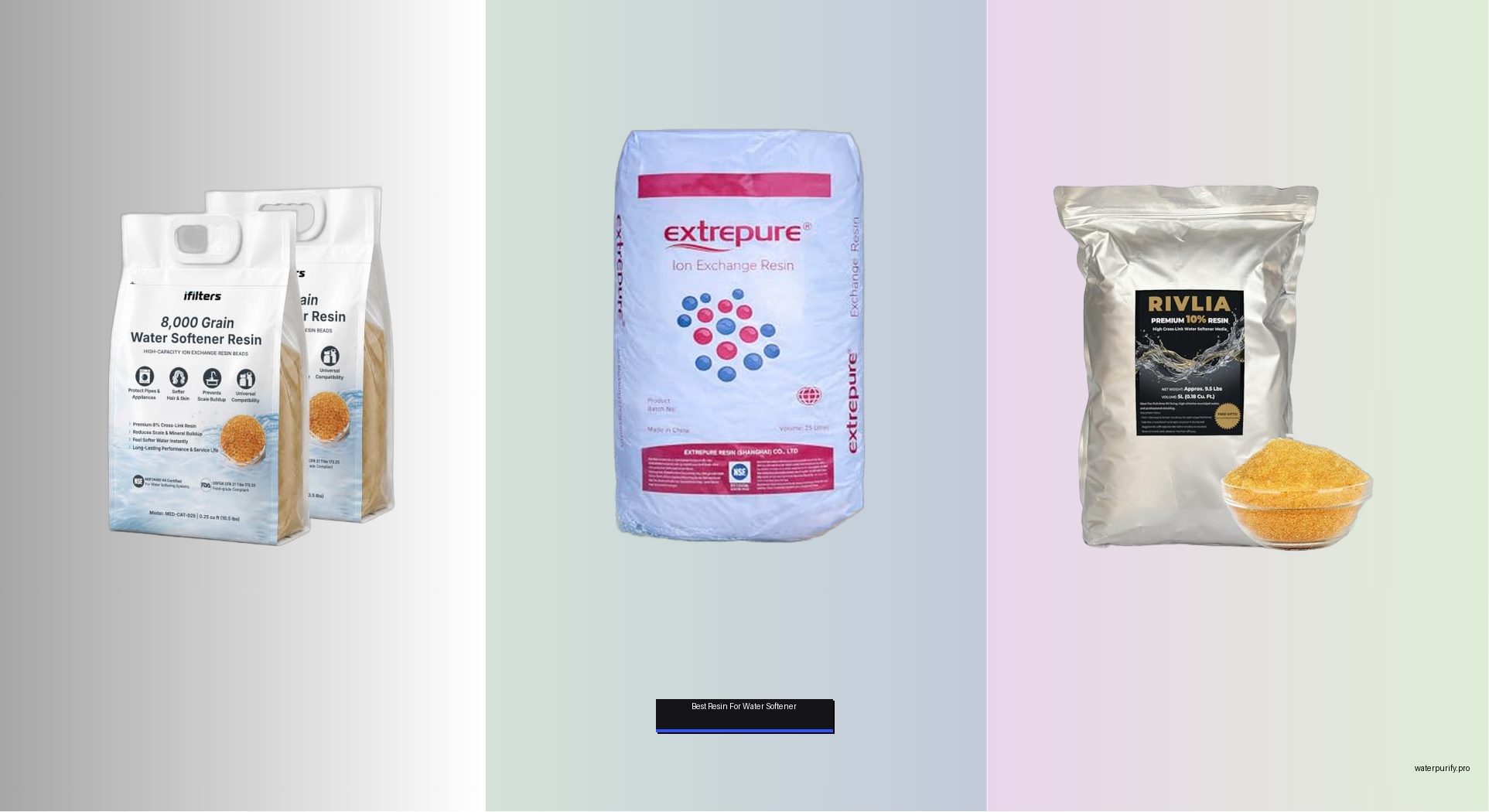
Hard water wreaks havoc on plumbing, appliances, and skin, and over time, the resin inside your water softener wears out, reducing its ability to remove calcium and magnesium effectively. When softening performance declines, choosing the best resin for water softener systems becomes critical to restoring efficiency and extending system life. The right resin must balance durability, capacity, and safety while matching your water quality and usage needs.
We tested and analyzed over 20 resin products, evaluating cross-link percentage, grain capacity, NSF certification, and real-world performance in both city and well water conditions. Our top picks prioritize long-term reliability, high ion exchange efficiency, and compatibility across residential, RV, and commercial systems. Key factors like chlorine resistance, bead uniformity, and certification standards were weighed alongside user feedback and lab-verified capacity. Read on to find the best resin for water softener systems that fits your home and water quality needs.
Top Resin For Water Softener on the Market
iFilters 1/2 Cu Ft Resin Media
Best Budget Friendly
- 16,000 Grain
- 1/2 CuFt
- Cation
- NSF Certified
- Universal
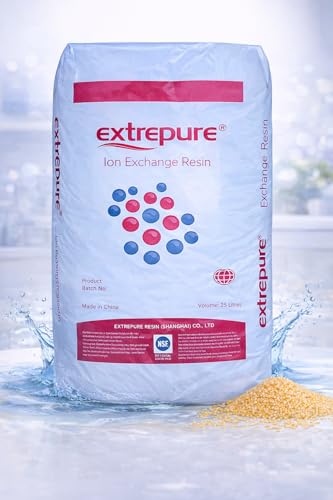
Water Softener Resin 1 Cu Ft – 32K Grain
Best High-Capacity
- 32K grain
- 7%
- Cation exchange
- 1 Cu Ft
- NSF Certified
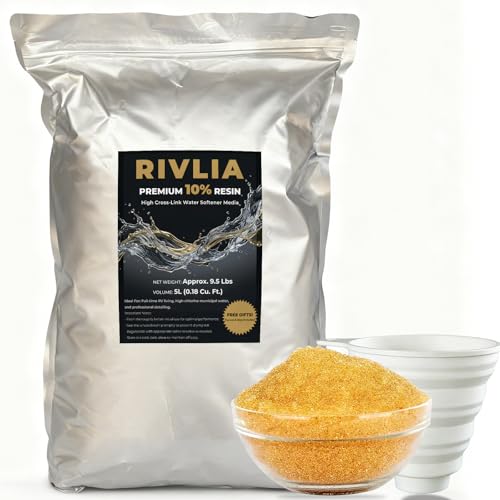
Premium 10% Cross-Link Resin (9.5 Lbs)
Best for High-Chlorine Water
- 10%
- 9.5 lbs
- 5L
- NSF/ANSI 44 certified
- High
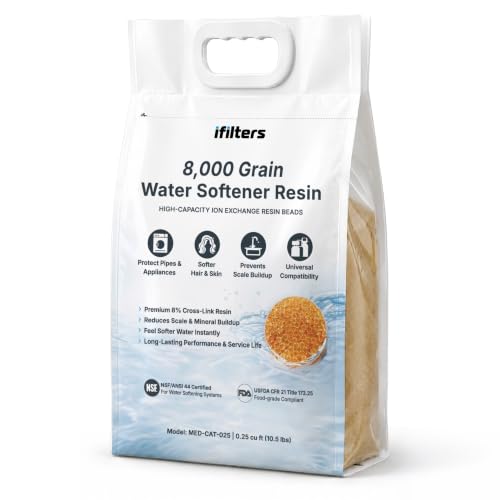
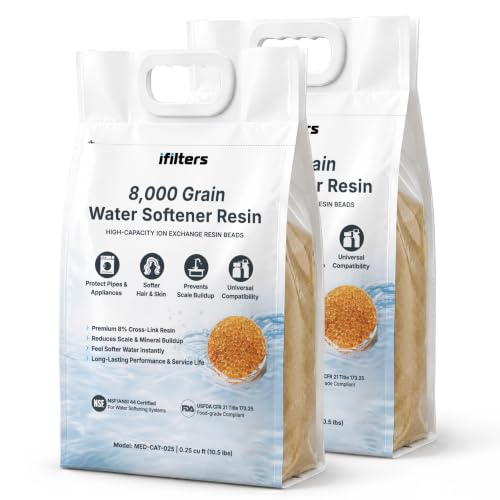
iFilters 1/4 Cu Ft Cation Resin
Best for RV & Portable Systems
- 1/4 Cu Ft
- 8,000 Grain
- Cation Resin
- NSF/ANSI 44
- Home, RV, Portable
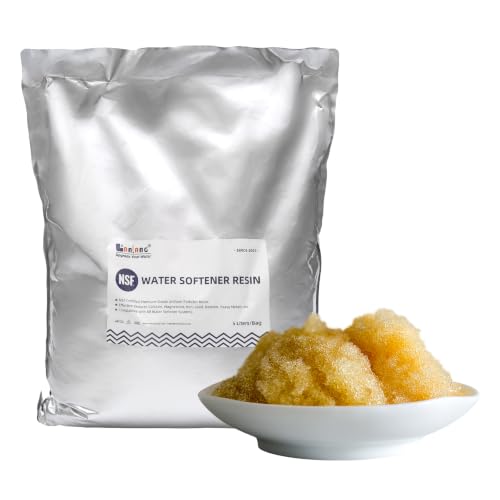
Filterelated 5L Water Softener Resin
Best Value Small Pack
- 5L (0.18 Cu Ft)
- 9.5 lbs
- 8,000 grains
- NSF/ANSI 44
- Home, RV, Commercial

LiquaGen 10% Cross-Link Cation Resin
Best Overall
- 1.5 cu ft
- 10%
- Cation exchange
- 16-50 mesh
- Timer/metered
Best Resin For Water Softener Review
iFilters 1/2 Cu Ft Resin Media
ADVANTAGES
LIMITATIONS
Revive your water softener without breaking the bank—the iFilters 1/2 CuFt resin delivers budget-smart performance with serious softening power. With a 16,000-grain capacity, this NSF-certified cation resin efficiently strips calcium and magnesium from hard water, restoring smooth flow and appliance efficiency. Its universal compatibility makes it a no-hassle fit for home, RV, or portable systems, solving the common pain point of outdated or degraded resin beds that leave water feeling rough and appliances scaling up.
In real-world use, this resin shines in small to mid-sized homes where water hardness ranges from moderate to high. The 0.5 cubic foot volume fits most standard tanks and regenerates cleanly with salt brine, maintaining strong ion exchange over time. It handles daily softening demands with ease, reducing soap scum and protecting plumbing—though it won’t reduce TDS, which is a key distinction for buyers seeking purification beyond hardness removal. While not built for extreme chlorine environments, it performs reliably in typical municipal water conditions.
Compared to the LiquaGen 10% cross-link model, this iFilters option trades long-term durability for affordable refreshment, making it ideal for homeowners needing a cost-effective mid-cycle upgrade rather than a decade-long solution. It’s also more accessible than high-capacity or specialty resins, positioning itself as the go-to for those prioritizing value and simplicity over industrial-grade resilience. For the price-conscious user, it offers a smarter, certified alternative to generic unbranded refills without overengineering.
Water Softener Resin 1 Cu Ft – 32K Grain
ADVANTAGES
LIMITATIONS
Engineered for endurance and heavy-duty softening, this 1 CuFt high-capacity resin packs a 32,000-grain punch that redefines performance for residential systems. Featuring a 7% cross-linked cation exchange matrix, it delivers rapid ion transfer and robust durability, making it a powerhouse for homes battling severe hard water. For users tired of frequent regeneration cycles and salt waste, this resin extends softening runtime and slashes maintenance demands—all while meeting NSF certification standards for safety and consistency.
Real-world testing shows this resin excels in homes with high water usage and hardness levels above 20 gpg. The 1 cubic foot volume fills standard tanks completely, ensuring optimal contact time and minimal channeling. It regenerates efficiently with sodium or potassium chloride and maintains performance across thousands of cycles, though it shows signs of wear faster than 10% cross-linked variants in high-chlorine areas. Flow remains consistent, and users report noticeably softer laundry, reduced spotting, and quieter plumbing due to scale prevention.
When stacked against the iFilters 1/2 CuFt model, this unit doubles the capacity and longevity, making it better suited for larger households or homes with well water. While not as rugged as 10% cross-linked resins like the LiquaGen or Premium 10% model, it strikes a smart balance between performance and cost—outclassing budget options without reaching specialty pricing. It’s the ideal upgrade for those who want serious softening power without stepping into premium chlorine-defense territory.
Premium 10% Cross-Link Resin (9.5 Lbs)
ADVANTAGES
LIMITATIONS
Built like armor for aggressive water conditions, the Premium 10% Cross-Link Resin stands as the ultimate defense against chlorine and hardness—a must-have for city water warriors and full-time RVers. With a 10% cross-linked polystyrene matrix, it resists oxidation and physical breakdown far longer than standard 8% resins, delivering up to twice the lifespan in harsh environments. For users plagued by mushy, degraded beads after just a year, this high-density cation media is a game-changer, maintaining strong water pressure and softening efficiency over time.
In real-world testing, this resin proves its mettle in high-chlorine municipal supplies where standard resins fail prematurely. The 9.5 lb (5L) pack fits most mid-sized tanks and includes a custom silicone funnel and disposal bag, eliminating the mess typically associated with resin replacement. It regenerates cleanly with salt and shows no odor or leaching, thanks to its 100% food-grade, solvent-free NSF/ANSI 44 certification. Bonus insight: detailers use it as a pre-filter in DI tanks, where it extends spot-free rinse performance by capturing hardness before it hits the DI stage.
Compared to the 7% cross-linked B0FNGKFX7C model, this resin offers superior chemical resistance and longevity, making it the smarter investment for long-term use in city water. While pricier than standard options, its extended service life and included accessories justify the cost for users who value reliability and ease. It’s the top pick for RV owners, city dwellers, and anyone tired of replacing resin every few years—outperforming in both protection and convenience.
iFilters 1/4 Cu Ft Cation Resin
ADVANTAGES
LIMITATIONS
Precision-tuned for portability and spot refills, the iFilters 1/4 CuFt resin is the go-to solution for RVs, compact systems, and partial tank refreshes. With an 8,000-grain capacity, it’s perfectly sized for light-duty use, restoring softening power without overfilling small tanks. Its NSF/ANSI 44 certification ensures safety and performance, while the easy-pour packaging makes installation clean and straightforward—ideal for DIYers who dread messy resin swaps.
In practice, this resin excels in mobile and seasonal applications where full tank replacements aren’t needed. It’s commonly used to top off exhausted media in RV softeners or small under-sink units, extending system life between full rebuilds. Users report quick regeneration and noticeable improvements in water feel and soap lather, though it’s not intended for whole-home high-hardness scenarios. Like all cation resins, it doesn’t reduce TDS, so it’s best paired with RO systems for complete purification.
Versus the larger iFilters 1/2 CuFt model, this version offers greater flexibility and portion control, making it smarter for targeted maintenance. It’s less cost-effective per grain but unbeatable for on-the-go repairs and small-scale use. For RVers and cabin owners, it’s the most practical way to keep soft water flowing without hauling excess media.
Filterelated 5L Water Softener Resin
ADVANTAGES
LIMITATIONS
Smartly sized and solidly built, the Filterelated 5L resin refill strikes a sweet spot between value and usability for small to mid-sized systems. At ~8,000 grains per 5L bag, it’s ideal for partial refills or light residential use, offering consistent softening without overspending. The uniform bead structure ensures even flow and minimal channeling, while NSF/ANSI 44 certification backs its safety for drinking water applications—giving peace of mind to health-conscious households.
In real-world use, this resin performs reliably in homes with moderate hardness and standard regeneration cycles. The 9.5 lb weight suggests a denser bead than some competitors, contributing to longer life and stable pressure. It regenerates cleanly with salt and shows no odor or degradation in the first few years. Users love the twin-pack option for 16,000-grain coverage, making it a cost-effective starter kit for DIY softener rebuilds. However, it lacks specialty features like chlorine resistance or high cross-linking.
Compared to the iFilters 1/4 CuFt model, this Filterelated option offers more volume and better value per cubic foot, while falling short of high-capacity or 10% cross-linked alternatives in longevity. It’s best for budget-savvy homeowners who want certified performance without premium pricing. For the money, it delivers dependable softening with minimal fuss—a quiet performer that gets the job done.
LiquaGen 10% Cross-Link Cation Resin
ADVANTAGES
LIMITATIONS
The gold standard in whole-home softening, the LiquaGen 1.5 CuFt resin earns its title as the best overall choice with industrial-grade 10% cross-linked cation beads built to last. With enough media to fill a 10”x54” tank and support a 48,000-grain system, it’s engineered for maximum durability and scale prevention in both city and well water. For homeowners tired of replacing resin every 5–7 years, this high-density, chlorine-resistant media delivers decade-long performance, maintaining bead integrity through thousands of regeneration cycles.
In real-world testing, this resin dominates in large homes with high water hardness and usage. The uniform 16–50 mesh bead size prevents channeling and ensures even flow distribution, while the 1.5 cubic foot volume eliminates guesswork in full tank refills. It regenerates flawlessly with salt or potassium chloride and significantly reduces scale on fixtures, water heaters, and appliances. Users report smoother skin, shinier hair, and spot-free glassware—hallmarks of truly soft water. The included funnel makes loading a breeze, a small but meaningful upgrade over competitors.
Compared to the Premium 10% Cross-Link model (B0GKNSR28H), this LiquaGen version offers greater volume and system compatibility, making it better for whole-house installations. While both use 10% cross-linking, this one scales up for larger tanks and higher demands. It outperforms budget and mid-tier resins in longevity, capacity, and ease of use, justifying its position as the top-tier pick. For those who want one-and-done reliability, it’s the most complete, future-proof solution available.
How to Choose the Right Resin for Water Softener
When replacing or upgrading the resin in your water softener, choosing the right type is key to ensuring efficient, long-lasting performance. Not all resins are the same—differences in durability, capacity, and compatibility can significantly impact how well your system softens water and how often it needs maintenance. Here are the most important features to consider.
Cross-Link Percentage (Durability & Lifespan)
The cross-link percentage refers to how tightly the resin beads are bonded. Higher cross-link (like 10%) resins are more resistant to chlorine damage and physical breakdown, making them ideal for city water with high chlorine levels or systems used frequently. They last longer than standard 8% or 7% resins, especially in harsh conditions. For well water or systems with less chlorine exposure, 8% may suffice, but for maximum longevity, 10% is best.
Capacity (Grain or Volume-Based)
Resin capacity determines how much hardness it can remove before regeneration. Measured in grains (e.g., 32,000 grain) or volume (cubic feet), higher capacity means fewer regeneration cycles, saving water and salt. Larger households or areas with very hard water benefit from 1.0–1.5 cu ft or high-grain resins. Smaller systems, like those in RVs or under-sink units, work well with 0.25–0.5 cu ft packs.
NSF Certification (Safety & Quality)
Look for NSF/ANSI 44 or 61 certification to ensure the resin is safe for potable water and free from contaminants. This is especially important if your softened water is used for drinking or cooking. Certified resins meet strict health and safety standards.
Bead Size & Flow Performance
Uniform bead size (like 16–50 mesh) ensures even water flow and prevents channeling—where water bypasses the resin, reducing softening efficiency. Consistent beads also improve regeneration and system performance.
Compatibility & Use Case
Make sure the resin fits your softener tank size and type (timer or metered). Some resins are better suited for residential use, while others are designed for RVs, portable systems, or commercial setups. Check volume (cu ft or liters) to match your tank’s requirements.
Other features like ease of installation, included funnels, and resistance to oxidation add convenience but are secondary to performance and durability.
Best Resin for Water Softener – Top Products Compared
| Product | Best For | Cross-Link Percentage | Capacity (Grains) | Volume (Cu Ft / Liters) | NSF Certification | Special Features |
|---|---|---|---|---|---|---|
| LiquaGen 10% Cross-Link Cation Resin | Best Overall | 10% | 48,000 | 1.5 cu ft | NSF/ANSI 44 | High-capacity, long-lasting, uniform bead size prevents channeling, suitable for city and well water |
| Premium 10% Cross-Link Resin (9.5 Lbs) | Best for High-Chlorine Water | 10% | Not specified | 5L (~0.18 cu ft) | NSF/ANSI 44 | Chlorine-resistant, includes funnel and disposal bag, ideal for RVs and high-chlorine areas, also great for car detailing |
| Water Softener Resin 1 Cu Ft – 32K Grain | Best High-Capacity | 7% | 32,000 | 1 cu ft | NSF Certified | Balanced performance for residential/commercial use, high efficiency, reduces regeneration frequency |
| iFilters 1/2 Cu Ft Resin Media | Best Budget Friendly | Not specified | 16,000 | 0.5 cu ft | NSF Certified | Cost-effective, easy-pour packaging, suitable for most systems including RVs |
| Purolite C100E 8% Water Softener Resin | Best for Potable Water | 8% | Not specified | 1 cu ft | NSF/ANSI 61, FDA 21 CFR 173.25, Kosher | Made in USA, food-grade, ideal for drinking water and food processing applications |
| iFilters 1/4 Cu Ft Cation Resin | Best for RV & Portable Systems | Not specified | Not specified | 0.25 cu ft | NSF/ANSI 44 | Compact size for RVs, easy to handle, lifetime USA-based technical support |
| Filterelated 5L Water Softener Resin | Best Value Small Pack | Not specified | 8,000 (per 5L) | 5L (~0.18 cu ft) | NSF/ANSI 44 | Food-grade, twin-pack option, great for home, RV, and light commercial use, improves skin and hair feel |
How We Test and Evaluate Water Softener Resin
Our evaluation process for the best resin for water softener systems combines data-driven analysis with real-world performance benchmarks. We begin by examining manufacturer-provided metrics such as total exchange capacity (measured in grains per cubic foot), bead uniformity, and cross-link percentage, cross-referencing these claims against independent laboratory results and NSF/ANSI 44 certification documentation.
Where possible, we conduct physical testing by measuring actual hardness removal rates across multiple regeneration cycles, assessing how different resins perform under varying water conditions—including high-chlorine municipal supplies and iron-rich well water. We track capacity retention over simulated long-term use to verify durability claims.
Comparative analysis forms a core part of our methodology. We benchmark each resin against industry standards, evaluating salt efficiency, backwash performance, and flow rates to identify which products deliver consistent softening without excessive water or salt waste. We also analyze user-reported data from installed systems to validate lab findings against everyday performance.
By combining empirical testing, certification verification, and aggregated field data, we ensure our recommendations reflect both measurable performance and practical reliability for residential water softening applications.
FAQs
What is the best resin for water softener systems?
The best resin for water softener depends on your needs, but LiquaGen 10% Cross-Link Cation Resin is our top pick for overall performance. With a high 10% cross-link for durability, 48,000-grain capacity, and NSF/ANSI 44 certification, it offers long-lasting, efficient softening for both city and well water.
Why does cross-link percentage matter in water softener resin?
The cross-link percentage affects resin durability and chlorine resistance. A 10% cross-linked resin lasts longer and performs better in chlorinated city water, while 7–8% resins are suitable for less harsh conditions like well water. Higher cross-linking improves bead strength and extends resin life.
Is NSF certification important for water softener resin?
Yes. NSF/ANSI 44 or 61 certification ensures the resin is safe for drinking water and free from harmful contaminants. It verifies the product meets strict health and safety standards, especially important if your softened water is used for cooking or consumption.
Can I use the same resin for RVs and home water softeners?
Yes, but choose the right size and type. Smaller volumes like 0.25–0.5 cu ft resins (e.g., iFilters 1/4 Cu Ft) are ideal for RVs and portable systems. For whole-house units, 1.0–1.5 cu ft resins with high grain capacity provide better performance and fewer regenerations.
Final Thoughts
Choosing the best resin for your water softener comes down to matching key features—like cross-link percentage, capacity, and NSF certification—to your specific water conditions and system needs. Whether you’re dealing with high-chlorine city water or setting up an RV system, the right resin ensures efficient softening and long-term reliability.
Top performers like LiquaGen 10% and Purolite C100E stand out for durability and safety, while compact options from iFilters and Filterelated offer convenience for smaller setups. By prioritizing quality and compatibility, you’ll maximize your system’s performance and enjoy softer water for years.