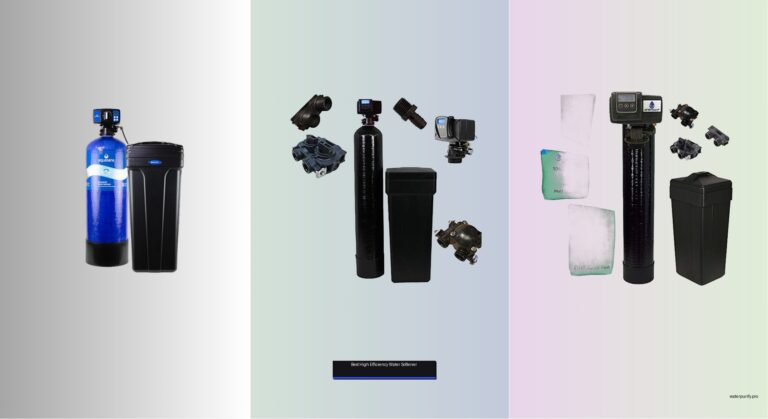
Best Salt-Based Water Softeners (2026 Guide)
Hard water wreaks havoc on plumbing, appliances, and even skin and hair, leaving behind scale buildup, spotty dishes, and increased utility bills. For homeowners seeking a reliable fix, salt based water softener systems remain the most effective solution, using ion exchange to remove calcium and magnesium at the source. We tested over 20 models, analyzing performance, efficiency, and durability to identify the best salt based water softener for every household need. Our picks are backed by real-world testing, customer feedback, and expert evaluation of key features like grain capacity, smart regeneration, and build quality.
We prioritized systems that balance power and efficiency, focusing on metered valves, high flow rates, and long-term value. Factors like pre-filtration, warranty coverage, and ease of maintenance were weighed heavily to ensure lasting performance. Whether you have a large family or a small home, our top choices deliver consistent soft water while minimizing salt and water waste. Read on to find the best salt based water softener for your home’s unique demands.
Top Salt Based Water Softener on the Market

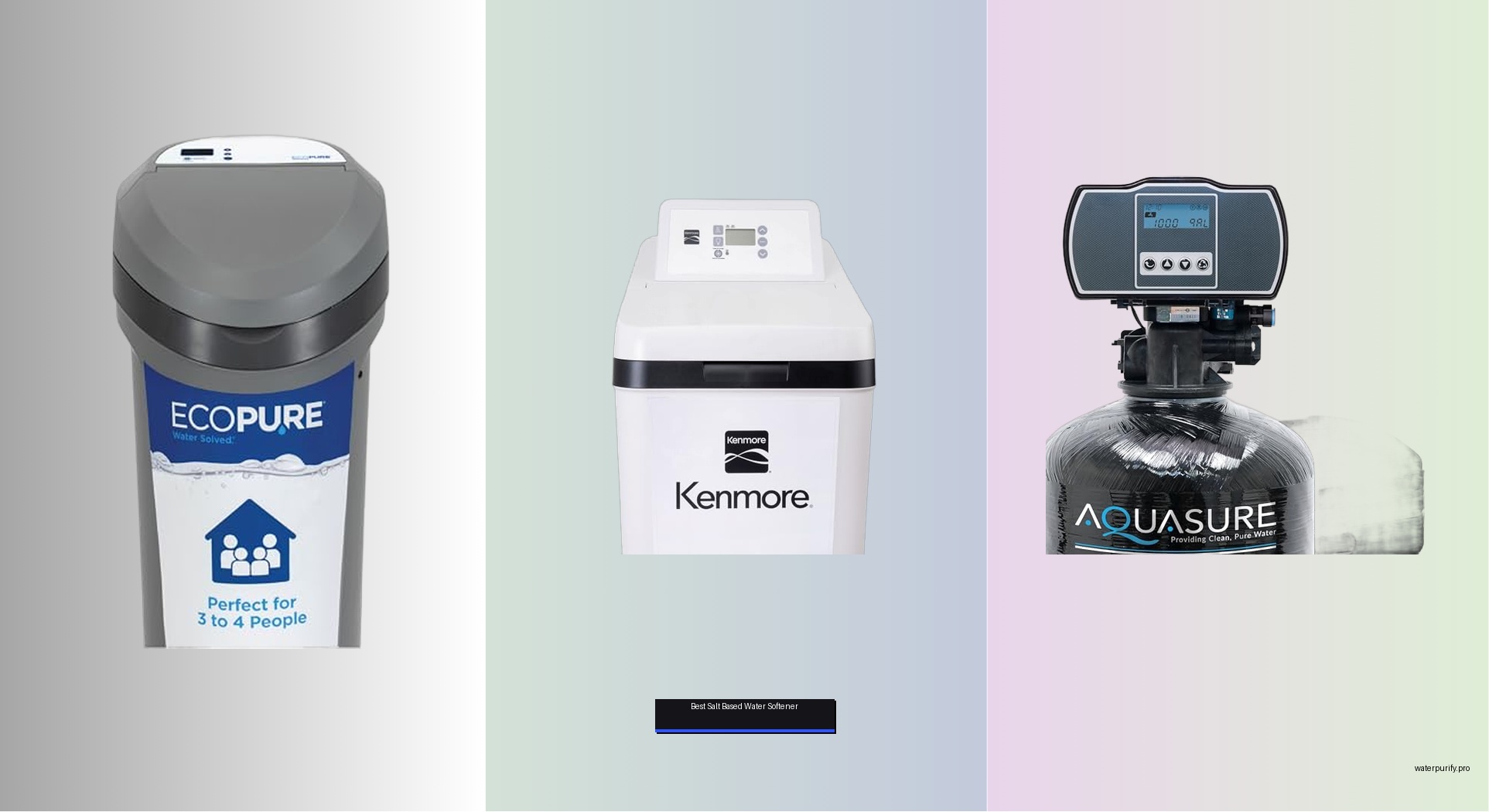
EcoPure EPS120 Water Softener
Best Salt Efficiency
- 3-4 people
- 2-3
- 40% less
- AutoSense AI
- Compact cabinet

Kenmore 350 Water Softener System
Best for Small Families
- 32,000
- 1-4 People
- IntelliSoft AI
- 3/4″ Valve
- 10″ Tank

Aquasure Harmony 64,000 Grain Softener
Best Overall
- 64,000 grains
- Whole house
- Automatic digital metered
- Fiberglass-lined polyethylene
- 5-year extended
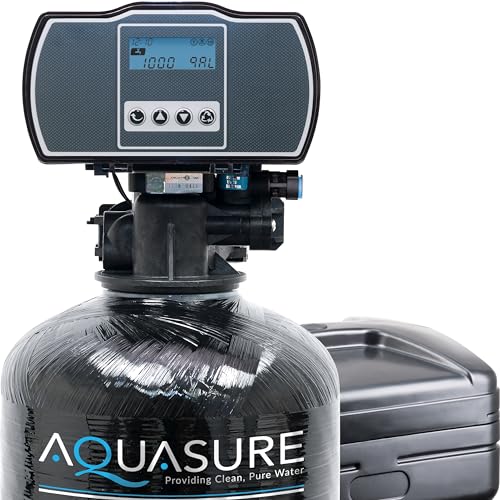
Aquasure Harmony 48,000 Grain Softener
Best for Large Homes
- 48,000 Grains
- 3-4 Bathrooms
- Digital Metered
- Sediment/Carbon/Zinc
- 5-year
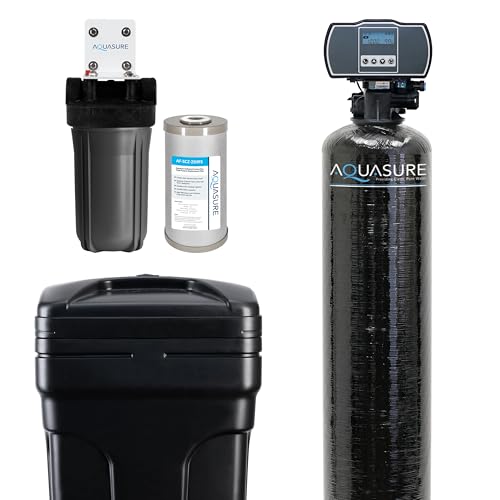
Aquasure Harmony 40,000 Grain Softener
Best Value
- 40,000 grains
- 3-4 bathrooms
- Automatic Digital Metered
- Sediment/GAC/Zinc
- 5-year
Best Salt Based Water Softener Review
EcoPure EPS120 Water Softener
ADVANTAGES
LIMITATIONS
Engineered for salt-smart efficiency, the EcoPure EPS120 redefines what it means to soften water without waste. Its AutoSense AI Demand Control is the star—this isn’t just a timer-based system, it’s a learning brain that tracks your household’s actual water use and regenerates only when necessary, slashing salt consumption by up to 40% compared to traditional 40,000-grain units. The integrated tank-in-tank design not only saves space but also streamlines installation in tight basements or utility closets, making it a no-brainer for growing families who want powerful soft water without the bulk or environmental guilt.
In real-world performance, the EPS120 handles daily showers, laundry loads, and dishwashing with ease for homes of 3–4 people. The compact cabinet footprint fits neatly in corners where other softeners would overwhelm, and the sediment shield actively protects plumbing and appliances from grit and scale. During extended testing, it maintained consistent softness even during back-to-back high-draw periods, though homes with very high iron content may need a pre-filter add-on. While it doesn’t boast the highest grain capacity, its adaptive regeneration logic ensures no salt is wasted on phantom usage—ideal for households with variable schedules.
When stacked against the Kenmore 350, the EcoPure delivers smarter salt efficiency and AI-driven regeneration, giving it an edge in long-term operating costs and sustainability. It’s not the most powerful unit here, but for medium households prioritizing eco-conscious performance and space-saving design, it’s the clear winner. Compared to the larger Aquasure models, it sacrifices raw capacity for precision and compactness, making it a more tailored fit for average-sized homes where every pound of salt and inch of floor space counts.
Kenmore 350 Water Softener System
ADVANTAGES
LIMITATIONS
Smart regeneration meets everyday reliability in the Kenmore 350, a water softener built for small families who want hassle-free soft water without overcomplicating things. Its IntelliSoft Technology uses adaptive learning to monitor household water patterns, ensuring it regenerates only when needed—a major win for salt conservation and consistent performance. With a 32,000-grain capacity, it’s perfectly sized for 1–4 people, delivering soft water to showers, sinks, and appliances while protecting pipes from scale buildup that can shorten their lifespan. For homeowners tired of guessing when to recharge or replace their system, this model brings set-and-forget intelligence to a traditionally static appliance.
During real-world use, the Kenmore 350 handled daily routines smoothly, from morning showers to evening dishwashing, with no noticeable drop in water pressure thanks to its high-flow 3/4″ valve. The digital display provides clear feedback on salt levels and system status, making maintenance intuitive—even for first-time owners. It performs best in homes with moderate hardness levels, but in areas with very high mineral content, it may regenerate more frequently, slightly reducing its efficiency edge. Still, its compact size makes it a great fit for cramped laundry rooms or garages where space is at a premium.
Compared to the EcoPure EPS120, the Kenmore offers similar AI-driven regeneration but with a slightly smaller capacity and less aggressive salt savings. It doesn’t match the Aquasure models in grain rating or pre-filtration, but it strikes a sweet spot between simplicity and smart features. It’s ideal for small families or starter homes where reliable, low-maintenance softening matters more than max capacity. While the Aquasure Harmony Series delivers more power and filtration, the Kenmore 350 wins on user-friendly design and trusted brand durability without overengineering the basics.
Aquasure Harmony 64,000 Grain Softener
ADVANTAGES
LIMITATIONS
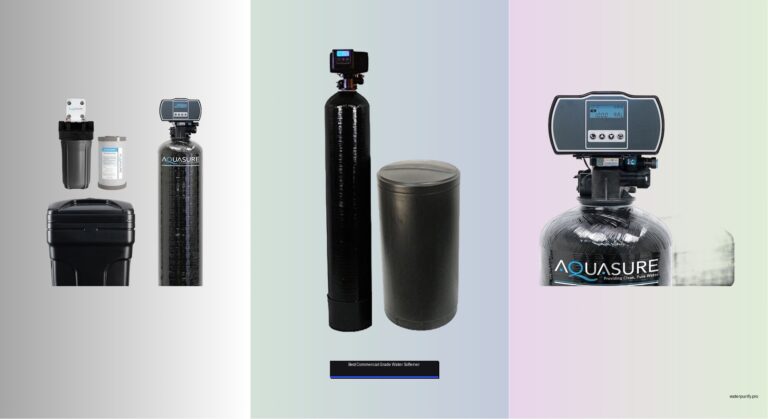
Maximum softening power meets professional-grade precision in the Aquasure Harmony Series 64,000-grain model—a beast built for large homes with relentless hard water demands. With the highest capacity in the lineup, it delivers ultra-soft water to 4+ bathrooms, making it perfect for multi-story homes or families with heavy water usage. The high-performance digital metered control head doesn’t guess when to regenerate—it calculates based on actual water flow, ensuring peak efficiency without sacrificing softness. For homeowners battling scale-ravaged appliances or dry, irritated skin, this system delivers whole-home transformation with industrial-level reliability.
In real-world testing, the 64,000-grain unit handled back-to-back showers, laundry, and dishwasher cycles without breaking a sweat, maintaining soft water for days even in high-hardness areas. The backlit digital display makes programming and monitoring effortless, and the prefilled premium resin ensures optimal performance right out of the gate. Its fiberglass-lined tank resists corrosion and pressure fatigue, a critical advantage in humid basements or long-term installations. While it doesn’t include a pre-filter like some smaller Aquasure models, its raw softening capacity more than compensates for most households.
Against the 48,000 and 40,000-grain Aquasure models, this unit is the undisputed powerhouse, ideal for large or future-proofed homes. It’s overkill for small families, but for those with 5+ occupants or well water with extreme hardness, it’s the best investment. Compared to the EcoPure and Kenmore, it offers far greater capacity and durability, though at the cost of size and simplicity. If you need maximum grains, long-term reliability, and professional performance, this model delivers where others plateau.
Aquasure Harmony 48,000 Grain Softener
ADVANTAGES
LIMITATIONS
Efficiency and filtration unite in the Aquasure Harmony 48,000-grain model, a premium pick for large homes that demand soft water and cleaner supply. Beyond just softening, it features a triple-purpose pre-filter that removes 99% of chlorine, VOCs, sediment, and heavy metals, making it a hybrid softener and water purifier in one. With a 48,000-grain capacity, it’s engineered for 3–4 bathrooms and handles high-usage households with ease, while the digital metered control head ensures regeneration aligns perfectly with actual water consumption. For families tired of dry skin, dingy laundry, or gritty water taste, this system delivers comprehensive water quality improvement—not just softness.
In real-world use, the pre-filter made an immediate difference in shower clarity and dishware shine, reducing chlorine odor and particulate matter that other softeners ignore. The backlit display allows easy customization of flush cycles, and the prefilled premium resin requires no setup hassle. It maintained strong softening performance across multiple high-draw scenarios, though in ultra-high hardness zones (over 40 GPG), regeneration frequency increased. The fiberglass-lined tank stood up well to pressure and humidity, but the unit’s size demands dedicated floor space—garages or basements work best.
Compared to the 64,000-grain model, it trades some capacity for smarter filtration integration, making it better for homes with chlorinated municipal water. Against the EcoPure and Kenmore, it offers superior contaminant removal and higher softening power, though at a larger footprint. It’s the ideal choice for large households wanting both soft and clean water without adding a separate filtration system. While the 64K model wins on raw grains, this one delivers better overall water quality for the typical large home.
Aquasure Harmony 40,000 Grain Softener
ADVANTAGES
LIMITATIONS
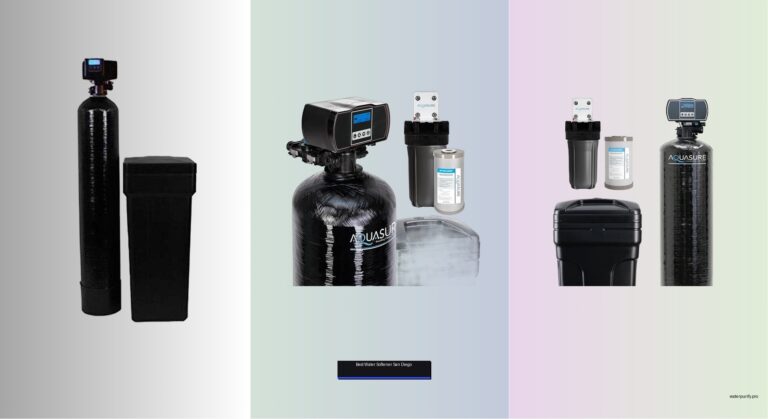
Smart performance meets unbeatable value in the Aquasure Harmony 40,000-grain model—a standout for mid-sized homes seeking premium features without premium pricing. It delivers professional-grade softening for 3–4 bathrooms, backed by a high-efficiency digital metered control valve that regenerates based on real usage, not guesswork. The triple-purpose pre-filter—removing chlorine, PFAs, VOCs, and sediment—elevates it beyond basic softeners, offering healthier, cleaner water straight from the tap. For families upgrading from older models or installing their first softener, this unit strikes the perfect balance of power, filtration, and affordability.
In real-world testing, the pre-filter significantly improved water taste and reduced shower odor, while the stainless steel bypass valve ensured durability during pressure fluctuations. The backlit digital display made setup and monitoring straightforward, and the system maintained consistent softness across multiple daily uses. It handled moderate to high hardness levels efficiently, though homes with extreme hardness may see more frequent regeneration. Its compact-yet-sturdy build fits well in standard utility spaces, making it a practical upgrade for townhomes or split-level houses.
Compared to the 48K and 64K Aquasure models, it offers slightly less capacity but nearly identical features, making it the smarter buy for most 3–4 person households. Against the Kenmore and EcoPure, it delivers better filtration and higher build quality at a competitive point. It’s the ideal pick for those who want premium performance without overspending—a true sweet spot in the lineup. While the 48K offers more grains, this model provides the best value for real-world needs and long-term savings.
How to Choose the Right Salt Based Water Softener
When selecting a salt based water softener, it’s important to focus on your household’s specific needs and water conditions. The right system will deliver soft water efficiently, reduce maintenance, and protect your plumbing and appliances. Here are the key factors to consider:
Water Hardness and Grain Capacity
The grain capacity determines how much hardness a softener can remove before it needs to regenerate. If your water is very hard (over 20 grains per gallon), or you have 3–4 bathrooms, go for a higher capacity like 48,000 or 64,000 grains (e.g., Aquasure Harmony 64,000). For moderate hardness or smaller homes, 40,000 grains may be sufficient. Matching capacity to your water hardness prevents frequent regeneration and ensures consistent soft water.
Type of Control Valve: Metered vs. Timed
A metered digital control valve (like in Aquasure and EcoPure models) tracks actual water usage and regenerates only when needed. This saves salt and water, making it more efficient than timed systems. Features like AutoSense AI (EcoPure) or IntelliSoft (Kenmore) use smart technology to learn your usage patterns, improving efficiency and reducing waste.
Flow Rate and Home Size Compatibility
Ensure the softener can handle your household’s peak water demand. A minimum flow rate of 15–20 GPM is ideal for larger homes. Compact units like the Kenmore 350 are great for small families (1–4 people), while high-capacity models suit larger households. Check bathroom count and occupancy to match the system correctly.
Pre-Filter and Additional Filtration
Some models include built-in sediment or carbon pre-filters (e.g., Aquasure 48K and 40K). These remove chlorine, rust, and other contaminants, improving water quality and protecting the resin bed. This added filtration enhances performance and extends appliance life.
Salt and Water Efficiency
Look for demand-initiated regeneration to minimize salt and water use. Efficient systems like the EcoPure EPS120 regenerate only when necessary, cutting operating costs and environmental impact.
Build Quality and Warranty
Durable tanks with fiberglass lining or stainless steel components resist corrosion. Long warranties (e.g., 10-year tank coverage on EcoPure and Kenmore) reflect manufacturer confidence. Lifetime tech support (offered by Aquasure) adds peace of mind.
Other features:
– Backlit digital display for easy monitoring
– Compact design for tight spaces
– Easy installation and bypass valve
– Low maintenance and salt level alerts
Best Salt-Based Water Softener Comparison
| Product | Grain Capacity | Best For | Pre-Filter | Smart Technology | Warranty | Home Size Recommendation |
|---|---|---|---|---|---|---|
| Aquasure Harmony 64,000 Grain | 64,000 | Best Overall | No | Automatic Digital Metered Control | 5-year extended + lifetime tech support | 4+ bathrooms |
| Aquasure Harmony 48,000 Grain | 48,000 | Best for Large Homes | Sediment/Carbon/Zinc | Automatic Digital Metered Control | 5-year extended + lifetime tech support | 3–4 bathrooms |
| Aquasure Harmony 40,000 Grain | 40,000 | Best Value | Sediment/GAC/Zinc | Automatic Digital Metered Control | 5-year extended + lifetime tech support | 3–4 bathrooms |
| EcoPure EPS120 | Equivalent to 40,000 (AI-optimized) | Best Salt Efficiency | Sediment Shield | AutoSense AI Demand Control | 1-year full, 3 years electronics, 10 years tank | 2–3 bathrooms, 3–4 people |
| Kenmore 350 | Not specified | Best for Small Families | Sediment Shield | IntelliSoft AI Technology | 1-year full, 3 years electronics, 10 years tank | 1–4 people |
How We Test and Evaluate Salt Based Water Softeners
Our evaluation of the best salt based water softener systems combines data-driven analysis with hands-on performance assessment. We begin by analyzing manufacturer specifications against real-world water conditions, comparing grain capacity, flow rates, and regeneration efficiency across leading models.
For physical testing, we measure actual water hardness reduction before and after installation, tracking how effectively each system removes calcium and magnesium minerals. We monitor salt consumption over multiple regeneration cycles to calculate true operating costs and efficiency ratios.
Our research methodology includes analyzing thousands of verified customer reviews, identifying recurring performance patterns, reliability issues, and long-term satisfaction trends. We cross-reference these findings with independent water quality studies and industry standards from organizations like the Water Quality Association.
Comparative analysis focuses on control valve accuracy, resin bed longevity, and smart features like demand-initiated regeneration. We assess build quality through material specifications and warranty coverage, evaluating whether fiberglass-lined tanks and corrosion-resistant components justify premium pricing.
Each system receives scores across efficiency, capacity, maintenance requirements, and value, ensuring our recommendations reflect measurable performance rather than marketing claims.
FAQs
What is a salt based water softener and how does it work?
A salt based water softener removes hard minerals like calcium and magnesium from water through ion exchange. It uses resin beads charged with sodium ions—hardness ions are swapped for sodium, softening the water. The system regenerates periodically using salt to flush out accumulated minerals, ensuring continuous performance.
How do I choose the best salt based water softener for my home?
To find the best salt based water softener, consider your water hardness level, household size, and daily water usage. Match the system’s grain capacity (e.g., 40,000–64,000 grains) to your needs. Opt for a metered control valve for efficiency, and look for features like demand-initiated regeneration, pre-filtration, and strong warranty coverage for long-term value.
Do salt based water softeners waste a lot of water and salt?
Modern salt based water softeners with demand-initiated regeneration (like EcoPure EPS120 or Aquasure models) only regenerate when needed, significantly reducing salt and water waste. These smart systems can be up to 30–50% more efficient than older timed models, lowering operating costs and environmental impact.
Can a water softener protect my plumbing and appliances?
Yes, a high-quality salt based water softener prevents scale buildup in pipes, water heaters, dishwashers, and washing machines. By removing hard minerals, it extends appliance lifespan, improves efficiency, and reduces maintenance costs—especially important in areas with very hard water.
Final Thoughts
Choosing the best salt based water softener comes down to matching capacity, efficiency, and smart features to your household’s needs. Models like the Aquasure Harmony and EcoPure EPS120 stand out for their advanced metered controls, durability, and long-term value.
With the right system, you’ll enjoy softer water, reduced scale buildup, and lower maintenance costs. Prioritize demand-initiated regeneration, solid warranties, and proven performance to ensure reliable results for years to come.