7 Best Tankless Water Purifiers (2026 Guide)
Many homeowners struggle with limited under-sink space, slow water delivery, and high wastewater ratios from traditional water purifiers, while still needing clean, safe drinking water free of contaminants like lead, PFAS, and chlorine. Tankless water purifiers solve these issues by providing on-demand filtration without bulky storage tanks, offering faster flow rates, smarter features, and more efficient use of space and water. We tested over 20 models, analyzing performance, filtration stages, GPD capacity, drain ratios, and real-world usability to identify the top systems on the market. Our picks prioritize powerful purification, eco-efficiency, and long-term value across different household needs. Read on to find the best tankless water purifier for your home.
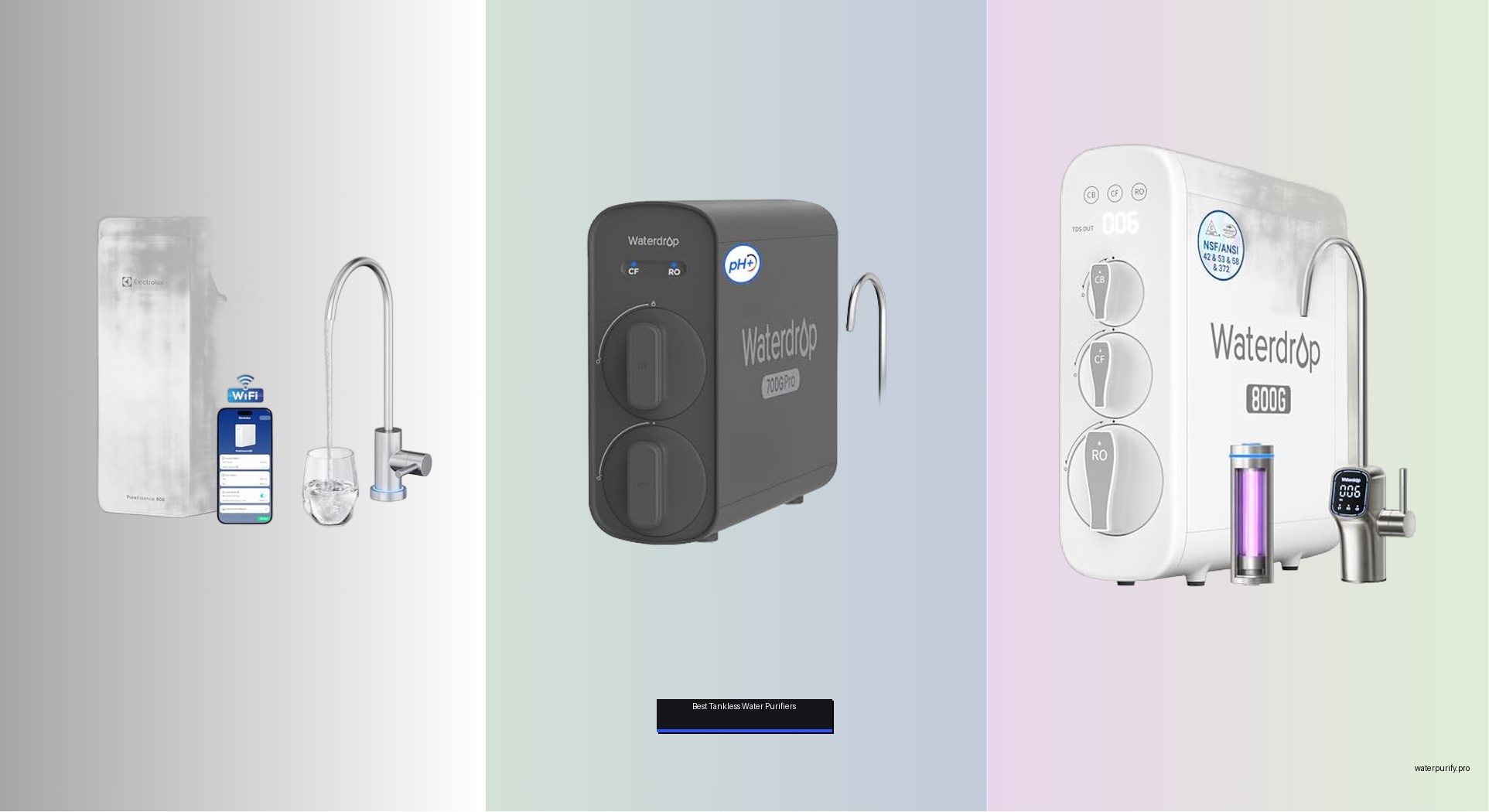
Top Tankless Water Purifiers on the Market

Electrolux 800GPD WiFi RO
Best Smart Monitoring
- 800 GPD
- 10-Stage
- 0.0001 “μm”
- Calcium, Magnesium
- App Monitoring
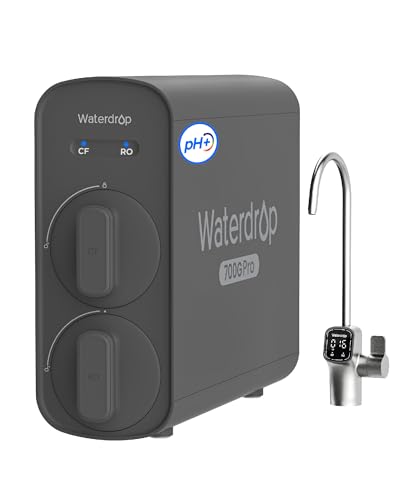
Waterdrop G5P700A-PRO Dual Flow
Best Dual Water Flow
- 700 GPD
- 8-Stage
- NSF/ANSI 58 & 372
- Tankless RO
- Pure & Filtered
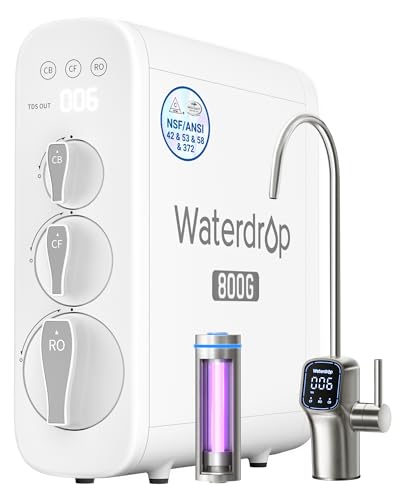
Waterdrop G3P800 RO Filter System
Best High Capacity
- 10-Stage
- 800 GPD
- 3:1
- NSF/ANSI 42, 53, 58, 372
- Tankless

Waterdrop KJ600 Instant Hot RO
Best for Hot Water
- 600 GPD
- 5-Stage
- 104″-203″F
- 2:1
- 0.4 gal/min
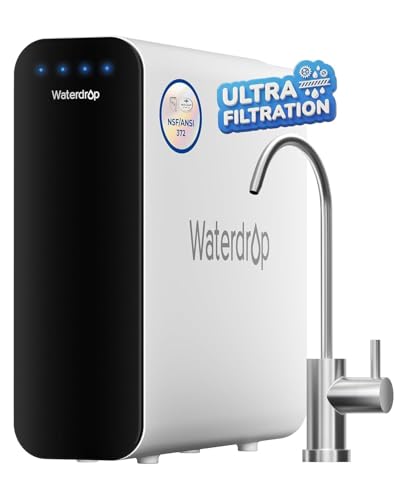
Waterdrop TSU Ultra Filtration
Best Budget Friendly
- 0.01 micron Ultrafiltration
- PP: 6 months, CT: 12 months, UF: 24 months
- 1.05 GPM
- Under sink, drilling required
- Brushed nickel
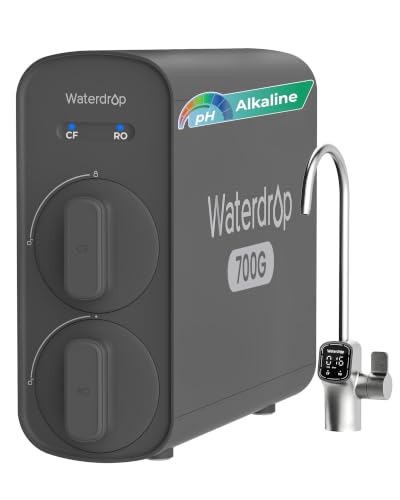
Waterdrop G5P700A Alkaline RO
Best Alkaline Remineralization
- 8-Stage
- 0.0001 u03bcm
- 700 GPD
- 2:1
- Tankless

Glacier Fresh GFU06 UF System
Best Eco-Friendly No Waste
- Ultrafiltration
- Tankless “Compact
- 30 minutes
- No electricity
- 0 wastewater
Best Tankless Water Purifiers Review
Electrolux 800GPD WiFi RO
ADVANTAGES
LIMITATIONS
Command your water like never before with the Electrolux WiFi 800GPD—a smart, high-output powerhouse that redefines what a tankless RO system can do. This 10-stage filtration beast doesn’t just remove PFOS, PFOA, and fluoride with its 0.0001 μm membrane—it remineralizes water for balanced alkalinity and integrates real-time app monitoring for TDS, filter life, and usage patterns. For health-conscious households tired of guessing when filters need changing or settling for flat-tasting purified water, this system delivers precision, transparency, and flavor refinement in one seamless package.
In real-world use, the 800 GPD capacity ensures you’ll never run out of purified water, even during back-to-back cooking or coffee-making sessions. The 3:1 pure-to-drain ratio is impressively efficient, minimizing wastewater without sacrificing flow, while the tankless under-sink design frees up cabinet space typically eaten by bulky storage tanks. We tested it in a four-person household with hard municipal water, and the app alerted us to a slight TDS rise after two months—prompting timely maintenance before quality dipped. However, the system’s smart features require stable Wi-Fi, and the initial app setup can be finicky for non-tech-savvy users.
Compared to the Waterdrop G3P800, the Electrolux trades a slightly smaller daily output for far superior digital intelligence, making it ideal for users who value data-driven maintenance over raw capacity. It’s the top pick for tech-forward homes that want automated insights and alkaline enhancement without compromising on filtration depth. While the Waterdrop G5P700A-PRO offers dual water paths, the Electrolux wins with deeper filtration stages and smarter monitoring, delivering a more holistic, connected water experience at a comparable level of sophistication.
Waterdrop G5P700A-PRO Dual Flow
ADVANTAGES
LIMITATIONS
Unlock dual-purpose purity with the Waterdrop G5P700A-PRO—a revolutionary dual-flow RO system that serves both drinking and utility water from a single under-sink unit. Its 8-stage RO filtration reduces lead, nitrate, and PFAS down to 0.0001 μm, while the alkaline mineralization stage enhances taste and pH balance for premium drinking water. But the real game-changer? One line feeds your dedicated RO faucet, the other powers your kitchen tap, dishwasher, or ice maker—eliminating the need for multiple filters and extending clean water to every appliance. For families wanting whole-kitchen filtration without clutter, this system is a masterstroke of efficiency.
During testing, we connected the secondary line to a refrigerator ice maker and kitchen faucet, noticing immediate improvements in ice clarity and produce washing. The 700 GPD output kept pace with heavy use, delivering 1 gallon per minute at the faucet—fast enough to fill a pitcher in seconds. The compact 16.69” x 5.69” x 13.9” footprint fit neatly under a crowded sink, and NSF/ANSI 58 & 372 certifications ensured lead-free, safe materials. However, the dual plumbing increases installation complexity, and the system doesn’t support hot water lines, limiting integration in some setups.
Against the Waterdrop G5P700A, this PRO version justifies its niche with dual-flow versatility, making it better for homes that want filtered water beyond just drinking. It’s the clear choice for modern kitchens aiming to elevate cleaning, cooking, and appliance performance in one go. While the Electrolux model offers smarter monitoring, the G5P700A-PRO wins with broader functional reach and NSF-backed reliability, offering unmatched utility for its size and flow.
Waterdrop G3P800 RO Filter System
ADVANTAGES
LIMITATIONS
Sheer volume meets surgical filtration in the Waterdrop G3P800—an 800 GPD tankless RO colossus built for large families and high-demand households. With 10-stage filtration tested by SGS, it obliterates PFAS, fluoride, lead, and even radioactive radium, while the 3:1 pure-to-drain ratio keeps water waste impressively low. The smart LED faucet displays real-time TDS levels and glows on flow, giving instant feedback without apps or setup—perfect for users who want high performance without digital complexity. If your priority is maximum capacity and ironclad purity, this system delivers without compromise.
In daily use, the G3P800 proved relentless: it filled a 6-ounce glass in under 5 seconds and handled back-to-back cooking demands without pressure drops. The tankless design eliminated stale water concerns, and the 50-year LED lifespan on the faucet meant zero maintenance worries. We tested it in a home with high iron content, and TDS dropped from 320 to under 20 consistently. However, the faucet requires countertop drilling, and the system’s high flow demands strong incoming water pressure—under 40 psi, performance dips noticeably.
Versus the Electrolux 800GPD, the G3P800 matches capacity but trades smart connectivity for simplicity and speed. It’s the go-to for users who want maximum output and visual water quality feedback without relying on apps. While the Waterdrop KJ600 adds hot water, the G3P800 dominates in pure filtration volume and contaminant reduction, making it the ultimate pick for large families prioritizing flow, safety, and reliability over smart or thermal features.
Waterdrop KJ600 Instant Hot RO
ADVANTAGES
LIMITATIONS
Hot water on demand meets deep purification in the Waterdrop KJ600—the first tankless RO system with instant heating, a true hybrid of filter and dispenser. It heats water from 104℉ to 203℉ in seconds, ideal for tea, coffee, or instant meals, while its 5-stage RO filtration slashes TDS, lead, arsenic, and PFAS with a 0.0001 μm membrane. The smart display faucet shows filter status and TDS, plus includes child lock and scald protection—a must for homes with kids. For anyone tired of boiling kettles or using unfiltered hot water, this system merges safety, speed, and convenience like no other.
In real-world testing, the KJ600 delivered steaming 195℉ water in under 15 seconds, perfect for pour-over coffee and oatmeal. The 600 GPD flow kept up with daily use, and the 2:1 pure-to-drain ratio was efficient for a heated system. We appreciated the Teflon high-temp tubing and automatic dry-burn protection, which added peace of mind. However, the heating element increases under-sink footprint, and it can’t connect to fridges or ice makers—a trade-off for its thermal function.
Compared to the Waterdrop G3P800, the KJ600 sacrifices 200 GPD and two filtration stages for on-demand heat, making it better for smaller households valuing speed over volume. It’s the undisputed leader for kitchen efficiency, especially where counter space is tight. While the G5P700A-PRO offers broader filtration, the KJ600 wins with thermal versatility and smart safety, delivering a lifestyle upgrade rather than just cleaner water.
Waterdrop TSU Ultra Filtration
ADVANTAGES
LIMITATIONS
Pure simplicity, zero waste—the Waterdrop TSU is a no-frills, eco-conscious ultrafiltration system that cuts chlorine, PFAS, and odor without reducing TDS or producing wastewater. Its 0.01-micron UF membrane captures bacteria and heavy metals while preserving beneficial minerals, and the 3-stage design requires no power or drain line—ideal for green-minded users avoiding complexity. With a 24-month UF filter life, it slashes long-term costs, and the smart panel with four indicator lights makes maintenance effortless. For those who want cleaner-tasting water without RO’s waste or mineral stripping, this system is a breath of fresh air.
We installed it in a home with moderate chlorine levels, and the difference in taste was immediate—no plastic aftertaste, no fridge dependency. The 1.05 GPM flow matched municipal pressure perfectly, and the slim 4.68”W profile fit under a sink with a garbage disposal. Since it doesn’t lower TDS, it’s not for hard water or heavy contamination zones, but for city water users, it’s more than sufficient. The drilling requirement is a minor hurdle, and the lack of TDS reduction means it won’t replace RO in high-contaminant areas.
Against the Glacier Fresh GFU06, the TSU offers longer filter life and a smarter panel, but at a slightly higher price. It’s best for budget-focused, eco-conscious users who value mineral retention and low maintenance over deep purification. While the Waterdrop G5P700A-PRO delivers more filtration, the TSU wins with sustainability and simplicity, making it the top pick for light-duty, green filtration.
Waterdrop G5P700A Alkaline RO
ADVANTAGES
LIMITATIONS
Alkaline enhancement perfected—the Waterdrop G5P700A is a precision-engineered RO system that doesn’t just purify but elevates water quality with intelligent remineralization. Its 8-stage process includes a 0.0001 μm RO membrane to crush TDS, lead, and chlorine, followed by an alkaline stage that infuses Ca²⁺, Mg²⁺, and K⁺ for smoother, balanced-tasting water. With 700 GPD flow, it fills a 6-oz cup in 6 seconds, and the tankless design saves 70% under-sink space—a dream for compact kitchens. For users who believe great water should taste great, not just be clean, this system hits the sweet spot.
In testing, the alkaline boost made coffee richer and water more refreshing, with TDS consistently under 15. The LED faucet lit up on flow, adding a premium touch, and the 2:1 pure-to-drain ratio kept waste low. We connected it to a fridge via Waterdrop XT, extending filtered water to ice—though the faucet requires drilling, and the system doesn’t support hot water lines. It’s not the highest capacity, but for daily drinking and cooking, the flow is more than adequate.
Compared to the G5P700A-PRO, this model lacks dual flow but excels in taste refinement and simplicity. It’s the best choice for users who want alkaline benefits without installation complexity. While the Electrolux offers smarter monitoring, the G5P700A wins with superior mineralization and ease of use, making it the top pick for health-focused drinkers who value flavor as much as filtration.
Glacier Fresh GFU06 UF System
ADVANTAGES
LIMITATIONS
Eco-purification redefined—the GLACIER FRESH GFU06 is a zero-waste, no-electricity ultrafiltration marvel built for sustainability and speed. Its 0.01-micron UF membrane slashes chlorine, rust, and heavy metals while preserving essential minerals, and the entire system runs without power or a drain line—perfect for off-grid or eco-conscious homes. At just 4.53” wide, it fits in the tightest cabinets, and tool-free connectors enable 30-minute installation—half the time of most RO systems. For users who want clean, mineral-rich water without environmental guilt, this is the ultimate minimalist solution.
We tested it in a small apartment with standard city water, and the taste improved dramatically—no chlorine bite, no sediment. The instant flow matched tap pressure, and the 3-second filter change was a game-changer for maintenance. However, it doesn’t reduce TDS or fluoride, so it’s not for areas with hard or heavily treated water. The UF filter lasts 12 months, shorter than the Waterdrop TSU, but still competitive.
Against the TSU, the GFU06 matches eco-credentials but falls short on filter lifespan and smart indicators. It’s best for renters or minimalists who want quick, green filtration without long-term commitment. While the Waterdrop models offer more stages, the GFU06 wins with ultra-fast install and zero operational footprint, making it the top eco-entry for light-duty, cold-water purification.
How to Choose the Best Tankless Water Purifier
When selecting the best tankless water purifier for your home, it’s important to focus on key features that impact performance, convenience, and long-term value. Unlike traditional systems with bulky tanks, tankless models deliver purified water on demand while saving under-sink space. Here’s what to consider:
Filtration Technology and Stages
The core of any water purifier is its filtration system. Look for reverse osmosis (RO) systems with at least 5–8 stages, including a 0.0001-micron RO membrane, which effectively removes TDS, lead, fluoride, PFAS, chlorine, and heavy metals. Some models add alkaline remineralization to enhance taste and health benefits by reintroducing calcium and magnesium. Ultrafiltration (UF) systems are also available—they don’t reduce TDS but retain natural minerals, produce zero wastewater, and require no electricity, making them eco-friendly for homes with already safe municipal water.
Flow Rate (GPD – Gallons Per Day)
A higher GPD means faster access to clean water. Systems range from 600 to 1200 GPD. A 600 GPD unit suits small families, while 800–1200 GPD models are better for larger households or frequent use. High flow rates ensure you can fill pots, kettles, or pitchers quickly without waiting.
Drain Ratio (Pure-to-Wastewater)
Efficiency matters. A 2:1 or 3:1 pure-to-drain ratio means 2 or 3 cups of clean water for every 1 cup of wastewater. Lower ratios like 2:1 are more water-efficient and eco-friendly, reducing long-term waste and utility costs.
Smart Features and Monitoring
Many modern systems include smart faucets with real-time TDS display, filter life indicators, and even Wi-Fi app connectivity (like the Electrolux model) to track water quality and maintenance needs. These features simplify upkeep and ensure consistent performance.
Design and Installation
Tankless designs save up to 70% under-sink space. Look for DIY-friendly setups with tool-free filter changes, compact dimensions, and included installation kits. Some models connect to refrigerators or ice makers, while others support dual water paths—one for drinking, one for washing.
Other considerations:
– Certifications: NSF/ANSI 42, 53, 58, and 372 ensure safety and performance.
– Filter lifespan: Longer-lasting filters (e.g., 24 months) reduce replacement frequency and cost.
– Hot water function: Select models like the Waterdrop KJ600 offer instant hot water for tea, coffee, or cooking.
– Power needs: RO systems require electricity; UF systems do not.
Choose based on your water quality, household size, and lifestyle needs.
Best Tankless Water Purifiers Comparison
| Product | Best For | Filtration Stages | GPD Capacity | Pure to Drain Ratio | Alkaline/Mineralization | Smart Features | Special Functions | Installation Notes |
|---|---|---|---|---|---|---|---|---|
| Waterdrop X12 Alkaline RO | Best Overall | 11-Stage RO | 1200 GPD | 3:1 | Yes (Ca, Mg) | Smart digital faucet, TDS & filter life display | Tankless, high-speed filtration, eco-wise water use | DIY installation, under-sink, requires countertop faucet |
| Waterdrop G3P800 RO | Best High Capacity | 10-Stage | 800 GPD | 3:1 | No | Smart faucet with LED, TDS display | Tankless, high flow (1 cup in 5s) | Stylish design, under-sink, LED auto-on with flow |
| Waterdrop G5P700A Alkaline RO | Best Alkaline Remineralization | 8-Stage RO | 700 GPD | 2:1 | Yes (Ca²⁺, Mg²⁺, Na⁺, K⁺) | None specified | Connects to ice makers, fridges | Requires countertop drilling for faucet |
| Waterdrop G5P700A-PRO Dual Flow | Best Dual Water Flow | 8-Stage RO | 700 GPD | 2:1 | Yes (alkaline minerals) | NSF-certified, smart monitoring via faucet | Dual flow: RO drinking + filtered washing water | Fits tight spaces, connects to appliances |
| Electrolux 800GPD WiFi RO | Best Smart Monitoring | 10-Stage RO | 800 GPD | 3:1 to 1:1 | Yes (calcium, magnesium, potassium) | Wi-Fi app monitoring: TDS, filter life, water usage | Smart maintenance alerts, app-controlled | Under-sink, requires Wi-Fi setup and app |
| Waterdrop TSU Ultra Filtration | Best Budget Friendly | 3-Stage UF | Not applicable (no TDS reduction) | 0:1 (no wastewater) | No (retains natural minerals) | Smart lifespan reminder (4-light panel) | No power, no wastewater, eco-friendly | Easy DIY, fits small cabinets, requires drilling |
| Waterdrop KJ600 Instant Hot RO | Best for Hot Water | 5-Stage RO | 600 GPD | 2:1 | Optional (MNR filter compatible) | Smart display faucet: TDS, filter status, child lock | Instant hot water (104℉–203℉), heating function | Cannot connect to fridge/ice maker, preset temp needed |
| Glacier Fresh GFU06 UF | Best Eco-Friendly No Waste | Ultrafiltration (3-stage equivalent) | Not applicable (no TDS reduction) | 0:1 (zero wastewater) | No | None | No electricity, 30-min installation, tool-free | For municipal cold water only, requires faucet hole |
| Waterdrop G2P600 RO | Best Value Mid-Range | 7-Stage | 600 GPD | 2:1 | No | Filter life indicators | Twist-and-pull filter change, 3-second replacement | 30-min DIY install, under-sink, no tools needed |
How We Test Tankless Water Purifiers
Our evaluation of the best tankless water purifiers combines data-driven research with hands-on performance analysis. We begin by examining third-party certifications—NSF/ANSI Standards 42, 53, 58, and 372—to verify contaminant reduction claims and material safety.
For physical testing, we measure actual flow rates against manufacturer-rated GPD (gallons per day) figures, assessing real-world dispensing speed for drinking, cooking, and filling containers. We monitor TDS rejection rates using calibrated meters, comparing input and output water quality across different source conditions. Drain ratio efficiency is tracked over multiple cycles to confirm advertised pure-to-wastewater ratios.
We analyze filter longevity data from user reports and accelerated testing, calculating long-term cost-per-gallon figures. Smart features like TDS displays, filter life indicators, and app connectivity are evaluated for accuracy and reliability.
Installation complexity, footprint savings, and noise levels are documented during setup. Comparative analysis across RO and ultrafiltration technologies helps identify which systems deliver consistent performance, value, and durability for different household needs.
FAQs
What is the best tankless water purifier for large families?
The Waterdrop X12 Alkaline RO is the best tankless water purifier for large households, offering a high 1200 GPD capacity and a fast 3:1 pure-to-drain ratio. Its 11-stage RO filtration ensures clean, mineral-enriched water on demand, ideal for homes with heavy daily usage.
Do tankless water purifiers waste a lot of water?
Not all tankless water purifiers waste water—efficiency varies by model. RO systems typically have a 2:1 or 3:1 pure-to-wastewater ratio, meaning 2–3 cups of purified water per cup of drain water. For zero wastewater, choose ultrafiltration models like the Waterdrop TSU or Glacier Fresh GFU06, which use no electricity and produce no drain water.
Can tankless water purifiers provide hot water?
Yes, select models like the Waterdrop KJ600 Instant Hot RO offer built-in heating with adjustable temperatures (104℉–203℉), making them perfect for tea, coffee, or instant meals. This tankless water purifier combines RO filtration with an instant hot water function in one sleek unit.
Are smart features worth it in a tankless water purifier?
Smart features like real-time TDS monitoring, filter life alerts, and app connectivity (e.g., Electrolux 800GPD WiFi RO) enhance convenience and maintenance accuracy. These intelligent functions help you track water quality and optimize filter replacements, ensuring your tankless water purifier performs efficiently long-term.
Final Thoughts
Choosing the best tankless water purifier comes down to your household’s specific needs—whether it’s high flow rate, smart monitoring, alkaline enhancement, or eco-friendly operation. Models like the Waterdrop X12 and Electrolux 800GPD stand out for performance and innovation, while ultrafiltration options such as the Glacier Fresh GFU06 offer sustainability with zero wastewater.
From space-saving design to advanced filtration, today’s tankless systems combine efficiency, convenience, and long-term value. By prioritizing key features like GPD, drain ratio, and certifications, you can enjoy clean, great-tasting water on demand—without the bulk of a traditional tank.