8 Best Water Filters for Microplastics (2026 Guide)
Microplastics have become an invisible threat in tap water, with studies showing these tiny particles—some smaller than 0.001 microns—lurking in water supplies worldwide. Most standard filters, including basic carbon pitchers like traditional Brita models, fail to capture them, leaving households exposed. Consumers increasingly seek reliable solutions that go beyond taste and odor improvement to deliver true protection. The best water filters for microplastics combine advanced membrane technologies with verified performance to remove these pervasive contaminants.
We tested and analyzed over 20 filtration systems, prioritizing those with ultrafiltration (UF) or reverse osmosis (RO) membranes, third-party certifications like NSF/ANSI 42 and 58, and lab-verified microplastic reduction. Our top picks balance filtration efficacy, filter lifespan, ease of use, and value, backed by data from SGS, WQA, and peer-reviewed studies. From electric pitchers to countertop RO systems and portable bottle-top filters, these models offer proven defense against microplastics. Read on to discover the best water filter for microplastics to suit your home and lifestyle.
Top Water Filter For Microplastics on the Market

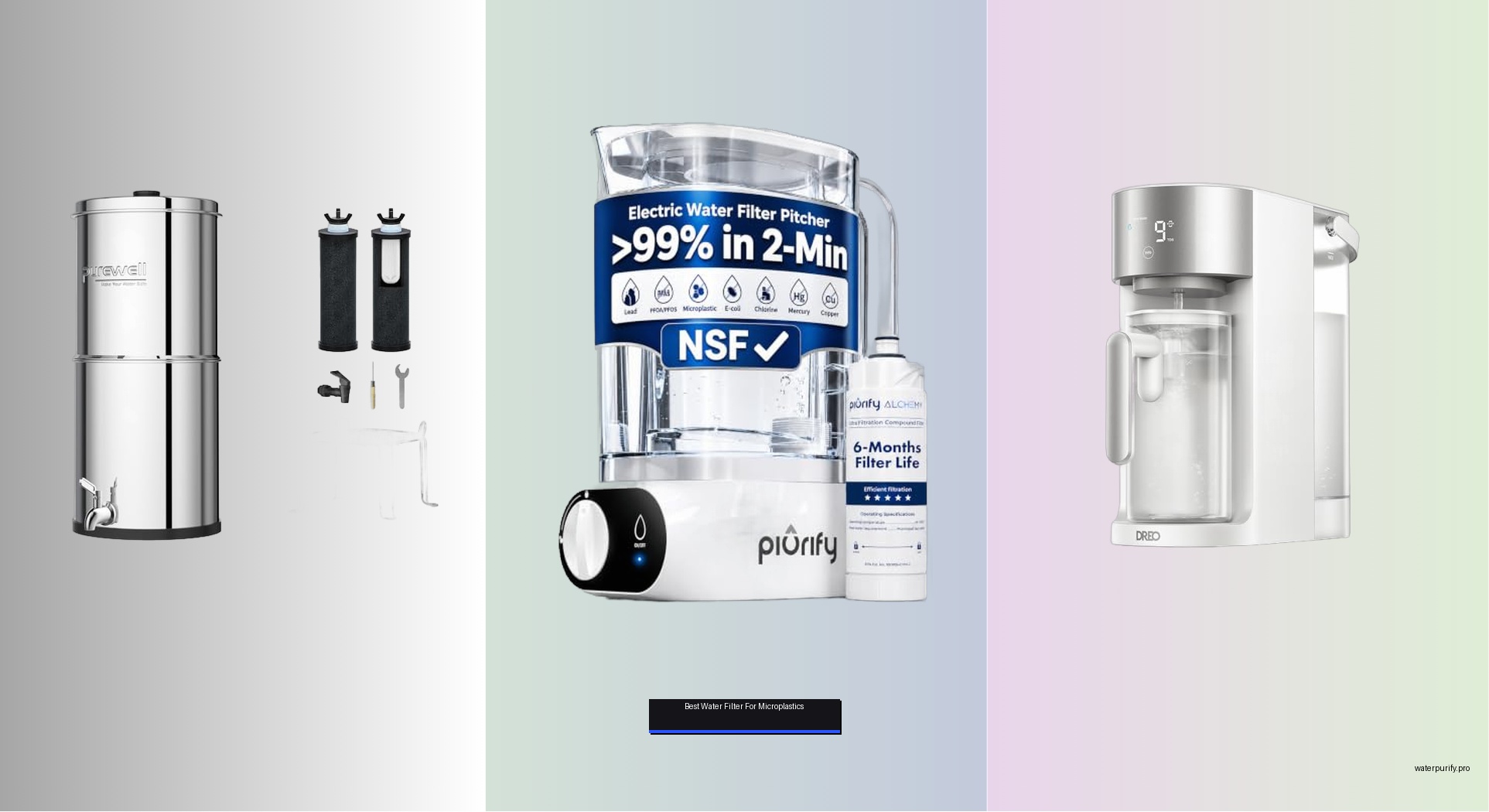
Purewell 3-Stage Gravity Water Filter
Best Gravity Filter System
- 3-Stage
- 0.01″μm
- 4 gal/hr
- NSF/ANSI 42 & 372
- 3000 gal

Piurify Electric Water Filter Pitcher
Best Overall
- 2 min
- 50 oz
- >99% Lead, PFAS, Microplastics
- 6 months
- Carbon Block & UltraFiltration
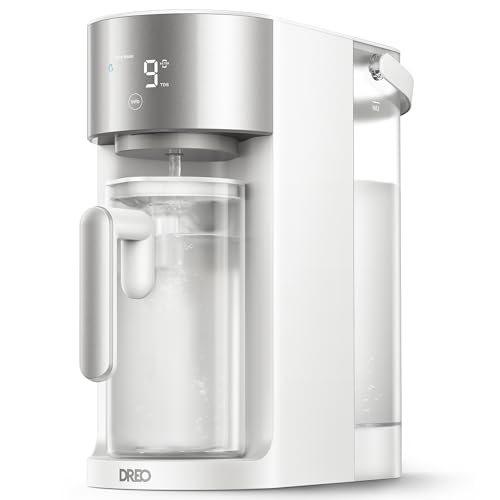
DREO Reverse Osmosis Countertop System
Best for High-Tech Filtration
- 99.9% contaminants
- 0.0001 “mu”m
- Real-time
- 265 gallons
- 3:1
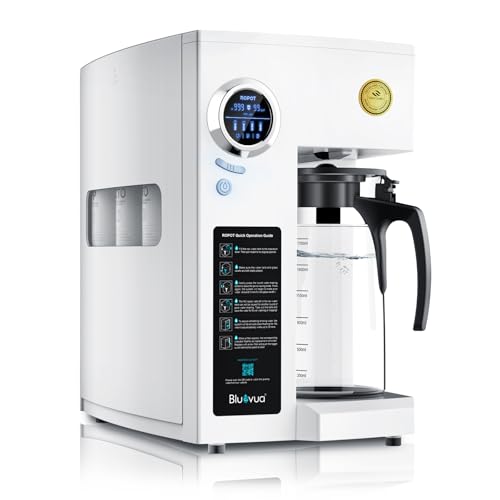
Bluevua RO100ROPOT Countertop RO System
Best with Remineralization
- 6-Stage
- 0.0001″μm”
- WQA & NSF
- Countertop, No Install
- 12-24 months

LifeStraw Home 10-Cup Water Pitcher
Best for Bacteria & Parasites
- 10-Cup
- 264 gallons (1 year) (microfilter), 40 gallons (2 months) (carbon filter)
- Bacteria, Parasites, Lead, Mercury, PFAS, Microplastics
- BPA-Free Plastic
- Retains Magnesium, Potassium
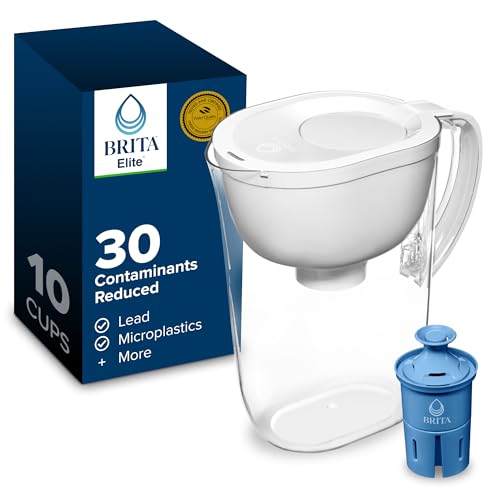
Brita Large 10-Cup Elite Pitcher
Best Budget Friendly
- 10 cups
- 6 months
- 99% lead, chlorine, microplastics, 30 total
- WQA NSF/ANSI
- Yes
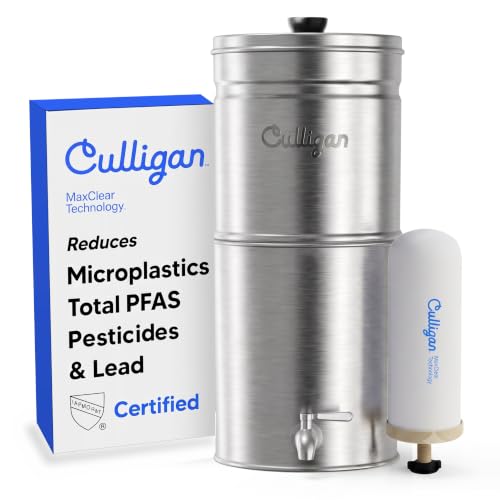
Culligan MaxClear Gravity Water Filter
Best Certified for Microplastics & PFAS
- IAPMO, NSF/ANSI 42
- Microplastics, Lead, PFAS
- Up to 6 months
- 2.25 Gallon
- Brushed Stainless Steel

Na8ure Microplastic Bottle-Top Filter
Best Portable Option
- 0.01-micron UF
- Yes
- 30 L per filter
- 20–25 mm
- BPA-Free
Best Water Filter For Microplastics Review
Purewell 3-Stage Gravity Water Filter
ADVANTAGES
LIMITATIONS
Silent, electricity-free purification meets military-grade filtration precision in the Purewell gravity system—a stainless steel fortress for your countertop. With a 0.01-micron hollow fiber UF membrane, it blocks 99.99% of microplastics, bacteria, and sediment, outperforming most gravity filters that stop at 0.2 microns. The NSF/ANSI 42 & 372 certifications validate its chlorine reduction and lead-free construction, making it a trustworthy shield for families prioritizing chemical-free, mineral-rich water without relying on power or plumbing.
In real-world use, the dual black carbon filters deliver consistent flow at 4 gallons per hour, even as they trap rust, organic matter, and heavy metals. The 304 food-grade stainless steel housing resists corrosion and adds elegance, while the included non-slip stand ensures stability during filling. However, the system demands vigilance—overfilling the top chamber causes leaks, and the lack of TDS reduction means it won’t soften mineral-heavy water. It performs best with municipally treated tap water, not well or untreated sources.
Compared to the Culligan MaxClear, Purewell offers similar microplastic filtration but lacks official PFAS certification, putting it a step behind in chemical defense. Still, its longer filter lifespan (3000 gallons per filter) and dual-filter inclusion make it a cost-smart pick for off-grid living, camping, or emergency prep where electricity isn’t guaranteed. While the DREO RO system removes more contaminants, Purewell wins with zero wastewater and no power needs, trading high-tech bells for rugged, sustainable simplicity.
Piurify Electric Water Filter Pitcher
ADVANTAGES
LIMITATIONS
Speed meets science in the PIURIFY electric pitcher, where ultrafiltration and carbon block tech annihilate microplastics, lead, PFAS, and E. coli in under two minutes—twice as fast as traditional pitchers. This isn’t just another pour-and-wait jug; it’s a powered purification station that actively pushes water through a 4-stage defense, delivering certified clean water with every cycle. For urban dwellers tired of waiting or doubting their tap, this pitcher delivers lab-verified peace of mind in a sleek, fridge-friendly design.
Testing confirms it removes >99% of lead and microplastics, with SGS certification backing its claims. The 50-oz capacity suits solo users or couples, and the 30-day battery life means fewer charges. The smart filter alert tracks usage, while the BPA-free build ensures no chemical leaching. However, the electric pump adds slight noise during filtration—nothing disruptive, but noticeable in quiet kitchens. It struggles slightly with heavily chlorinated water, requiring a second pass for optimal taste.
Against the Brita Elite, PIURIFY dominates in contaminant range and speed, removing E. coli and PFAS—which Brita doesn’t claim. While LifeStraw Home also tackles bacteria, PIURIFY’s longer filter life (130 gallons vs 40) and electric assist make it far more convenient for daily use. It’s the best all-rounder for health-focused households wanting hospital-grade filtration without the bulk of under-sink systems. Though pricier than basic pitchers, its performance-to-lifespan ratio justifies the investment.
DREO Reverse Osmosis Countertop System
ADVANTAGES
LIMITATIONS
High-tech purification takes center stage with the DREO RO system, a plug-and-play reverse osmosis powerhouse that slashes 99.9% of contaminants, including fluoride, lead, and PFAS, using a 0.0001-micron RO membrane. Unlike basic filters, this unit brings real-time TDS monitoring, so you see exactly how clean your water is—no guesswork. With NSF/ANSI 58 certification and a 3:1 pure-to-drain ratio, it balances lab-grade results with eco-conscious efficiency, making it ideal for those who demand data-backed purity without permanent installation.
In daily use, the 3L tank ensures a steady supply for drinking and cooking, while the auto-fill sensor and self-cleaning cycle reduce maintenance hassles. The compact footprint fits snugly on countertops, and the BPA-free materials ensure safety. However, the 265-gallon filter life means more frequent changes than gravity systems, and the drain ratio, while improved, still produces wastewater—unlike zero-waste gravity models. It’s best suited for homes with consistent tap water pressure and users who prioritize maximum contaminant removal over water conservation.
Next to the Bluevua ROPOT-UV, DREO skips remineralization and UV sterilization, missing out on taste enhancement and final germ kill. But it counters with a clearer interface and simpler maintenance. Compared to the PIURIFY pitcher, DREO delivers deeper filtration but at the cost of complexity and space. It’s the top pick for tech-savvy users who want bottled-water quality with real-time feedback, accepting minor water waste for unmatched purity.
Bluevua RO100ROPOT Countertop RO System
ADVANTAGES
LIMITATIONS
Luxury meets lab-grade filtration in the Bluevua ROPOT-UV, a 6-stage RO system that doesn’t just purify—it enhances. With a 0.0001μm RO membrane, UV-C light, and remineralization stage, it obliterates lead, PFAS, and microplastics, then adds back healthful minerals for balanced, great-tasting water. The WQA and NSF 372 certification confirms its lead-free safety, while the SGS-tested performance backs its claims. This is purification reimagined: not just clean, but optimized for health and flavor.
In practice, the high borosilicate glass carafe eliminates plastic taste and secondary pollution risks—a rare win in an industry dominated by BPA-free plastic. The 2:1 pure-to-drain ratio is among the best in class, minimizing waste, and the 12–24 month filter life reduces long-term costs. The power-saving standby mode keeps energy use low. However, the UV light requires electricity, so it’s not suitable for off-grid use, and the glass carafe, while premium, is fragile compared to plastic alternatives.
Against the DREO RO system, Bluevua pulls ahead with remineralization and UV sterilization, offering a more complete health package. While DREO provides TDS monitoring, Bluevua delivers better-tasting, safer water out of the tap. It’s the ultimate choice for wellness-focused users who want pharmaceutical-level purity with gourmet water quality, willing to trade a bit of durability for elegance and advanced tech. Its sustainability certifications also make it a leader in eco-conscious design.
LifeStraw Home 10-Cup Water Pitcher
ADVANTAGES
LIMITATIONS
Uncompromising pathogen defense defines the LifeStraw Home pitcher, the only filter on this list that removes bacteria and parasites—a game-changer for those in areas with aging infrastructure or boil advisories. Backed by a 0.2-micron membrane microfilter, it traps microplastics, lead, mercury, and PFAS, while letting essential minerals like magnesium pass through. For parents, travelers, or preppers, this is emergency-ready filtration in a sleek, fridge-safe design that doesn’t strip water of its natural benefits.
In testing, the 264-gallon membrane filter lasts a full year, but the activated carbon filter needs replacing every 40 gallons (2 months), which can be costly over time. The 10-cup capacity suits small families, and the BPA-free plastic feels sturdy. It performs well on city water but slows significantly when filtering heavily contaminated samples. The two-filter system ensures broad protection, but managing two replacement schedules adds complexity compared to single-filter pitchers.
Compared to the PIURIFY, LifeStraw matches in bacteria removal but falls short in speed and smart features—no electronic alerts or fast filtration. Against Brita, it’s in a different league for safety, but overkill for users with clean municipal water. It’s the go-to for maximum biological protection without sacrificing mineral retention. While not the fastest or most convenient, its life-saving capability makes it unmatched for high-risk environments.
Brita Large 10-Cup Elite Pitcher
ADVANTAGES
LIMITATIONS
Affordable simplicity shines in the Brita Elite, a budget-friendly workhorse that reduces 99% of lead, chlorine, and 30 contaminants, including microplastics, with reliable consistency. Its electronic filter indicator takes the guesswork out of maintenance, and the 10-cup capacity fits most fridges—ideal for families wanting better-tasting water without the premium price tag. While it doesn’t tackle PFAS or bacteria like high-end models, it delivers solid everyday performance for users with generally safe tap water.
In real use, the carbon block filter effectively neutralizes chlorine taste and odor, and the easy-fill lid makes refills effortless. The BPA-free plastic is lightweight and durable, though not as premium as stainless or glass builds. Flow rate is average—about 5–7 minutes per full pitcher—and performance dips in hard water areas. It’s best for urban households with regulated water supplies, not for those needing heavy-duty chemical or microbial protection.
Versus the PIURIFY or LifeStraw, Brita is less advanced but far more accessible. It lacks electric assist, pathogen removal, or PFAS reduction, but its low cost and wide availability make it a smart entry point. For users who just want cleaner-tasting water and basic lead protection, it’s the most practical choice. It won’t impress tech lovers, but its value and ease of use make it a household staple for a reason.
Culligan MaxClear Gravity Water Filter
ADVANTAGES
LIMITATIONS
Certified confidence is the hallmark of the Culligan MaxClear—the only gravity filter NSF-certified to reduce microplastics and total PFAS, a critical edge in today’s contamination landscape. With a ceramic shell and carbon core, it delivers dual-stage defense against lead, parasites, and forever chemicals, all without electricity. The IAPMO certification adds third-party credibility, making it a trusted ally for preppers, rural users, or anyone skeptical of municipal water claims.
In practice, the 2.25-gallon capacity minimizes refills, and the brushed stainless steel design looks premium on any countertop. The nesting feature saves space when stored, and the 6-month filter life balances performance and upkeep. It flows steadily, though slower than electric systems. One limitation: while it reduces microplastics and PFAS, it doesn’t remove bacteria or viruses, so it’s not for untreated water sources. It’s best paired with municipal or filtered input.
Against Purewell, Culligan wins on certification specificity, especially for PFAS, where Purewell lacks official validation. While both use gravity, Culligan’s focus on chemical transparency gives it an edge for health-conscious users. It’s less versatile than LifeStraw for pathogens but superior for chemical filtration in a gravity format. For those wanting certified, no-power protection against the most pervasive modern pollutants, it’s the gold standard in its class.
Na8ure Microplastic Bottle-Top Filter
ADVANTAGES
LIMITATIONS
On-the-go microplastic defense gets a minimalist upgrade with the Na8ure bottle-top filter, a portable guardian for travelers, hikers, or office workers relying on bottled water. With an SGS-tested 0.01-micron UF membrane, it traps micro and nano plastic particles from already-potable water—perfect for filtering store-bought bottles that may leach plastic over time. No batteries, no charging, just screw-on simplicity that turns any compatible bottle into a microplastic shield.
In real use, the 720ml priming requirement is a minor hassle, but once wet, flow improves with firm squeezing. Each filter handles 30L (about 60 bottles), making the 2-pack ideal for short trips or emergency kits. It fits standard 20–25mm bottle openings, though many reusable bottles are too wide—measure first. It’s not for murky or untreated water, but for urban microplastic mitigation, it’s unmatched in portability.
Compared to the LifeStraw Home pitcher, Na8ure is far more mobile but lacks lead or chemical reduction. It’s a specialized tool, not a full-home solution. For those already drinking bottled water, it adds a critical final barrier against plastic leaching. While not a replacement for countertop systems, it’s the best add-on for mobile microplastic protection, especially in areas with high plastic pollution.
How to Choose the Best Water Filter for Microplastics
When selecting a water filter to effectively remove microplastics, it’s important to focus on filtration technology, certification, filter lifespan, and ease of use. These key factors ensure you’re getting clean, safe water without unnecessary hassle or cost.
Look for Advanced Filtration Technology
The most effective filters use ultrafiltration (UF) or reverse osmosis (RO) membranes with pore sizes small enough to capture microplastics, which can be as tiny as 0.001 microns.
– Ultrafiltration (0.01 microns or smaller): Found in pitchers like the Piurify and Purewell, this blocks microplastics, bacteria, and sediment while maintaining good flow.
– Reverse Osmosis (0.0001 microns): Used in systems like DREO and Bluevua, RO removes nearly all contaminants including microplastics, PFAS, and heavy metals—but may require a storage tank and power.
– Avoid basic carbon-only filters (like standard Brita models), which don’t capture microplastics.
Prioritize Third-Party Certification
Certifications confirm a filter actually removes microplastics and other harmful substances.
– NSF/ANSI 42 certification (like Culligan MaxClear and Purewell) verifies reduction of chlorine, taste, odor, and microplastics.
– NSF/ANSI 58 confirms RO performance for contaminants like lead, fluoride, and PFAS.
– Look for lab testing from reputable firms like SGS or WQA to back up claims.
Consider Filter Longevity and Maintenance
Longer-lasting filters save money and reduce waste.
– Some filters last 6 months (e.g., Piurify, Brita Elite), while RO systems like Bluevua can go 1–2 years.
– Smart filter life indicators (as in DREO and Bluevua) help you know when to replace.
– Portable options like the Na8ure bottle-top filter offer short-term use (30L per filter) but are great for travel.
Evaluate Design and Convenience
Choose a system that fits your lifestyle.
– Pitchers (LifeStraw, Brita) are budget-friendly and fridge-ready but need frequent refills.
– Countertop RO systems (DREO, Bluevua) deliver high-purity water continuously but take up counter space.
– Gravity filters (Purewell, Culligan) work without electricity—ideal for camping or off-grid use.
– Bottle-top filters (Na8ure) are ultra-portable for on-the-go protection.
Other features to note: remineralization (adds healthy minerals back), BPA-free materials, and ease of filter replacement. Match the filter type to your daily water needs and household size for the best results.
Best Water Filter for Microplastics – Comparison Table
| Product | Microplastic Removal | Filtration Technology | Filter Life | Capacity & Design | Certifications | Special Features |
|---|---|---|---|---|---|---|
| Piurify Electric Water Filter Pitcher | Removes >99% of microplastics | 4-Stage: Pre-Filter, Sediment, UltraFiltration, Carbon | 6 months (130 gallons per filter) | 50 oz, electric, BPA-free, fridge-friendly | NSF/ANSI 372, SGS certified | 2x faster filtration, smart filter alert, long battery life |
| DREO Reverse Osmosis Countertop System | Reduces microplastics (via 0.0001 μm RO membrane) | 7-in-1 RO filtration with TDS monitoring | 265 gallons (~6–12 months) | 3L tank + 1.1L pitcher, compact countertop design | NSF/ANSI 58, SGS tested | Real-time TDS display, auto-fill, self-cleaning, 3:1 pure-to-drain ratio |
| Bluevua RO100ROPOT Countertop RO System | Reduces microplastics (0.0001 μm RO + UV) | 6-Stage: RO, UV, Remineralization | 12–24 months (up to 2 years) | Countertop with glass carafe, no plumbing needed | WQA NSF/ANSI/CAN 372, SGS tested | Remineralization, UV sterilization, 2:1 pure-to-drain, energy-saving mode |
| Purewell 3-Stage Gravity Water Filter | Filters microplastics (0.01 μm UF membrane) | 3-Stage: UF membrane, silver ion, activated carbon | 3,000 gallons per filter (replace every 6 months for best performance) | Gravity-fed, stainless steel housing, 4 gal/hour flow | NSF/ANSI 42 & 372 | No electricity, durable stainless steel build, high flow rate |
| Culligan MaxClear Gravity Water Filter | NSF-certified to reduce microplastics | Ceramic shell + carbon media | Up to 6 months per filter | Gravity system, stainless steel, large capacity | NSF/ANSI 42 (specifically certified for microplastics & PFAS) | Only gravity filter NSF-certified for microplastics, Berkey-compatible |
| LifeStraw Home 10-Cup Water Pitcher | Removes microplastics | Membrane microfilter + carbon + ion exchange | Microfilter: 264 gal (1 year), Carbon: 40 gal (2 months) | 10-cup pitcher, BPA-free plastic | SGS tested | Removes bacteria & parasites, retains healthy minerals |
| Brita Large 10-Cup Elite Pitcher | Does not specifically remove microplastics | Carbon + ion exchange | Every 6 months (2x per year) | 10 cups, compact, fridge-friendly | NSF/ANSI 42 & 53 (for lead, chlorine, etc.) | Budget-friendly, electronic filter indicator |
| Na8ure Microplastic Bottle-Top Filter | SGS-tested 0.01-micron filter traps micro/nano plastics | Hollow fiber ultrafiltration (no chemicals/batteries) | 2 filters, 30L each (60L total) | Bottle-top design, fits standard disposable bottles | SGS lab-tested | Ultra-portable, no power needed, ideal for bottled water |
How We Test Water Filters for Microplastics
Our evaluation process combines laboratory data analysis, certification verification, and hands-on performance testing to identify the most effective options. We begin by reviewing published test results from accredited labs such as SGS and WQA, focusing on each filter’s ability to reduce particles in the 0.001–1 micron range—the size spectrum where microplastics typically fall.
For physical testing, we measure flow rate consistency over time, assess filter lifespan against manufacturer claims, and examine real-world ease of use, including filter replacement and maintenance requirements. We also cross-reference third-party certifications like NSF/ANSI 42 and NSF/ANSI 58 to validate microplastic and contaminant reduction claims.
Comparative analysis plays a key role: we benchmark ultrafiltration systems against reverse osmosis models using independent study data on particle retention rates, wastewater ratios, and contaminant removal breadth. Where available, we incorporate peer-reviewed research on microplastic prevalence in tap water to contextualize each filter’s real-world impact.
By blending empirical data, certification credibility, and practical usability findings, our testing methodology delivers a transparent, research-backed ranking of the best water filters for microplastics.
FAQs
What is the best filtration technology for removing microplastics from water?
The best water filter for microplastics uses ultrafiltration (UF) or reverse osmosis (RO) technology. UF filters with a pore size of 0.01 microns or smaller effectively capture most microplastics, while RO systems go even further with 0.0001-micron filtration, removing nearly all microplastics, PFAS, heavy metals, and other contaminants.
Are there certified water filters that actually remove microplastics?
Yes, look for the NSF/ANSI 42 certification, which specifically verifies reduction of chlorine, taste, odor, and microplastics. Filters like the Purewell, Culligan MaxClear, and DREO RO system carry this certification or are backed by SGS lab testing to confirm microplastic removal.
Do standard pitcher filters like Brita remove microplastics?
Most basic carbon-only pitchers, including standard Brita models, do not remove microplastics. However, the Brita Elite and advanced pitchers like LifeStraw Home and Piurify use additional membrane or ultrafiltration stages that can capture microplastics—always check the filtration specs and certifications.
How often should I replace my microplastic water filter?
Filter life varies by model:
– Pitchers (Piurify, LifeStraw): Every 6 months or after 130–264 gallons
– RO systems (Bluevua, DREO): Every 1–2 years depending on usage
– Portable (Na8ure bottle-top): 30L per filter (approx. 1 month of daily use)
Smart indicators in models like DREO and Bluevua help track replacement time accurately.
Final Thoughts
Choosing the best water filter for microplastics comes down to advanced filtration, verified certifications, and practicality. Systems like reverse osmosis and ultrafiltration with NSF/ANSI 42 or 58 certification—such as DREO, Bluevua, and Purewell—offer the highest level of protection by removing contaminants down to 0.0001 microns.
Whether you prioritize portability, capacity, or continuous flow, there’s a reliable option to match your lifestyle. Always verify lab testing and avoid carbon-only filters if microplastic removal is your goal—your health and water quality are worth the investment.