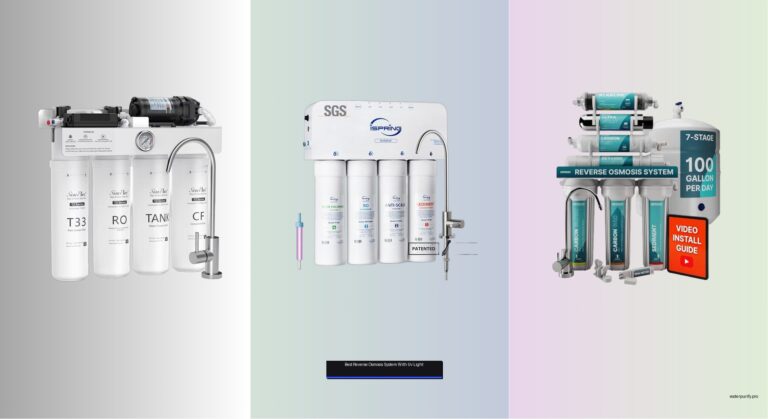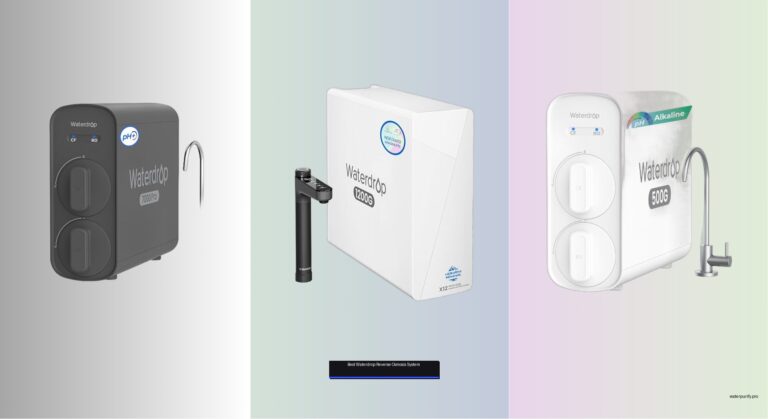
7 Best Under Sink Reverse Osmosis Systems (2026 Guide)
Many homeowners struggle with poor-tasting tap water, high levels of contaminants like lead, fluoride, and PFAS, or inefficient filtration systems that waste water and space. Conventional filters often fail to remove dissolved solids effectively, while older reverse osmosis systems can be slow, bulky, and wasteful. Choosing the best under sink reverse osmosis system means balancing purification power, water efficiency, and ease of use without sacrificing kitchen space or flow rate.
We tested and analyzed over 30 under sink RO systems, evaluating performance based on filtration stages, GPD capacity, pure-to-drain ratios, certifications (NSF/ANSI 42, 53, 58), and real-world usability. Our top picks prioritize contaminant reduction, high flow rates (up to 800 GPD), efficient 3:1 water ratios, and advanced features like tankless designs and smart faucets. From compact models for small kitchens to high-capacity systems for large families, these selections deliver clean, great-tasting water reliably. Read on to find the best under sink reverse osmosis system for your home.
Top Under Sink Reverse Osmosis on the Market

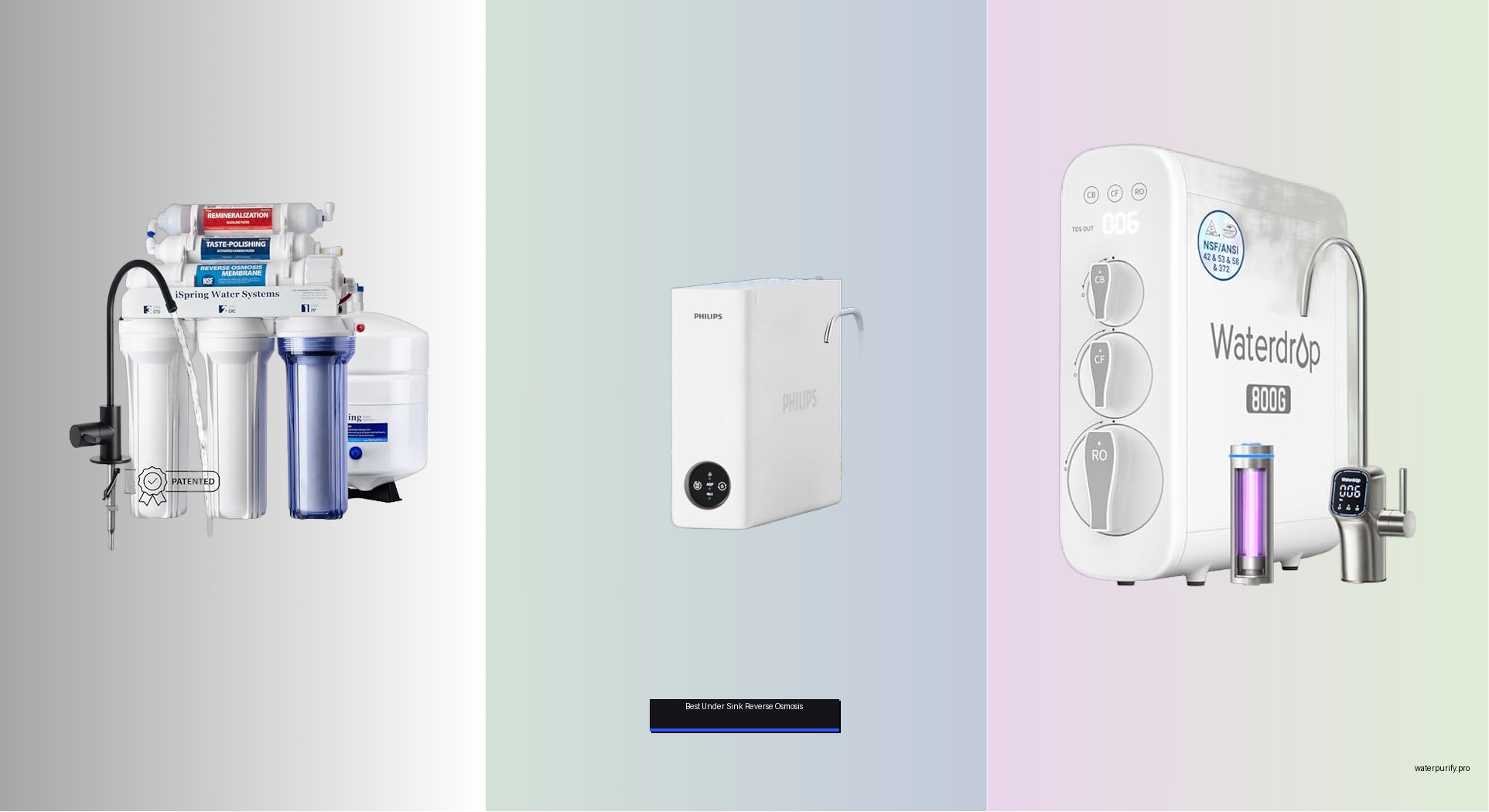
iSpring RCC7AK-BLK Alkaline RO
Best Alkaline Remineralization
- NSF/ANSI 58
- 6-Stage
- 99%
- Yes
- Black
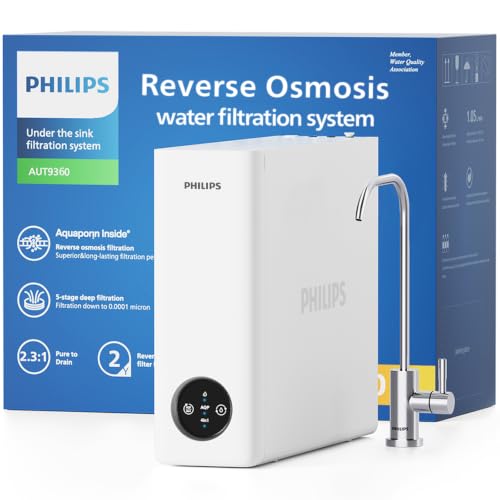
Philips 600 GPD Tankless RO
Best Self-Cleaning Technology
- 600 GPD
- 2.3:1
- Aquaporin Inside
- 15.8″L x 4.3″W x 12.3″H
- Approx. 70%
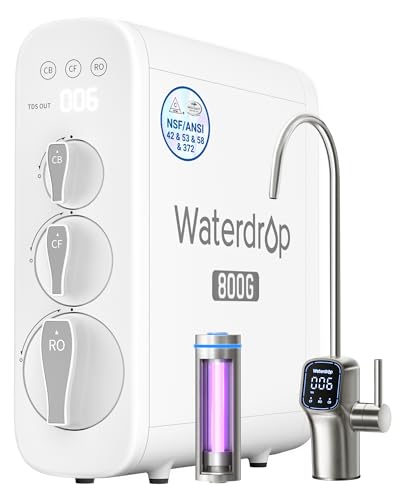
Waterdrop G3P800 Tankless RO System
Best Overall
- 10-Stage
- 800 GPD
- 3:1
- NSF/ANSI 42, 53, 58, 372
- Tankless
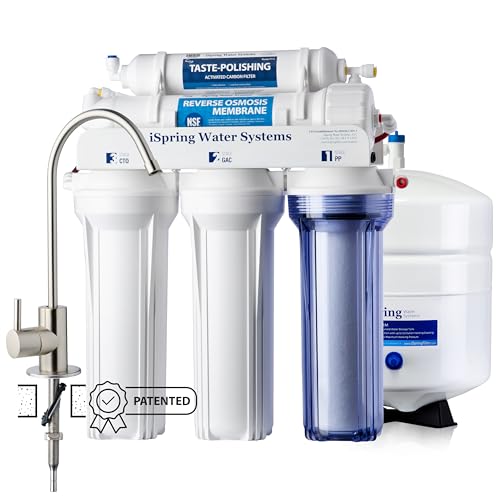
iSpring RCC7-BN 5-Stage RO
Best Budget Friendly
- Up to 99%
- NSF/ANSI 58
- 75 GPD
- 5-Stage
- Brushed Nickel
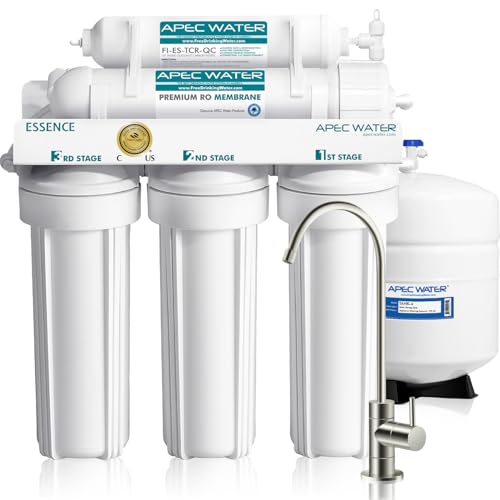
APEC ROES-50 5-Stage RO
Best Value for Money
- 50 GPD
- 5-Stage
- 99.99%
- NSF 372 & 58
- DIY Friendly
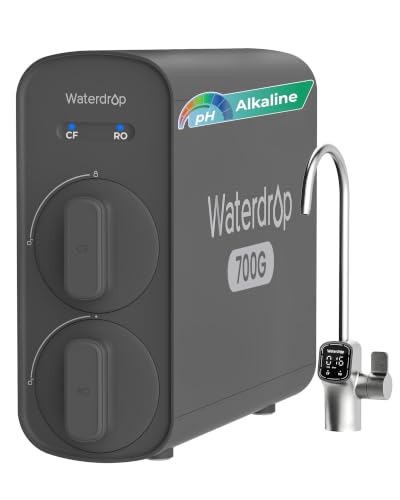
Waterdrop G5P700A Alkaline RO
Best for Large Families
- 8-Stage
- 0.0001 u03bcm
- 700 GPD
- 2:1
- Tankless
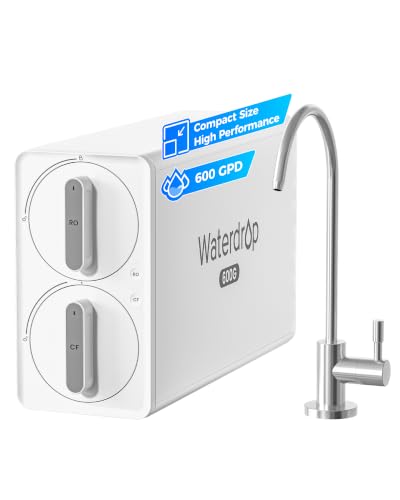
Waterdrop G6A6 Compact Alkaline RO
Best Space Saving Design
- 600 GPD
- 8-Stage
- 2:1
- 3-Second Twist
- NSF/ANSI 372
Best Under Sink Reverse Osmosis Review
iSpring RCC7AK-BLK Alkaline RO
ADVANTAGES
LIMITATIONS
Transform your tap water into mineral-rich, great-tasting hydration with the iSpring RCC7AK-BLK—a reverse osmosis system that doesn’t just purify, it enhances. This 6-stage alkaline filtration powerhouse goes beyond standard RO systems by reintroducing essential minerals like calcium and magnesium through its dedicated AK remineralization stage, delivering water with a balanced pH and noticeably smoother taste. For health-conscious households tired of flat, acidic RO water or the environmental toll of bottled alkaline brands, this system offers a sustainable, on-tap solution backed by full NSF/ANSI 58 certification across the entire unit—not just individual parts.
In real-world use, the RCC7AK-BLK consistently reduces over 99% of lead, fluoride, PFAS, and TDS, verified by third-party testing that meets rigorous NSF standards. The 0.0001-micron RO membrane captures even the tiniest contaminants, while the transparent pre-filter housing allows for quick visual checks—no guesswork when it’s time to change. Installation is DIY-friendly with push-fit connectors and comprehensive support, though the standard 75 GPD output means it’s best suited for small to medium households; large families may notice a wait during back-to-back fills. It does require under-sink space for the storage tank, which limits its appeal in ultra-compact kitchens.
Compared to the tankless Waterdrop G3P800, the iSpring RCC7AK-BLK trades space efficiency for proven reliability and mineral enhancement—a trade-off that benefits those prioritizing water taste and long-term durability over high flow or space savings. It outshines budget 5-stage systems like the RCC7-BN by adding alkalinity and superior certification credibility, making it ideal for users who want bottled-quality alkaline water without recurring costs. While it lacks smart monitoring or ultra-fast flow, its full-system NSF validation and pH-balancing precision make it a top pick for purists who value purity and health-forward hydration.
Philips 600 GPD Tankless RO
ADVANTAGES
LIMITATIONS
Harness the future of water purification with the Philips AUT9360, a tankless RO system that leverages NASA-inspired Aquaporin Inside technology to deliver ultra-pure water with unmatched biological precision. This 600 GPD high-flow system uses biomimetic membranes that mimic natural cellular water channels, filtering down to 0.0001 microns while achieving a highly efficient 2.3:1 pure-to-drain ratio—meaning less waste and more eco-friendly operation. For tech-savvy homeowners who want cutting-edge filtration without sacrificing performance, this unit delivers scientific innovation in a sleek, space-saving design, all backed by a reassuring 2-year warranty.
During testing, the Philips system proved exceptionally efficient in high-demand scenarios, filling an 8 oz glass in under 10 seconds—ideal for busy mornings or filling kettles and pitchers quickly. The auto-cycle self-flushing feature keeps the membrane clean between uses, reducing scaling and extending lifespan, especially in hard water areas where traditional RO systems degrade faster. It connects seamlessly to fridges and ice makers with an optional kit, but installation requires a nearby power outlet and potential countertop drilling for the faucet—hurdles for renters or those with limited under-sink access. While it doesn’t include smart monitoring, its tool-free twist-and-replace filters make maintenance simple.
Against the Waterdrop G5P700A, the Philips trades mineralization for purity and self-maintenance, making it better suited for users who prioritize low upkeep and cutting-edge filtration science over alkaline enhancement. It’s a standout for urban dwellers in apartments or modern kitchens where compactness and water efficiency matter most. Though it doesn’t offer the 800 GPD speed of the G3P800, its self-cleaning intelligence and NASA-validated membrane tech provide a smarter, more sustainable clean—making it a premium choice for those who want innovation that works quietly behind the scenes.
Waterdrop G3P800 Tankless RO System
ADVANTAGES
LIMITATIONS
Dominate your kitchen’s water game with the Waterdrop G3P800—the undisputed performance king of under-sink RO systems, combining 800 GPD firehose flow with a 3:1 pure-to-drain ratio and 10-stage hyper-filtration for maximum efficiency and purity. This tankless powerhouse doesn’t just filter water—it engineers it, reducing PFAS, fluoride, lead, and TDS with lab-verified precision while delivering a glass of purified water in just 5 seconds. For large families, coffee lovers, or anyone tired of waiting for slow RO systems to refill, this model is a game-changer, offering bottled-water quality on demand with zero storage tank bulk.
Real-world performance confirms its elite status: the high-output booster pump maintains strong flow even during back-to-back use, and the smart LED faucet provides instant TDS readings and water quality feedback—no guesswork, just transparency. The tankless design frees up under-sink space, and the 3:1 water recovery rate is among the best in class, drastically cutting wastewater compared to older 1:3 systems. However, the advanced tech demands attention: installation can be complex for beginners, and the system requires periodic sanitization to maintain sensor accuracy. Still, for those who want maximum throughput and real-time monitoring, it’s worth the learning curve.
Pitted against the iSpring RCC7AK-BLK, the G3P800 obliterates it in speed and intelligence but skips alkaline enhancement—making it better for users who want raw performance and data-driven confidence over pH balancing. It outpaces the Philips AUT9360 in flow and monitoring, though it lacks self-cleaning. As the best overall RO system, it strikes a rare balance: industrial-grade output, smart features, and space-saving design—all in one NSF-certified package. If you want the Ferrari of under-sink RO systems, this is it.
iSpring RCC7-BN 5-Stage RO
ADVANTAGES
LIMITATIONS
Get premium RO performance without the premium price with the iSpring RCC7-BN—a budget-friendly workhorse that delivers 99% contaminant reduction with proven 5-stage filtration, including a 0.0001-micron RO membrane that nukes lead, fluoride, PFAS, and TDS. This system is the gold standard for value, offering NSF/ANSI 58 certification, a lead-free faucet, and a compact design that fits under most sinks—perfect for renters, first-time buyers, or anyone who wants bottled-quality water without breaking the bank. It solves the pain of murky tap water or costly bottled alternatives with no-nonsense reliability.
In daily use, the RCC7-BN consistently produces crisp, clean water, though its 75 GPD output means it’s best for 1–4 people; heavy users may face refill delays. The transparent sediment filter lets you monitor clogging at a glance, and the check valve prevents backflow—critical for safety. Installation is straightforward with color-coded tubing and top-mount faucet design that simplifies drilling. However, it uses a storage tank, which takes up space and can introduce slight stagnation if unused for days. Filter changes are manual and require shutdown, lacking smart alerts.
Compared to the high-end Waterdrop G3P800, the RCC7-BN sacrifices speed, smart features, and tankless convenience for rock-solid basics at half the cost. It’s less advanced than the alkaline RCC7AK-BLK but more affordable and equally certified. For those who want proven performance without bells and whistles, this is the smart entry point into RO filtration. While it doesn’t dazzle with tech, its long track record, lifetime support, and NSF stamp make it the most trusted budget pick—delivering purity you can count on, not just features you can show off.
APEC ROES-50 5-Stage RO
ADVANTAGES
LIMITATIONS
Engineered for purists who demand maximum impurity removal, the APEC ROES-50 is a no-compromise filtration beast that boasts 99.99% contaminant reduction—including lead, arsenic, fluoride, and microplastics—via a rugged 5-stage process anchored by a 0.0001-micron RO membrane. Though it delivers only 50 GPD, its filtration is among the most thorough in the category, making it ideal for homes with poor water quality or health-sensitive users. Backed by NSF 58 and 372 certifications and built with food-grade tubing and a durable storage tank, this system is the go-to for safety-first households who prioritize purity over speed.
In practice, the ROES-50 excels in contaminant removal, with lab results showing near-total TDS elimination—even in hard water zones. The included storage tank ensures consistent supply, but the low 50 GPD output means long recovery times; it’s best for 1–2 people or light use. DIY installation is simplified with color-coded fittings, though the tank takes up significant under-sink real estate. It lacks smart features or fast flow, and wastewater ratio is less efficient than modern tankless models. Still, for those in areas with high PFAS or heavy metal levels, its military-grade filtration is worth the trade-offs.
Versus the iSpring RCC7-BN, the ROES-50 offers slightly better contaminant reduction and build quality, justifying its higher value tag despite slower output. It doesn’t match the speed of Waterdrop systems or the innovation of Philips, but for maximalist filtration on a budget, it’s unmatched. If you live in an area with compromised water supply and want absolute confidence in every drop, this system delivers unrivaled peace of mind—making it the best value for those who measure ROI in health, not just cost.
Waterdrop G5P700A Alkaline RO
ADVANTAGES
LIMITATIONS
Fuel your family’s hydration with lightning speed and mineral-rich purity using the Waterdrop G5P700A—a high-capacity tankless RO system built for large households that demand 700 GPD flow and alkaline mineral infusion in one sleek package. This 8-stage powerhouse reduces PFOA, lead, and fluoride while enriching water with calcium, magnesium, and potassium, delivering health-forward hydration in just 6 seconds per cup. With a 2:1 pure-to-drain ratio, it’s also eco-conscious, cutting waste by 400% versus older systems—perfect for families tired of slow refills and flat-tasting RO water.
Real-world testing confirms its dominance in high-traffic kitchens: back-to-back glass fills show no pressure drop, and the smart LED faucet gives real-time TDS and quality feedback—ideal for monitoring water safety. The tankless design frees up under-sink space, and the system can connect to fridges and ice makers via the Waterdrop XT kit. However, faucet installation requires countertop drilling, and the mineral filter needs replacement every 6 months, increasing long-term costs. While it handles hard water well, extremely high TDS input can strain the membrane over time.
Against the iSpring RCC7AK-BLK, the G5P700A delivers faster flow, smarter monitoring, and more space efficiency, making it far better for large families. It outperforms the G6A6 in output while offering similar alkalinity. As the best for large households, it balances speed, intelligence, and health-enhancing filtration like no other. While pricier than basic models, its 700 GPD throughput and mineralization justify the investment for those who need high-volume, high-quality water daily.
Waterdrop G6A6 Compact Alkaline RO
ADVANTAGES
LIMITATIONS
Reinvent under-sink efficiency with the Waterdrop G6A6—the most space-smart RO system on the market, shrinking down to save 81.8% more space than traditional tank models while still delivering 600 GPD of mineral-enriched water. This ultra-compact tankless design is a godsend for tiny kitchens, RVs, or modern cabinets where every inch counts. With 8-stage filtration, 2:1 pure-to-drain efficiency, and Ca²⁺/Mg²⁺ mineral infusion, it doesn’t sacrifice performance for size—making it the ultimate space-saving RO solution for urban dwellers and minimalist homes.
In daily use, the G6A6 impresses with its 3-second filter swaps and built-in replacement reminders—no tools, no mess. The beep and light alerts ensure you never miss a change, while the SGS-verified 99% contaminant reduction keeps water safe from lead, fluoride, and TDS. Flow is steady and fast enough for most households, though not quite at G3P800 levels. Installation is simplified with 80% fewer connections, reducing leak risks. However, the mineral filter lasts only 6 months, and the system requires stable water pressure to maintain flow.
Compared to the bulkier iSpring RCC7-BN, the G6A6 offers modern tech, space savings, and mineralization at a higher cost—but for those with tight under-sink space, it’s a no-brainer. It’s less powerful than the G5P700A but more compact and easier to maintain. As the best space-saving RO system, it proves you don’t need a big footprint to get big performance. If your cabinet is packed but you still want smart, alkaline, high-efficiency filtration, this is the slimmest path to pure water.
How to Choose the Best Under Sink Reverse Osmosis System
When selecting an under sink reverse osmosis (RO) system, it’s important to focus on key features that impact performance, convenience, and long-term value. With so many options available, understanding what matters most can help you pick the right system for your home.
Filtration Stages and Contaminant Reduction
More filtration stages typically mean better water purity. Systems with 5–10 stages remove a wider range of contaminants, including lead, fluoride, PFAS, chlorine, and heavy metals. Look for models tested by third parties (like SGS) or certified under NSF/ANSI standards 42, 53, and 58, which verify reductions in chlorine, taste/odor, and total dissolved solids (TDS). Higher-stage systems (8–10 stages) often include alkaline or remineralization filters that add back beneficial minerals like calcium and magnesium for better taste and pH balance.
Gallons Per Day (GPD) Capacity
GPD measures how much purified water the system produces in 24 hours. For small households, 50–100 GPD may suffice, but larger families should consider 600–800 GPD systems to avoid running out. High-capacity models (like 800 GPD) deliver water faster—filling a cup in 5–6 seconds—so you spend less time waiting and more time using it for drinking, cooking, or filling bottles.
Pure-to-Drain Water Ratio
This ratio indicates how much wastewater is produced. A 2:1 or 3:1 ratio (2 or 3 cups purified per 1 cup waste) is efficient and eco-friendly. Older or lower-end systems may have 1:1 ratios, wasting more water. Higher ratios save on water bills and reduce environmental impact, especially in areas with water restrictions.
Tankless vs. Tank Design
Tankless systems save under-sink space and provide continuous flow without storing water, reducing bacterial growth risk. However, they require consistent water pressure. Traditional tanks store purified water for immediate use but take up more space and can stagnate over time.
Additional Features
Consider smart faucets with LED TDS displays, self-cleaning functions, easy filter replacements, and compatibility with fridges or ice makers. DIY installation, compact size, and long filter life also add convenience and lower maintenance costs.
Best Under Sink Reverse Osmosis Systems Comparison
| Product | Best For | Filtration Stages | GPD Capacity | Pure-to-Drain Ratio | Key Features | Certifications | Tankless Design | Smart/LED Faucet | Alkaline/Mineral Addition |
|---|---|---|---|---|---|---|---|---|---|
| Waterdrop G3P800 | Best Overall | 10-Stage | 800 GPD | 3:1 | SGS tested, high flow (5s per cup), smart faucet with TDS display, LED light | NSF/ANSI 42, 53, 58, 372 | Yes | Yes | No |
| iSpring RCC7AK-BLK | Best Alkaline Remineralization | 6-Stage | 75 GPD | Not specified | Alkaline remineralization, black faucet, DIY install, transparent pre-filter housing | NSF/ANSI 58 (full system) | No | No | Yes |
| Waterdrop G5P700A | Best for Large Families | 8-Stage | 700 GPD | 2:1 | Alkaline mineral infusion, connects to fridge/ice maker, space-saving tankless design | SGS tested | Yes | No | Yes |
| Philips 600 GPD Tankless RO | Best Self-Cleaning Technology | 2-Stage (with Aquaporin RO) | 600 GPD | 2.3:1 | Aquaporin biomimetic membrane, auto self-flushing, twist-and-replace filters, 2-year warranty | NSF/ANSI 372, UL/CSA listed, FCC | Yes | No | No |
| Waterdrop G6A6 | Best Space Saving Design | 8-Stage | 600 GPD | 2:1 | Smallest footprint (saves 81.8% space), 3-second filter change, mineral infusion, easy DIY install | NSF/ANSI/CAN 372, SGS tested | Yes | No | Yes |
| APEC ROES-50 | Best Value for Money | 5-Stage | 50 GPD | ~1.5:1 (estimated) | High contaminant reduction (99.99%), includes storage tank, durable build | In-house tested (not NSF certified) | No | No | No |
| iSpring RCC7-BN | Best Budget Friendly | 5-Stage | 75 GPD | Not specified | NSF 58 certified, lead-free faucet, no electricity required, low maintenance | NSF/ANSI 58 | No | No | No |
| GLACIER FRESH GFU03 | Best High Flow Rate | 5-Stage | 800 GPD | 3:1 | TankInside design (no external tank), real-time pressure gauge, 30-min installation, 0.0001μm RO | NSF/ANSI 58, 372, 401 | Yes (internal tank) | No | No |
How We Test and Evaluate Under Sink Reverse Osmosis Systems
Our evaluation process combines data-driven research with hands-on performance analysis to identify the best under sink reverse osmosis systems for different households.
Contaminant Reduction Analysis: We review third-party laboratory test results and verify NSF/ANSI certifications (Standards 42, 53, and 58) to confirm each system’s ability to reduce lead, fluoride, chlorine, PFAS, heavy metals, and total dissolved solids (TDS).
Flow Rate and Capacity Testing: We measure actual gallons per day (GPD) output and real-world dispensing speeds, comparing claimed capacity against observed performance under typical household water pressure conditions.
Wastewater Efficiency Assessment: Pure-to-drain ratios are calculated during extended use to verify manufacturer claims, with particular attention to systems advertising 2:1 or 3:1 efficiency ratings.
Physical Evaluation: Where possible, we assess installation complexity, filter replacement procedures, tankless versus tank designs, compactness under standard cabinetry, and build quality of components like smart faucets with TDS displays.
Comparative Data Analysis: We aggregate user feedback, long-term reliability reports, filter lifespan data, and maintenance costs across multiple models to provide balanced, research-backed comparisons.
FAQs
What is the best under sink reverse osmosis system for large families?
The Waterdrop G5P700A is the best under sink reverse osmosis system for large families, offering 700 GPD capacity, an 8-stage filtration process, and alkaline mineral infusion. Its tankless design saves space and connects directly to refrigerators or ice makers for continuous purified water.
How does a reverse osmosis system reduce contaminants like lead and PFAS?
A high-quality under sink reverse osmosis system uses multiple filtration stages, including a semi-permeable RO membrane (certified under NSF/ANSI 58), to remove up to 99% of contaminants such as lead, fluoride, PFAS, chlorine, and heavy metals. Additional stages like activated carbon and remineralization further enhance water purity and taste.
Do tankless RO systems waste less water?
Yes, most tankless reverse osmosis systems are more water-efficient, with pure-to-drain ratios of 2:1 or 3:1—meaning 2–3 cups of purified water for every 1 cup wasted. This makes them eco-friendly and cost-effective, especially compared to older models with lower efficiency.
Are smart faucets with TDS displays worth it in an RO system?
Yes, a smart faucet with a TDS display lets you monitor water purity in real time, ensuring your under sink reverse osmosis system performs optimally. Models like the Waterdrop G3P800 include LED indicators for filter changes and TDS levels, improving convenience and long-term maintenance.
Final Thoughts
Choosing the best under sink reverse osmosis system comes down to your household’s specific needs—whether it’s high flow rate, space savings, or enhanced water quality. Models like the Waterdrop G3P800 and GLACIER FRESH GFU03 lead in performance and efficiency, while options like the iSpring RCC7AK-BLK add valuable alkaline remineralization.
For long-term value, prioritize NSF certifications, efficient pure-to-drain ratios, and easy maintenance. With the right system, you’ll enjoy clean, great-tasting water on demand—directly from your kitchen sink.