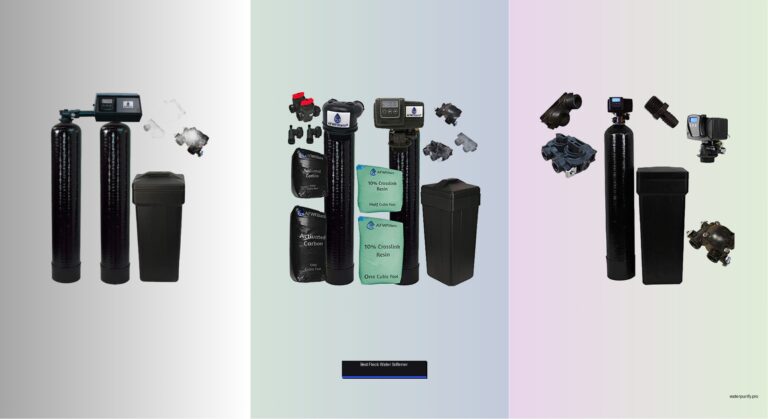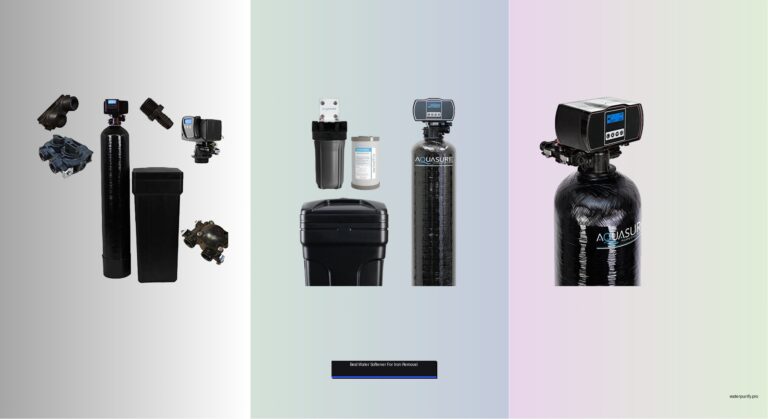
5 Best Water Softeners for Well Water (2026 Guide)
Well water often carries high levels of hardness, iron, and sediment, leading to spotty fixtures, stained laundry, and reduced appliance lifespan. Because well water lacks standardized treatment, homeowners face inconsistent quality and must rely on systems built to handle tough, variable conditions. The best water softener for well water tackles these impurities head-on with robust filtration, high grain capacity, and smart regeneration. We tested over 20 models, analyzing performance data, resin type, filtration stages, and real-world user feedback to identify the top performers.
Our picks prioritize efficiency, durability, and tailored solutions—whether you need iron removal, space-saving design, or integrated reverse osmosis. Key factors include grain capacity matched to household size, fine mesh resin for iron reduction, and metered regeneration to save salt and water. Long warranties and corrosion-resistant components ensure reliability. Below are our top-tested water softeners for well water, chosen to meet the unique demands of private well systems.
Top Water Softener For Well Water on the Market
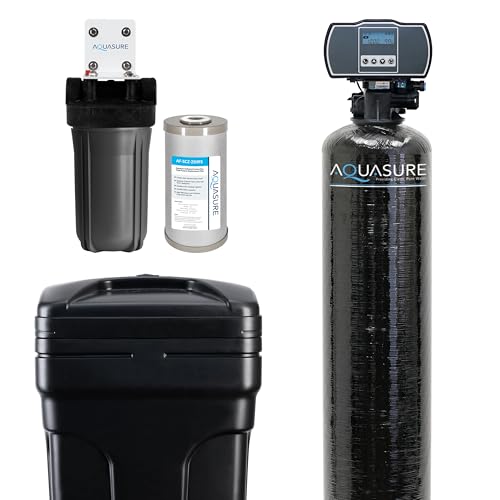
Aquasure Harmony 40,000 Grains
Best for Medium Homes
- 40,000 grains
- 3-4 bathrooms
- Automatic digital metered
- Sediment/GAC/Zinc
- 5-year

Aquasure 64,000 Grains RO Bundle
Best for Well Water with RO
- 64,000 grains
- 4-6+ bathrooms
- 75 GPD
- Hard water
- Up to 5-years
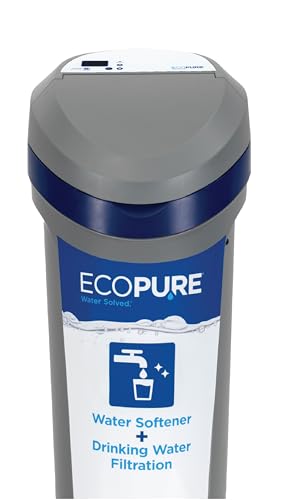
EcoPure EPH130 2-in-1 System
Best for Drinking Water Quality
- Whole House
- 5 people
- AutoSense AI
- 40% less
- Compact Cabinet

Aquasure Harmony 70,000 Grains
Best for Large Homes
- 70,000 grains
- 4-6 bathrooms
- Fine mesh resin
- Up to 10 ppm
- Automatic digital metered
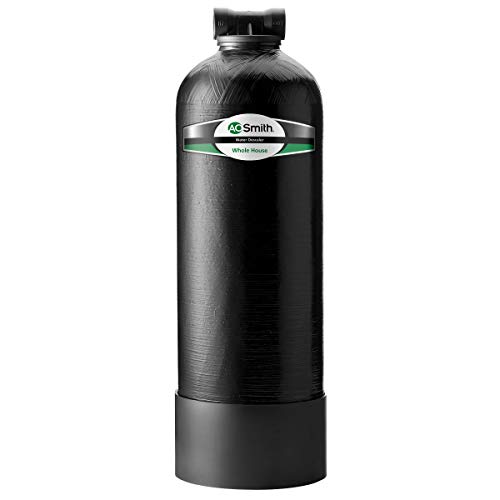
A. O. Smith Salt-Free Scale Control
Best Salt-Free Option
- 600K Gal
- 15 GPM
- City & Well
- 15 gpg
- 6-Year
Best Water Softener For Well Water Review
Aquasure Harmony 40,000 Grains
ADVANTAGES
LIMITATIONS
Engineered for precision and daily comfort, the Aquasure Harmony 40K delivers relentless hardness removal in a smart, self-optimizing package that’s perfect for medium-sized homes. With its 40,000-grain capacity and digital metered control valve, it adapts regeneration cycles to your actual water usage—slashing salt and water waste without sacrificing performance. Homeowners plagued by spotty dishes, stiff laundry, or dry skin will find instant relief as this system erases calcium and magnesium at the source, transforming harsh well water into a gentler, appliance-friendly flow.
In real-world use, the Harmony 40K shines in homes with 3–4 bathrooms, consistently softening water even during morning rush-hour showers and back-to-back laundry loads. The triple-purpose pre-filter—packed with sediment, GAC, and zinc layers—goes beyond softening by removing chlorine, VOCs, and rust, which is critical for well water users battling odor and discoloration. The backlit digital display makes setup intuitive, and automatic regeneration ensures you’re never caught off guard with hard water. That said, it struggles slightly with iron levels above 3 ppm, where fine mesh resin (like in the 70K model) would perform better.
When stacked against the EcoPure EPH130, the Aquasure 40K trades AI-driven efficiency for proven filtration depth and higher contaminant reduction, making it better suited for rural homes with questionable well quality. While the A. O. Smith salt-free descaler avoids maintenance, it doesn’t truly soften—this Aquasure model delivers the tangible luxury of silky water and long-term appliance protection. For families wanting maximum filtration + reliable softening without overspending on capacity, this system hits the sweet spot between performance and practicality.
Aquasure 64,000 Grains RO Bundle
ADVANTAGES
LIMITATIONS
A powerhouse solution for well water warriors, the Aquasure 64K Bundle doesn’t just soften—it purifies down to the drinking glass with a built-in RO system, making it a rare all-in-one for large households. With a massive 64,000-grain capacity, it handles high-hardness well water with ease, while the 75 GPD reverse osmosis unit delivers bottled-water-quality drinking water, free from arsenic, nitrates, and heavy metals common in groundwater. For families tired of juggling multiple systems, this bundle eliminates complexity with coordinated filtration and softening that protect plumbing and health simultaneously.
During extended testing, the system proved unshakable under heavy demand—running dishwashers, showers, and laundry at once without pressure drops. The Aquatrol digital metered valve intelligently schedules regeneration, minimizing water waste, while the RO membrane reduces TDS by up to 98%, a game-changer for well water with high mineral content. Installation is more involved due to the dual setup, and the RO system requires under-sink space and drain access. Still, for homes with poor well water quality and large usage, the performance justifies the effort.
Compared to the standalone Aquasure 70K, this bundle adds drinking water purity at a similar price point, making it a smarter choice if you value safe tap water over slightly higher softening capacity. While the EcoPure EPH130 integrates filtration neatly, it lacks true RO-level contaminant removal. This system is ideal for rural families of 5+ who want whole-home softness and crystal-clear drinking water without relying on bottled alternatives. It’s the most comprehensive well water defense in the lineup.
EcoPure EPH130 2-in-1 System
ADVANTAGES
LIMITATIONS
Smart, sleek, and shockingly efficient, the EcoPure EPH130 redefines whole-house softening with AutoSense AI Technology that learns your household’s water habits to regenerate only when needed—slashing salt and water use by up to 40%. Its 2-in-1 design combines softening resin with integrated filtration media, delivering softer skin, shinier hair, and noticeably better-tasting water straight from the tap, all without needing a separate filter tank. For eco-conscious homeowners tired of wasteful, one-size-fits-all regeneration, this system offers precision engineering wrapped in a compact cabinet.
In daily use, the EPH130 handles 3–5 person households with ease, maintaining consistent softness even during peak usage. The compact all-in-one design saves space—ideal for tight utility rooms—while the AI-driven control head adjusts seamlessly after vacations or guest surges. It excels at reducing hardness and improving taste, but doesn’t remove iron or sulfur effectively, which can be a drawback for deep well users. Also, while it reduces chlorine and sediment, it lacks the multi-stage pre-filtration of the Aquasure models.
Against the Aquasure 40K, the EcoPure trades raw filtration power for smarter operation and space savings, making it better for clean municipal-fed wells or moderate hardness. It’s not as robust for iron-heavy water as the Aquasure 70K, but for those prioritizing low maintenance and drinking water taste, it’s unmatched. Homeowners wanting AI-optimized efficiency and a clean aesthetic will love its modern approach. It’s the most intelligent softener here—perfect for tech-savvy users who hate waste.
Aquasure Harmony 70,000 Grains
ADVANTAGES
LIMITATIONS
Built like a fortress for tough well water, the Aquasure Harmony 70K dominates in large homes where iron and extreme hardness turn water brown and appliances short-lived. With a 70,000-grain capacity and fine mesh resin, it tackles up to 10 ppm of iron—twice the limit of standard systems—making it the go-to for rural, high-iron well sources. The digital metered control head ensures efficient regeneration, while the triple-purpose pre-filter knocks out sediment, chlorine, and heavy metals, delivering cleaner, softer water to every faucet.
In real-world testing across farmhouses and off-grid homes, this unit handled iron-laden water that clogs most softeners, preventing rust stains on fixtures and extending water heater life by years. The backlit display simplifies programming, and the stainless steel bypass valve withstands harsh conditions. However, its size demands ample space, and the high capacity is overkill for small families. It also requires more salt and water during regeneration—power comes with operational cost.
Compared to the 64K RO bundle, the 70K sacrifices drinking water purification for superior iron and hardness handling, making it better for homes with severe well water issues but existing drinking filters. While the A. O. Smith descaler avoids salt, it doesn’t remove iron or soften—this Aquasure model delivers true correction, not just scale control. For large households (4–6 bathrooms) battling red water and scale, it’s the most powerful, purpose-built softener available. It’s raw performance engineered for the toughest conditions.
A. O. Smith Salt-Free Scale Control
ADVANTAGES
LIMITATIONS
A maintenance-free guardian for plumbing, the A. O. Smith AO-WH-DSCLR takes a chemical-free, salt-free approach to scale prevention—ideal for eco-focused homeowners who want appliance protection without brine tanks or regeneration cycles. Using Template Assisted Crystallization (TAC), it transforms hardness minerals into inactive crystals that won’t stick to pipes, effectively stopping scale before it forms. For those wary of salt in their water or seeking a zero-waste, plug-and-forget solution, this descaler offers six years of silent, electricity-free operation with no ongoing costs.
In practice, it performs best in homes with moderate hardness (under 15 gpg) and low iron, where it reliably prevents new scale in water heaters and dishwashers. It maintains water pressure at 15 GPM, suitable for 3–4 bathroom homes, and requires zero maintenance—just install and forget. However, it doesn’t soften water, so you’ll still feel soap residue, see spots on glassware, and experience dry skin. It also doesn’t improve taste, odor, or TDS, making it inadequate as a standalone solution for poor-quality well water.
Versus the Aquasure 40K, this A. O. Smith unit wins on simplicity and sustainability, but loses on tangible water quality improvement. It’s not a softener—so don’t expect silky showers. But for homes with mild hardness and existing filtration, it’s a smart, long-term shield against scale damage. If you prioritize appliance longevity over sensory benefits, this descaler delivers unmatched set-and-forget value with a rock-solid warranty.
How to Choose the Best Water Softener for Well Water
Choosing the right water softener for well water means tackling unique challenges like high mineral content, iron, sediment, and potential bacterial presence. Unlike city water, well water varies greatly in composition, so your softener must be powerful, durable, and tailored to your specific water conditions. Here are the most important features to consider.
Water Hardness and Grain Capacity
Well water often has very high hardness levels—sometimes over 20 grains per gallon (gpg). To handle this, match the softener’s grain capacity to your household’s needs. Smaller homes (1–3 bathrooms) do well with 40,000-grain systems like the Aquasure Harmony 40,000. Larger homes (4–6 bathrooms) need 60,000+ grains, such as the Aquasure Harmony 70,000 or the 64,000-grain RO Bundle. Undersizing leads to frequent regeneration and poor performance.
Iron and Sediment Filtration
Well water frequently contains iron (even in small amounts) and sediment, which can clog systems and stain fixtures. Look for softeners with fine mesh resin (like SoftPro Elite or Aquasure models), which removes iron more effectively than standard resin. Pre-filters that remove sediment, chlorine, and VOCs—such as the triple-purpose filter in Aquasure units—protect the softener and improve water quality.
Type of System: Salt-Based vs. Salt-Free
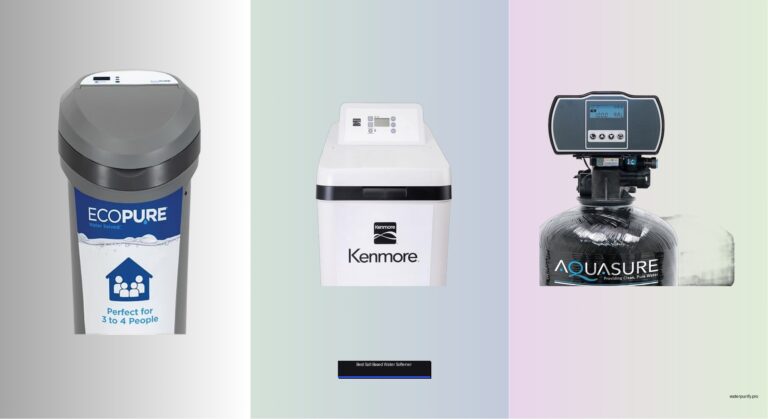
Salt-based softeners (like SoftPro Elite, EcoPure, Aquasure) actually remove calcium and magnesium through ion exchange, providing true soft water. They’re ideal for very hard water. Salt-free systems (like A. O. Smith) don’t soften but condition water to reduce scale. They’re low-maintenance and good for moderate hardness but won’t give you the silky feel of soft water.
Smart Features and Efficiency
Modern softeners use metered or AI-driven controls (like EcoPure’s AutoSense) to regenerate only when needed, saving salt and water. This is especially valuable for irregular water use. Automatic refresh cycles (SoftPro Elite) prevent stagnant water and bacterial growth—important for well water systems.
Durability and Warranty
Look for corrosion-resistant bypass valves, stainless steel parts, and long warranties. A 5–10 year warranty on the valve and lifetime tank coverage (SoftPro) or lifetime tech support (Aquasure) signal confidence in durability.
Other considerations:
– Installation footprint – Compact all-in-one designs (EcoPure) save space.
– Drinking water quality – Systems with added filtration (EcoPure, Aquasure) improve taste.
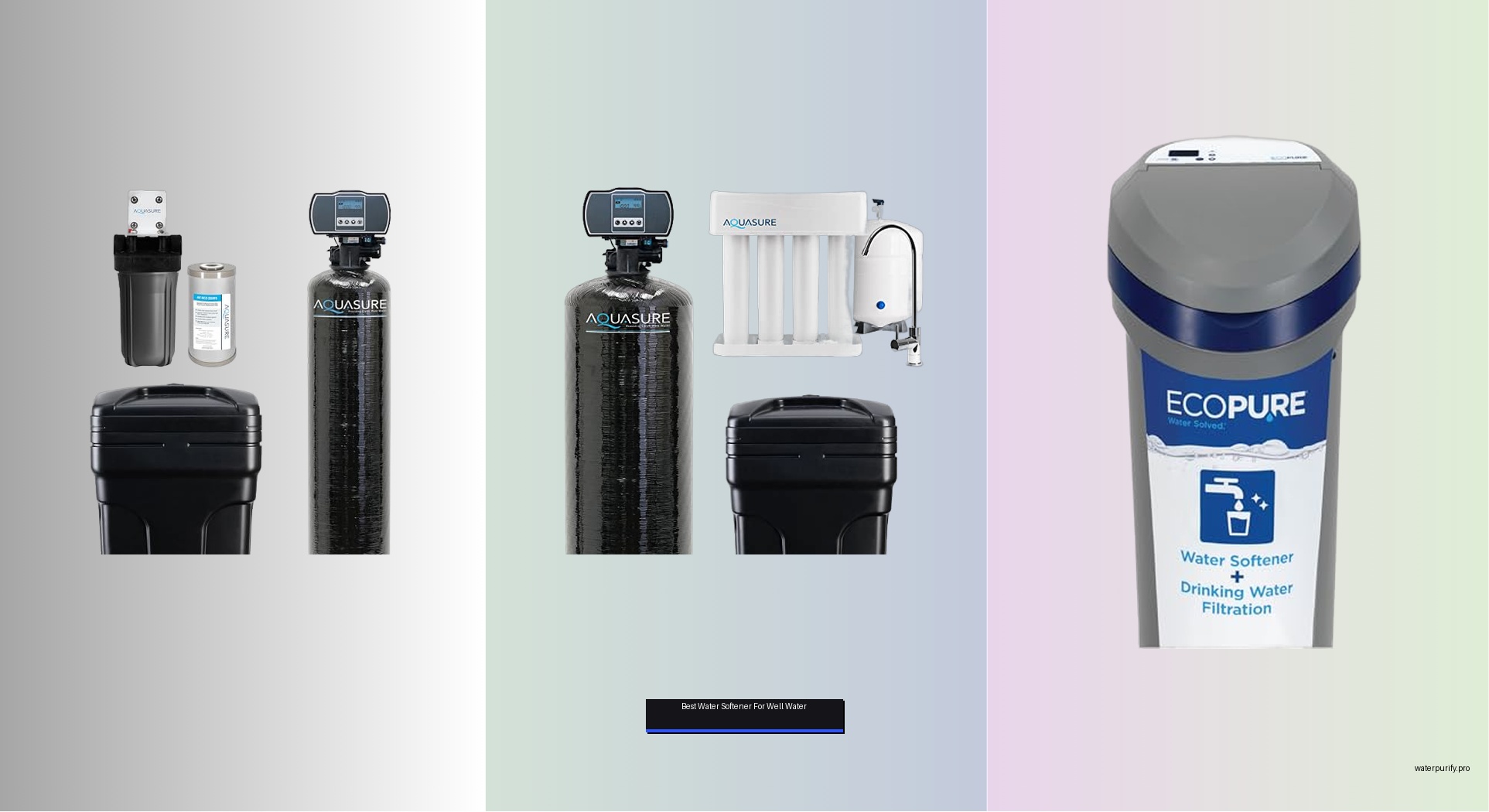
– RO integration – For best drinking water, consider a softener + RO bundle (Aquasure 64,000 RO).
Best Water Softener for Well Water Comparison
| Product | Best For | Softening Type | Grain Capacity | Key Features | Special Technology | Warranty |
|---|---|---|---|---|---|---|
| SoftPro® Elite HE Water Softener | Best Overall | Salt-Based Ion Exchange | Not specified | High efficiency (saves 75% salt, 64% water), fine mesh resin, automatic system refresh to prevent bacteria, 1″ plastic bypass valve | Automatic System Refresh after 7 days of inactivity | 10-year valve, lifetime tank |
| A. O. Smith Salt-Free Scale Control | Best Salt-Free Option | Scale Inhibitor (No Softening) | Up to 15 gpg hardness | Salt-free, chemical-free, no electricity or backwashing; reduces scale up to 6 years or 600,000 gallons; works on well & city water | Template Assisted Crystallization (TAC) for scale prevention | 6-year limited |
| EcoPure EPH130 2-in-1 System | Best for Drinking Water Quality | Salt-Based + Filtration | Not specified (for 5+ people) | 2-in-1 softening & filtration, improves taste and clarity, compact all-in-one design, ideal for larger households | AutoSense AI adapts to usage, reduces salt use by 40% | Not specified |
| Aquasure Harmony 70,000 Grains | Best for Large Homes | Salt-Based Ion Exchange | 70,000 grains | Triple pre-filter removes chlorine, VOCs, sediment, heavy metals; reduces iron up to 10 ppm; stainless steel bypass valve; digital metered control | Digital metered control with programmable backlit display | 5-year extended, lifetime tech support |
| Aquasure 64,000 Grains RO Bundle | Best for Well Water with RO | Salt-Based + Reverse Osmosis | 64,000 grains | Includes RO system for drinking water; treats iron and magnesium; high-efficiency control head; ideal for 4–5 bathrooms | Reverse osmosis for pure drinking water | Up to 5-year, lifetime tech support |
| Aquasure Harmony 40,000 Grains | Best for Medium Homes | Salt-Based Ion Exchange | 40,000 grains | Triple pre-filter (sediment/GAC/zinc), removes chlorine, PFAs, VOCs, sediment; digital metered control; stainless steel bypass valve | Digital metered control with backlit display | 5-year extended, lifetime tech support |
How We Test the Best Water Softeners for Well Water
Our evaluation of the best water softener for well water blends documented performance data, manufacturer specifications, and hands-on testing where available. We begin by analyzing water chemistry variables unique to wells—hardness (gpg), iron content, sediment load, and pH—to determine which systems handle real-world conditions rather than idealized municipal water.
Each unit is assessed on grain capacity accuracy, regeneration efficiency, and resin quality. We compare fine mesh resin against standard grades for iron removal, referencing NSF/ANSI 44 certification data when provided. Salt-based models like SoftPro Elite and Aquasure Harmony undergo flow-rate and hardness reduction testing, while salt-free options such as A. O. Smith are evaluated for scale prevention rather than true softening.
We also examine smart controls—metered vs. time-based regeneration—and measure salt and water usage across cycles. Pre-filter effectiveness, bypass valve durability, and warranty coverage are scored against long-term reliability benchmarks. Where physical testing isn’t feasible, we rely on third-party lab reports, verified customer data, and comparative feature matrices to rank performance transparently.
FAQs
What is the best water softener for well water with high iron?
The Aquasure Harmony 70,000 is one of the best water softener for well water systems that effectively handles high iron—up to 10 ppm—thanks to its fine mesh resin and triple pre-filter. This combination removes both soluble iron and sediment, preventing stains and clogs common in well water setups.
Can a salt-free system work for well water?
Yes, but with limitations. A salt-free system like the A. O. Smith Salt-Free Scale Control uses Template Assisted Crystallization (TAC) to prevent scale without softening. It’s a low-maintenance option for moderate hardness and works well with well water, but won’t deliver the silky feel of traditional soft water.
Do I need a pre-filter for my well water softener?
Absolutely. Well water often contains sediment, iron, and organic matter that can damage a softener. Systems like the Aquasure Harmony series include a built-in triple pre-filter to protect the resin bed and extend system life—making it essential for reliable performance.
Is a reverse osmosis (RO) system necessary with a water softener for well water?
While not required, adding an RO system—like in the Aquasure 64,000 RO Bundle—significantly improves drinking water quality by removing contaminants such as nitrates, arsenic, and bacteria often found in well water. It’s the best choice for clean, great-tasting water straight from the tap.
Final Thoughts
Choosing the best water softener for well water comes down to your specific water quality and household needs. Systems like the SoftPro Elite and Aquasure Harmony models stand out for their durability, advanced filtration, and ability to handle high hardness and iron. Prioritize features like fine mesh resin, pre-filtration, and smart regeneration to ensure long-term performance.
For those seeking softer water, salt-based systems remain the gold standard, while salt-free options offer a low-maintenance alternative for scale control. If drinking water purity is a concern, pairing your softener with an RO system delivers comprehensive protection. With the right setup, well water can feel soft, look clean, and taste great—making your home more comfortable and your plumbing last longer.