Fix Katadyn BeFree Water Filter Not Working
Your Katadyn BeFree water filter not working at the worst possible moment is a backcountry nightmare. One squeeze and nothing comes out, or maybe just a pathetic trickle where a steady stream should be. That sudden drop from 2 liters per minute to barely a few drops means something is blocking the hollow fiber membrane. The frustrating part is that the wrong fix can make things worse. The encouraging part is that most failed BeFree filters can be revived once you identify the actual cause.
This guide walks you through diagnosing whether you are dealing with sediment, mineral scale, or biofilm. You will learn field-safe quick fixes, deep cleaning protocols, and storage practices that prevent future failures. Every method here comes from real-world testing and technical analysis of how the BeFree actually performs under stress.
Identify the Clog Type Before You Touch Anything

Jumping straight to cleaning wastes time and risks permanent damage. The BeFree’s 0.1-micron hollow fibers can get blocked in three distinct ways, and each requires a different solution.
Sediment vs. Mineral vs. Biofilm
Sediment clogs are the most common and the easiest to fix. Drawing water from muddy streams, algae-heavy ponds, or silty sources packs visible debris into the membrane. Moss, bugs, and silt physically block the pores. Flow drops quickly but is usually reversible with shaking or backflushing.
Mineral scaling is sneakier and far more damaging. It forms when bleach-treated tap water, especially hard water above 180 mg/L, is used for cleaning or storage. Calcium carbonate builds up inside the fibers, creating a chalky blockage. Vinegar can dissolve it, but shaking will not help. Ignore this clog long enough and it becomes permanent.
Biofilm develops when the filter sits damp in storage. A slimy microbial layer grows inside the fibers, trapping particles and reducing flow. You will usually notice a foul odor. This requires disinfection, not just physical cleaning.
Test for Physical Damage First
If no water flows at all and the filter has been frozen or overheated, it may be permanently damaged. Ice expansion ruptures hollow fibers. Heat above 50°C, like in a hot car, warps plastic and degrades membranes. Inspect for cracks, soft spots, or deformed housing. If damage is visible, skip the cleaning and replace the filter.
Restore Flow with On-Trail Quick Fixes

When your BeFree stops working mid-trip, these field-safe methods require no special chemicals and can revive flow in minutes.
Shake and Clean Method
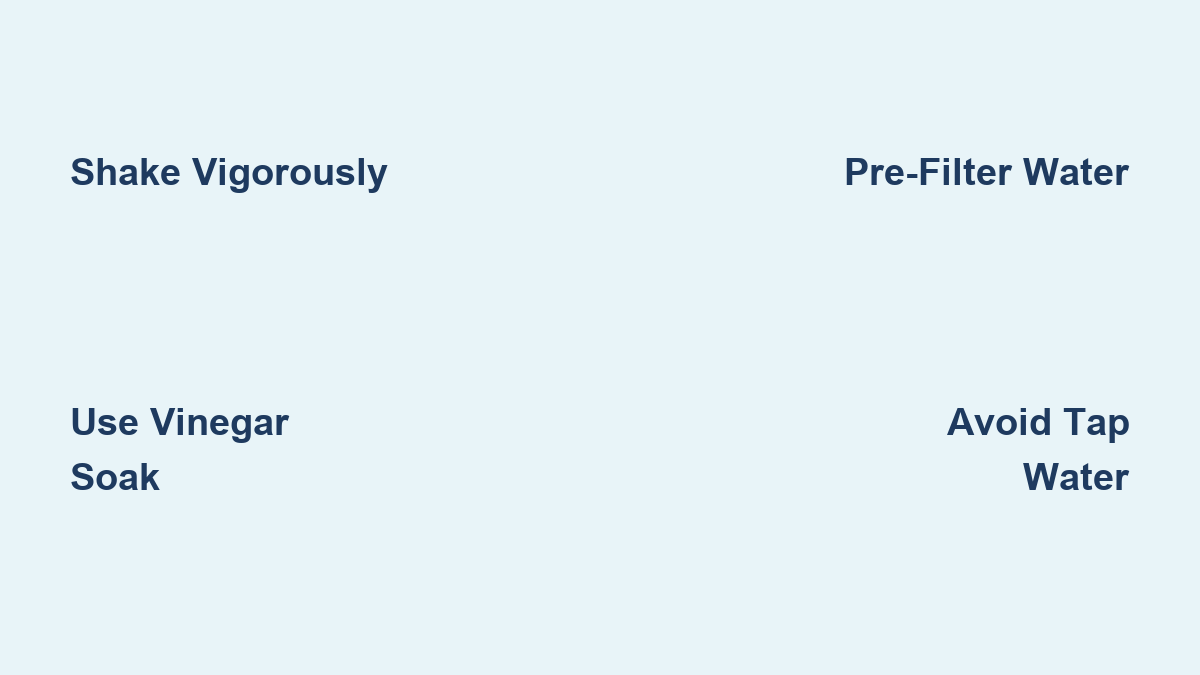
This is the first fix to try for sediment clogs. Fill the reservoir with clean water, reattach the filter, and shake vigorously for 5 to 10 seconds. The back-and-forth motion pushes water through the fibers in reverse, flushing out trapped particles. Pour out the dirty water and repeat 3 to 5 times. Most users see immediate improvement.
Doing this after every use prevents buildup before it hardens. Skipping this step is why so many filters fail on day three of a trip.
Use a Pre-Filter Immediately
Never draw water directly into the BeFree. Even clear mountain streams carry fine silt and algae. Pour source water through a bandana, buff, or mesh bag first. This simple barrier removes larger contaminants and cuts clogging dramatically. It is the single most effective preventive measure you can take.
Try a Sawyer Adapter for Backflushing
Katadyn does not officially support backflushing the BeFree, but many users successfully use a Sawyer blue adapter to reverse-flush the filter. Attach a syringe or pump and push clean water backward through the membrane. This forces debris out instead of deeper in.
Use low pressure. High force can damage the delicate fibers. If no adapter is available, stick to shaking; it is safer and still effective for most sediment clogs.
Deep Clean Mineral and Biofilm Buildup
When shaking fails, your filter likely has mineral scale or biofilm. Time for a chemical soak.
Soak in White Vinegar Solution
For mineral scaling, vinegar is the most reliable option. Mix 1 part distilled white vinegar to 2 parts water. Submerge the filter fully for 30 minutes to 2 hours. For severe clogs, use undiluted vinegar overnight.
The acetic acid dissolves calcium carbonate without harming the polymer fibers. Avoid colored or flavored vinegars; they can leave residues that affect taste.
Rinse With Purified Water Only
After soaking, rinse thoroughly. Flush the filter with distilled or purified water (Dasani or Aquafina work) for at least 1 hour. Tap water reintroduces minerals that can re-clog the filter as it dries, defeating the entire purpose of descaling.
Never use tap water for rinsing after descaling. This is the mistake that causes permanent clogs in the first place.
Alternative: Citric Acid or CLR
If vinegar fails, try citric acid powder (1 tsp per liter of water) or diluted CLR. Soak for 30 minutes, then rinse even longer than with vinegar, up to 2 hours, due to the stronger chemicals. CLR is riskier and not recommended for beginners. Always dilute and avoid prolonged exposure.
Prevent Future Failures with Proper Storage
Most BeFree failures happen during storage. Follow these steps to keep your filter ready for years.
Stop Using Tap Water for Storage
This is the leading cause of permanent clogs. Tap water, even with bleach, contains minerals that react with chlorine to form scale. If you live in a hard water area above 180 mg/L, this risk is extreme.
Use Distilled Water and Bleach for Long-Term Storage
Mix 4 drops of household bleach per liter of distilled water. Push this through the filter, then let it sit for 30 minutes. This kills microbes without forming scale.
After disinfecting, either air dry completely and store in a cool, dark place, or store slightly damp in a sealed bag only if perfectly clean. Damp storage keeps the membrane flexible but risks mold if not sterile. Dry storage is safer for months-long inactivity.
Avoid Freezing and Heat
Never let your filter freeze. Water trapped in the fibers expands and bursts them. Keep it in your sleeping bag in winter.
Also avoid heat above 50°C. A hot car or direct sun can warp the housing. Store in a shaded, insulated spot.
When to Replace Your Filter
Some clogs cannot be fixed. Know when it is time to retire your BeFree.
Permanent Flow Loss After Cleaning
If flow does not return after a vinegar soak and shaking, the pores are likely permanently blocked or the membrane is damaged. No further cleaning will help.
Visible or Suspected Damage
Replace immediately if:
– The filter was frozen while wet
– It was dropped hard or exposed to high heat
– Cracks, tears, or deformation are visible
– Water tastes foul even after rinsing
Odor That Will Not Go Away
Persistent bad smell means biofilm has taken hold deep in the fibers. Bleach soaks may help, but if the odor remains, replace the filter.
Heavy-Use Replacement Guideline
For frequent backpackers, consider replacing the filter every 1,000+ liters or at the start of each major season. This ensures safety and performance.
BeFree vs. Sawyer: Why the Difference Matters

The BeFree is fast and lightweight, but it is more prone to clogging than the Sawyer Squeeze, especially with improper storage.
Why Sawyer Handles Hard Water Better
In side-by-side tests, Sawyer filters maintained flow after storage in chlorinated tap water while BeFree units failed completely. Sawyer’s design allows safe backflushing with a syringe, clearing clogs mechanically.
The BeFree lacks an official backflush method, limiting field repair options. Using a Sawyer blue adapter lets you backflush safely, and many users report success without damage.
No Carbon Means No Taste Improvement
Unlike filters with activated carbon, the BeFree does not remove chlorine, pesticides, or bad tastes. Water filtered after bleach storage will still taste like bleach unless flushed extensively.
It also cannot filter saltwater. Attempting to do so may damage the membrane due to osmotic stress or salt crystallization.
Maintenance Checklist for Reliable Performance
Follow this routine before, during, and after every trip.
Pre-Trip: Test Flow and Inspect
- Check for cracks, worn O-rings, or leaks
- Soak dry filter in water for 5 minutes to prime
- Test flow with clean water; should be around 2 L/min
During Use: Prevent Clogs
- Always pre-filter with a bandana or mesh
- Avoid scooping from the bottom of lakes or streams
- Shake clean after every use
- Never leave filter attached to dirty water
Post-Trip: Deep Clean If Needed
- Soak in vinegar (1:2 ratio) for 30+ minutes if flow is slow
- Rinse with purified water for 1+ hour
- Disinfect with 4 drops/L bleach in distilled water (optional)
- Air dry completely before storage
Storage: Do It Right
- Use only distilled water for cleaning and storage
- Store in a cool, dry, dark place
- Never expose to freezing temps or direct sun
- Inspect before next use
Frequently Asked Questions About Katadyn BeFree Filter Problems
Why did my Katadyn BeFree stop working suddenly?
Sudden flow loss usually means sediment clogging from drawing water directly from a murky source without pre-filtration. Shaking the filter with clean water for 5 to 10 seconds often restores flow immediately.
Can I use tap water to clean my BeFree filter?
No. Tap water contains minerals that combine with bleach to form calcium carbonate scale inside the hollow fibers. Always use distilled or purified water for rinsing and storage to prevent permanent clogs.
How do I remove mineral buildup from my BeFree?
Soak the filter in a 1:2 white vinegar to water solution for 30 minutes to 2 hours. For severe scaling, use undiluted vinegar overnight. Rinse thoroughly with distilled water for at least 1 hour afterward.
Is it safe to backflush a Katadyn BeFree?
Katadyn does not officially support backflushing, but many users successfully use a Sawyer blue adapter with a syringe at low pressure. Excessive force can damage the hollow fibers, so proceed with caution.
How long does a Katadyn BeFree filter last?
Under proper maintenance, a BeFree can filter thousands of liters. Heavy users should consider replacement after 1,000+ liters or at the start of each major season. Replace immediately if the filter was frozen, overheated, or has persistent odor after cleaning.
Can the BeFree filter saltwater or remove chemicals?
No. The BeFree’s 0.1-micron membrane only removes bacteria and protozoa. It cannot filter saltwater and does not remove chlorine, pesticides, or improve taste. Use chemical treatment or a carbon filter for chemical removal.
Key Takeaways for Fixing Your Katadyn BeFree
A Katadyn BeFree water filter not working is rarely dead. Most failures come from preventable causes: sediment from skipping pre-filtration, mineral scaling from tap water maintenance, or biofilm from damp storage. Diagnose the clog type first, then apply the matching fix: shaking for sediment, vinegar soaks for minerals, and bleach disinfection for biofilm.
The single most important habit is using distilled water for all maintenance and storage. Pre-filter every source water, avoid freezing and heat exposure, and replace the filter if cleaning fails or damage appears. Follow these steps and your BeFree will deliver fast, reliable water for years in the wild.