Fix Samsung Water Dispenser Not Working
A Samsung water dispenser not working can quickly derail your kitchen routine, leaving you without chilled water or ice when you need it most. Many homeowners immediately blame the water filter, but service data shows frozen water lines in the door cause roughly 60% of failures in French door models. The good news is that about 80% of all dispenser problems can be fixed with four core checks: disabling Control Lock, testing the door switch, diagnosing frozen lines, and verifying filter bypass.
This guide walks you through every proven fix, from 30-second resets to multimeter diagnostics. You’ll learn which parts to replace, which to leave alone, and how to avoid the costly mistake of installing aftermarket filters that damage your housing assembly.
Disable Control Lock and Reset Your Dispenser
Before touching any mechanical parts, rule out software locks and incorrect settings.
Confirm Water Mode Is Selected
Many Samsung models include a toggle or lever switching between Water, Cubed Ice, and Crushed Ice. If the lever sits on ice, pressing the paddle produces nothing. On touchscreen models, tap the water icon directly. This simple oversight generates more “no water” complaints than actual hardware failures.
Unlock the Control Panel
A locked control panel is one of the top causes of a non-responsive Samsung water dispenser not working. When Control Lock activates, a padlock icon appears and every button becomes inactive, even if the lights stay on.
To unlock:
1. Locate the Control Lock button on your display.
2. Press and hold it for 3 to 5 seconds.
3. Listen for a beep and watch for the padlock icon to vanish.
If the lock reactivates on its own, you likely have a failing control board covered later in this guide.
Check Door Closure
Samsung refrigerators disable the dispenser when the door is open as a safety feature. Always test with the door fully shut. A faulty door switch can trick the system into thinking the door stays open, blocking all dispensing.
Test the Door Switch for Proper Function

A broken door switch silently cuts power to the water valve, making it a prime suspect when your Samsung water dispenser stops working.
Diagnose a Faulty Switch
The door switch turns off interior lights when the door closes. If it fails, the fridge believes the door is always open.
Test it in three steps:
1. Open the refrigerator door.
2. Manually press the door switch on the frame.
3. Watch the interior light.
If the light stays on while you press the switch, the component is bad and needs replacement.
Replace the Dispenser Switch
A failed switch prevents the water inlet valve from receiving power. Replacement parts run $50 to $90 and carry a moderate 3/5 DIY difficulty rating.
Replacement process:
– Remove the dispenser cover using clips or screws.
– Disconnect the wire harness carefully.
– Install the new switch and reassemble.
Use a multimeter to confirm continuity before installing. No continuity means replace.
Inspect for Internal Hose Disconnection

On Bespoke and Four-Door Flex models, a hidden water line behind the crisper drawers can disconnect and cause both leaks and dispensing failure.
Find the Disconnected Hose
This issue stops water flow entirely and creates internal puddles at the bottom of the fridge.
Inspection steps:
1. Pull out both crisper drawers completely.
2. Shine a flashlight into the rear compartment.
3. Look for a loose white or clear hose near a coupler.
If the hose has popped off, water spills into the fridge instead of reaching your glass.
Reconnect the Hose
Reconnection takes about five minutes and requires no special tools.
Steps to reattach:
1. Slide the hose back into the coupler.
2. Push firmly until it clicks into place.
3. Use pliers if needed to seat it fully.
Test the dispenser immediately after reconnecting. This fix resolves both leaks and flow problems simultaneously.
Diagnose Frozen Water Lines in the Door
Frozen lines represent the number one cause of dispenser failure in French door Samsung refrigerators, accounting for roughly 60% of cases.
Identify a Frozen Line
Classic symptoms include:
– Dispenser paddle lights up normally.
– No water or ice dispenses.
– All other functions appear operational.
Freezing happens when fridge temps drop below 34°F, freezer temps fall below 0°F, or poor insulation near the ice maker allows cold air to freeze the supply line.
Perform the Kick Plate Test

This diagnostic isolates whether the blockage sits inside the door.
Test procedure:
1. Unplug the refrigerator for safety.
2. Remove the kick plate at the base by pulling it straight out.
3. Locate the quick-disconnect coupler where the door meets the unit.
4. Press the release tab and disconnect the water line. Keep towels nearby.
5. Plug the fridge back in.
6. Press the water paddle.
Interpret your results carefully. Water shooting from the main unit side only confirms the door line is frozen. No water from either side points to an upstream problem with the filter, valve, or supply.
Thaw the Line Safely
Two reliable methods exist for clearing ice blockages.
The Water Line Buddy tool costs $12 to $20 and works fastest. Insert the syringe tubing into the door-side line and inject warm (never boiling) water. Ice clears within minutes without risking component damage.
Natural thawing serves as a last resort. Leave doors open with power off for 24 hours. This method risks food spoilage and extended downtime.
Prevent future freezing by keeping fridge temps above 34°F and freezer temps above 0°F.
Evaluate the Water Filter System

Filters get blamed constantly but cause only about 20% of dispenser failures. Still, filter-related issues deserve thorough investigation.
Test for a Clogged Filter
Warning signs include slow, sputtering flow or complete blockage despite other functions working.
Important myth to know: the red filter light is timer-based, not flow-based. A clogged filter can exist with the light off, and the light can glow on a perfectly functional filter.
Bypass test procedure:
1. Remove the water filter completely.
2. Press the dispenser paddle.
If water flows without the filter installed, your filter is clogged and needs replacement. Check your manual first, since not all models support auto-bypass.
Check for Filter Housing Damage
Aftermarket filters with incorrect lug dimensions can damage the internal bypass valve inside the housing assembly.
Diagnostic sequence:
1. Remove the filter and test for flow.
2. Install a genuine OEM Samsung filter.
3. Test again.
If flow stops with a new OEM filter but worked without any filter, the housing is damaged. Replacement housing costs $120 to $160, making that $20 aftermarket filter an expensive mistake. Always use genuine Samsung filters to protect your housing.
Purge Air After Filter Replacement
Trapped air blocks flow after filter changes or line reconnections.
Purge procedure:
– Hold the dispenser paddle down for 5 minutes straight.
– Dispense 2 to 3 gallons until flow becomes steady.
This clears air pockets and restores normal operation.
Inspect Water Supply and Inlet Valve
When lines and filters check out, the problem often lies with water entry components.
Verify Water Supply Connections
Check three critical points:
– Water shutoff valve is fully open.
– Supply line has no kinks, crushing, or sharp bends.
– Connections at both the wall and fridge are tight and secure.
RS27T and RS22T models feature dual water lines. Cross-connecting these during installation disables both water and ice dispensing entirely.
Test the Water Inlet Valve
The inlet valve (solenoid) sits at the bottom rear of the fridge and controls water entry into the system.
Failure symptoms:
– Dispenser hums but no water flows.
– No water despite clear supply lines and filters.
Multimeter testing procedure:
1. Unplug the refrigerator.
2. Locate the valve at the bottom rear.
3. Set your multimeter to Ohms (Ω).
4. Touch probes to the valve terminals.
A reading between 500 and 1500 ohms indicates a good valve. An OL (Open Loop) reading confirms a burned-out coil requiring replacement.
Valve replacement costs $100 to $160 and carries moderate 3/5 difficulty. Always rule out frozen lines before replacing this part, since misdiagnosis is common.
Diagnose Electronic Control Failures
When all mechanical checks pass but your Samsung water dispenser is still not working, electronics become the prime suspect.
Assess the Main Control Board
The main control board sends signals to the water valve and manages all dispenser logic.
Warning signs include:
– Control lock resets randomly without input.
– Dispenser lights illuminate but no water dispenses.
– No response after filter replacement and full reset.
One documented case involved a 2020 RS28 model with a working display and lights, yet the valve received no signal. Diagnosis confirmed a failed main control board (Part: DA94-04603E).
Replacement procedure:
1. Unplug the refrigerator.
2. Remove the control panel cover.
3. Photograph all wire harnesses before disconnecting.
4. Transfer harnesses to the new board one by one.
5. Reassemble and test thoroughly.
This repair rates 4/5 difficulty due to wiring complexity.
Perform a System Reset
A simple reset clears temporary electronic glitches.
Reset steps:
1. Unplug the refrigerator.
2. Wait 5 full minutes.
3. Plug back in and test.
If the issue returns immediately after reset, you’re dealing with hardware failure, not a software problem.
Address Water Quality and Temperature Issues
Even when water flows properly, users often complain about warm output or unpleasant taste.
Fix Warm Water Output
Samsung fridges contain a small 0.2-gallon internal reservoir. After dispensing 2 to 3 glasses, the reservoir empties faster than it can cool incoming water.
Solution: Wait approximately one hour after heavy use for full cooling recovery. Avoid dispensing large volumes back-to-back. This behavior is normal, not a malfunction.
Eliminate Bad Taste or Odor
Common causes include old filters past their service life and stagnant water sitting in long supply lines.
Effective fixes:
– Replace the filter with genuine OEM Samsung parts every 6 months.
– Shorten the supply line if installation allows.
– If using a whole-house filter, test the dispenser without the internal filter to check for pressure conflicts.
Prevent Future Dispenser Problems
Proactive maintenance prevents repeat failures and extends component life.
Follow Filter Replacement Schedule
Replace filters every 6 months regardless of indicator light status. Hard water or well water supplies may require even more frequent changes.
Use Only OEM Filters
Aftermarket filters often have incorrect lug dimensions that wear out the bypass valve over time. Saving $20 today can cost $140 or more in housing repairs later.
Monitor Temperatures Consistently
Keep fridge temps above 34°F and freezer temps above 0°F to prevent line freezing. Use an inexpensive fridge thermometer for accuracy.
Inspect Supply Lines Regularly
Check for kinks, leaks, and loose connections every 3 to 6 months. Catching small issues early prevents major failures.
Act Early on Slow Flow
Sputtering or reduced flow signals developing clogs or freezing. Address these warning signs before total failure occurs.
Model-Specific Troubleshooting Tips
RS27T and RS22T Models
These units feature dual water lines. Cross-connection during installation disables both water and ice dispensing. Always verify line routing during setup or any maintenance work.
Bespoke and Four-Door Flex Models
These models are prone to internal hose disconnection behind the crisper drawers. Check this area first if water stops flowing and you notice internal leaks.
French Door Models
French door designs carry the highest risk of frozen door lines due to insulation limitations. The Water Line Buddy tool provides the fastest, safest thawing solution for these units.
Final Diagnosis Flowchart
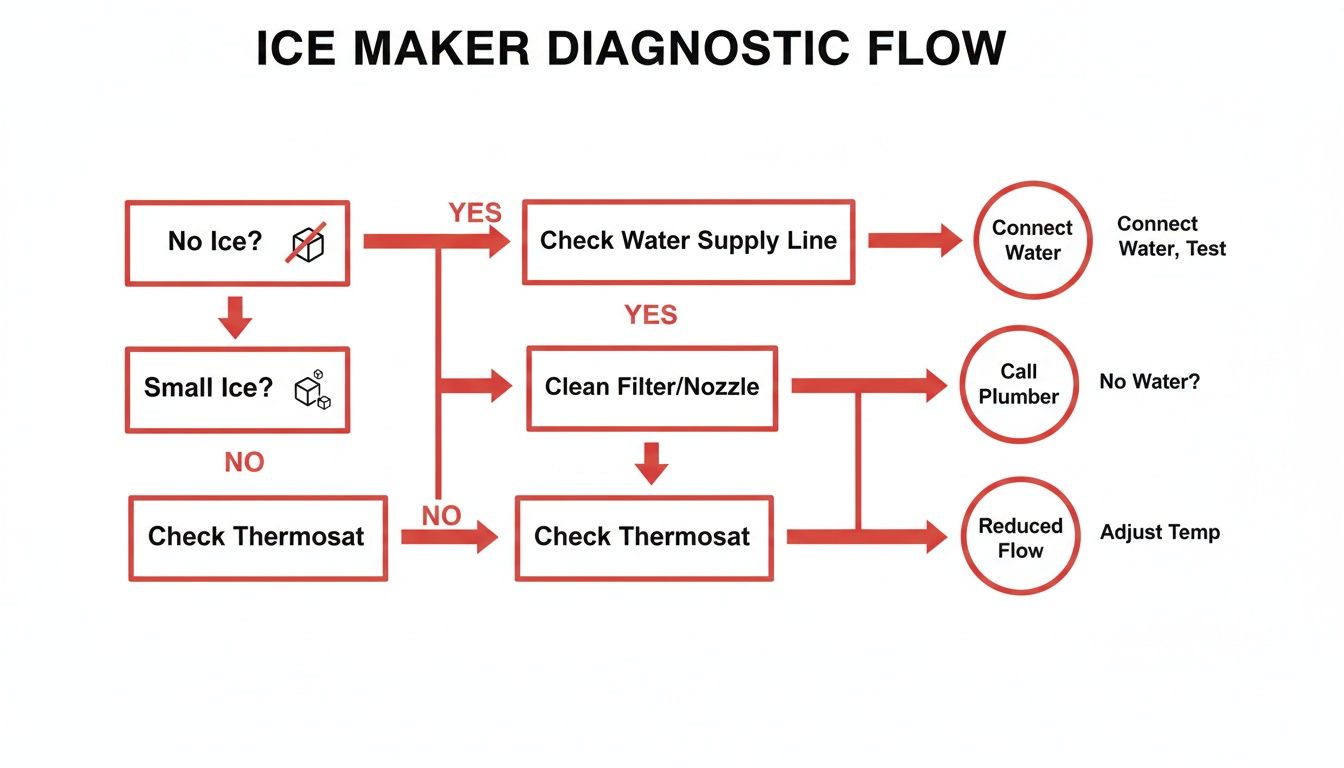
Follow this exact sequence to resolve your Samsung water dispenser not working:
- Disable Control Lock by holding the button for 3+ seconds.
- Test the door switch to confirm the interior light responds properly.
- Perform the kick plate test. If the main unit flows but the door doesn’t, thaw the line.
- Run the filter bypass test. No flow without the filter suggests housing damage.
- Inspect internal hoses on Bespoke and Flex models behind the crispers.
- Test the inlet valve with a multimeter. Readings of 500 to 1500 ohms confirm a good valve.
- Replace the control board if all other tests pass and lights function normally.
This sequence prioritizes free, fast fixes before advancing to costly part replacements. Most issues resolve within the first three steps.
Frequently Asked Questions About Samsung Water Dispensers
Why is my Samsung water dispenser not working but the ice maker still functions?
This usually points to a frozen water line in the door or a faulty door switch. The ice maker draws water from a different path than the dispenser. Run the kick plate test to isolate whether the blockage sits in the door line.
How do I reset my Samsung refrigerator water dispenser?
Unplug the refrigerator for 5 minutes, then plug it back in. Also press and hold the Control Lock button for 3 to 5 seconds to ensure the panel is unlocked. These two steps resolve most software-related issues.
Can a clogged water filter stop my Samsung dispenser completely?
Yes, a severely clogged filter can block all flow. However, the red indicator light is timer-based and may not reflect actual clogging. Remove the filter and test for bypass flow to confirm.
Why does my Samsung water dispenser dispense warm water?
The internal reservoir holds only 0.2 gallons. After dispensing 2 to 3 glasses, it empties faster than it can cool. Wait approximately one hour after heavy use for full temperature recovery.
Are aftermarket water filters safe for Samsung refrigerators?
Aftermarket filters risk damaging the filter housing bypass valve due to inconsistent lug dimensions. Use only genuine OEM Samsung filters to prevent $120 to $160 housing replacements.
How do I thaw a frozen water line in my Samsung fridge?
The Water Line Buddy tool ($12 to $20) provides the fastest, safest method. Inject warm water directly into the door-side line. Avoid using boiling water, which can damage plastic components.
Key Takeaways for Fixing Your Samsung Water Dispenser
Start with the four free checks: Control Lock, door switch, frozen line test, and filter bypass. These resolve approximately 80% of all dispenser failures without spending a dime.
Use only genuine OEM Samsung filters. The $20 savings on aftermarket filters often leads to $140 or more in housing repairs down the road.
Keep temperatures above the freezing threshold. Maintaining fridge temps above 34°F and freezer temps above 0°F prevents the most common cause of dispenser failure.
Your next step: Run the kick plate test right now if you suspect frozen lines. It’s the single most valuable diagnostic for any Samsung water dispenser not working, and it takes less than 10 minutes to complete.