Does Reverse Osmosis Remove Manganese?
Yes, reverse osmosis removes manganese with impressive efficiency, eliminating up to 99% of dissolved manganese under controlled conditions and more than 90% in real-world residential use. This makes RO one of the most reliable point-of-use solutions for households worried about manganese in their drinking and cooking water.
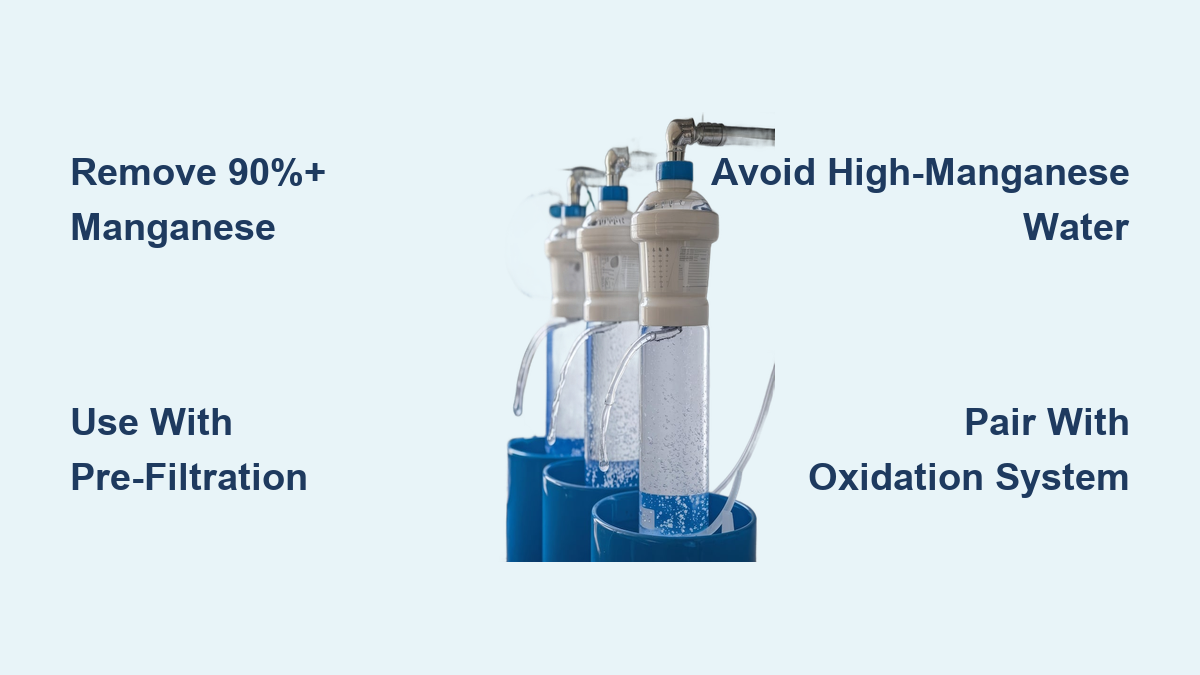
However, RO works best as a final polishing step rather than a frontline defense. High manganese levels can quickly foul the membrane, reduce flow rates, and shorten system life. For whole-house protection, especially with well water, pairing RO with oxidation and filtration delivers the best results.
In this guide, you’ll learn exactly how reverse osmosis removes manganese, which forms it handles best, how it compares to other methods, and when it’s the right choice for your home.
How Reverse Osmosis Removes Manganese

Reverse osmosis uses a semi-permeable membrane with pores as small as 0.0001 microns. This ultra-fine barrier blocks dissolved ions, including manganese, by forcing pressurized water through while flushing contaminants away in the reject stream.
The purified water, called permeate, flows to a storage tank and dispenses through a dedicated faucet. Dissolved manganese (Mn²⁺) cannot pass through the membrane structure and exits with the wastewater.
Manganese Removal Efficiency
RO performance varies based on manganese form and water conditions:
- Dissolved Mn²⁺ (manganous): Removes 98–99% when tested alone or with iron
- Solid (manganic) particles: Can be filtered, but only if pre-filters protect the membrane from clogging
- Real-world residential systems: Expect greater than 90% reduction
RO performs best when manganese stays below 2 ppm, feed water receives pre-filtration, and the system receives regular maintenance.
Critical Insight: RO does not treat your entire home’s water supply. It’s designed for point-of-use applications, typically under-sink kitchen units.
When Reverse Osmosis Is Most Effective
RO excels in specific scenarios where precision matters more than volume.
Low to Moderate Manganese Levels
For concentrations under 2 mg/L, RO delivers strong results. This includes city water with trace manganese, well water already treated with pre-filtration, and final polishing after whole-house treatment. At these levels, the membrane stays healthy and maintenance intervals remain manageable.
Point-of-Use Drinking Water Protection
If your goal is clean, safe drinking and cooking water, RO is ideal. Even when a whole-house system handles bulk manganese removal, an under-sink RO unit ensures no residual manganese reaches your beverages, coffee makers, kettles, or ice makers. This dual approach is common in regions like Southeastern Pennsylvania and Minnesota, where well water frequently contains manganese.
Combined Contaminant Removal
RO doesn’t just target manganese. It also removes:
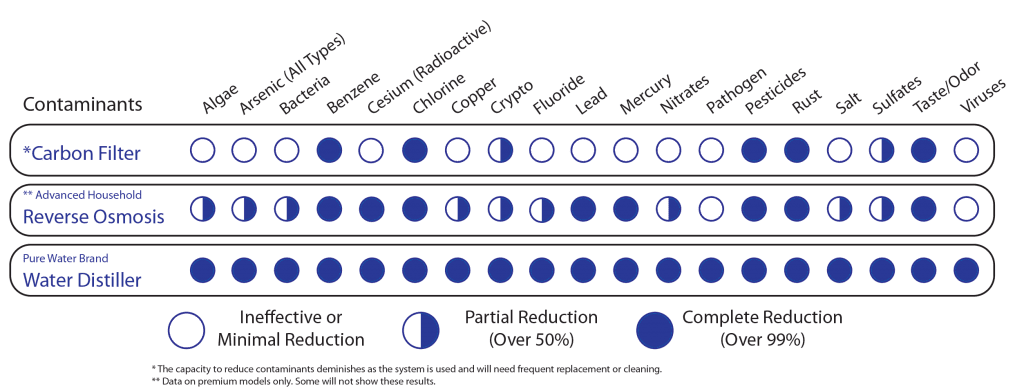
- Heavy metals: Lead, cadmium, chromium
- Nitrates and sulfates
- Microplastics and pharmaceuticals
- Viruses and bacteria (with certain membranes)
If your water has multiple concerns, RO provides comprehensive protection in one compact system.
Risks of Using RO on High-Manganese Water
Using RO as a frontline defense against high manganese concentrations is risky and often leads to premature failure.
Membrane Fouling and Clogging
Manganese, especially in its oxidized solid form, sticks to the RO membrane surface. Over time, pores become blocked, water flow drops significantly, and system efficiency declines. Even after cleaning, studies show 9–14% permanent permeability loss due to manganese fouling.
Flow Rate Limitations
Standard residential RO systems produce 10–75 gallons per day, depending on the model. That’s enough for drinking and cooking, but nowhere near enough for showers, laundry, or dishwashing. Whole-house RO treatment would require industrial-scale equipment, high water pressure, and massive waste streams.
Waste Water Production
For every gallon of purified water, RO systems discharge 3–5 gallons as wastewater. In high-manganese applications, this ratio worsens due to frequent flushing and cleaning cycles.
Best Practice: Use RO only after pre-treatment (like oxidation and filtration) when manganese exceeds 0.3–2.0 mg/L.
Alternative Manganese Removal Methods
RO isn’t your only option. For whole-house treatment, other technologies often perform better, especially with higher manganese levels.
Oxidation + Filtration (Best for Whole House)
This approach is the gold standard for treating well water with manganese.
How It Works:
1. Oxidize: Convert dissolved Mn²⁺ into solid particles using air, chlorine, or ozone
2. Filter: Trap the solid manganese with media like Birm, Filox, or Greensand
Why It Wins:
– Handles up to 10 mg/L of manganese
– Treats all household water
– Low operating cost after installation
– Minimal wastewater
Pro Tip: Air injection systems require no chemicals and work well for eco-conscious homeowners.
Water Softeners (Ion Exchange)
Softeners can remove low levels (up to 2–3 mg/L) of dissolved manganese, but only under strict conditions.
Requirements:
– pH below 8.0 (to keep manganese dissolved)
– TDS under 500 ppm
– No chlorine or aeration before the softener
– Frequent regeneration with high salt dosage
Warning: If manganese precipitates before reaching the resin, it fouls the softener and ruins performance.
Distillation
Distillation boils water and condenses the vapor, leaving manganese behind. It removes nearly 100% of manganese but is slow, energy-intensive, and only practical for small volumes. It’s not ideal for daily household use but works in labs or emergency settings.
Comparing Manganese Removal Technologies
| Feature | Reverse Osmosis | Oxidation + Filtration | Water Softener | Distillation |
|---|---|---|---|---|
| Removal Rate | >90% (up to 99%) | Up to 100% | Variable (low-moderate) | ~100% |
| Best For | Drinking water (POU) | Whole house (high Mn) | Hard + low-Mn water | Small volume use |
| Max Manganese Level | < 2 mg/L | Up to 10 mg/L | < 3 mg/L | Any |
| Manganese Form Required | Dissolved or filtered | Dissolved (to oxidize) | Dissolved only | Any |
| Waste Water | High (3–5:1) | Backwash only | Brine discharge | Concentrate |
| Maintenance | Membrane replacement | Media/backwash | Salt/resin cleaning | Descaling |
Bottom Line: Use oxidation and filtration for whole-house protection and RO for drinking water purity.
Signs You Need Manganese Treatment
You can’t see dissolved manganese, but you can see its effects.
Visual Clues
- Black or brown stains on sinks, toilets, tubs, and laundry
- Dark particles in water or filters
- Film on toilet tank water (visible with a flashlight)
- Discolored dishes after dishwasher use (due to high-pH detergents)
Why dishwashers reveal manganese: Detergents raise pH above 8.0, causing dissolved Mn²⁺ to turn black and precipitate.
Sensory Indicators
- Metallic or bitter taste
- Unusual odor (often linked with hydrogen sulfide)
Testing Is Essential
Consumer test strips are unreliable for manganese. Lab testing is required to measure exact concentration, determine if manganese is dissolved or precipitated, and check for co-contaminants like iron, pH, and TDS.
Sampling Tip: Collect water without exposing it to air to prevent oxidation during transport.
Health Risks of Manganese in Water
While manganese is essential in small amounts, too much, especially for children, can be harmful.
Who’s at Risk?
- Infants and young children: Their brains absorb more manganese and excrete less
- Pregnant women: High exposure may affect fetal development
- Elderly individuals: May have reduced detoxification capacity
Potential Effects
- Reduced attention span and memory
- Motor function delays
- Muscle pain and fatigue
- Neurological symptoms similar to Parkinson’s (with chronic high exposure)
Safety Guidelines
- EPA SMCL (aesthetic): 0.05 mg/L (prevents staining)
- EPA Health Advisory: 0.3 mg/L (long-term safety)
- Infant Limit: Should not exceed 1.0 mg/L
If your water exceeds 0.05 mg/L, treatment is recommended, even if only for drinking and cooking.
Best Practices for RO System Maintenance
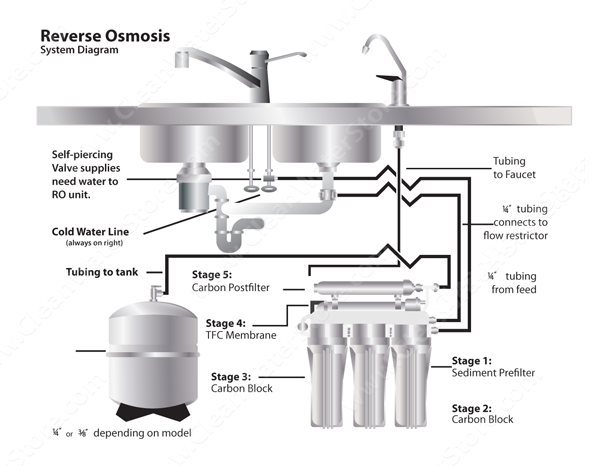
To keep your RO system removing manganese effectively, follow these steps.
Pre-Filtration Is Non-Negotiable
Always install:
– Sediment filter (5-micron): Removes particles
– Carbon filter: Reduces chlorine and organics
– Optional: Upstream oxidation filter if manganese exceeds 0.3 mg/L
This protects the membrane from clogging and extends its life.
Replace Filters and Membranes on Schedule
- Sediment and carbon filters: Every 6–12 months
- RO membrane: Every 2–3 years (or sooner if flow drops)
- Post-carbon filter: Every 12 months (improves taste)
Warning: Low water flow means it’s time to check or replace the membrane.
Sanitize Annually
Bacteria can grow in storage tanks and lines. Sanitize the system once a year using food-grade hydrogen peroxide or a manufacturer-approved cleaner.
Monitor Performance
Track permeate flow rate, total dissolved solids (TDS) of product water, and frequency of filter changes. A sudden drop in flow or rise in TDS signals a problem.
Final Decision: Should You Use RO for Manganese?
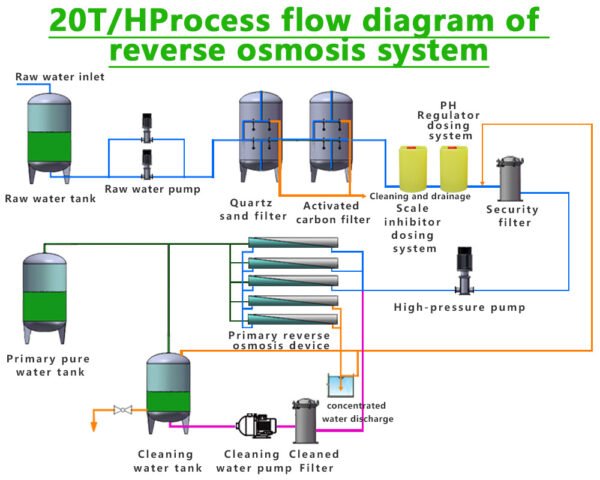
Here’s a quick decision guide based on your water test results.
Use RO If:
- Manganese is below 0.3 mg/L
- You want pure drinking and cooking water
- You already have whole-house pre-treatment
- You’re okay with limited flow and some wastewater
Ideal Setup: Whole-house oxidation filter plus under-sink RO
Avoid RO as Primary If:
- Manganese exceeds 2 mg/L
- You need whole-house treatment
- You haven’t installed pre-filtration
- You’re on a tight water budget (due to waste)
Don’t Do This: Feed raw well water with high manganese directly into an RO system.
Frequently Asked Questions About Reverse Osmosis and Manganese
How much manganese can reverse osmosis remove?
Reverse osmosis can remove up to 99% of dissolved manganese (Mn²⁺) under controlled conditions. In real-world residential systems, expect greater than 90% reduction when the system is properly maintained and pre-filtered.
Is RO safe for high-manganese well water?
RO is not recommended as the primary treatment for high-manganese well water. Elevated manganese levels foul the membrane quickly, reducing flow and causing permanent permeability loss of 9–14%. Use oxidation and filtration first, then RO as a polishing step.
What manganese level requires treatment?
The EPA Secondary Maximum Contaminant Level is 0.05 mg/L, set to prevent staining and taste issues. The EPA Lifetime Health Advisory is 0.3 mg/L for long-term neurological safety. Treatment is recommended once levels exceed 0.05 mg/L.
Can a water softener remove manganese?
Water softeners can remove low to moderate manganese (up to 2–3 mg/L), but only when manganese stays dissolved. The water must have a pH below 8.0, TDS under 500 ppm, and no chlorine or aeration before the softener. Otherwise, precipitated manganese fouls the resin.
Does RO remove manganese taste and staining?
Yes. RO eliminates the metallic or bitter taste caused by manganese and prevents black or brown staining in coffee makers, kettles, ice makers, and dishware. It also stops discoloration on laundry and fixtures.
How often should I replace my RO membrane with manganese in the water?
Replace the RO membrane every 2–3 years under normal conditions. With manganese present, you may need earlier replacement if flow drops or TDS rises. Pre-filtration extends membrane life significantly.
Key Takeaways for Using Reverse Osmosis to Remove Manganese
Reverse osmosis does remove manganese, and it does so with impressive efficiency of over 90% in most homes and up to 99% in ideal conditions. Its strength lies in precision, not volume, making it the perfect point-of-use solution for clean drinking and cooking water.
However, RO works best as a final step, not a first defense. For whole-house manganese control, start with oxidation and filtration to handle the bulk of the contaminant. Then let your under-sink RO unit polish the water for taste, safety, and peace of mind.
Test your water first. Match the solution to your levels. And you’ll enjoy clean, safe, great-tasting water without the stains or health risks manganese brings.