Why Water Purifier Makes Noise: Troubleshooting Guide

A sudden hum from under the kitchen sink can catch you off guard, especially when you expect nothing but a quiet glass of water. If your water purifier makes noise louder than a gentle purr, something is off. Reverse osmosis systems naturally produce a soft hum from their booster pumps, but grinding, banging, or whistling sounds signal real problems you should not ignore.
The good news is that most noisy water purifier issues come from simple causes like loose screws, trapped air, or old filters. In this guide, you will learn how to match specific sounds to their root causes, apply targeted fixes, and keep your system running quietly for years.
Identify the Noise: Match Sound to Root Cause

Every noise your water purifier makes tells a story. Learning to recognize these acoustic signatures is the fastest way to diagnose why your water purifier makes noise and find the right solution.
Humming or Vibrating Sounds
A steady low hum is the most common complaint and usually points to installation or filter issues.
- Loose mounting: When the unit is not firmly screwed to the wall, the pump’s natural vibrations transfer into the cabinet, turning a quiet hum into a loud rattle.
- Clogged pre-filters: Sediment and carbon filters choke with debris after 4 to 6 months. The pump then strains to pull water through, creating a groaning sound.
- Resonance: Thin cabinet floors, especially on island sinks, act like drumheads and amplify pump vibrations.
Quick fix: Tighten all mounting screws and place a rubber pad or dense foam under the unit to absorb vibration.
Grinding or Rattling Noises
A deep, metallic grinding sound is a serious warning sign that demands immediate attention.
- Failing booster pump: Worn bearings or a cracked pump head produce a distinct grinding noise, often paired with reduced water flow.
- Uneven pump mounting: If the four mounting nuts on the pump are not tightened evenly, the pump wobbles and rattles against its housing.
- Loose internal parts: Components inside the motor housing may have come loose and collide during operation.
Warning: Never ignore grinding sounds. Turn off the system immediately and contact a technician to prevent total pump failure.
Hissing or Whistling Sounds
A sharp, high-pitched hiss usually means pressure or airflow problems.
- High inlet pressure: When incoming water pressure exceeds 80 PSI, water forces through narrow valves at high velocity, creating turbulence and noise.
- Partially closed shut-off valve: A valve that is not fully open restricts water flow and creates a whistling sound.
- Air gap leaks: A split in the small drain tube of an air-gap faucet can cause a constant hiss without visible water leakage.
Important: Never bypass the air gap to silence the noise. It is a critical backflow prevention device that protects your water supply.
Gurgling or Bubbling Noises
Sounds resembling boiling water or air bubbles mean trapped air is moving through your lines.
- After filter changes: Air enters the system when you swap filters. It typically clears after running water for several minutes.
- Low inlet pressure: If your home’s water pressure drops below 40 PSI, the pump struggles and produces pulsating, gurgling sounds.
- Faulty check valve: A damaged valve lets water flow backward, forcing the system to re-pressurize repeatedly.
Fix: Run the filtered water faucet for 5 to 10 minutes to flush out trapped air.
Thumping or Banging Noises
Sudden bangs or rhythmic clicks often come from hydraulic shocks or unsecured pipes.
- Water hammer: When the system shuts off, a pressure surge slams into the pipes, creating a loud thud. This is common in homes without pressure regulators.
- Loose tubing: Unclamped pipes swing and tap against cabinet walls when the pump cycles.
- Solenoid valves: Electronic valves make clicking sounds when opening or closing, which is normal but louder if unsecured.
Solution: Install a water hammer arrestor near the inlet valve to absorb pressure spikes.
Fix Loose Mounting and Vibration Problems

Poor installation is the leading reason a water purifier makes noise louder than it should. Addressing these structural issues often resolves the problem immediately.
Tighten All Mounting Hardware
- Check weekly: Vibrations gradually loosen screws over time. Ensure the unit is firmly attached to the wall.
- Use rubber washers: Place them under mounting bolts to absorb vibrations before they transfer to the cabinet.
- Maintain clearance: The unit should not touch cabinet walls, pipes, or stored items.
Dampen Pump Vibration
- Inspect rubber feet: Ensure all four feet are intact and resting flat on the surface.
- Add isolation pads: Place a thick rubber mat, foam pad, or dense cardboard between the unit and cabinet floor.
- Use vibration-dampening mounts: These break the sound transmission path from the pump to the cabinet.
Secure All Tubing
- Trim excess pipe length: Long, floppy tubing amplifies movement and noise.
- Use cable ties or clamps: Fasten pipes to the cabinet frame to prevent swinging.
- Avoid sharp bends: Route tubing smoothly to reduce turbulence and water flow noise.
Clear Trapped Air and Flush the System
Air pockets are a frequent cause of gurgling and pulsating sounds, especially after maintenance work.
Flush After Filter Replacement
- Turn on the filtered water faucet.
- Let water run for 5 to 10 minutes.
- You will hear air bubbles clear out, which is completely normal.
- If gurgling stops, the issue is resolved.
Pro tip: Run the faucet in the evening to shift purge cycles to daytime and avoid nighttime noise.
Open the Drain Valve
- Some systems include a manual drain valve.
- Open it briefly while the system runs to let trapped air escape.
- Close it once water flows steadily without bubbles.
Prevent Future Air Locks
- Ensure inlet pressure remains stable.
- Replace filters one at a time when possible to minimize air entry.
- Always prime new carbon filters by soaking them in water before installation.
Replace Clogged Filters and Fouled Membranes
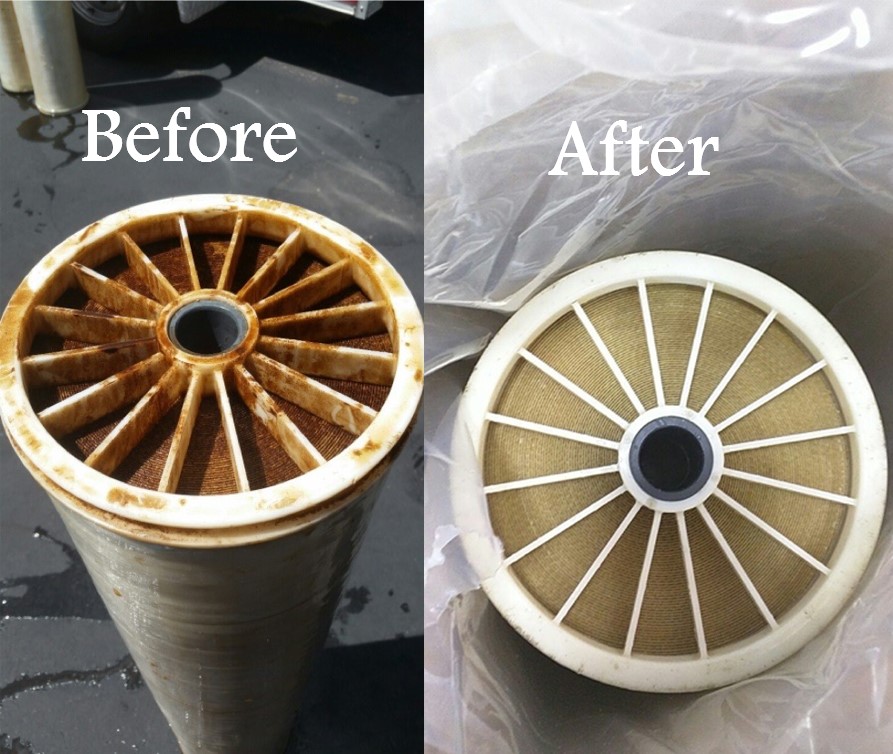
Neglected maintenance is a top cause of loud, strained noises. When filters clog, the pump must work harder, which directly explains why your water purifier makes noise.
Change Pre-Filters Every 6 to 12 Months
- Sediment filter: Blocks sand, rust, and dirt. When clogged, the pump strains and creates a loud hum.
- Carbon filter: Removes chlorine and odors. A dirty carbon filter increases resistance and noise.
Signs of clogging:
– Decreased water flow
– Louder pump noise
– Longer fill times for the storage tank
Action: Replace both pre-filters every 6 months, or sooner if you use borewell water with high sediment.
Replace the RO Membrane Every 2 to 3 Years
- A fouled membrane from scaling or biofilm forces the pump to run longer and louder.
- Scaling increases operating pressure and strains the entire system.
Check for fouling:
– Low water production
– High TDS readings in filtered water
– Persistent noise even after replacing pre-filters
Replace the RO membrane every 2 to 3 years or as recommended by the manufacturer.
Check Valves and Water Pressure
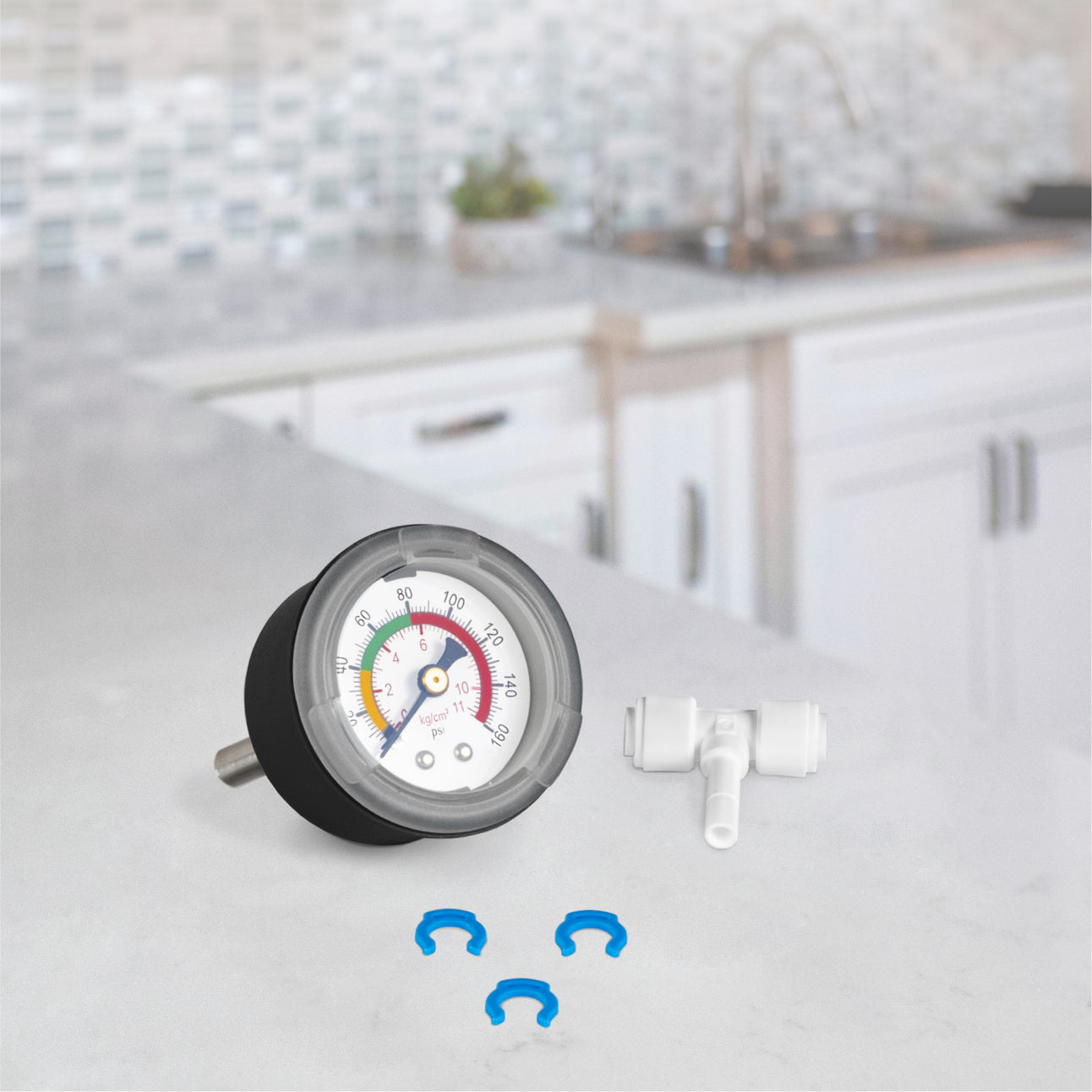
Improper pressure or faulty valves can turn a quiet system into a noisy one overnight.
Ensure Full Inlet Valve Opening
- The shut-off valve under the sink must be fully open.
- A partially closed valve causes turbulent flow and hissing sounds.
Test Your Water Pressure
- Ideal range: 40 to 80 PSI
- Too low (below 40 PSI): The pump struggles, causing pulsating and gurgling
- Too high (above 80 PSI): Causes hissing, whistling, and water hammer
Solution: Install a pressure regulator if your inlet pressure exceeds 80 PSI.
Inspect the Check Valve
- A failed check valve allows water to flow back into the membrane.
- When the system restarts, it must re-pressurize, causing loud cycling and gurgling.
Test: If the system runs frequently when no water is being used, the check valve may be leaking.
Replace the check valve if you find damage.
Install a Water Hammer Arrestor
- Prevents loud banging when the system shuts off.
- Install near the inlet valve.
- Screws onto the water line like a standard filter for an easy DIY fix.
Upgrade to a Quiet Water Purifier System
If noise persists despite your best efforts, consider upgrading to a modern low-noise system designed with silence technology.
Choose Inverter or Variable Speed Pumps
- Standard pumps: Run at full speed constantly, making them loud and inefficient
- Inverter pumps: Adjust speed based on demand, running quieter and lasting longer
- Noise level: Can reduce sound to under 40 dB, which is near silence
Look for “Silence Technology” or “Low-Noise Pump” labels in product specifications.
Opt for Non-Electric Designs
- Some tankless RO systems use only incoming water pressure, eliminating the pump entirely.
- These require a minimum of 60 PSI inlet pressure to function.
- They are virtually silent but unsuitable for homes with low water pressure.
Select Systems with Acoustic Damping
- Built-in foam pads, rubber mounts, and insulated enclosures absorb sound before it escapes.
- Look for models with rubber feet, smooth hydraulic pathways, and smart cycle scheduling that avoids nighttime operation.
Follow a Preventive Maintenance Schedule
Prevent noise before it starts with regular care and attention.
Monthly Tasks
- Flush the system by running the faucet for 2 to 3 minutes
- This prevents air locks and maintains steady flow
Every 6 Months
- Replace sediment and carbon pre-filters
- Inspect tubing for cracks or loose connections
Every 2 to 3 Years
- Replace the RO membrane
- Monitor TDS levels to detect early fouling
Annually
- Inspect mounting hardware and tighten screws
- Check rubber feet and replace worn dampeners
After Any Filter Change
- Run water for 5 to 10 minutes to remove trapped air
- Listen for unusual sounds during the first cycle
When to Call a Professional
Some issues require expert help rather than DIY repairs.
Booster Pump Is Grinding
- Do not attempt DIY repair on the pump motor.
- Worn bearings or cracked housings need professional replacement.
- Continuing to run a failing pump can damage the entire system.
Persistent Hissing at the Faucet
- May indicate a split in the air gap drain tube.
- Trim damaged tubing or replace the air gap faucet.
- Never bypass the air gap, as it is a critical health and safety feature.
Continuous Noise After All Fixes
- Could indicate internal valve failure, membrane blockage, or complex hydraulic issues.
- Contact manufacturer support or a certified water treatment technician.
Frequently Asked Questions About Water Purifier Noise
Is it normal for a water purifier to make noise?
A soft hum is normal, especially in RO systems with booster pumps that operate around 50 dB. However, grinding, loud buzzing, hissing, or banging sounds indicate problems that need attention.
Why does my water purifier make noise only at night?
Many systems run automatic flush cycles during low-usage hours. Running the faucet in the evening can shift purge cycles to daytime and reduce nighttime noise.
Can clogged filters really cause that much noise?
Yes. Clogged pre-filters force the booster pump to work significantly harder to pull water through. This strain creates a loud, groaning sound and shortens pump lifespan if left unaddressed.
What is the ideal water pressure for a quiet RO system?
The recommended inlet pressure range is 40 to 80 PSI. Pressure below 40 PSI causes pump strain and pulsating noises, while pressure above 80 PSI creates hissing and water hammer effects.
How often should I replace filters to prevent noise?
Replace sediment and carbon pre-filters every 6 months and the RO membrane every 2 to 3 years. Regular replacement prevents the strain that causes loud pump operation.
Should I worry about a grinding sound from my purifier?
Grinding sounds signal imminent pump failure from worn bearings or a cracked pump head. Turn off the system immediately and contact a technician to avoid further damage.
Key Takeaways for a Quiet Water Purifier
A slight hum from your water purifier is normal, but grinding, loud buzzing, hissing, or banging sounds mean something needs fixing. Most noise issues stem from loose parts, clogged filters, trapped air, or pressure problems, all of which you can resolve with simple steps. Start by tightening the unit, flushing the system, and replacing old filters. If noise continues, check your valves, water pressure, and tubing connections.
For a permanent quiet solution, consider upgrading to a model with an inverter pump or built-in silence technology. Regular maintenance not only keeps your system quiet but also extends its life and ensures consistently clean, safe water. Listen to what your purifier is telling you. Addressing noise early prevents costly repairs and keeps your household peaceful.