How to Purify Water After Nuclear Fallout
When nuclear fallout occurs, securing safe drinking water becomes a life-or-death priority. The danger comes from radioactive isotopes like Cesium-137, Strontium-90, and Iodine-131—particles and dissolved elements that enter water through dust, debris, or groundwater infiltration. These contaminants cannot be seen, tasted, or smelled, yet they cause cancer, organ damage, and long-term illness.
Boiling, standard camping filters, and chemical tablets will not protect you—and some methods actually concentrate radiation. Survival depends on using multi-barrier systems that target both suspended particles and dissolved isotopes. After fallout arrives, waiting 48–72 hours lets short-lived isotopes decay, but when water is needed immediately, precision matters most.
This guide provides a step-by-step plan to purify water after nuclear fallout using proven technologies, DIY methods, and strategic safety practices.
Prioritize Safe Water Sources Before Purification
Choose the Lowest-Risk Supplies First
Source selection is your first line of defense. Use this priority list to find the safest water available:
- Sealed bottled water – Unopened containers stored indoors are the gold standard.
- Household plumbing – Water in your water heater or pipes is shielded from fallout. Flush taps briefly before drinking.
- Emergency water bladders – Devices like WaterBob, filled pre-disaster, offer large-volume protection.
- Sealed underground wells – Groundwater filtered through soil is safer, but only if the well cap is airtight.
- Seepage wells (5+ feet from rivers) – Dug holes below the water table benefit from natural soil filtration.
Avoid open tanks, surface water like lakes and ponds, and rainwater collected during or right after fallout. Assume municipal water is unsafe unless authorities confirm otherwise.
Protect Existing Water Supplies Immediately
If warning is given, act fast:
- Cover open cisterns or tanks with plastic sheeting secured with weights.
- Fill bathtubs, sinks, and bladders before fallout arrives.
- Seal wellheads with waterproof tape or metal caps.
Fallout can arrive within minutes to hours of detonation, so every second counts.
Avoid Ineffective Purification Methods That Create False Safety
Boiling Concentrates Radiation
Boiling kills bacteria and viruses but does nothing to remove radioactive isotopes. Worse, evaporation reduces water volume and concentrates contaminants. Never rely on boiling alone after nuclear fallout.
Standard Filters Offer No Protection
Household pitcher filters like Brita, faucet filters, and most camping filters (LifeStraw, Sawyer) only remove sediment, protozoa, and bacteria. Their pores are thousands of times too large to capture dissolved radionuclides. Using them creates a dangerous false sense of security.
Chemical Disinfectants Fail Against Radiation
Chlorine or iodine tablets kill microbes but have zero effect on radioactive particles. They are useful after radiological treatment if biological contamination is suspected, but never as a standalone solution.
Sand or Soil Filters Are Incomplete
Sand, gravel, and clay can remove visible debris and some heavy particles, but they do not eliminate dissolved isotopes like Strontium-90 or Cesium-137. Use them only as a pre-filter, not final purification.
Use Proven Purification Technologies That Actually Work
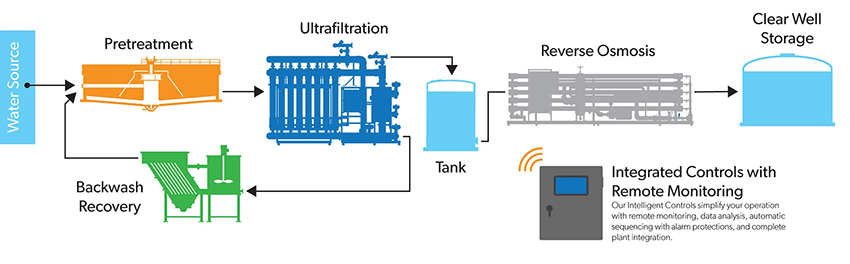
Distillation Removes Nearly All Radionuclides
Distillation is the most reliable single method for removing radioactive contaminants.
How it works:
Water is heated to steam; contaminants with higher boiling points (heavy metals and most radionuclides) remain behind. The steam cools and condenses into pure water.
Effectiveness:
– Removes 99% or more of dissolved solids, including Uranium, Radium, Cesium, and Strontium.
– Leaves radioactive sludge in the boiling chamber, which is hazardous waste.
Limitations:
– Volatile gases like Radon and Iodine-131 vapor may carry over.
– Pair with an activated carbon post-filter to capture these gases.
Practical options:
– Countertop distillers ($100–$300): Produce 1–2 gallons per hour, ideal for long-term use.
– DIY still: Use a pot, lid, bowl, and ice to condense steam.
– Clean the boiler after every use and treat sludge as radioactive waste.
Reverse Osmosis Blocks Dissolved Isotopes
RO forces water through a semi-permeable membrane with pores as small as 0.0001 microns, blocking dissolved ions.
Targeted contaminants:
– Removes 90–99% of Uranium, Radium, Cesium, Strontium, and gross alpha/beta particles.
– Most effective when paired with pre- and post-filters.
Critical requirements:
– Pre-filters: Remove sediment to prevent membrane clogging.
– Carbon post-filter: Captures volatile radionuclides like Radon.
– TDS meter: Monitor output. Rising Total Dissolved Solids means membrane failure.
Limitations:
– Wastes 3–5 gallons for every gallon purified.
– Membranes clog quickly in contaminated water. Replace filters aggressively.
– Requires water pressure or a pump; solar-powered systems work off-grid.
Activated Carbon Traps Radioactive Gases
Activated carbon adsorbs contaminants onto its porous surface.
Key strengths:
– Highly effective at removing Iodine-131 and Radon-222, which other methods miss.
– Works best as a pre- or post-stage in multi-system setups.
Best sources:
– Coconut shell-based carbon has higher adsorption capacity.
– Use in combination with RO or distillation for full-spectrum protection.
Replace often:
Carbon becomes saturated. In a fallout event, change filters after 10–20 gallons or within days, whichever comes first. Treat used filters as hazardous waste.
Ion Exchange Targets Bone-Seeking Isotopes
Ion exchange resins swap harmless ions (like sodium) for radioactive ones in water.
Most effective against:
– Strontium-90 (mimics calcium and accumulates in bones).
– Cesium-137, Radium-226, and Uranium.
How to use:
– Found in some water softeners.
– In emergencies, pack resin beads into a column filter between carbon and RO stages.
– Replace frequently; resin becomes radioactive over time.
Build a Multi-Barrier Purification System for Maximum Safety
Combine Methods to Cover Every Threat
No single method removes all radionuclides. Use layered filtration for complete protection.
Best combinations:
1. Reverse Osmosis + Carbon + Sediment Pre-Filter
– Removes particulates, dissolved ions, and gases.
– Monitor TDS weekly.
2. Distillation + Carbon Post-Filter
– Eliminates solids and captures volatile gases.
– Clean boiler after each batch.
3. Ion Exchange + RO
– Specialized defense against Strontium and Cesium.
Commercial Systems That Work
- Seychelle Radiological Filter: Removes Gross Alpha, Beta, Radium, Cesium, and Uranium. Portable and field-ready.
- Alexa Pure Pro: Advertised to remove over 95% of uranium and radionuclides.
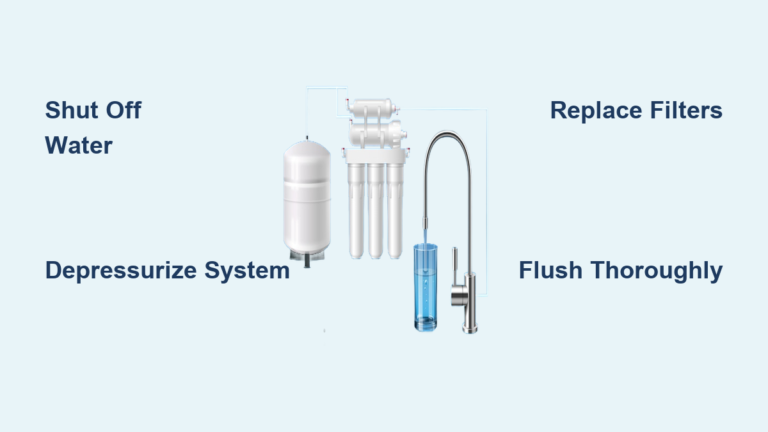
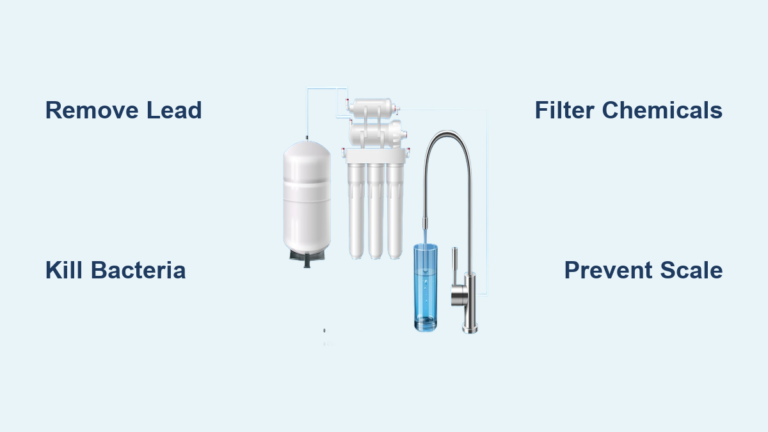
- New Aqua 7-Stage RO with UV: Home system with carbon, RO, and disinfection.
- Berkey with Radionuclide Elements: Only effective if equipped with PF-2 or PF-4 filters; standard black filters do not remove radiation.
Implement Emergency DIY Methods When Commercial Systems Are Unavailable
Build a Multi-Layer Gravity Filter
Materials (5-gallon bucket or bottle):
– Bottom layer (20%): Crushed limestone or oyster shells to bind Strontium-90.
– Middle layer (20%): Fine sand to remove fine particulates.
– Top layer (20%): Activated carbon to adsorb gases like Iodine-131.
– Topmost: Coarse sand and cloth to prevent clogging.
How to use:
1. Drill holes in the container bottom.
2. Layer materials in order.
3. Pour water slowly and collect filtrate.
4. Discard the first few batches if cloudy.
5. Replace media every 20–50 gallons or after 3 days in fallout conditions.
Construct a Solar Still for Passive Distillation
Use when fuel or electricity is unavailable.
- Dig a 3-foot wide, 2-foot deep pit in a sunny area.
- Place a clean container in the center.
- Surround with contaminated water or wet vegetation, keeping it out of the container.
- Cover with clear plastic and seal edges with soil.
- Place a small rock in the center to create a drip point.
Sun heats water, it evaporates, condenses on the plastic, and drips into the container. This method produces 0.5–1 quart per day per square foot and removes most dissolved solids and radionuclides.
Settle and Decant Before Filtering
Reduce contaminant load before final purification:
- Collect water from still sources (ponds over rivers).
- Let sit undisturbed for 2 or more hours.
- Heavy particles sink to the bottom.
- Carefully pour off the top 70–80% and avoid stirring the bottom sludge.
- Use decanted water for distillation or filtration.
Test, Maintain, and Manage Waste Safely
Testing Is Limited but Essential
What works:
– Lab testing: Send samples to certified labs for radionuclide analysis.
– Specialized kits: Gross alpha/beta test strips (e.g., ProLab) give rough estimates.
– TDS meter: For RO systems, rising levels mean membrane failure.
What doesn’t work:
– Geiger counters: Cannot detect dissolved isotopes in water without drying samples or using immersion probes. Not reliable for water testing.
Handle Radioactive Waste with Extreme Care
Purification concentrates radiation; the waste is dangerous.
Safe disposal steps:
– Used filters, resins, carbon: Seal in plastic bags, label “Radioactive Waste,” and store away from living areas.
– Distillation sludge: Wipe with paper towels, double-bag, and do not pour down drains.
– DIY filter media: Treat sand, clay, and charcoal as contaminated. Bury deep or store securely.
– Never reuse any component that contacted fallout water.
Maintain Systems Aggressively
In a contamination event:
– Replace filters far more often than recommended.
– Sanitize storage containers with bleach (rinse thoroughly) to prevent biological growth.
– After radiological treatment, add UV or chlorine if microbial risk is suspected.
Prepare Now for Long-Term Safety
Store Water Before Disaster Strikes
Guidelines:
– Minimum: 1 gallon per person per day for 3 days.
– Ideal: 2-week supply (14 gallons per person).
– Use food-grade containers: HDPE plastic (labeled #2), glass, or water bladders.
– Rotate every 6 months and store in a cool, dark place.
Best storage options:
– WaterBob: Fills bathtub for up to 100 gallons.
– 55-gallon drums: Store underground or in shaded areas.
– Bury tanks: Protects from heat, light, and fallout.
Protect Wells and Tanks
- Seal well caps with waterproof gaskets.
- Use solar-powered pumps to avoid opening the well.
- Cover open cisterns immediately with tarps and sandbags.
Know When Evacuation Is the Only Option
- Iodine-131 decays in weeks.
- Cesium-137 and Strontium-90 remain hazardous for 30 or more years.
- If contamination is severe (near ground zero), no filtration will make long-term habitation safe.
- Monitor government radiation maps and wind patterns.
- Have an evacuation plan with a destination outside predicted fallout zones.
Frequently Asked Questions About Purifying Water After Nuclear Fallout
Does boiling water remove radioactive contamination?
No. Boiling kills bacteria and viruses but does not remove radioactive isotopes. In fact, boiling evaporates clean water and concentrates the radioactive contaminants that remain, making the water more dangerous.
Can a LifeStraw or Brita filter protect against fallout?
No. Standard camping filters and pitcher filters have pore sizes of 0.1 to 0.2 microns, which are far too large to capture dissolved radioactive ions. These filters only remove sediment, protozoa, and bacteria, offering zero protection against radiation.
How long after fallout is water safe to drink naturally?
Waiting helps but is not a complete solution. Short-lived isotopes like Iodine-131 decay significantly within weeks. However, long-lived isotopes like Cesium-137 and Strontium-90 remain hazardous for 30 or more years, so natural decay alone is not enough for long-term survival.
What is the best single method to remove radiation from water?
Distillation is the most effective single method, removing 99% or more of dissolved radionuclides. However, it does not capture volatile gases like Radon, so pairing distillation with an activated carbon post-filter provides the most complete protection.
Can I use rainwater collected after fallout?
Rainwater collected during or immediately after fallout is unsafe because it can carry radioactive particles. If you must collect rainwater afterward, use clean collection surfaces and filter the water through a multi-stage system including RO or distillation.
How do I safely dispose of used water filters after a fallout event?
Seal all used filters, resins, and carbon in plastic bags labeled “Radioactive Waste.” Store them away from living areas and never reuse them. Distillation sludge should be wiped with paper towels, double-bagged, and disposed of in the same manner.
Key Takeaways for Surviving Nuclear Fallout Water Contamination

After nuclear fallout, water safety depends on preparation, layered filtration, and disciplined waste management. Boiling and camping filters will not protect you, so invest in distillation, reverse osmosis, or multi-stage systems that remove both particles and dissolved isotopes. Store at least a two-week water supply now, protect your sources by sealing wells and covering tanks, and treat all post-fallout waste as hazardous.
Your life may depend on the choices you make before the first warning siren sounds. Start building your emergency water supply and filtration system today, because when fallout arrives, there will be no time to prepare.
Sources:
– Environmental Working Group
– EPA Maximum Contaminant Levels
– CDC Radiation Emergencies