Does Purified Water Have Minerals?

You’ve probably grabbed a bottle labeled “purified water” and wondered what that really means for your health. Does purified water have minerals? In most cases, no. Purified water undergoes treatment processes specifically engineered to strip out impurities, including the calcium, magnesium, and potassium you’d find in spring or tap water.
What you get is water with a clean, neutral taste and a Total Dissolved Solids (TDS) count under 10 parts per million (ppm)—the U.S. regulatory threshold for the “purified” label. While perfectly safe for hydration, this mineral-light profile raises real questions about taste, dietary impact, and when purified water is the right choice.
This guide breaks down exactly how purification removes minerals, how purified water compares to other types, and what the mineral deficit means for your health. You’ll also learn the best uses for purified water and when to reach for something else.
How Purification Removes Minerals

Purified water starts as tap, groundwater, or surface water. It then passes through advanced treatment systems designed to eliminate contaminants—and minerals—down to trace levels. The goal is purity, not mineral retention.
Distillation: Boil and Condense
Distillation heats water until it becomes steam, leaving non-volatile substances like calcium, magnesium, and heavy metals behind in the boiling chamber. The steam cools and condenses back into liquid, producing water that is nearly mineral-free.
- Mineral removal: Over 99%
- TDS level: Typically 1–5 ppm
- Limitation: May not capture volatile organic compounds (VOCs) unless paired with a carbon filter
Because minerals don’t vaporize at water’s boiling point, they stay trapped in the original chamber. This makes distilled water—one of the purest forms available—virtually mineral-free.
Reverse Osmosis: Filter at the Molecular Level
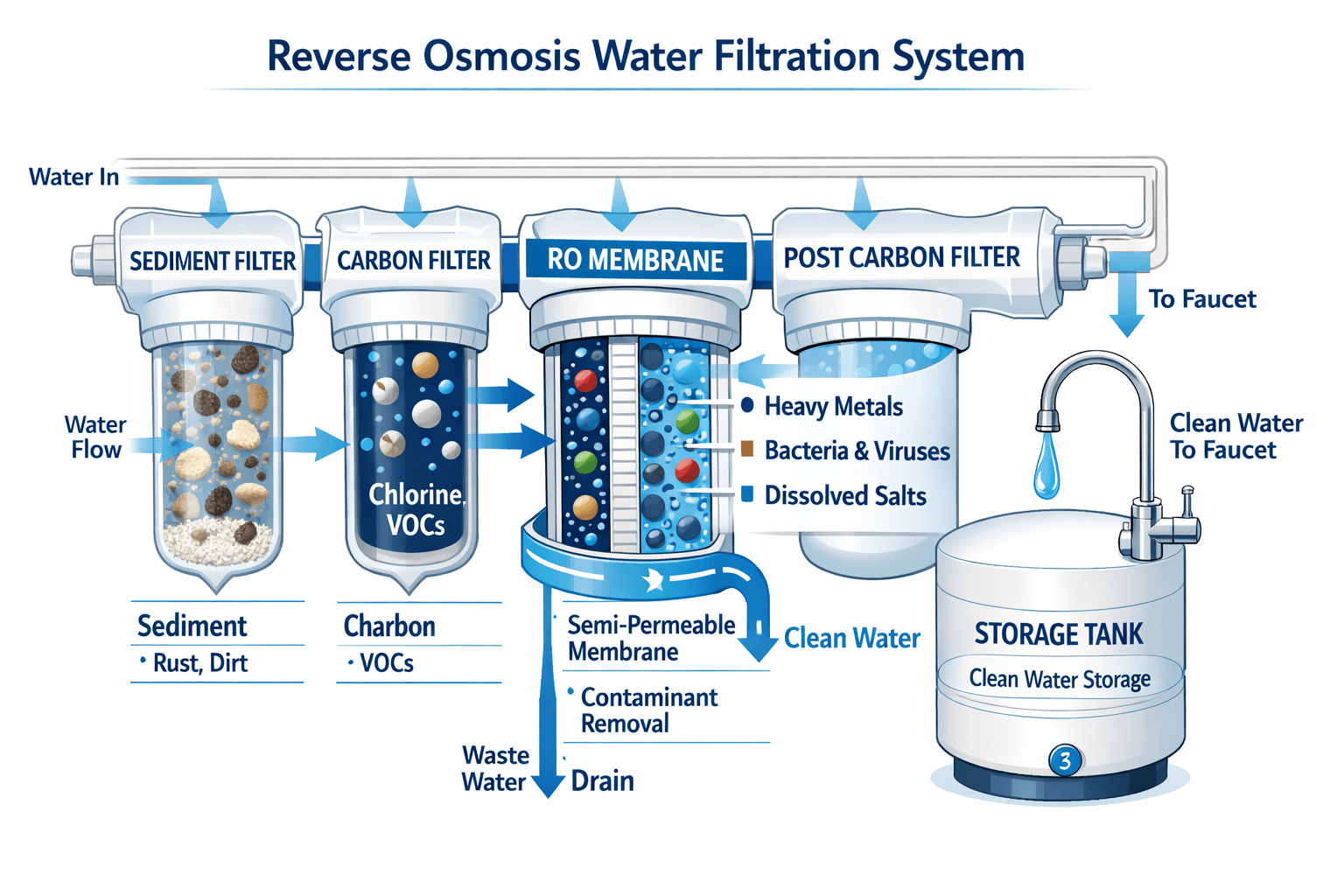
Reverse osmosis (RO) forces water through a semi-permeable membrane that blocks dissolved solids, including salts and minerals. Most systems include pre-filters and post-filters to boost performance.
- Mineral removal: 90–99%, depending on membrane quality
- TDS reduction: From 100+ ppm down to under 10 ppm
- Optional step: Some RO units add a remineralization cartridge to reintroduce calcium and magnesium after filtration
Without that final stage, RO water tastes flat and lacks electrolytes. It’s ideal for appliances but less satisfying for daily drinking.
Other Methods: Varying Mineral Impact
Not all purification methods strip minerals equally. Here’s how the most common options compare:
- Deionization: Uses resin beads to remove mineral ions, producing ultra-pure water for labs and industrial use.
- Activated Carbon: Reduces chlorine and odors but does not effectively remove dissolved minerals.
- UV Treatment: Kills bacteria and viruses but leaves minerals and chemicals untouched.
Only comprehensive systems like RO or distillation remove minerals in meaningful amounts. Basic carbon filtration improves taste but retains most of the original mineral content.
Purified vs. Other Water Types: Mineral Comparison
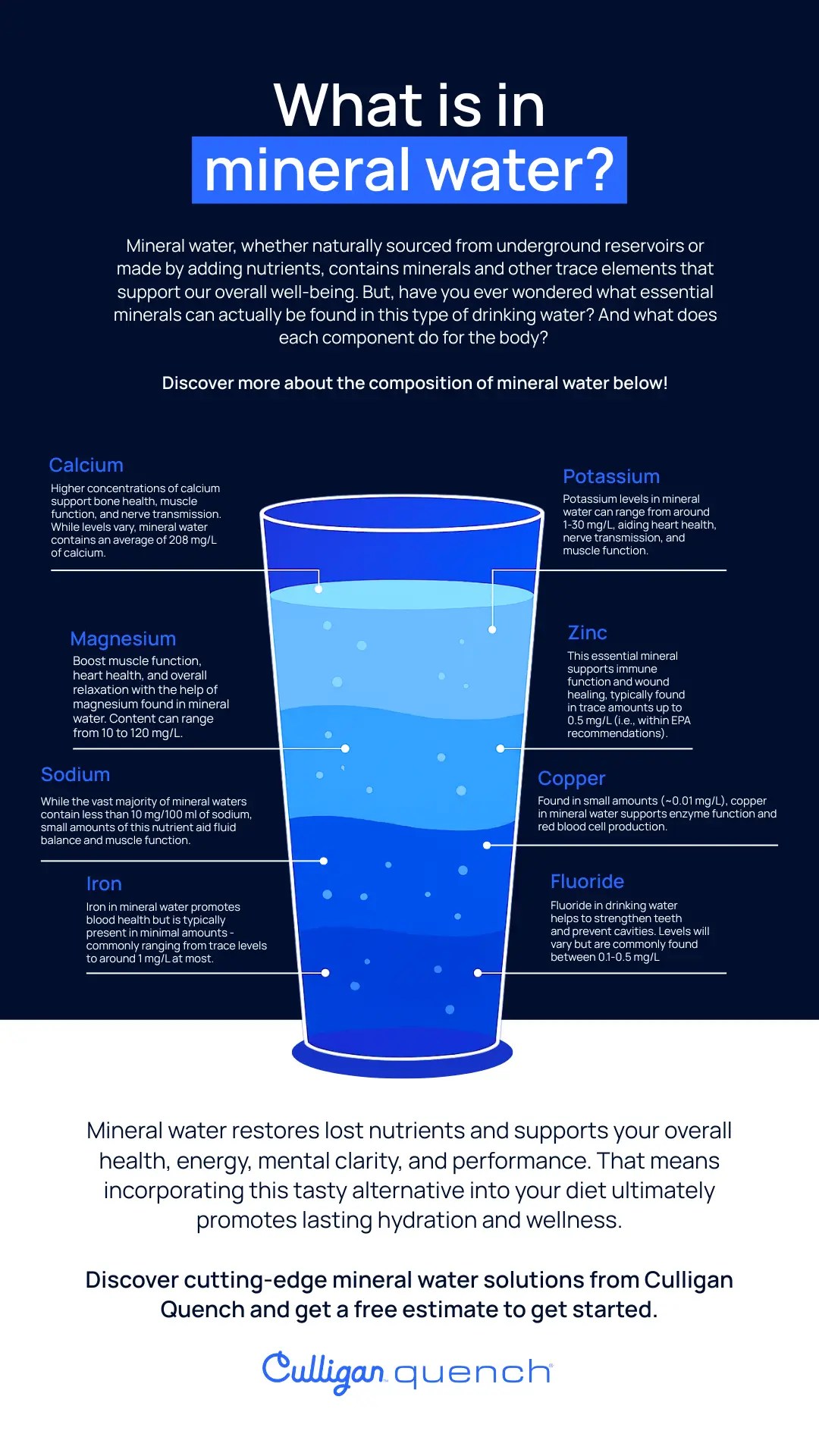
Not all “clean” water is the same. Here’s how purified water stacks up against common alternatives:
| Water Type | Mineral Content | TDS Range (ppm) | Best For |
|---|---|---|---|
| Purified | Very low to none | Under 10 | Appliances, safety-focused use |
| Distilled | Essentially zero | 1–5 | Medical devices, labs |
| Filtered | Variable | 50–200 | Daily drinking, taste improvement |
| Spring | High (natural) | 150–500+ | Taste, mineral intake |
| Mineral | High (regulated) | 200–500+ | Health-focused consumption |
Purified vs. Distilled: What’s the Difference?
All distilled water is purified, but not all purified water is distilled. Distilled water always goes through phase change (liquid to vapor to liquid), which guarantees mineral removal. Purified water may use RO, distillation, or deionization—most methods strip minerals, but not always completely.
For medical devices or sensitive appliances, distilled water remains the gold standard.
Spring Water: Nature’s Mineral Source
Spring water comes from underground aquifers and keeps its natural mineral profile. It’s regulated for safety but valued for taste and mineral content—especially calcium and magnesium, which create that satisfying “crispness” and mouthfeel.
Purified water lacks this character. Without minerals, many people describe it as flat or bland.
Health Implications of Mineral-Free Water
Drinking purified water is safe, but the lack of minerals sparks ongoing debate. Here’s what the evidence actually shows.
Is It Safe to Drink Daily?
Yes. The FDA and EPA confirm that purified water meets strict safety standards. It removes harmful contaminants like lead, chlorine, bacteria, and PFAS, making it safer than untreated tap water in many regions.
A few important clarifications:
- It does not cause dehydration.
- It does not leach minerals from your body (a common myth).
- It lacks electrolytes, so heavy exercisers should replenish through food or sports drinks.
Does It Affect Your Mineral Intake?
For most people, the answer is no. You don’t rely on water as a primary source of calcium or magnesium. A single banana or a serving of spinach delivers more potassium than gallons of mineral water.
That said, there are exceptions:
- If your diet is poor and you drink only purified water, you may miss out on small but meaningful mineral contributions.
- Long-term consumption of demineralized water without dietary compensation could theoretically contribute to deficiencies, though strong evidence is limited.
A balanced diet easily offsets the lack of minerals in purified water.
Who Should Be Cautious?
- Immunocompromised individuals: Benefit from purified water due to thorough pathogen removal.
- Kidney patients: Should consult a doctor, as some require controlled mineral intake.
- Infants on formula: Use distilled or purified water to avoid contaminants.
Taste and Sensory Differences
The absence of minerals changes how water feels and tastes—and not everyone enjoys the difference.
Why Purified Water Tastes “Flat”
Minerals like calcium and magnesium add structure to water. Without them:
- Water feels lighter in the mouth
- It lacks the crisp bite of spring water
- Some people detect a slightly metallic or acidic aftertaste from dissolved CO₂
This isn’t a flaw. It’s a natural result of extreme purity. But many find it unappealing for everyday drinking.
Remineralization: Fixing the Flavor
Many modern RO systems include a remineralization stage that adds back:
- Calcium carbonate
- Magnesium
- Potassium
This improves taste while restoring trace minerals. Bottled brands like Essentia and LIFEWTR use similar technology.
Pro tip: If your purified water tastes flat, try chilling it thoroughly or adding a tiny pinch of Himalayan salt to restore some electrolyte character.
Best Uses for Purified Water

Mineral-free water excels in specific applications—just not always for drinking.
Ideal for Appliances and Devices
Minerals cause scale buildup, which damages equipment over time. Use purified or distilled water for:
- CPAP machines: Prevents limescale in humidifier chambers. Manufacturers recommend distilled water only.
- Humidifiers and steam irons: Avoids white dust and internal clogging.
- Car batteries and cooling systems: Prevents corrosion and conductivity issues.
- Laboratory and medical use: Ensures chemical accuracy and sterility.
Warning: Never use spring or standard tap water in these devices.
When to Choose Filtered or Spring Water
For daily drinking and cooking, consider alternatives:
- Filtered tap water (carbon or partial RO) retains some minerals and improves taste.
- Spring water offers natural minerals and superior mouthfeel.
- Refrigerator filters typically don’t remove minerals, striking a good balance between taste and safety.
Maintenance and System Tips
A poorly maintained purification system can become a contamination source rather than a solution.
Replace Filters on Schedule
Old filters can:
- Release trapped contaminants back into the water
- Harbor bacteria
- Reduce overall system efficiency
Follow manufacturer guidelines—typically every 6–12 months for RO membranes and 2–6 months for carbon filters.
Clean and Sanitize Regularly
- Distillers: Clean the boiling chamber monthly to remove mineral residue.
- RO tanks: Sanitize annually to prevent biofilm growth.
- CPAP water chambers: Wash daily and always use distilled water.
Test Your Water
A simple TDS meter ($10–20) gives you instant feedback:
- Under 10 ppm = purified
- 50+ ppm = likely filtered, not purified
- Sudden TDS spike = possible filter failure
Home test kits can also screen for lead, chlorine, and hardness.
Frequently Asked Questions About Purified Water and Minerals
Does purified water have electrolytes?
No. It lacks sodium, potassium, calcium, and magnesium—the key electrolytes your body uses for hydration and nerve function. Replenish these through food or electrolyte drinks if needed.
Is boiled water the same as purified?
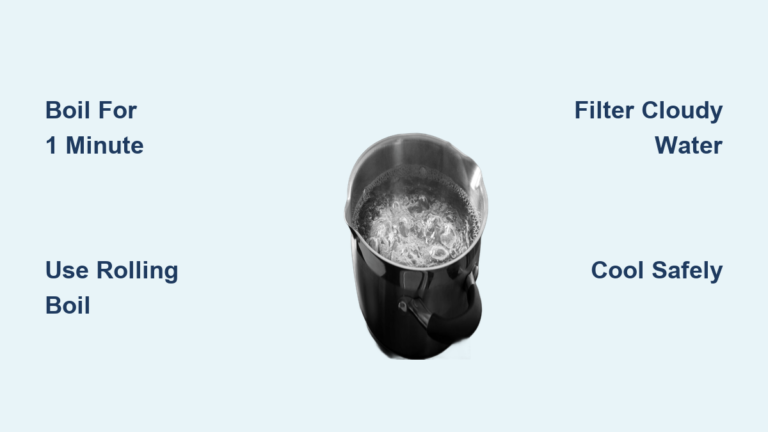
No. Boiling kills bacteria and viruses but does not remove minerals, lead, or chemical contaminants. It’s a disinfection method, not a purification method.
Can I use purified water in my CPAP?
Only if it’s distilled or RO water. Some bottled “purified” waters still contain enough minerals to cause scaling over time. Distilled remains the safest choice.
Does purified water cause kidney stones?
No evidence supports this claim. Staying well hydrated with any safe water actually helps prevent stone formation.
Is purified water more acidic?
Slightly. Without buffering minerals, it can absorb CO₂ and drop to a pH of around 5.5–6.5. However, your body regulates pH effectively, so this has no meaningful health impact.
Key Takeaways: Understanding Minerals in Purified Water
So, does purified water have minerals? Generally, no. The purification process is specifically designed to remove them, leaving you with water that contains under 10 ppm of total dissolved solids.
Here’s what matters most:
- Purified water is safe for daily drinking and excels in appliances and medical devices.
- It lacks minerals that contribute to taste and minor nutritional value, which is why it often tastes flat.
- Your diet matters more than your water source when it comes to mineral intake.
For the best approach, use purified or distilled water for devices like CPAP machines and humidifiers. For daily hydration, consider filtered, spring, or remineralized water to enjoy better taste and trace mineral benefits. Pair either choice with a balanced diet, and you’ll stay well-hydrated and properly nourished.