How to Purify Pool Water for Drinking
Your backyard pool holds 15,000 to 30,000 gallons of water. In a municipal supply failure or natural disaster, that volume could sustain your family for weeks. But pool water is treated for swimming, not survival, and drinking it straight from the source can cause nausea, chemical burns, or serious infection.
The good news is that pool water can be purified into safe drinking water with the right approach. This guide walks you through assessment, filtration, chemical removal, and pathogen elimination based on your specific situation. You’ll learn which methods work for chlorinated pools, saltwater systems, and stagnant water, plus which critical mistakes to avoid when your health is on the line.
Assess Your Pool Water Condition First

The purification method you choose depends entirely on what’s in your pool. Skipping this step can leave you with water that’s still dangerous to drink.
Check Visual and Olfactory Clues
Your senses reveal a lot about contamination level:
- Clear and odorless: Recently maintained. Lower biological risk, but chemical load may be high.
- Green or cloudy: Algae bloom present. High organic load with possible bacterial overgrowth.
- Slimy texture or foul smell: Biological decomposition underway. Treat as high-risk.
- Saltwater pool: Salinity runs 3,000 to 6,000 ppm, far above safe drinking limits of 200 to 500 ppm. Requires desalination.
Test Chemical Levels When Possible
Pool test strips help you understand what you’re dealing with:
- Chlorine: Standard pools maintain 3 to 5 ppm. This must be removed before drinking.
- pH: Readings outside 7.0 to 7.6 may indicate chemical imbalance.
- Cyanuric acid or copper: High levels signal chemical residues requiring advanced filtration.
If you can’t test, assume worst-case contamination and use the most thorough purification method available.
Pre-Filter to Remove Debris and Particulates
Even clear pool water carries fine particles that interfere with later purification steps. Removing them first protects your filters and improves results.
Skim and Settle Particulates
- Skim with cloth: Pour water through a fine mesh, coffee filter, or cheesecloth.
- Let it settle: Store in a bucket for 4 to 6 hours so sediment sinks.
- Decant carefully: Pour off the top layer, leaving sludge behind.
Pro Tip: Use a siphon tube to draw clean water without disturbing sediment at the bottom.
Why Pool Filters Aren’t Enough
Sand, cartridge, and DE filters clean for clarity, not safety. They do not remove dissolved chlorine, heavy metals like copper or iron, viruses, chloramines, or salts in saltwater pools.
Never drink water straight from a pool filter, no matter how clean it looks.
Remove Chlorine and Chloramines
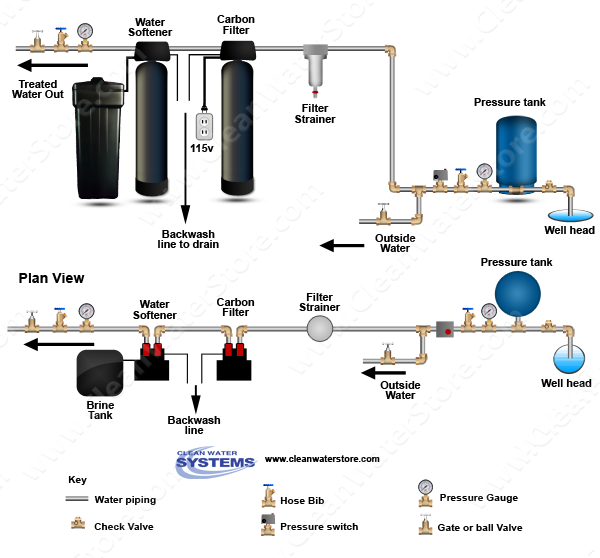
Pool sanitizers must be neutralized before the water is safe to drink. Several methods work, each with specific applications.
Activated Carbon Filtration
Activated carbon is essential for removing chlorine, chloramines, and organic chemicals.
- Best options: Berkey, LifeStraw Mission, or DIY carbon columns
- Effectiveness: Removes over 99% of chlorine and improves taste
- Limitation: Does not remove salts or viruses
Replace carbon filters regularly. Saturated filters can leach contaminants back into your water.
Chemical Neutralization with Sodium Thiosulfate
For fast, complete dechlorination:
- Dosage: 1 gram per 100 gallons
- Source: Aquarium or photography supply stores
- Process: Stir into water and wait 15 to 30 minutes
This method neutralizes chlorine and bromine instantly and works reliably in emergencies.
Boiling (Partial Solution Only)
Boiling for 10 to 15 minutes removes free chlorine and some chloramines. However, it concentrates heavy metals and salts, does not kill all pathogens in cloudy water, and leaves behind disinfection byproducts.
Use boiling only after filtration, never as your first step.
Eliminate Pathogens Safely
After removing chemicals, you must sterilize the water to kill bacteria, viruses, and chlorine-resistant parasites like Cryptosporidium and Giardia.
Boil for Full Sterilization
After chemical and particulate removal, boiling kills all pathogens.
- Rolling boil for 1 minute (3 minutes above 6,500 feet elevation)
- Efficacy: Destroys bacteria, viruses, Giardia, and Cryptosporidium
- Warning: Do not boil first. It concentrates toxins rather than removing them.
UV Purification for Clear Water
UV light destroys microbial DNA by damaging their ability to reproduce.
- Requires: Clear water with low turbidity
- Flow rate: Slow for full exposure (follow device specifications)
- Best for: Final step after carbon and sediment filtration
UV does not work on cloudy water and does not remove chemical contaminants.
Bleach Treatment (Use with Caution)
Only use bleach if chlorine was neutralized first.
- Type: Unscented household bleach with 5 to 6% sodium hypochlorite
- Dosage: 6 to 8 drops per gallon
- Wait: 30 minutes minimum, up to 24 hours for full kill
- Check: A faint chlorine smell should be present
Never use scented, color-safe, or additive-laden bleach. The fragrances and thickeners can be toxic when ingested.
Desalinate and Remove Heavy Metals
Standard filtration cannot address dissolved salts or heavy metals. For saltwater pools or pools treated with copper-based algaecides, you need advanced methods.
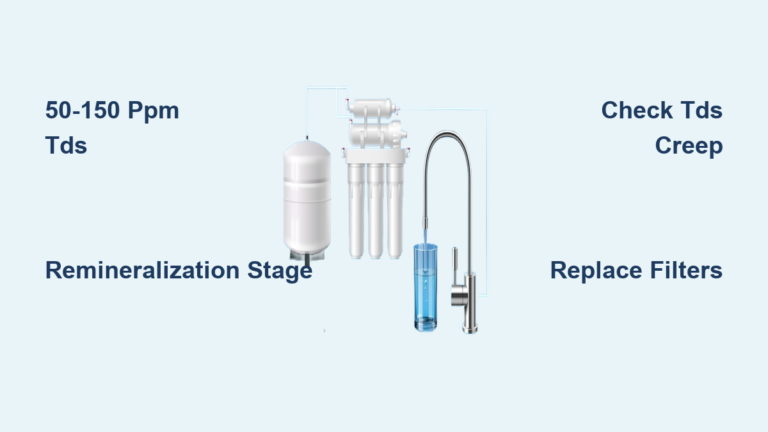
Reverse Osmosis for Salt and Metals
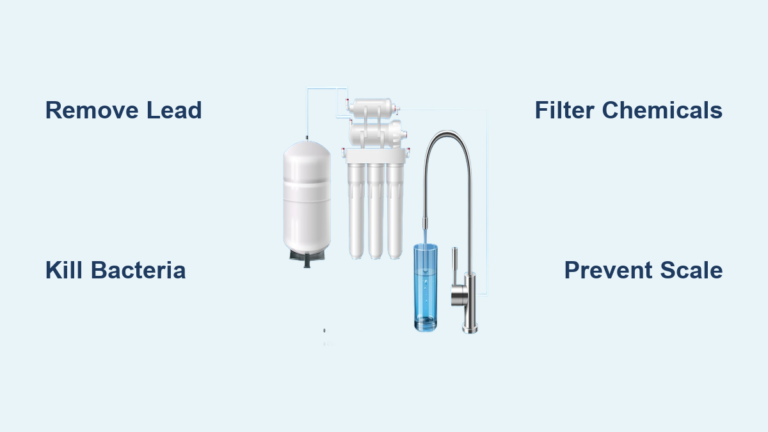
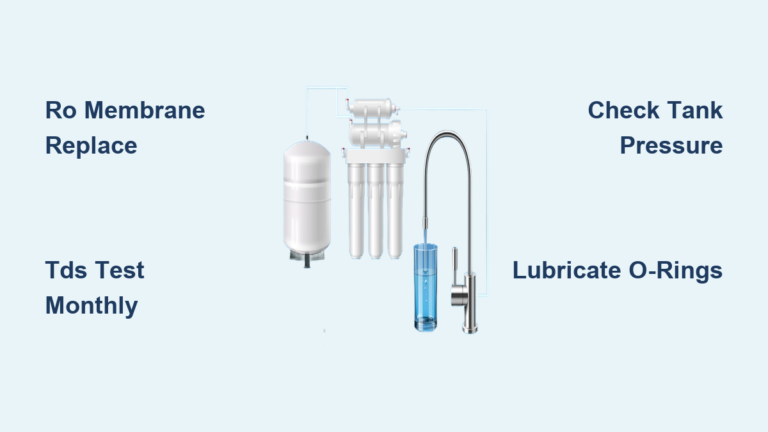
RO is one of the few methods that removes dissolved salts, heavy metals like copper and lead, pesticides, nitrates, and disinfection byproducts.
Requirements include:
- Pre-filtration with sediment and carbon stages
- A pressure source such as a hand pump or electric pump
- A waste line to expel concentrated contaminants
A reverse osmosis system typically produces 1 to 2 gallons per hour, depending on the model. Survivor-grade portable units like the Katadyn H2O work well for emergencies.
Ion Exchange Resins for Metal Removal
Often built into advanced filters, these resins swap harmful ions like copper and calcium for harmless ones like sodium and hydrogen. Combine them with carbon filtration for best results. The resins need periodic regeneration or replacement.
Distillation: The Safest Method for Unknown Water

When in doubt, distill. It’s the only method that removes everything: salts, chemicals, metals, and pathogens simultaneously.
Heat-Based Distillation
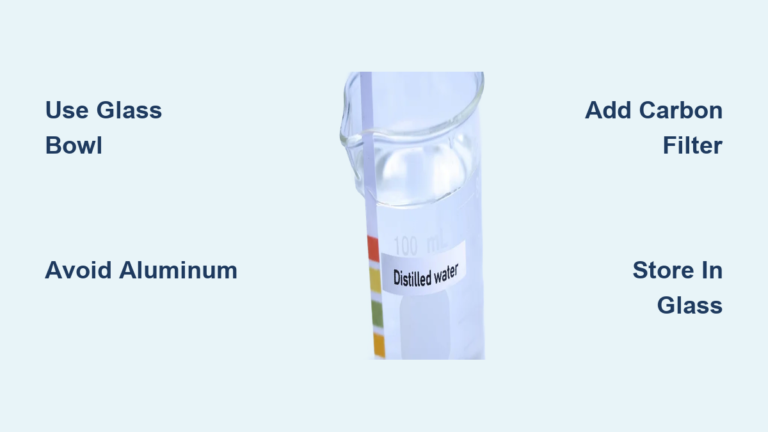
Materials: Large pot, lid, collection bowl, heat source
Steps:
- Fill pot with filtered pool water.
- Place a heat-safe bowl in the center to catch condensate.
- Invert the lid and place ice or a cold wet cloth on top.
- Boil water. Steam condenses on the lid and drips into the bowl.
Expect 1 to 2 gallons per hour depending on fire strength. Angle the lid to direct drips into the collection bowl, and use only glass or stainless steel components.
Solar Distillation
Materials: Black basin, clear plastic sheet, small cup, rock
Steps:
- Pour water into the basin and place the cup in the center.
- Cover tightly with clear plastic.
- Place a rock in the center to create a dip above the cup.
- Sun heats water, vapor condenses on the plastic, and drips into the cup.
Output runs about 0.5 to 1 quart per day per still. Build multiple units for family use. This method is useless in rain or cold weather.
Follow Scenario-Based Protocols

Your specific situation determines the best approach.
Clear, Recently Maintained Pool
Risk: Moderate (chemicals only)
- Pre-filter through cloth
- Run through activated carbon filter
- Boil for 1 minute or UV treat
- Store in a clean container
Time required: Under 30 minutes
Green, Stagnant, or Unknown Pool
Risk: High (chemicals, pathogens, algae)
- Let water settle and decant the clear layer
- Distill. Do not rely on filtration alone.
- Store immediately
Algae carry toxins, and unknown algaecides may include copper sulfate. Only distillation removes all threats.
Saltwater Pool
Risk: High salinity
- Do not boil or chemically treat. Both are ineffective.
- Use distillation or reverse osmosis
- Avoid carbon-only filters
Drinking salt-concentrated water worsens dehydration rather than relieving it.
No Tools, Only Basic Supplies
In pure survival mode:
- Build a solar still using plastic and a container
- Or use pot distillation over a fire
- Collect slowly and prioritize drinking over washing
Coordinate with neighbors to maximize output. Pool water is a shared resource.
Avoid Critical Mistakes
Do Not Boil Pool Water Alone
Boiling without pre-filtration concentrates chlorine, salts, and metals. It may increase toxicity and leaves chemical residues behind. Boiling is a final step, not a first step.
Do Not Drink from a Pool Filter
Pool filters improve clarity, not safety. They do not remove viruses, dissolved chemicals, salts, or heavy metals. The output is still unsafe.
Do Not Ignore Algaecides
Copper-based algaecides are common in pool maintenance. Ingestion causes nausea, liver damage, and long-term toxicity. RO or distillation is required.
Do Not Use Scented Bleach
Only unscented, additive-free bleach is safe for water disinfection. Fragrances and thickeners can be toxic when ingested.
Store Purified Water Safely
Use Food-Grade Containers
Safe options include:
- Glass bottles
- HDPE plastic labeled with recycling code #2
- Stainless steel without lead solder
Avoid milk jugs, which degrade quickly, and unlined metal containers that can corrode.
Keep Water Sealed and Covered
Prevent airborne contamination and block sunlight to avoid algae regrowth. Label each container with the purification date.
Rotate if Storing Long-Term
Use within 6 months unless sealed and stored in a cool, dark place.
Frequently Asked Questions About Purifying Pool Water
Can you drink pool water if you boil it?
Boiling alone is not enough. It kills pathogens but concentrates chlorine, salts, and heavy metals. You must filter and remove chemicals first, then boil as a final sterilization step.
How long do you need to boil pool water?
After pre-filtration and chemical removal, bring water to a rolling boil for 1 minute. At altitudes above 6,500 feet, extend to 3 minutes.
What removes chlorine from pool water?
Activated carbon filtration and sodium thiosulfate (1 gram per 100 gallons) both effectively neutralize chlorine and chloramines.
Can you purify saltwater pool water for drinking?
Yes, but standard methods won’t work. You need distillation or reverse osmosis to remove the dissolved salts. Boiling saltwater makes it more concentrated and more dangerous.
Is pool water safe after going through a pool filter?
No. Pool filters remove particles for clarity but do not eliminate dissolved chemicals, heavy metals, viruses, or salts. The water is still unsafe to drink.
What is the best method to purify pool water in an emergency?
Distillation is the most reliable method because it removes all contaminants simultaneously: chemicals, salts, metals, and pathogens. For clear, recently maintained pools, activated carbon filtration followed by boiling works well.
Key Takeaways for Safe Pool Water Purification
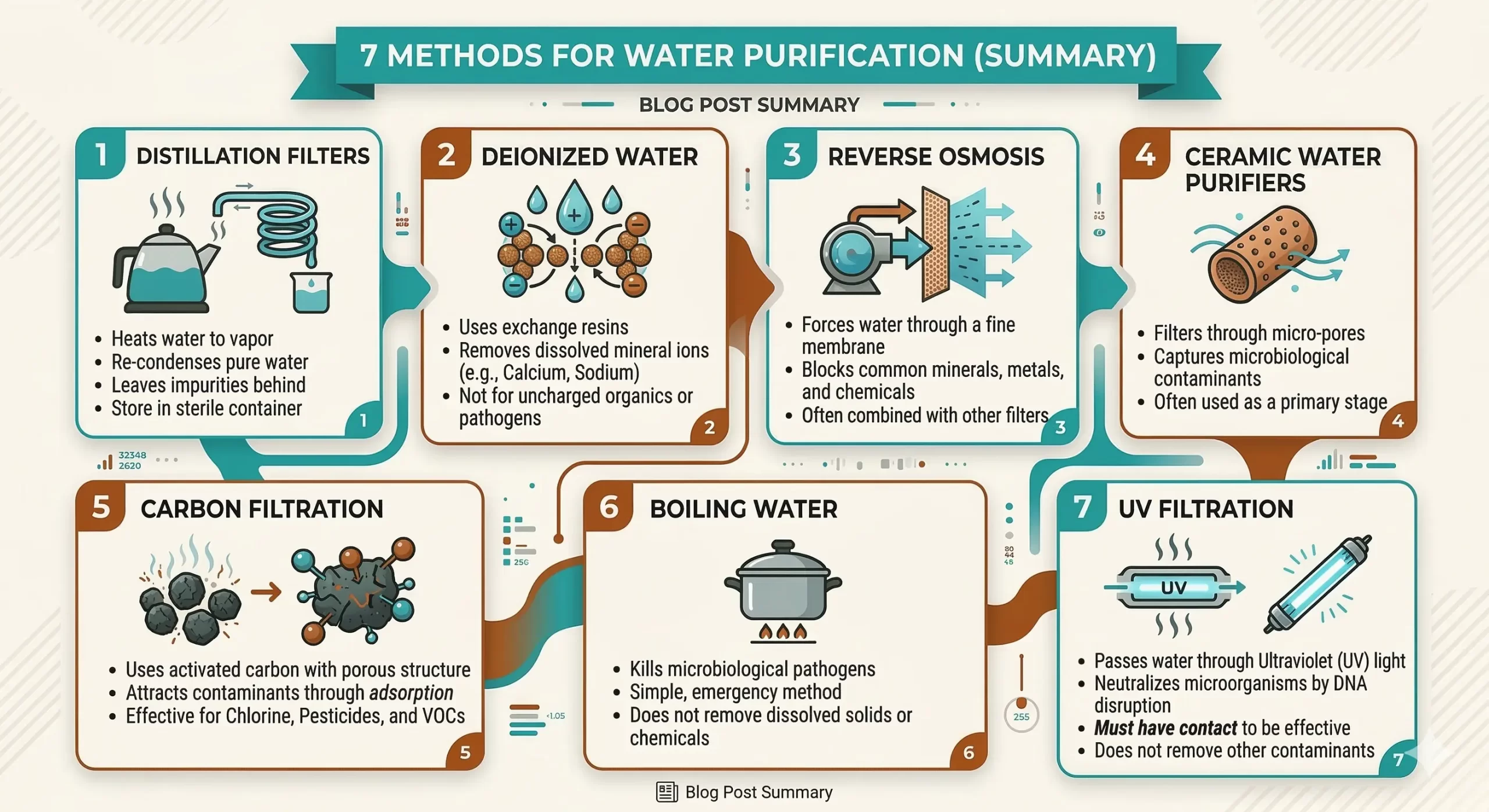
Distillation stands as the only method that guarantees safety from all contaminants, whether chemical, biological, or mineral. In uncertain or degraded conditions, it’s the gold standard.
For clear, recently maintained pools, a combination of activated carbon filtration and boiling provides faster results. For saltwater pools, reverse osmosis offers a practical alternative if you have the equipment.
The most important step is preparation. Store a portable RO unit, carbon filters, test strips, or build a solar still template before disaster strikes. Pool water is a last resort, not a substitute for dedicated drinking water storage. But if the worst happens and your family depends on that blue water in the backyard, you now know exactly how to purify pool water for drinking safely and effectively.