How to Purify Water Naturally

You’re hiking deep in the wilderness, prepping for emergencies, or living off-grid, and suddenly you need clean drinking water. Tap water isn’t an option. Your survival depends on knowing how to purify water naturally. The good news? Nature and simple science offer powerful tools to make unsafe water drinkable without chemicals or electricity.
Natural water purification isn’t just for survivalists. It’s a practical skill for campers, preppers, and anyone seeking chemical-free water. But not all methods are equal. Some kill germs, others remove dirt, and only a few tackle heavy metals or salt. Using the wrong method can leave dangerous contaminants behind.
In this guide, you’ll learn proven, science-backed ways to purify water naturally, from boiling and solar disinfection to plant-based filters and distillation. You’ll discover which techniques work best in different situations, how to combine them for maximum safety, and critical mistakes to avoid. By the end, you’ll know exactly what to do, whether you’re filtering river water with a pine branch or turning seawater into safe drinking water.
Boil Water for Guaranteed Safety
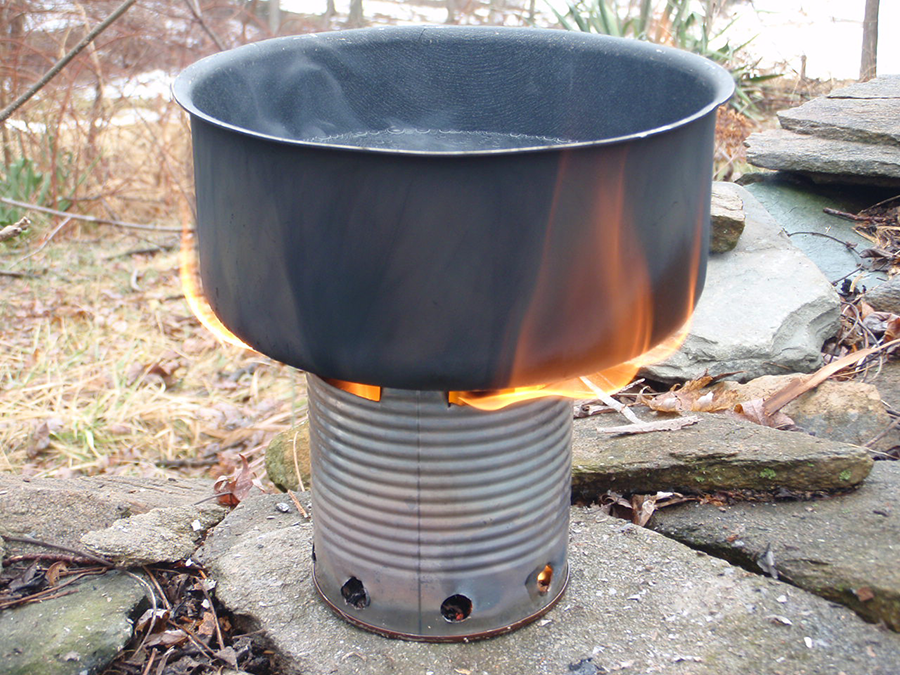
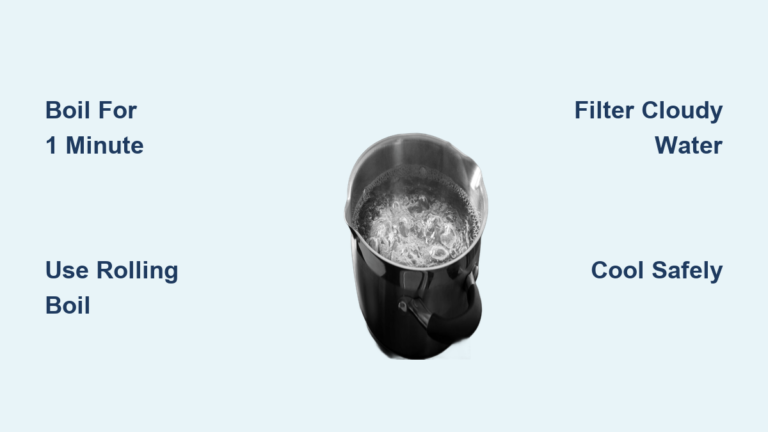
Boiling is the most reliable way to kill pathogens in water, no special tools required. It’s been used for centuries and remains the gold standard in emergency and survival scenarios.
Adjust Boiling Time by Elevation
At higher altitudes, water boils at lower temperatures, reducing its germ-killing power. Follow these guidelines:
- Below 6,500 feet (2,000 m): Boil for 1 minute.
- Above 6,500 feet: Boil for 3 minutes.
- Emergency buffer: Some experts recommend 5 to 6 minutes for extra safety, especially with cold or cloudy water.
Use a rolling boil, where bubbles rise vigorously across the entire surface.
Improve Taste After Boiling
Boiled water often tastes flat due to lost oxygen. Fix this by:
- Pouring water between two clean containers 5 to 10 times to re-aerate.
- Adding a pinch of salt per quart to enhance flavor.
Never skip cooling. Let water cool naturally before drinking or storing.
Know Boiling’s Limits
Boiling kills bacteria, viruses, and parasites like Giardia and Cryptosporidium. But it does not remove:
- Heavy metals (lead, mercury)
- Chemicals (pesticides, pharmaceuticals)
- Salt (in seawater)
- Sediment
In fact, boiling can concentrate non-volatile contaminants. If you suspect chemical pollution or salinity, use distillation instead.
Try Stone Boiling in Survival Situations
No metal pot? Use hot stones:
- Heat clean, dry stones in a fire for 10 to 15 minutes.
- Use wooden tongs to transfer them into a water-filled container (clay, wood, or sturdy bark).
- Replace stones as they cool until water boils.
Warning: Avoid wet or porous stones; they may explode from trapped steam.
Use Sunlight to Disinfect Water (SODIS)
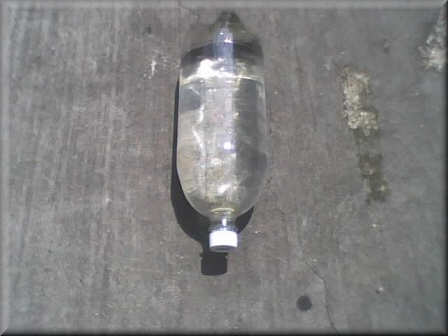
Solar disinfection (SODIS) uses UV rays and heat to destroy microbes, perfect when fuel or filters aren’t available.
Prepare Bottles for SODIS
Use clear PET plastic or glass bottles (no labels, no tint). Avoid colored or opaque containers, as they block UV light.
Wash bottles thoroughly. Fill with water that has low turbidity. If you can’t see through it, pre-filter first.
Expose to Sun for 6+ Hours
Place bottles on a reflective surface (like metal or sand) in direct sunlight:
- Sunny day: Minimum 6 hours
- Cloudy sky (>50% cover): Up to 48 hours
The UV-A radiation damages microbial DNA, while heat (above 50°C / 122°F) speeds up the process.
Combine with Pre-Filtration
SODIS only works on clear water. Particles shield bacteria from UV. Always:
- Filter cloudy water through cloth or sand first.
- Let water settle, then decant the top layer.
This method is ideal for small quantities (like one liter at a time) and sunny climates.
Build a Plant Stem Water Filter
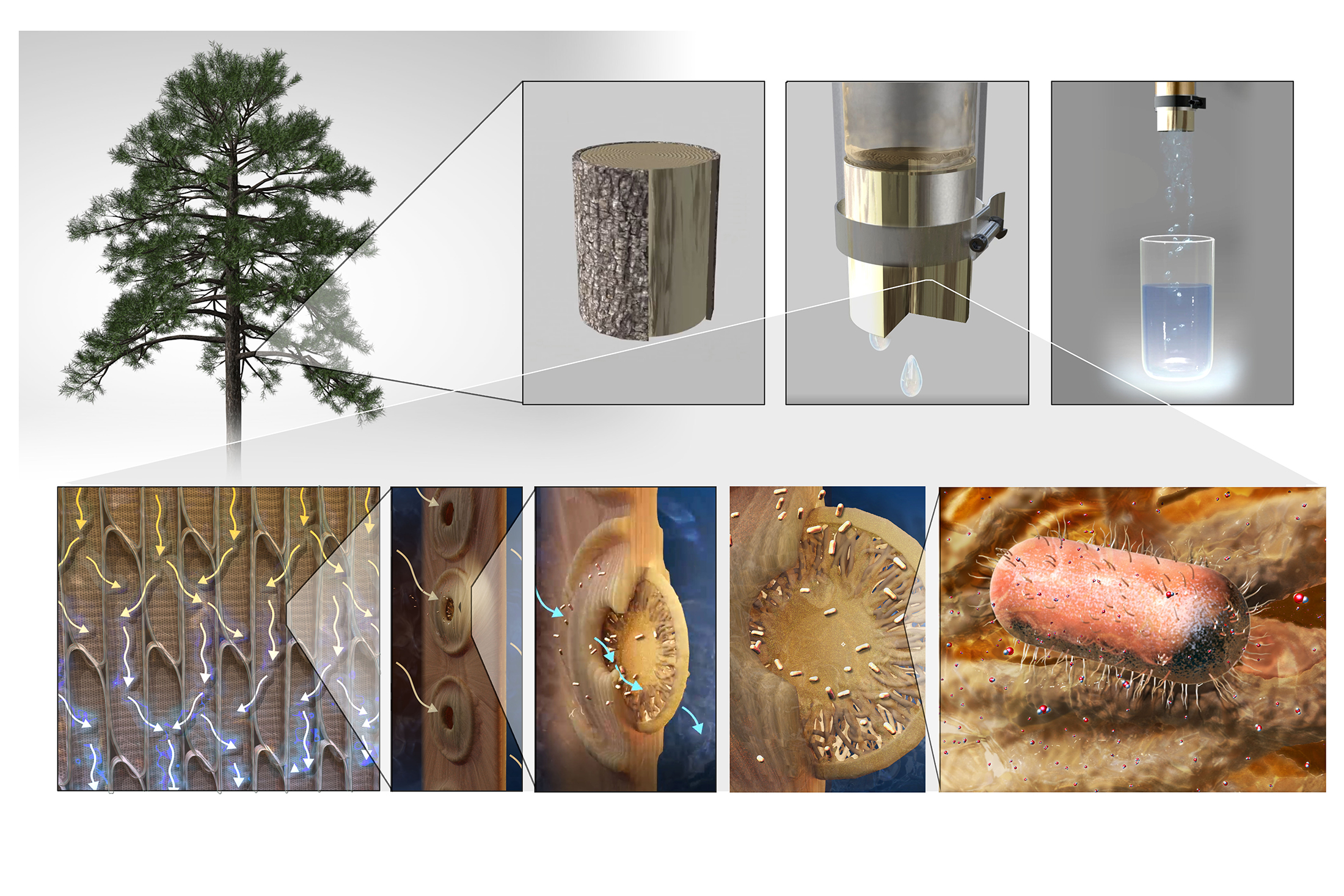
A breakthrough in low-tech purification: xylem filtration uses plant stems to remove bacteria naturally.
Choose the Right Branch
Use fresh, actively growing stems from:
- Pine
- Grape vine
- Cypress
Avoid dead, dry, or drought-stressed plants. The xylem (water-conducting tissue) must be functional.
Assemble the Filter Correctly
- Cut a 12 to 18 inch section.
- Immediately submerge the cut end in water to prevent air bubbles from clogging the xylem.
- Strip bark from the lower end to expose the wood.
- Insert the stem into a container with the root end facing contaminated water.
- Seal joints with tape and cover the top with clean cloth to prevent contamination.
Gravity pulls water through microscopic pores, blocking 99.9% of bacteria like E. coli.
Understand What It Can’t Do
While lab tests show near-total bacteria removal, xylem filters do not:
- Remove viruses (pore size too large)
- Filter out chemicals or heavy metals
- Improve taste significantly (water may taste slightly grassy)
Use this as a pre-filter, followed by boiling or SODIS for full safety.
Make a DIY Sand and Charcoal Filter
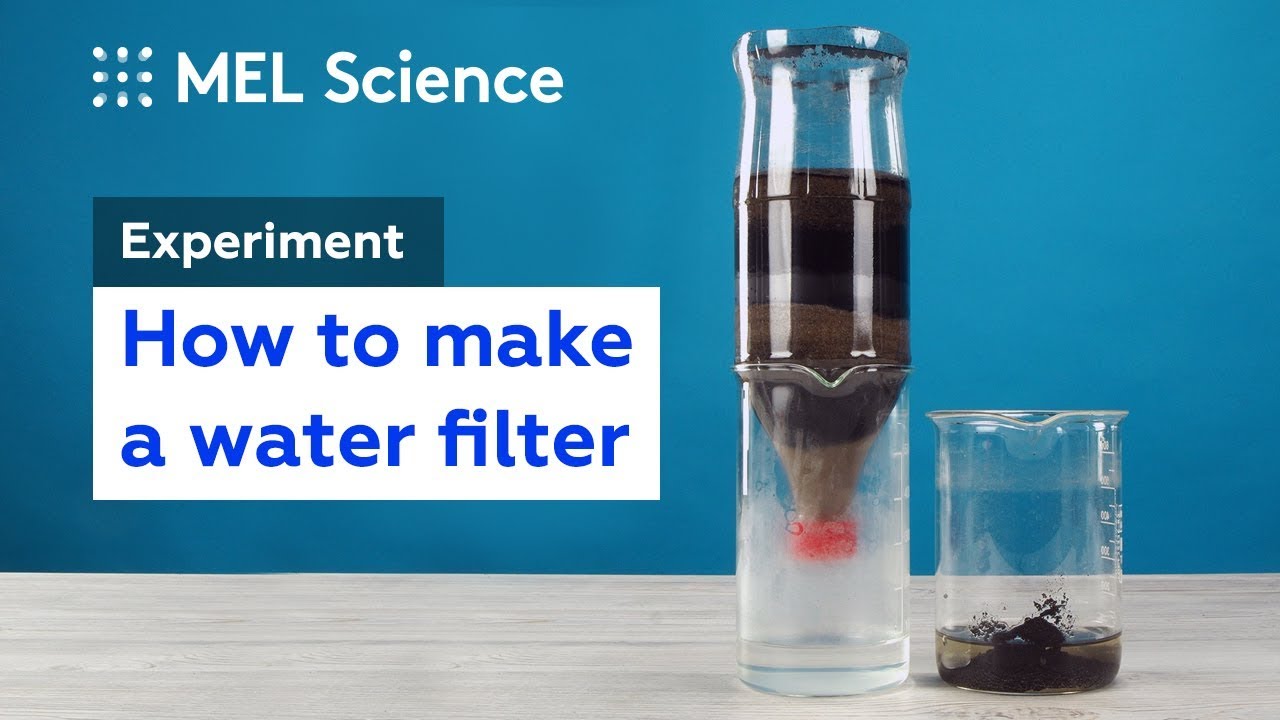
Create a multi-layer gravity filter using natural materials found in the wild or at home.
Layer Materials from Bottom to Top
In a cone-shaped container (e.g., cut plastic bottle), stack layers:
- Bottom: Moss or cloth (to hold media)
- Fine sand
- Coarse sand
- Small gravel
- Crushed activated charcoal (from burned coconut shells or commercial source)
- Top: Large rocks (to spread incoming water)
Charcoal adsorbs organic chemicals, chlorine, and odors, making water more palatable.
Pre-Filter and Maintain Flow
Run water slowly. Fast flow reduces contact time and effectiveness. Replace or clean layers when clogged.
Critical: This filter does not kill microbes. Always boil or disinfect the output water.
Use this system to:
- Clarify muddy water
- Remove silt and debris
- Reduce pesticides or VOCs (with quality charcoal)
Use Ceramic and Carbon Filters
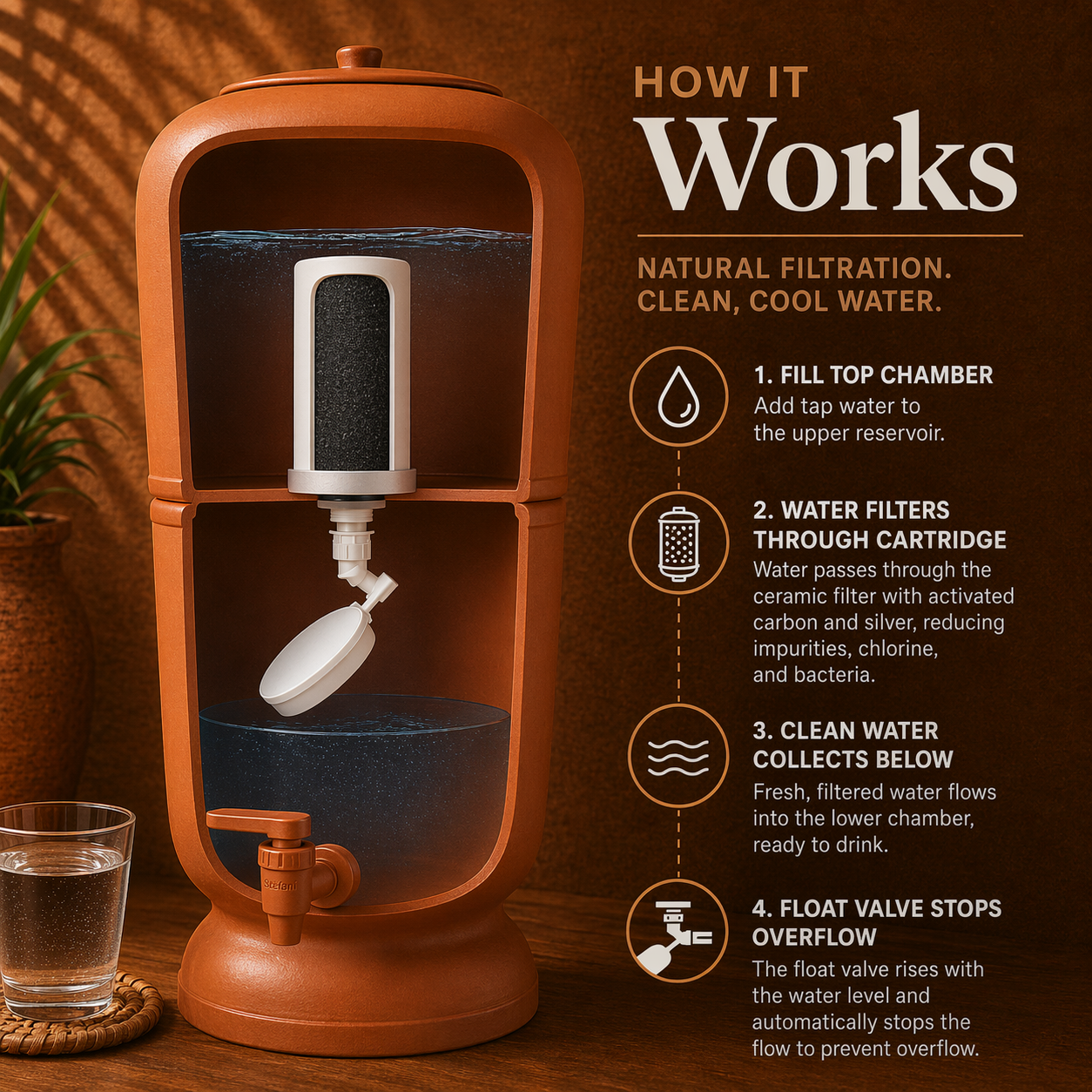
These natural media filters are used worldwide for reliable, long-term water purification.
Rely on Ceramic for Microbe Removal
Ceramic filters, made from fired clay, have microscopic pores that trap:
- Bacteria
- Protozoa (Giardia, Cryptosporidium)
- Sediment
Many include silver-impregnated ceramic to inhibit bacterial growth inside the filter.
Some models combine ceramic with activated carbon cores for dual action, removing microbes and improving taste.
Choose Coconut-Based Carbon Filters
For chemical removal, use granular or block activated carbon from coconut shells, a renewable, natural source.
These filters reduce:
- Chlorine and chloramines
- Pesticides and herbicides
- Pharmaceuticals and VOCs
Note: Carbon does not kill microbes unless paired with another technology (like UV or ceramic).
Replace filters as recommended. Saturated carbon stops working and can release trapped contaminants.
Disinfect with Natural Household Chemicals
When heat or sunlight isn’t possible, use common household items to kill pathogens.
Use Unscented Bleach Correctly
Only use regular, unscented bleach with 5.25% to 8.25% sodium hypochlorite. No color-safe, splash-less, or scented versions.
Dosage per quart/liter:
- Clear water: 2 drops of 6% bleach
- Cloudy or cold water: 4 drops
Stir and let sit for 30 minutes. Water should smell slightly of chlorine. If not, repeat dose and wait 15 more minutes.
For larger volumes:
- 1 gallon: 8 drops (6%) or 6 drops (8.25%)
- 4 gallons: 1/3 tsp (6%) or 1/4 tsp (8.25%)
Try Iodine with Caution
Household 2% tincture of iodine works in emergencies:
- Clear water: 5 drops per quart
- Cloudy water: 10 drops per quart
- Wait 30 minutes before drinking
Do not use if:
- Pregnant
- Have thyroid issues
- Allergic to iodine
- Planning long-term use
Consider Commercial Tablets
Chlorine dioxide tablets are highly effective against bacteria, viruses, and Cryptosporidium. Follow package instructions. Some require 4 hours in cold water.
Store tablets in a cool, dry place. They last years when sealed.
Distill Water to Remove All Contaminants

Distillation is the only natural method that removes everything: microbes, chemicals, heavy metals, and salt.
Set Up a Simple Still
You need:
- A heat source (fire or stove)
- A boiling pot
- A lid (inverted)
- A collection cup
Steps:
- Place a heat-safe cup in the center of the pot.
- Add contaminated water around it (don’t submerge the cup).
- Cover with an inverted lid (handle facing up).
- Add ice or cold water on top of the lid to speed condensation.
- Steam rises, hits the cool lid, condenses, and drips into the cup.
The collected water is nearly pure H₂O.
Use for Saltwater and Chemicals
This method is essential for:
- Desalinating seawater
- Removing lead, mercury, or industrial pollutants
- Treating water after chemical spills
Warning: Distilled water lacks minerals. Drink it in moderation and don’t rely on it long-term without remineralization.
Energy-intensive? Yes. But when safety is critical, distillation wins.
Choose the Safest Water Sources
The best purification starts with smart sourcing.
Prioritize Moving Water
- Best: Fast-moving streams, mountain springs
- Good: Rainwater (if collected on clean surfaces)
- Risky: Ponds, lakes, stagnant pools (breeding grounds for pathogens)
Avoid water near:
- Animal trails or grazing areas
- Agricultural runoff
- Industrial sites or mining zones
Pre-Treat Cloudy Water
Let water sit for 1 to 2 hours so sediment settles. Carefully pour off the clearer top layer.
Then filter through cloth or sand before disinfection. Cloudy water blocks UV and shields microbes from chemicals.
Combine Methods for Maximum Safety
No single natural method removes all threats. For complete protection, layer your approach:
Standard Purification Sequence
- Sedimentation: Let particles settle.
- Filtration: Use cloth, sand, or ceramic to remove debris and some microbes.
- Disinfection: Boil, use bleach, or apply SODIS to kill remaining pathogens.
- Optional: Use carbon to improve taste and remove organics.
For seawater or chemically contaminated water:
- Distill first.
- Cool and store in clean containers.
For survival with plant materials:
- Xylem filter to remove bacteria.
- SODIS or boil to ensure viral safety.
Store Purified Water Safely
Clean water can become re-contaminated fast.
Use Proper Containers
- Food-grade plastic jugs
- Glass bottles
- BPA-free water tanks
Never use containers that held chemicals, cleaning agents, or fuel.
Follow Storage Rules
- Quantity: At least 1 gallon per person per day
- Duration: Rotate tap water every 6 months
- Location: Cool, dark place, away from sunlight and toxins
Add a few drops of bleach (4 drops per gallon) to extend shelf life if storing long-term.
Frequently Asked Questions About Natural Water Purification
What is the safest way to purify water naturally?
Boiling is the most reliable natural method for killing bacteria, viruses, and parasites. Bring water to a rolling boil for 1 minute at sea level, or 3 minutes above 6,500 feet. Always combine boiling with pre-filtration for cloudy water.
Can you purify water with just sunlight?
Yes, through Solar Disinfection (SODIS). Place clear water in PET or glass bottles and expose to direct sunlight for at least 6 hours. On cloudy days, extend exposure to 48 hours. SODIS works only on clear water, so pre-filter cloudy sources first.
Do plant-based filters really remove bacteria?
Xylem filters made from pine, grape, or cypress stems can block up to 99.9% of bacteria like E. coli. However, they do not remove viruses or chemicals. Always follow xylem filtration with boiling or SODIS for complete safety.
Does boiling water remove heavy metals or chemicals?
No. Boiling kills microorganisms but does not remove heavy metals, salts, or most chemicals. In fact, boiling can concentrate non-volatile contaminants. For chemical or salt removal, use distillation instead.
How much bleach do I use to purify water?
Use only regular, unscented bleach (5.25% to 8.25% sodium hypochlorite). Add 2 drops per quart for clear water, or 4 drops for cloudy water. Stir and wait 30 minutes. Water should smell slightly of chlorine.
How long can you store purified water?
Rotate stored tap water every 6 months. Keep containers in a cool, dark location away from chemicals. Adding 4 drops of bleach per gallon can extend shelf life for long-term storage.
Key Takeaways for Purifying Water Naturally
Knowing how to purify water naturally is a life-saving skill that gives you control in any situation. Boiling remains the gold standard for killing germs, while SODIS offers a fuel-free alternative when the sun shines. Plant xylem and sand filters handle bacteria and sediment effectively, and distillation tackles the toughest contaminants like salt and heavy metals.
But remember: no single method does it all. Always combine filtration with disinfection, and test your system before relying on it. When in doubt, boil it. Start by choosing one primary method that fits your environment, gather the materials today, and practice before you need it.