Should You Use Purified Water in Humidifiers?
You fill your humidifier, turn it on for the night, and wake up to a fine white powder coating your nightstand. That residue is mineral dust, and it is a warning sign for both your lungs and your machine. So, should you use purified water in your humidifier? The short answer is yes, but only if the purification method actually removes minerals.
The water you pour into your humidifier directly shapes your indoor air quality, your device’s lifespan, and your respiratory health. This guide breaks down exactly which water types work, which ones quietly damage your equipment, and how to protect your home without wasting money on the wrong “purified” label.
Distilled Water: The Gold Standard for Humidifiers

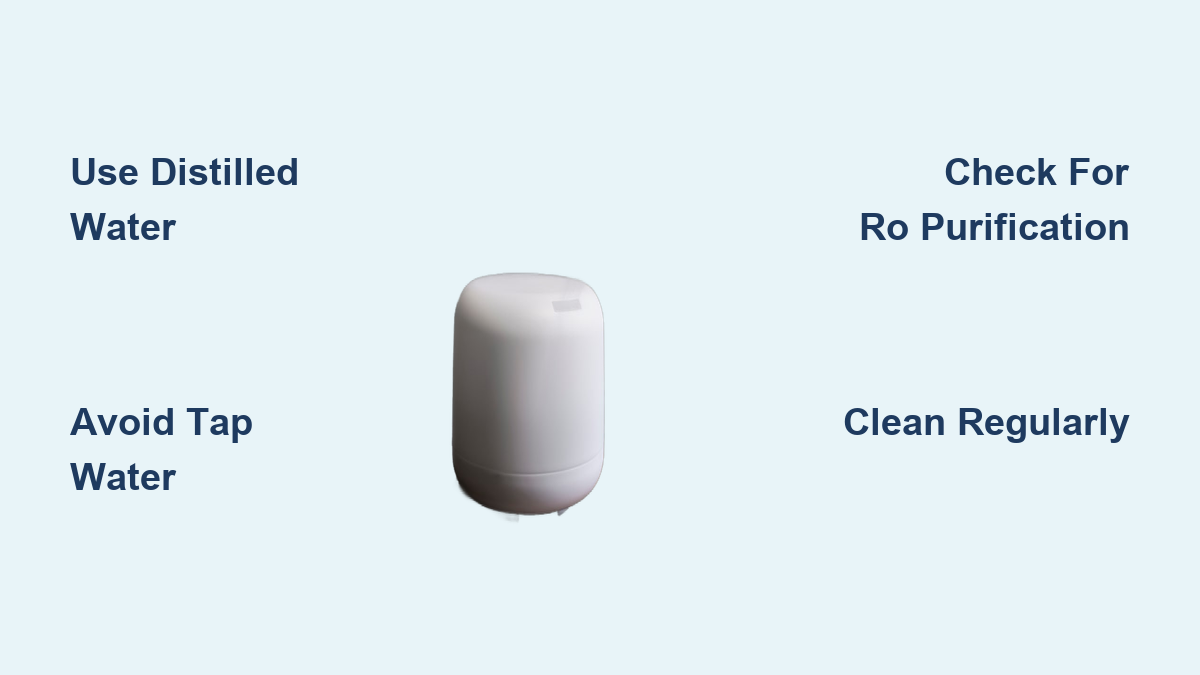
When safety and performance matter most, distilled water stands alone. It is the only option that guarantees zero mineral content, which is why medical facilities, manufacturers, and the EPA recommend it without hesitation.
Why Distilled Water Works So Well
Distilled water is created by boiling, vaporizing, and condensing water. That phase change leaves behind every mineral, metal, and contaminant. What remains is pure H₂O, which is exactly what your humidifier is designed to disperse.
Key benefits include:
– Zero white dust on furniture, electronics, and lungs
– No scale buildup on heating elements or nebulizer plates
– Extended device life, often lasting 3 to 5 years or more
– Less frequent cleaning, with deep cleans needed only every 2 to 3 weeks
Who Needs Distilled Water Most
Distilled water is non-negotiable for households with infants, elderly members, or anyone with asthma or allergies. It is also mandatory for owners of ultrasonic and impeller humidifiers, which project minerals directly into the air. If you live in a hard water region, switching to distilled water is not just smart; it is essential for protecting your health.
Purified Water: Only Reverse Osmosis Qualifies
The word “purified” on a label feels reassuring, but most purification methods do not remove the minerals that damage humidifiers. Only one method qualifies as a true substitute for distilled water.
Reverse Osmosis: The Only Acceptable Alternative

Reverse osmosis (RO) removes up to 99% of dissolved solids, including calcium, magnesium, lead, chlorine, and PFAS. This makes it the only “purified” water safe for humidifier use.
RO water delivers:
– Nearly identical performance to distilled water
– Prevention of most white dust and scale
– Safe daily use across most humidifier types
The small caveat is that RO water may still contain trace minerals. Occasional light scaling can occur, though far less than with tap water. Pairing RO water with regular vinegar cleaning keeps your unit running smoothly.
Other “Purified” Waters That Fail
Many products labeled purified use methods that leave minerals fully intact. These options create the same problems as tap water.
- Activated carbon filters (pitchers, fridge filters): Remove chlorine and improve taste but leave calcium and magnesium behind. White dust and scale still form.
- Ultrafiltration: May remove some microbes but often leaves dissolved solids untouched. Mineral removal is inconsistent.
- Bottled “purified” water: Quality varies wildly. Many brands use only carbon filtration, and some add minerals for taste, which is harmful in a humidifier.
The rule is simple: only use purified water if the label specifically states “reverse osmosis.” Otherwise, it will not solve the core problem.
Tap Water: Convenience That Costs You

Tap water is cheap and always available, but using it in your humidifier carries real consequences for your health and your device.
What Hides in Your Tap Water
Most municipal water contains calcium, magnesium, chlorine, and trace metals. Well water can add pesticides, microbes, and other contaminants. When vaporized, these do not vanish; they become airborne.
The Dangers of White Dust
Ultrasonic and impeller humidifiers turn tap water into a fine mist that carries mineral particles. These settle as white dust, a mix of calcium carbonate, magnesium, and metals.
Health risks include:
– Respiratory irritation, especially in children and asthmatics
– Aggravated allergies and sinus problems
– Long-term lung exposure linked in studies to infant lung damage
Even when you cannot see the dust, minerals are still being released into the air you breathe.
Scale: The Silent Equipment Killer
Minerals form hard, crusty scale on heating elements, nebulizer plates, and wicks. This buildup clogs components, reduces mist output, and forces your humidifier to work harder. Over time, scale leads to premature failure and costly replacements.
One Narrow Exception
Evaporative humidifiers trap some minerals in their wicks, reducing (but not eliminating) white dust. Some models, like the Levoit Superior 6000S, are explicitly designed for tap water. Always check your owner’s manual before using tap water.
Spring and Bottled Water: A Costly Myth
Bottled and spring water feel cleaner, but they are often worse for humidifiers than tap water.
Spring water is marketed for its natural mineral content, which is exactly what causes white dust and scale. Bottled water varies by brand, with some containing added electrolytes like magnesium and potassium. Using bottled water daily is expensive, environmentally wasteful, and still damaging to your device.
Boiled Water: A Common Misconception

Boiling tap water kills bacteria but does nothing to remove minerals. In fact, boiling reduces water volume and slightly increases mineral concentration. The resulting mist will still produce white dust and scale. Boiled water is a temporary emergency fix at best, never a long-term solution.
Match Your Water to Your Humidifier Type
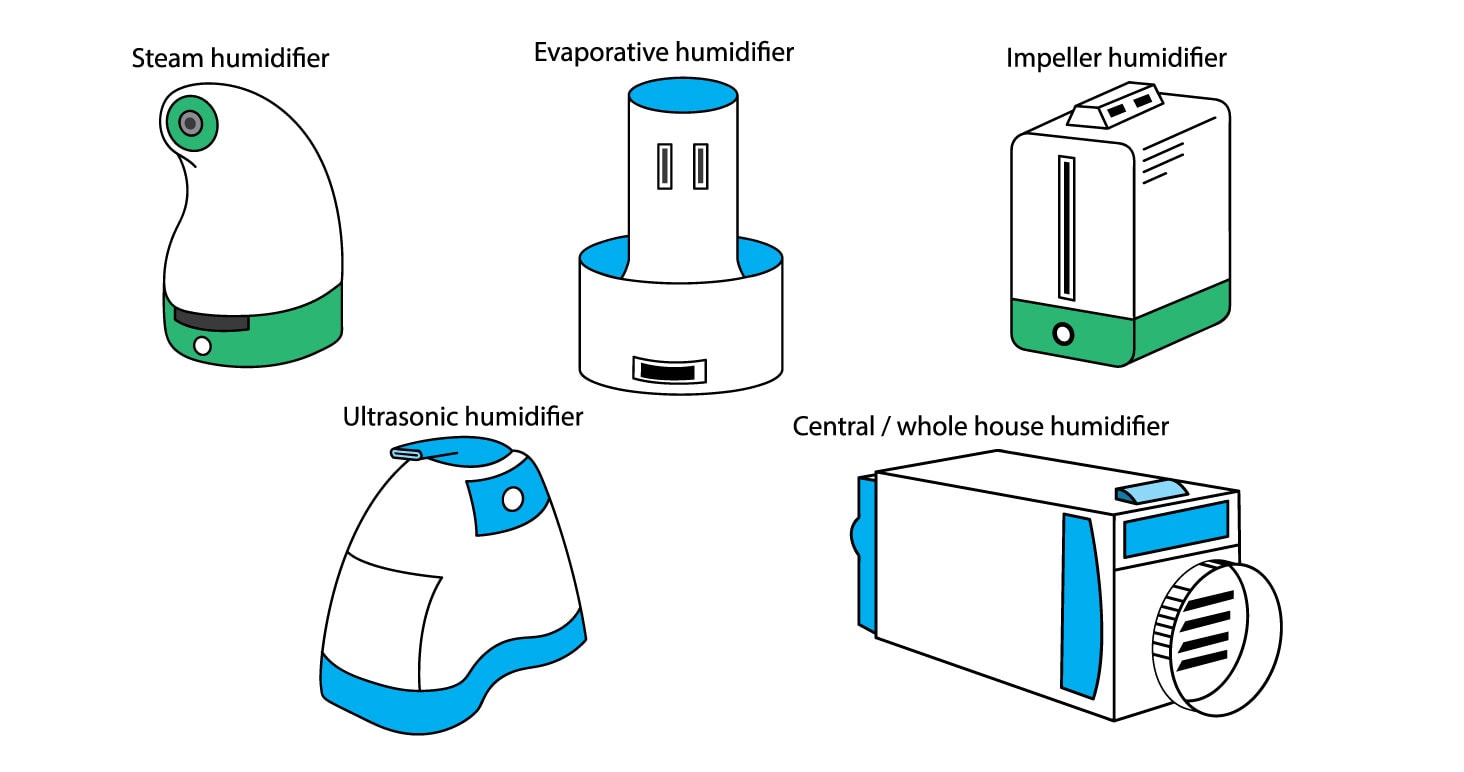
Your humidifier’s technology determines how sensitive it is to water quality. Matching the right water to your unit prevents damage and extends its life.
Ultrasonic humidifiers are the most sensitive. They use high-frequency vibrations to create mist and project minerals straight into the air. Use only distilled or RO water.
Evaporative humidifiers offer slight tolerance. The wick traps some minerals, reducing white dust. Distilled or RO water still works best, though some models permit tap water with frequent wick replacement.
Warm mist vaporizers boil water to kill microbes, but minerals remain and scale forms quickly on heating elements. Distilled water prevents element failure.
Impeller humidifiers use a spinning disc to create mist, dispersing minerals just like ultrasonic models. Only distilled or RO water should be used.
Whole-house humidifiers are built into HVAC systems and affect your entire home. Poor water quality damages the humidifier pad and ductwork. Use RO or distilled water whenever possible.
Cleaning Is Non-Negotiable
Even with the best water, regular cleaning prevents microbial growth and keeps your humidifier safe.
Cleaning Frequency by Water Type
| Water Type | Cleaning Frequency |
|---|---|
| Distilled or RO | Every 2 weeks |
| Tap, spring, or bottled | Weekly or more |
Step-by-Step Cleaning Process
- Unplug and empty the unit. Always disconnect power before maintenance.
- Soak with vinegar. Fill the tank with a 1:1 mix of white vinegar and water. Let it sit for 30 minutes.
- Scrub gently. Use a soft brush or cloth. For tough deposits, apply a paste of baking soda and water.
- Rinse thoroughly. Flush all parts with clean water to remove vinegar and residue.
- Dry completely. Air-dry all components or wipe with a lint-free towel before reassembling.
- Replace filters. Change wicks or filters every 1 to 3 months, or as recommended.
Warning Signs You Are Using the Wrong Water
Switch to distilled water immediately if you notice:
– White dust on surfaces
– Crusty deposits inside the tank
– Reduced mist output
– Musty or sour odors
The Real Cost of Cheap Water
Distilled water costs about $1 to $2 per gallon, but the long-term savings are significant.
| Cost Factor | Tap Water | Distilled or RO Water |
|---|---|---|
| Humidifier lifespan | 1 to 2 years | 3 to 5+ years |
| Filter or wick replacement | Every 1 to 2 months | Every 3 to 6 months |
| Cleaning supplies | Frequent descaling | Minimal |
| Device replacement | $50 to $150 every few years | One-time purchase |
Replacing a clogged humidifier every 18 months costs more than five years of distilled water.
Smart Sourcing Tips
- Buy distilled water in bulk to lower the per-gallon cost
- Install a home RO system for unlimited purified water
- Consider a home distiller (around $150) if you use a humidifier frequently
Frequently Asked Questions About Using Purified Water in Humidifiers
Is purified water the same as distilled water for a humidifier?
No. Purified water is a broad term, and only reverse osmosis purified water is safe for humidifiers. Distilled water is the gold standard because it removes 100% of minerals, while RO removes up to 99%. Other purified waters, like carbon-filtered or bottled, still contain minerals that cause white dust and scale.
Can I use bottled purified water in my humidifier?
Only if the label specifies reverse osmosis. Many bottled waters use carbon filtration only or add minerals for taste, which causes the same white dust and scaling problems as tap water. Check the source and treatment method before using any bottled water.
What happens if I use tap water in my humidifier once?
A single use will not destroy your humidifier, but it will release mineral dust into the air and begin forming scale. If you use tap water regularly, expect white dust on surfaces, faster scale buildup, reduced mist output, and a shorter device lifespan.
How often should I clean my humidifier if I use distilled water?
Clean your humidifier every 2 weeks when using distilled or RO water. Even with pure water, bacteria and mold can grow in stagnant, warm environments. Regular vinegar cleaning keeps the unit safe and efficient.
Is boiled water safe to use in a humidifier?
Boiling kills bacteria and viruses but does not remove minerals. In fact, boiling slightly increases mineral concentration as water evaporates. Boiled water will still produce white dust and scale, making it unsuitable as a long-term solution.
Do evaporative humidifiers need distilled water?
Evaporative humidifiers trap some minerals in their wicks, so they tolerate tap water slightly better than ultrasonic models. However, distilled or RO water still extends wick life, reduces cleaning frequency, and prevents scale buildup on internal components.
Final Verdict on Purified Water for Humidifiers
Should you use purified water in your humidifier? Yes, but only if it is reverse osmosis purified. Distilled water remains the safest and most effective choice for protecting your health, your home, and your device. RO water is the best alternative when distilled is unavailable.
Avoid tap water, spring water, bottled water, and carbon-filtered water unless your specific model is explicitly rated for them. Never rely on boiling as a fix, since it does not remove minerals. Clean your humidifier every 1 to 2 weeks with white vinegar, no matter which water you use.
Your humidifier should add moisture to your air, not minerals or mold. Switch to the right water today and breathe easier knowing your indoor air is clean and your device is built to last.