Does Reverse Osmosis Remove Viruses?

If you rely on well water or worry about aging pipes, you may be asking: does reverse osmosis remove viruses? The short answer is yes, when the system works properly. Reverse osmosis (RO) filters physically block viruses through ultra-fine membrane pores ranging from 0.0001 to 0.001 microns, far smaller than most viruses (typically 0.02 to 0.3 microns). This size difference allows RO to achieve over 99% virus removal in ideal conditions.
But here’s what most guides won’t tell you: RO doesn’t kill viruses, it only separates them. A cracked membrane, failed seal, or biofilm buildup can let live pathogens slip through. In this guide, you’ll learn exactly how RO removes viruses, where it falls short, and how to build a truly safe drinking water setup.
How RO Blocks Viruses by Size

Reverse osmosis stops viruses through physical filtration, not chemical treatment. The core mechanism is size exclusion, where contaminants larger than the membrane pores get blocked.
Pore Size vs. Virus Dimensions
RO membranes have pores as small as 0.0001 microns (1 angstrom). To put that in perspective:
– Most viruses range from 0.02 to 0.3 microns (20 to 300 nanometers).
– Even the smallest known viruses (~0.01 microns) are still significantly larger than the tightest RO pores.
– For comparison, bacteria like E. coli are about 0.5 microns, and parasites like Giardia are 2 to 15 microns, all easily blocked.
This means viruses cannot pass through an intact RO membrane. They get diverted to the drain as wastewater while purified water molecules continue through.
Filtration Stages That Protect the Membrane
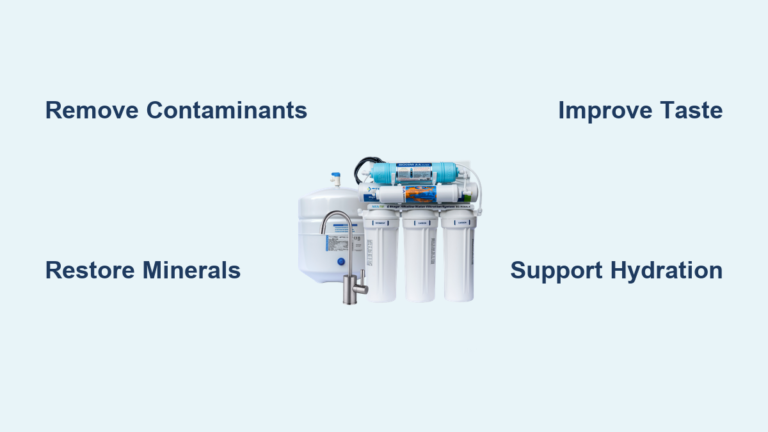
RO systems use multiple stages to keep the membrane working properly:
1. Sediment pre-filter (5 microns): Removes sand, silt, and rust.
2. Carbon pre-filter: Eliminates chlorine, which can degrade thin-film composite membranes.
3. RO membrane: The primary barrier that removes viruses, bacteria, heavy metals, and dissolved solids.
4. Post-carbon filter: Polishes taste and odor.
Without proper pre-filtration, chlorine or debris can damage the membrane and create pathways for viruses to slip through.
Viral Removal Rates and Proven Efficacy

While RO isn’t certified as a standalone microbiological purifier, its real-world performance against viruses is strong.
Documented Virus Removal Efficiency
Studies and manufacturer data show RO systems achieve:
– >99% virus removal under ideal conditions.
– Up to 99.995% removal of bacteria and larger microbes.
– Effective reduction of Hepatitis A and E, which fall well within the 0.02 to 0.03 micron range.
These high rates assume a fully intact membrane, proper installation with no bypass leaks, and regular maintenance.
Comparison to Other Contaminants
RO doesn’t just target microbes. It reduces a wide range of pollutants:
– Viruses: >99%
– Bacteria: 99.9 to 99.995%
– Giardia / Cryptosporidium: ~100%
– Lead: 95 to 98%
– Fluoride: 85 to 92%
– PFAS (“forever chemicals”): 90 to 99%
– Total Dissolved Solids (TDS): 90 to 99%
This broad-spectrum reduction makes RO one of the most comprehensive home water treatments available.
Why RO Isn’t a Standalone Disinfection Method
Despite its high viral removal rate, RO is not a disinfectant, and that distinction matters.
No Pathogen Inactivation
RO does not kill viruses or bacteria. It merely separates them from drinking water. This means:
– Live pathogens remain in the concentrate (waste) stream.
– If the system develops a leak or backflow occurs, contaminated water can re-enter the clean side.
– Biofilm can form on storage tanks or inside tubing, allowing microbes to regrow.
Unlike UV or chlorination, RO provides zero residual protection once water leaves the system.
Risk of System Failure
RO filtration is all-or-nothing:
– A pinhole leak, cracked housing, or failed seal can allow unfiltered water to mix with purified water.
– Such breaches may go unnoticed without regular monitoring.
– A sudden rise in TDS often indicates membrane failure.
Because of this, health authorities do not classify RO alone as a certified microbiological purifier.
Critical Maintenance for Reliable Virus Removal
An RO system only removes viruses effectively if you maintain it. Neglect leads to failure.
Required Filter Replacement Schedule
- Sediment pre-filter: Every 6 months (prevents clogging and membrane damage)
- Carbon pre-filter: Every 6 to 12 months (removes chlorine and protects membrane)
- RO membrane: Every 2 to 3 years (core filtration; must be intact for virus removal)
- Post-carbon filter: Every 12 months (improves taste and removes VOCs)
- UV lamp (if installed): Annually (loses intensity over time, even if still glowing)
Ignoring these timelines risks membrane degradation and microbial bypass.
Preventing Biofilm and Stagnation
Storage tanks in traditional RO systems can harbor bacterial growth if water sits too long. Tankless RO systems reduce this risk by eliminating stagnant reservoirs. Annual sanitization of the system with food-grade hydrogen peroxide kills biofilm in lines and housings.
Without cleaning, even a perfectly functioning membrane can deliver contaminated water.
When to Add UV for Complete Protection

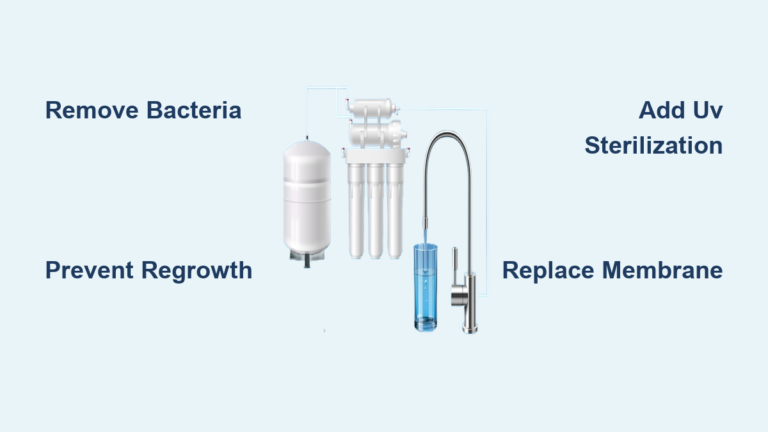
For maximum safety, especially with untreated water sources, pairing RO with UV sterilization is the gold standard.
How UV + RO Works Together
- Water passes through sediment and carbon filters.
- RO membrane removes 99%+ of viruses, bacteria, and chemicals.
- Final UV light exposure inactivates any surviving pathogens by destroying their DNA.
This combination offers physical removal (RO), biological inactivation (UV), and protection against membrane failure or biofilm.
Best Applications for UV+RO
- Private well water: High risk of fecal contamination and viruses.
- Rural or off-grid homes: No municipal disinfection.
- Immunocompromised individuals: Zero tolerance for pathogens.
- Areas with frequent boil advisories: Extra layer of security.
UV systems require clear water to work, so placing them after RO and carbon filtration ensures optimal performance.
RO vs. Other Virus Removal Methods
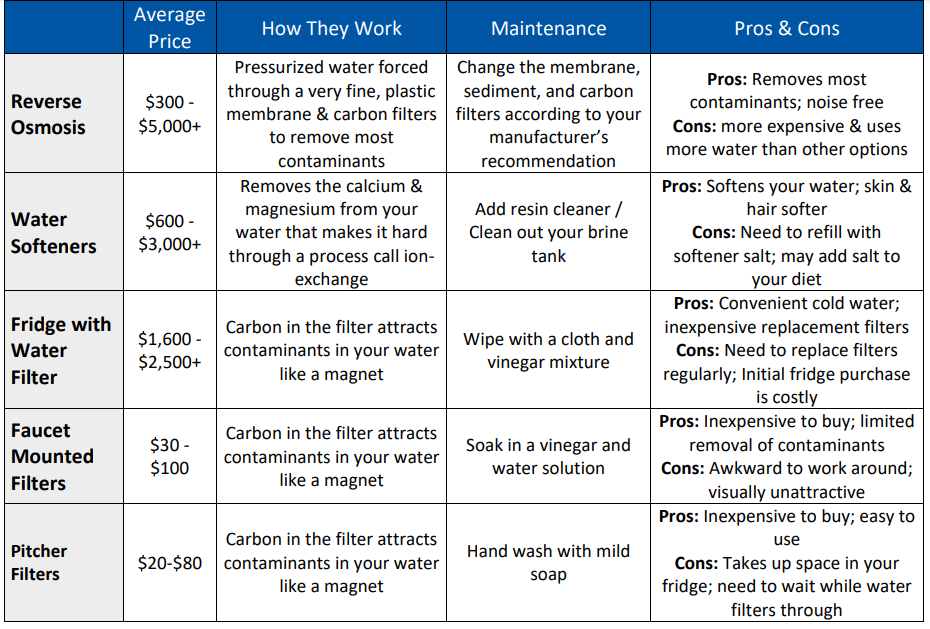
Not all filtration technologies are equal when it comes to viruses.
- Reverse Osmosis: >99% removal (if intact); doesn’t kill pathogens; removes chemicals; best for whole-home chemical and microbe reduction.
- UV Sterilization: >99.9% inactivation; kills pathogens; no chemical removal; best as final disinfection step.
- Boiling Water: 100% kill rate; kills pathogens; no chemical removal; best for emergency use only.
- Standard Carbon Filter: Minimal virus removal; doesn’t kill pathogens; moderate chemical removal; best for taste and odor only.
- Ceramic Filter (0.2 micron): Partial virus removal; doesn’t kill pathogens; no chemical removal; best for backpacking, not viruses.
Key insight: Boiling kills viruses but doesn’t remove chemicals. Carbon filters improve taste but do nothing for viruses. RO removes both, but only if maintained.
Real-World Scenarios and Recommendations
Your water source determines whether RO alone is enough.
Municipal Tap Water
- Risk level: Low for viruses (already chlorinated).
- RO role: Removes lead, fluoride, PFAS, chlorine byproducts.
- UV needed? Usually not, but adds peace of mind if pipes are old.
Private Wells
- Risk level: High; can contain animal waste, septic leakage, or surface runoff.
- RO role: Essential for chemical and microbial reduction.
- UV needed? Yes. Required for full pathogen inactivation.
- Add pre-filters: Iron, sulfur, and sediment filters protect RO and UV.
Post-Disaster or Travel
- Boiling is reliable but inconvenient.
- Portable RO or UV pens can work, but verify pore size and UV intensity.
- For long-term safety, install a certified RO+UV system.
Ensuring Your RO System Works Against Viruses
Don’t assume your RO unit is protecting you. Verify its performance.
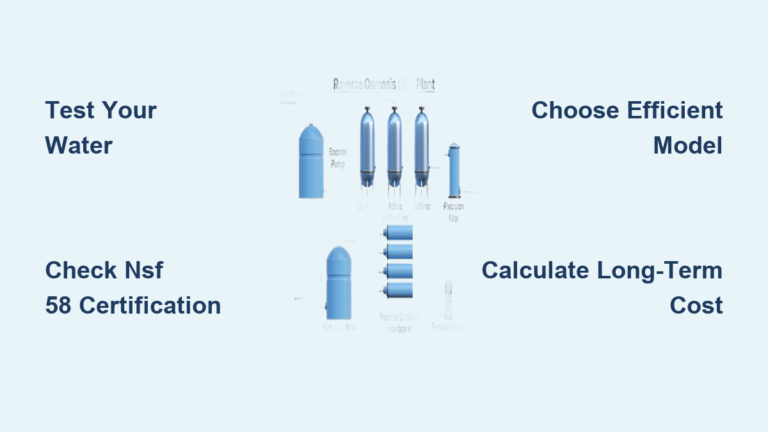
Look for NSF/ANSI Standard 58 Certification
This certification confirms the system reduces contaminants as claimed, has structural integrity (no bypass leaks), and is tested for virus and bacteria reduction. Always check the product label or manual for certification.
Monitor with a TDS Meter
Test purified water monthly. Normal TDS reads below 50 ppm (depends on feed water). A sudden increase, like jumping from 10 to 100 ppm, signals membrane failure. Replace the membrane immediately if TDS spikes.
Schedule Annual Water Testing
Test for total coliform, E. coli, and nitrates, which are indicators of fecal contamination. If viruses are a concern (e.g., near agricultural runoff), request viral testing. Test before and after installing or servicing your RO system.
Frequently Asked Questions About Reverse Osmosis and Virus Removal
Does reverse osmosis remove 100% of viruses?
No system guarantees 100% removal. RO achieves over 99% virus removal when the membrane is intact and the system is properly maintained. For absolute protection, pair RO with UV sterilization.
Can viruses pass through a damaged RO membrane?
Yes. If the membrane has a pinhole, tear, or failed seal, viruses can bypass filtration entirely. This is why regular maintenance and TDS monitoring are critical.
Is RO enough to make well water safe from viruses?
RO alone is not certified as a microbiological purifier. For well water, experts strongly recommend combining RO with UV sterilization to inactivate any pathogens that might bypass the membrane.
How often should I replace my RO membrane to ensure virus removal?
Replace the RO membrane every 2 to 3 years, depending on water quality and usage. Pre-filters should be changed every 6 to 12 months to protect the membrane from chlorine and sediment damage.
Does boiling water work better than RO for viruses?
Boiling kills 100% of viruses but doesn’t remove chemical contaminants. RO removes both viruses and chemicals but doesn’t kill pathogens. For comprehensive safety, many households use RO for daily filtration and boiling as an emergency backup.
What size are viruses compared to RO membrane pores?
RO membrane pores measure 0.0001 to 0.001 microns. Most viruses range from 0.02 to 0.3 microns, making them significantly larger than the pores and easy to block through size exclusion.
Key Takeaways for Safe Virus Removal with Reverse Osmosis

Reverse osmosis removes over 99% of viruses when the system is properly installed, maintained, and the membrane is intact. Its 0.0001-micron pores block even the tiniest viruses, including Hepatitis A and E. It also removes bacteria, cysts, heavy metals, and chemicals, making it one of the most comprehensive home water filters available.
But here’s the catch: RO does not kill viruses. It only separates them. If the membrane cracks, seals fail, or biofilm grows in the tank, live pathogens can reach your glass. That’s why RO alone is not certified as a microbiological purifier.
For true, worry-free protection, especially with well water or vulnerable individuals, combine RO with UV sterilization. This dual approach gives you chemical reduction (RO), pathogen inactivation (UV), and defense against system failure. Pair this with regular filter changes, annual sanitization, and TDS monitoring, and you’ll have the highest level of drinking water safety possible in a home setting.
Bottom line: Reverse osmosis is excellent at removing viruses, but for complete peace of mind, make it part of a multi-barrier system. Start by testing your water and checking your current system for NSF/ANSI Standard 58 certification.