RO Membrane: What It Is and How It Works

If your tap water carries high mineral content, unusual taste, or traces of contaminants, a Reverse Osmosis (RO) system offers one of the most thorough solutions available. At the center of that system sits the RO membrane, a precision-engineered barrier that removes up to 99% of dissolved solids, heavy metals, and pathogens from your water supply.
This small cylindrical component uses applied pressure to force water molecules through microscopic pores, separating pure H₂O from salts, chemicals, and microorganisms. Whether you own a home drinking water purifier or manage an industrial treatment facility, understanding how the RO membrane works helps you maintain water quality, extend equipment life, and avoid costly mistakes.
How the RO Membrane Works
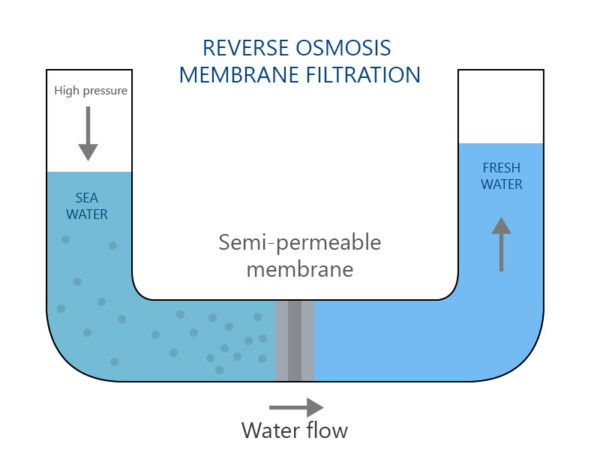
Reverse osmosis reverses a natural process. In standard osmosis, water moves across a semi-permeable membrane from low-solute areas to high-solute areas until concentrations balance. The RO membrane inverts this flow using external pressure, typically 40–80 psi in residential systems and over 800 psi in desalination plants.
Reverse Osmosis vs. Natural Osmosis
Applied pressure pushes water against the membrane’s natural osmotic gradient. Only water molecules small enough to pass through the 0.0001-micron pores make it through. Salts, metals, bacteria, and viruses get rejected and exit as wastewater.
This pressure requirement explains why RO systems include pressurized storage tanks and, in low-pressure homes, booster pumps. The goal is maintaining a steady flux rate so contaminants flush continuously rather than concentrating on the membrane surface.
Two-Stream Separation Process
Every RO system produces two outputs:
- Permeate: Purified water that passes through the membrane and flows to your faucet.
- Wastewater (brine): Rejected contaminants flushed to the drain.
This dual-flow design is essential. If the wastewater line clogs or restricts improperly, contaminants accumulate, leading to fouling and premature membrane failure.
Skirt Seal Prevents Bypass
A skirt seal on the feed end of the membrane flares outward against the housing wall when pressurized. This forces all incoming water through the membrane layers rather than around them. Without this seal, untreated water could enter your clean water stream undetected.
Inside the RO Membrane Structure

The pores are invisible to the naked eye, yet the layered construction delivers remarkable filtration precision. Most modern membranes use a thin-film composite (TFC) design combining strength, selectivity, and durability.
Three-Layer Thin-Film Design
Polyamide Active Layer
The ultra-thin top layer, often just 0.2 microns thick, performs the actual filtration. Its dense network of 0.0001-micron pores blocks sodium, chloride, lead, arsenic, and viruses. Only water molecules fit through.
Polyamide is sensitive to chlorine. Even trace amounts degrade this layer over time, which is why carbon pre-filters are mandatory in every RO system.
Polysulfone Support Layer
Beneath the active layer sits a porous polysulfone sheet that provides mechanical stability. It prevents the delicate polyamide from collapsing under high operating pressures, often exceeding 200 psi in residential units and far higher in industrial systems.
Mesh Spacer in Spiral-Wound Design
In spiral-wound configurations, a permeable mesh spacer sits between membrane layers. This maintains consistent spacing, allowing feed water to flow evenly while wastewater channels carry away rejected solids. Without it, layers would stick together, creating dead zones where fouling begins.
RO Membrane Configurations

Different applications call for different membrane designs, each optimized for flow, space, or pressure requirements.
Spiral-Wound: Most Common Type
Used in roughly 90% of residential and industrial systems, spiral-wound membranes wrap flat sheets around a central permeate tube. This maximizes surface area in a compact cylinder, making it ideal for under-sink units and large desalination plants.
Water spirals outward across the membrane surface. Purified water collects in the core tube while concentrate exits the opposite end.
Hollow Fiber: High-Density Option
Hollow fiber membranes bundle thousands of tiny straw-like fibers together. Water flows either from inside out or outside in through progressively tighter layers toward a central collection tube.
These designs offer high packing density and fast flow rates, making them common in portable purifiers and emergency filters.
Flat Sheet: For Testing and Research
Flat sheet membranes are simple two-dimensional sheets used primarily in laboratories. Engineers test new materials, fouling resistance, and cleaning protocols on flat sheets before scaling up to spiral or hollow formats.
Key Components Supporting the RO Membrane
The membrane cannot function alone. Several supporting parts maintain pressure, ensure sealing, and regulate flow.
O-Rings Prevent Leaks
Two rubber O-rings sit on the membrane’s outer edge, creating a watertight seal between the membrane and housing. If these degrade or misalign during replacement, untreated water bypasses the membrane entirely. You may see full water pressure, but it won’t be filtered. Always inspect O-rings when changing the membrane.
Flow Restrictor Controls Back Pressure
This small inline device on the wastewater line contains a calibrated orifice. It limits how fast brine exits, creating the back pressure needed for reverse osmosis to occur.
Too much restriction reduces permeate flow. Too little results in poor contaminant rejection. The restrictor is matched to the membrane’s capacity, commonly 400 GPD or 500 GPD, so replacing it incorrectly ruins performance.
Membrane Housing Holds It All Together
The housing is a pressure-rated chamber containing the membrane, seals, and flow channels. It directs water to the feed side, manages permeate collection, and connects to inlet, outlet, and drain lines. Cracks or internal buildup can compromise efficiency even with a brand-new membrane.
What Contaminants Does the RO Membrane Remove?
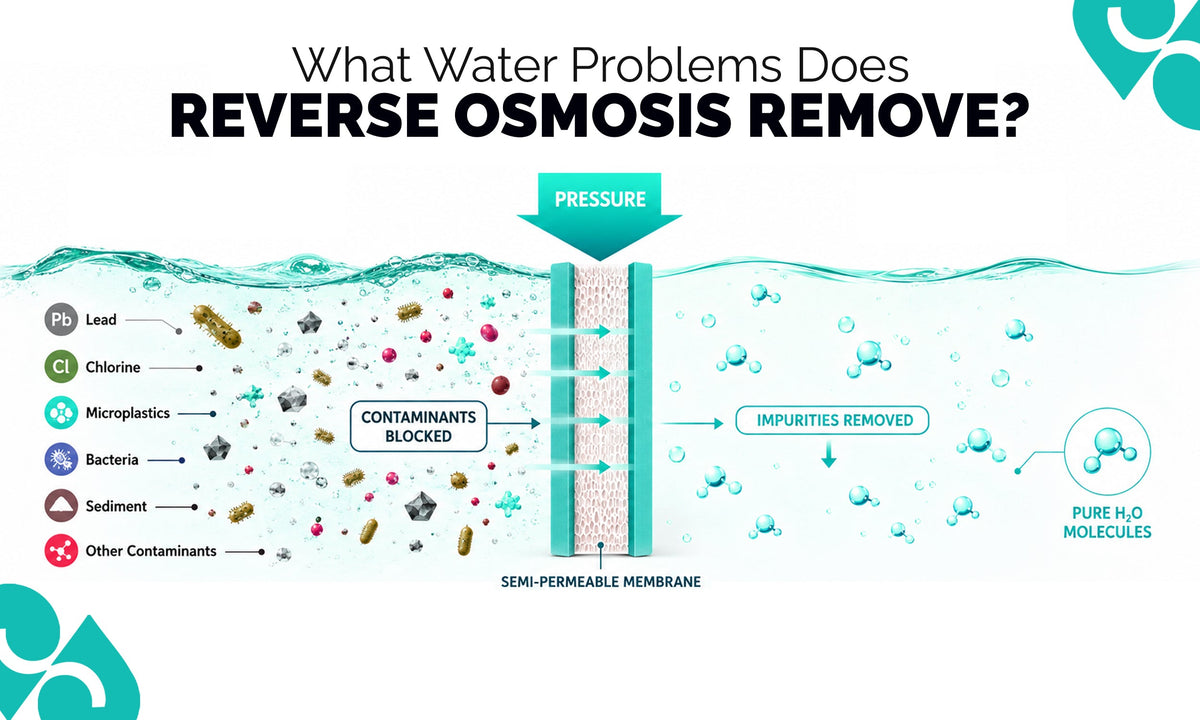
Few filtration methods match the RO membrane’s removal range. While carbon filters handle chlorine and VOCs, only RO addresses dissolved inorganic contaminants.
Removes These Common Pollutants
| Contaminant | Removal Rate |
|---|---|
| Lead | >95% |
| Arsenic | >90% |
| Fluoride | 85–95% |
| Nitrate | >90% |
| Sodium | 85–95% |
| Total Dissolved Solids (TDS) | 90–99% |
| Bacteria and Viruses | >99% |
| Chromium-6 | >90% |
This makes RO ideal for areas with hard water, high TDS, or agricultural runoff. It also forms the backbone of seawater desalination.
Does Not Remove Gases or Volatiles
RO membranes do not effectively remove volatile organic compounds like chlorine or chloramines. That is why every RO system includes a carbon pre-filter, both to protect the membrane and handle these chemicals separately.
Why RO Membranes Fail Prematurely
Even with a 2–5 year lifespan, many membranes fail early due to preventable issues.
Chlorine Damages Polyamide Layer
The polyamide active layer is highly sensitive to oxidizers. Even low chlorine levels degrade the membrane over time, causing reduced rejection rates, increased TDS in product water, and pinhole leaks. Always use a quality carbon pre-filter and replace it every 6–12 months.
Scaling from Hard Water
When feed water contains high calcium and magnesium, these minerals precipitate on the membrane surface under pressure, forming hard scale. This reduces flow and creates hotspots for fouling. Use a water softener upstream if hardness exceeds 7 gpg.
Fouling from Organics and Sediment
Organic matter, algae, and fine silt clog membrane pores, especially when pre-filters are overdue. Biological fouling is also common in stagnant setups. Replace sediment and carbon filters regularly to avoid this.
Bypass Due to Seal Failure
Damaged O-rings or torn skirt seals allow unfiltered water into the product stream. You may not notice until testing reveals high TDS. Always hand-tighten connections and lubricate O-rings with food-grade silicone grease during maintenance.
When to Replace the RO Membrane
No membrane lasts forever. Replace proactively rather than waiting for total failure.
Replacement Indicators
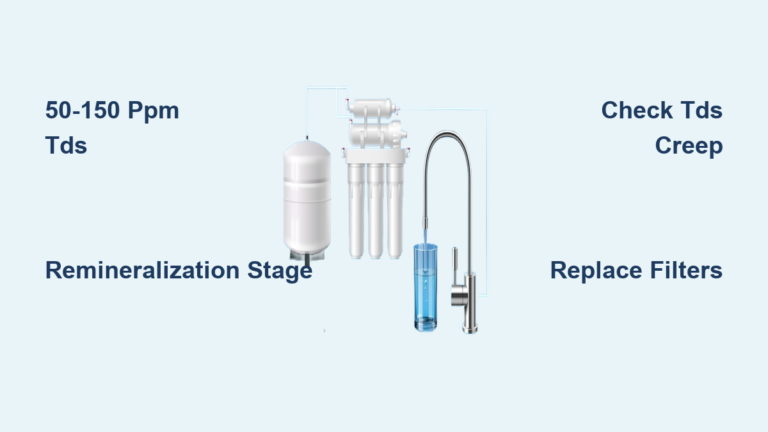
TDS Creep in Product Water
Use a TDS meter to test purified water. If readings rise above 15–20% of the original rejection rate, the membrane is failing.
Low Water Production
A noticeable slowdown in filling the storage tank, even with good incoming pressure, signals clogging or degradation.
Age Over 3–5 Years
Most manufacturers recommend replacement every 2 to 5 years, depending on water quality and usage. If you have never changed it, assume it is due.
Physical Damage
Inspect the membrane during service. Look for torn end caps, slime or biofilm, and discoloration. Any of these means immediate replacement.
Maintaining RO Membrane Performance
Proper maintenance is the difference between a 2-year and a 5-year membrane life.
Replace Pre-Filters on Schedule
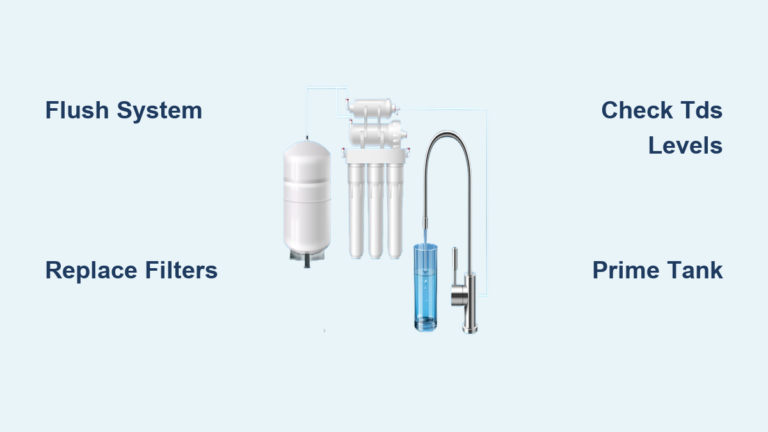
Sediment and carbon filters protect the membrane. Replace them every 6 months in areas with dirty or chlorinated water, or every 12 months in clean municipal supplies. Skipping this step is the leading cause of early membrane failure.
Sanitize the System Annually
Bacteria can grow in stagnant lines even with good filtration. Perform full system sanitization once a year using hydrogen peroxide or an NSF-approved sanitizer. Shut off water, drain the system, circulate the sanitizer for 30 minutes, then flush thoroughly.
Monitor Flow and Pressure
Keep an eye on production rate and wastewater ratio. A healthy system fills the tank in 2–4 hours with a typical 1:3 or 1:4 permeate-to-waste ratio. Higher ratios waste water; lower ones risk fouling.
Applications of RO Membranes

From kitchen sinks to massive desalination plants, RO membranes serve diverse roles where high-purity water is critical.
Drinking Water Purification
The most common use. Under-sink RO systems deliver clean water free of lead, nitrates, and pharmaceuticals. Many offices and restaurants use point-of-use RO units for ice machines and coffee brewers.
Seawater Desalination
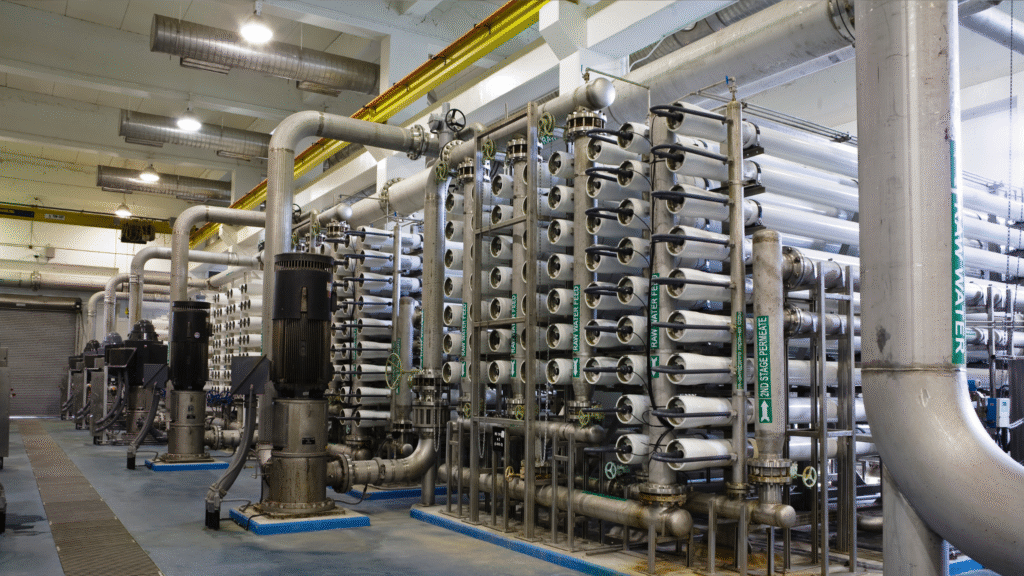
RO is the backbone of modern desalination. Large spiral-wound membranes treat seawater at pressures over 800 psi, producing millions of gallons of freshwater daily. Countries like Israel, Saudi Arabia, and Australia rely heavily on this technology.
Industrial and Pharmaceutical Use
Industries need ultra-pure water for boiler feed, ingredient mixing, equipment rinsing, and sterile solutions. RO provides consistent quality while reducing scaling and contamination risks.
Wastewater Reuse
Municipal and industrial facilities use RO to treat and recycle wastewater. After biological treatment, RO polishes water to near-distilled quality, suitable for irrigation, cooling towers, or indirect potable reuse.
Frequently Asked Questions About the RO Membrane
What does the RO membrane actually remove from water?
The RO membrane removes dissolved solids, heavy metals like lead and arsenic, nitrates, sodium, fluoride, bacteria, viruses, and up to 99% of total dissolved solids. It does not effectively remove chlorine or volatile organic compounds, which is why carbon pre-filters are essential.
How long does an RO membrane typically last?
Under optimal conditions with proper pre-filtration and maintenance, an RO membrane lasts 2 to 5 years. Lifespan depends on feed water quality, pre-filter replacement schedule, and whether the system is sanitized regularly.
Why does my RO system produce so much wastewater?
Wastewater production is necessary to flush rejected contaminants away from the membrane surface. A typical ratio is 1 gallon of permeate to 3–4 gallons of wastewater. If the ratio seems too high, check for a failing flow restrictor or clogged drain line.
Can I install an RO membrane myself?
Many homeowners replace RO membranes as part of routine maintenance. The process involves shutting off water, relieving pressure, removing the housing, swapping the membrane, and inspecting O-rings. Always follow your system’s specific instructions and lubricate seals with food-grade silicone grease.
What happens if I don’t replace my RO membrane on time?
An aging membrane allows more contaminants to pass through, increasing TDS in your drinking water. Production rates also decline as pores clog. In severe cases, a degraded membrane can develop pinhole leaks or allow bacterial biofilm to contaminate your water supply.
Is RO water safe to drink long-term?
RO water is safe and exceptionally clean. Some people prefer to remineralize it because the process removes beneficial minerals like calcium and magnesium. Adding a remineralization stage restores pH balance and taste if desired.
Key Takeaways for Understanding the RO Membrane
The RO membrane is a high-precision separation device that removes contaminants down to 0.0001 micron, making it the gold standard in water purification. Its three-layer thin-film composite structure, consisting of polyamide, polysulfone, and mesh spacer, delivers both selectivity and durability across residential and industrial applications.
To maximize membrane life, replace pre-filters every 6–12 months, sanitize the system annually, and monitor both TDS readings and production rates. Plan to replace the membrane every 2–5 years based on water quality and usage. With proper care, your RO system will deliver pure, safe water for years, proving that sometimes the most powerful technology comes in the smallest package.