When to Change Zero Water Filter: Quick Guide

Your morning glass of water tastes a little off, or maybe the TDS meter is climbing faster than usual. These are not random quirks; they are your ZeroWater filter telling you it has reached the end of its life. Knowing when to change ZeroWater filter is less about the calendar and more about reading real-time signals from your water, your taste buds, and your equipment.
This guide breaks down every reliable indicator that your filter needs replacing. You will learn how to read TDS numbers, spot sensory red flags, track usage by water quality, and handle special situations like plant care or long storage. Everything here is based on ZeroWater’s technical specs and real-world replacement data.
TDS Reading Hits 006 or Higher

The included TDS meter is the gold standard for knowing when to change ZeroWater filter. Total Dissolved Solids measure every inorganic and organic substance in your water, and a healthy ZeroWater filter strips nearly all of them out.
Replace Immediately at 006 ppm
Once your meter reads 006 ppm or above, the filter is officially spent. This is the exact threshold where the dual ion exchange resin becomes fully saturated and can no longer trap dissolved contaminants.
- Optimal range: 000–002 ppm
- End-of-life signal: 006+ ppm
- Critical zone: At 001 ppm, test after every refill, because the jump to 006 can happen within days
Even if the water still tastes fine, a 006 reading means dissolved solids are slipping through. Continued use risks exposure to lead, chromium 6, and other heavy metals the filter was designed to capture.
How to Test Accurately
False readings can trick you into replacing too early or too late. Follow these steps for reliable results:
- Submerge the meter tip directly into the filtered water reservoir, not a poured glass
- Use room-temperature water (hot water inflates TDS artificially)
- Clean the pitcher thoroughly so soap residue does not skew results
- Press “HOLD” to freeze the reading once it stabilizes
- Replace LR44 batteries if the display is dim or stuck at 000
For households with tap water above 300 ppm TDS, test daily. High-mineral water exhausts filters fast, sometimes after just 8 gallons.
Fishy or Sour Taste Detected

Your taste buds are an early warning system. If filtered water develops a fishy or lemon-like acidic taste, the filter is failing, and you should replace it right away.
Fishy Smell Points to Trimethylamine
A fishy odor comes from trimethylamine, an organic compound released when the anion resin in the filter becomes saturated. This chemical is harmless in trace amounts but signals that the filter is no longer removing contaminants effectively.
- Common in high-TDS or chloramine-rich water
- Often appears before TDS hits 006
- Indicates resin exhaustion and organic breakthrough
Sour or Metallic Taste Means pH Is Dropping
An acidic or metallic taste means the filter has over-saturated and is lowering the water’s pH, sometimes below 5.0.
- Caused by hydrogen ion dominance in exhausted resin
- Not dangerous, but unpleasant and corrosive over time
- Confirmed by TDS reading at or above 006
Replace the filter immediately if taste changes occur. Do not wait for confirmation with the meter; your health and taste experience are already compromised.
Flow Rate Slows Significantly
ZeroWater filters naturally pour slower than basic carbon filters, around 6.5 oz per minute, because of the dense 5-stage media. But a dramatic slowdown means trouble.
Sudden Stoppage Usually Means an Air Lock
If water stops flowing entirely, try these quick fixes:
- Lift the reservoir slightly to break the vacuum
- Remove the filter and squeeze the body 4–5 times under running water
- Reinstall and check flow
This usually resolves temporary air locks.
Permanently Slow Flow Means the Filter Is Clogged
If the flow stays sluggish even after clearing air, the filter is physically clogged with sediment or contaminants.
- Common in areas with hard water or high iron
- Stages 1 and 2 (screen and foam) are overwhelmed
- Cannot be cleaned or backflushed
Replace the filter. Do not try to force water through; it will not restore performance and may damage the pitcher.
Based on Gallons Used

While TDS is the most accurate method, tracking usage helps predict replacement timing, especially if you do not own a meter.
Capacity Depends on Tap Water Quality
ZeroWater’s advertised 40-gallon lifespan is only achievable with very low-TDS water (under 50 ppm). Most users get far less.
| Tap Water TDS | Expected Filter Life |
|---|---|
| 002–050 ppm | 40+ gallons (150+ L) |
| 051–200 ppm | 25–40 gallons (100–150 L) |
| 201–300 ppm | 15–25 gallons (50–100 L) |
| 301–400 ppm | 8–15 gallons (30–50 L) |
| 401+ ppm | 8 gallons or less (under 30 L) |
Example: If your tap water measures 250 ppm and your household uses 1 gallon per day, plan to replace every 2–3 weeks.
Track Usage with a Simple Log
Keep a small chart near your pitcher:
- Mark each gallon filtered
- Note TDS readings every few days
- Reset the count after each filter change
This builds a personalized replacement schedule tailored to your water and household habits.
For Carnivorous Plant Care

If you use ZeroWater for Venus flytraps, sundews, or pitcher plants, the replacement rule is stricter.
Never Exceed 006 ppm
These plants are extremely sensitive to mineral buildup. Even slightly elevated TDS (above 10 ppm) can damage roots and kill them over time.
- Replace the filter at or before 006 ppm
- Do not stretch beyond “acceptable” taste
- Avoid letting TDS climb into the teens
Some growers replace filters earlier, around 003–004 ppm, as a safety buffer. The cost of a new filter is far less than losing rare specimens.
After 6 Months of Inactivity
Even unused filters degrade over time. If your ZeroWater sits idle for months, replace the filter every 6 months regardless of use.
Why Inactive Filters Fail
- Moisture and air exposure cause resin breakdown
- Bacterial growth can occur in wet media
- Off-tastes may appear despite low TDS
Storage Tips
- Unopened filters: No expiry; store sealed in a cool, dry place
- Installed but unused: Remove, seal in an airtight bag, and refrigerate
- Maximum storage: Do not keep an open filter unused for more than 3 months
If you restart after a long break and notice odd taste, replace immediately, even if TDS reads low.
Filter Maintenance Mistakes to Avoid
Improper care shortens filter life and causes false readings.
Never Use Cloth Towels
After washing the pitcher:
- Dry with a paper towel only
- Cloth towels leave soap residue and fibers
- Residue interferes with TDS meter accuracy
Do Not Dishwash the Pitcher
- Components are not dishwasher safe
- Heat warps plastic and breaks seals
- Hand wash with warm water and mild soap
Skip the Pre-Soak
ZeroWater filters come pre-rinsed:
- Do not soak before use
- Do not prime or flush for minutes
- Rinse the exterior under warm water for 30 seconds to remove carbon dust
Black specks in the first few batches are normal activated carbon. They are harmless and settle quickly.
Frequently Asked Questions About ZeroWater Filter Replacement
How often should I replace my ZeroWater filter?
Replace your ZeroWater filter when the TDS meter reads 006 ppm or higher, when you notice a fishy or sour taste, or when the flow rate drops permanently. Most households replace every 1–2 months, but high-TDS water can shorten that to a few weeks.
Can I use my ZeroWater filter past 006 ppm?
No. At 006 ppm and above, the ion exchange resin is fully saturated and can no longer trap contaminants. Continued use may allow dissolved solids, including heavy metals, to pass through into your drinking water.
What happens if I drink water from an expired ZeroWater filter?
You may ingest dissolved solids like lead, chromium 6, and nitrates that the filter can no longer capture. The water may also taste fishy or acidic due to trimethylamine and pH drops. While not immediately toxic, long-term exposure is a health risk.
Does ZeroWater remove bacteria or viruses?
No. ZeroWater is designed for municipally treated, potable water only. It does not purify well water, untreated water, or any non-potable source. The filter contains copper-zinc media to inhibit bacterial growth inside the cartridge, but it does not sterilize unsafe water.
How do I recycle my used ZeroWater filters?
Collect 10 used filters, place them in a ZeroWater recycle bag (available for purchase), include your invoice with your address, and mail them in. You will receive a €5.00 voucher as a thank-you for participating.
Key Takeaways for Changing Your ZeroWater Filter
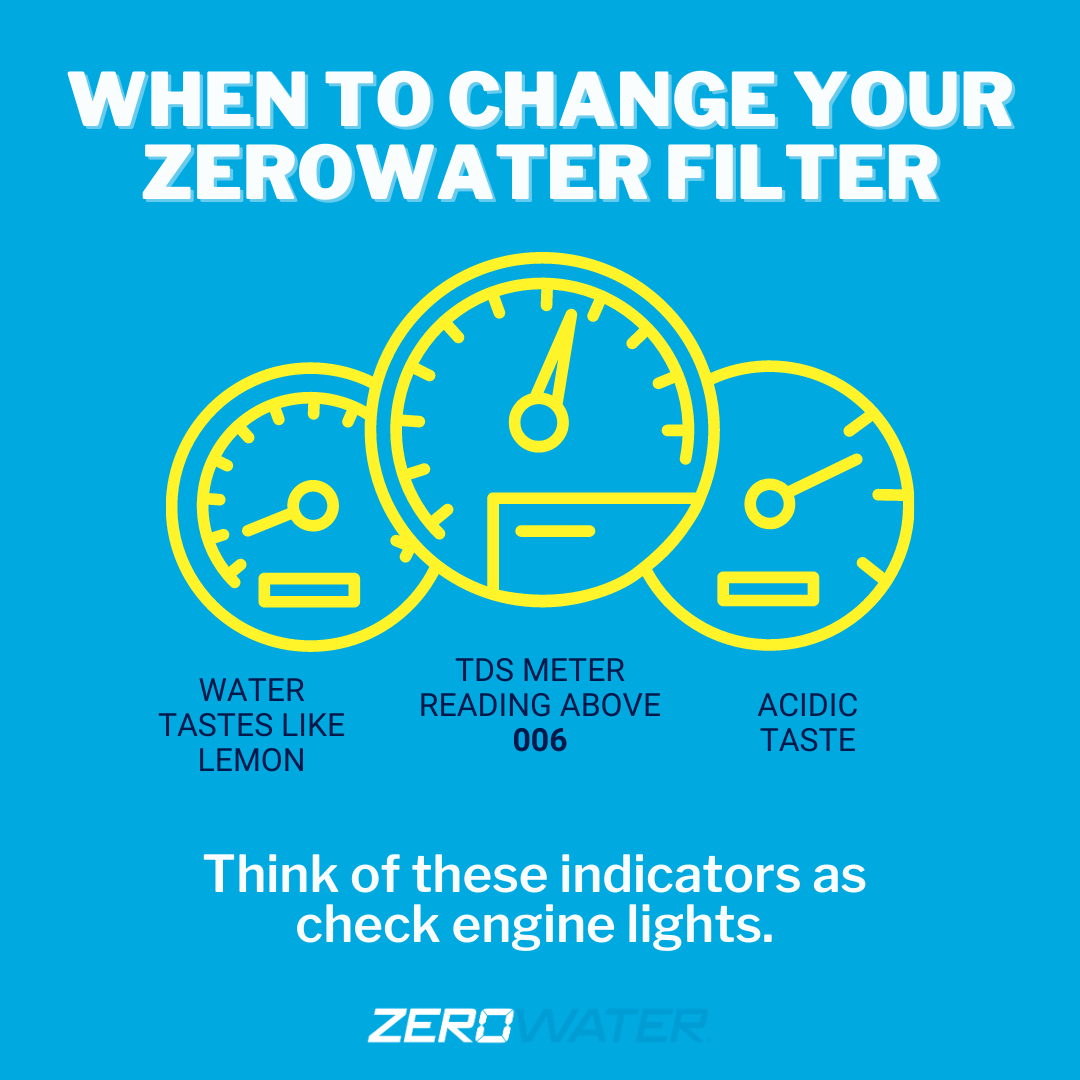
Knowing when to change ZeroWater filter protects your health, saves money, and ensures great-tasting water. Rely on three core signals: the TDS meter (replace at 006 ppm), taste (fishy or sour means replace now), and flow rate (permanently slow means replace).
Track your water’s TDS and daily usage to predict lifespan. For carnivorous plants or infrequent use, follow stricter guidelines. Never stretch a filter past its limits; your safety depends on timely replacement.
Next step: Test your filtered water right now with your TDS meter. If it reads 006 or higher, order a replacement filter today so you never go a day without clean water.