How Water Purifiers Work: Simple Guide

You turn on the tap and expect clean, safe water. But what’s really in your water, and how do water purifiers make it safe to drink? The answer lies in a series of smart, science-backed processes that target everything from dirt and rust to invisible viruses and toxic chemicals. Whether you use a simple pitcher or a full under-sink reverse osmosis system, every purifier works by combining physical barriers, chemical reactions, and sometimes even light to remove harmful substances.
So, how do water purifiers work? At their core, they force water through specialized media that trap, block, or neutralize contaminants. Different systems use different methods. Some filter out particles like a sieve, others attract chemicals like a magnet, and advanced models even destroy microorganisms with ultraviolet light. Understanding these processes helps you choose the right system for your home and ensures your drinking water stays safe every day.
In this guide, you’ll learn exactly how each type of water purifier functions, what contaminants they remove, and why multi-stage systems are often the best choice. From sediment filters to RO membranes and UV lamps, we’ll break down the technology behind clean water so you can make an informed decision and protect your health.
Core Filtration Methods Explained
Water purifiers aren’t one-size-fits-all. Each system uses specific technologies designed to target certain types of impurities. Knowing the main methods—mechanical filtration, adsorption, ion exchange, reverse osmosis, and UV disinfection—helps you understand what your purifier can and can’t do.
Mechanical Filtration: The Sieve Approach
Mechanical filtration is the most basic form of water purification. It works like a sieve, physically blocking particles based on size. These filters use materials such as polypropylene, ceramic, or mesh screens with tiny pores measured in microns.
A 5-micron sediment filter stops sand, rust, and silt before they reach more sensitive components. While effective for visible debris, mechanical filters can’t remove dissolved chemicals or microorganisms smaller than their pore size. Bacteria range from 0.2 to 10 microns, so they may pass through a 5-micron filter unless it has an absolute rating. True pathogen removal requires sub-micron filtration (below 0.2 microns) or additional treatment stages.
Ceramic filters offer finer mechanical filtration, with pores as small as 0.1 to 0.5 microns. They’re reusable and effective against parasites like Giardia and Cryptosporidium, but they need regular cleaning and won’t stop viruses or chemical pollutants.
Activated Carbon: Molecular-Level Trapping
Activated carbon is the go-to solution for improving taste, odor, and chemical safety. Unlike mechanical filters, it doesn’t just block particles. It captures contaminants at a molecular level through adsorption, where pollutants stick to the carbon surface.
Made from coconut shells or wood, activated carbon is treated to create a massive internal surface area (up to 2,000 square meters per gram). This allows it to trap chlorine, chloramines, pesticides, herbicides, and volatile organic compounds (VOCs), including industrial solvents and PFAS.
There are two main forms:
- Granular Activated Carbon (GAC): Loose carbon granules allow fast flow but may develop channels where water bypasses the media.
- Carbon Block: Compressed carbon offers tighter filtration (often 0.5 to 1 micron), better contact time, and improved removal of lead, mercury, and microplastics.
However, activated carbon doesn’t remove dissolved inorganic substances like nitrates, fluoride, or heavy metals unless specially treated. Once saturated, old filters can release trapped chemicals back into the water, so timely replacement is crucial.
Ion Exchange: Swapping Problem Minerals
Ion exchange tackles dissolved minerals and toxic metals by swapping them with harmless ions. Most commonly used in water softeners, this process replaces calcium and magnesium (which cause scale) with sodium or potassium ions using resin beads.
While excellent for protecting pipes and appliances, standard softeners don’t remove bacteria or organic chemicals. However, specialized ion exchange resins can target contaminants like nitrate, arsenic, or lead by attracting specific ions from the water.
Hydrogen-based resins avoid adding sodium, making them ideal for drinking water systems. These are often combined with other technologies to reduce both hardness and harmful metals without compromising health.
Sequestration vs. Softening: Scale Control Methods
Sequestration is a non-removal method that prevents scale by chemically binding calcium and magnesium ions with food-grade polyphosphate. Unlike ion exchange, it doesn’t remove the minerals. It keeps them in solution so they can’t form hard deposits.
This method is popular in small-scale applications like coffee machines or refrigerator filters. It’s low-maintenance and doesn’t require regeneration, but it’s ineffective in very hard water (above 180 ppm). For whole-home scale prevention, traditional ion exchange softeners are more reliable.
Reverse Osmosis: Deep Purification Explained

Reverse osmosis (RO) is the most thorough residential water purification method available. It removes up to 99% of contaminants, including dissolved solids, heavy metals, and microorganisms, making it the gold standard for clean drinking water.
The RO Membrane: Core of the System
The RO membrane is a semi-permeable barrier with pores as small as 0.0001 microns (0.1 nanometers), far smaller than bacteria or viruses. Water is forced through under pressure, while contaminants are rejected and flushed away.
This thin-film composite membrane typically consists of:
- A polyamide layer for selective filtration
- Polyester support fabric
- A central permeate tube to collect purified water
Water molecules (about 0.3 nanometers in size) pass through, but almost everything else, including lead, arsenic, fluoride, nitrates, and salts, is blocked. The result is water with TDS levels as low as 10 to 30 ppm, similar to rainwater.
Why High Pressure Is Required
Natural osmosis moves water from low to high solute concentration. RO reverses this by applying external pressure, typically 100 to 220 PSI, to push water against the concentration gradient.
Most homes have municipal water pressure between 40 and 60 PSI, which is insufficient for effective RO. That’s why many systems include a booster pump to increase pressure, especially when dealing with high-TDS water or undersized pre-filters.
Without adequate pressure, the system produces less purified water and wastes more. Low pressure also increases the risk of membrane fouling and scaling, shortening its lifespan.
Wastewater and Efficiency Trade-Offs
One downside of RO is wastewater. For every gallon of purified water, 2 to 4 gallons are flushed down the drain as concentrate, carrying away rejected contaminants.
While this may seem wasteful, it’s essential for maintaining membrane performance. The waste stream prevents buildup and keeps the system running efficiently. Newer systems with permeate pumps or zero-waste designs can reduce this ratio, but they often come at a higher cost or require additional storage.
Despite the waste, RO remains unmatched in its ability to deliver consistently pure water, especially in areas with contaminated or hard water supplies.
UV Disinfection: Killing Microbes with Light
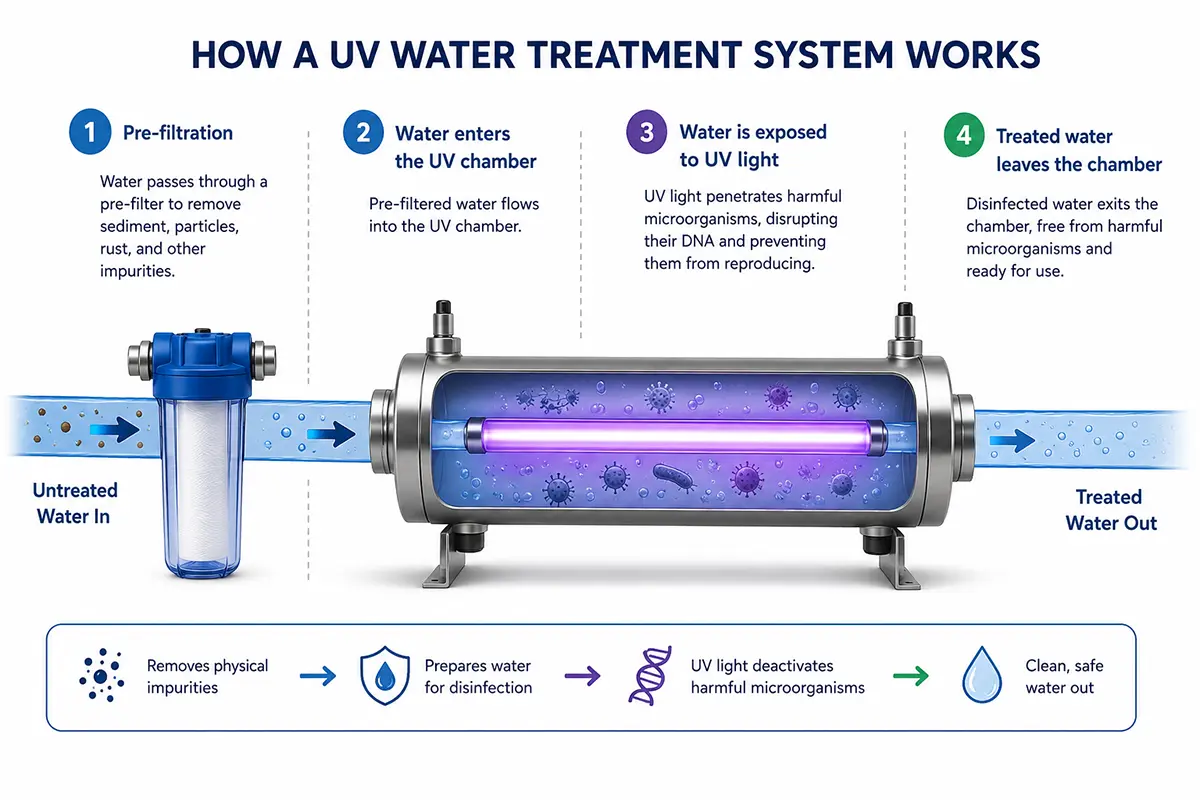
When biological safety is a top concern, ultraviolet (UV) disinfection provides a powerful final barrier. Unlike filters, UV doesn’t remove particles or chemicals. It destroys microorganisms by disrupting their DNA.
How UV Light Inactivates Pathogens
UV systems use a special lamp that emits light at 254 nanometers, a wavelength lethal to bacteria, viruses, and protozoa. Exposure to this UV-C light damages microbial DNA, preventing them from reproducing and rendering them harmless.
It works instantly and requires no chemicals, leaving no residue or change in taste. A properly sized UV chamber can achieve over 99.9% reduction of pathogens, including tough ones like E. coli, Hepatitis A, and Cryptosporidium.
However, UV only works if the water is clear. Turbidity, color, or particles can shield microbes from the light. That’s why UV should always follow pre-filtration stages. Sediment and carbon filters ensure the water entering the UV chamber is clean and transparent.
When UV Is Necessary
UV is especially important for:
- Homes with private wells (unregulated water sources)
- Areas prone to boil-water advisories
- Immune-compromised individuals at higher risk of infection
- Systems without RO or ultrafiltration
It’s often added as a final stage after storage tanks, where stagnant water could allow bacterial regrowth. With annual lamp replacement, UV provides reliable, continuous protection.
Multi-Stage Purification Systems
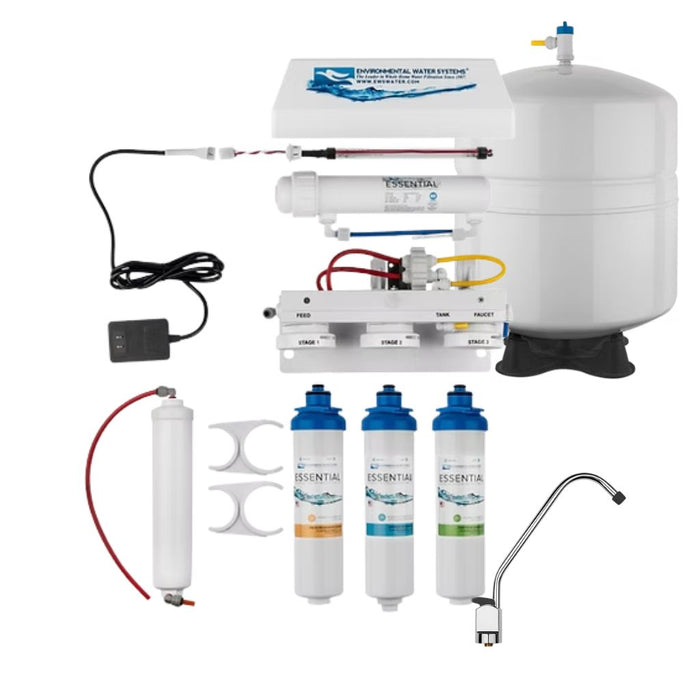
The most effective water purifiers don’t rely on a single technology. Instead, they combine multiple stages to address different contaminants and protect sensitive components.
5-Stage RO System Breakdown
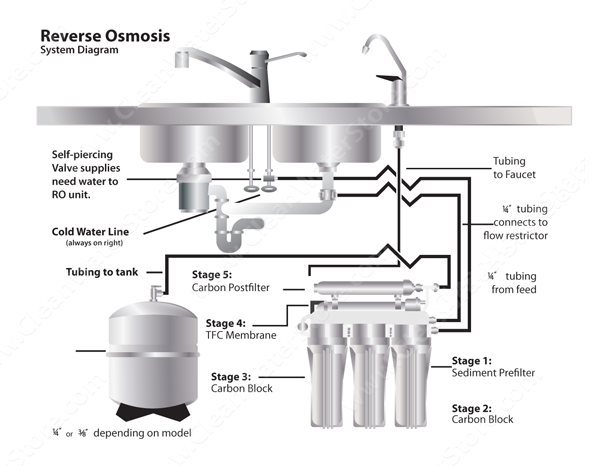
A typical under-sink RO system follows this sequence:
- Sediment Filter (5–20 microns): Removes sand, rust, and silt. Protects downstream filters from clogging.
- Carbon Block Filter: Eliminates chlorine, VOCs, and pesticides. Prevents RO membrane damage.
- RO Membrane: Removes dissolved solids, heavy metals, and microbes. Produces purified water.
- Storage Tank: Holds treated water under pressure for on-demand use.
- Final Polishing Filter (Optional): Adds taste improvement or remineralization.
Some advanced systems include even more stages, like a second carbon filter, anti-scalant injection, or UV disinfection, for maximum safety and performance.
Pre-Filtration: Why It Matters
Skipping pre-filtration is the fastest way to ruin an RO system. Chlorine degrades polyamide membranes, and sediment causes physical blockages. A failed membrane means poor water quality and expensive repairs.
Always ensure your system includes:
- A sediment filter to catch large particles
- A carbon filter to remove oxidants
- Regular maintenance to prevent breakthrough
These stages extend the life of the RO membrane and maintain consistent water quality.
Post-Treatment and Final Polishing
After purification, some systems add final touches:
- UV Lamp: Kills any microbes that entered the storage tank.
- Ultrafiltration (UF): Adds a 0.05-micron barrier for extra microbial safety.
- Remineralization: Reintroduces calcium and magnesium to improve taste and pH balance.
While RO water is safe without added minerals, some users prefer the taste of slightly mineralized water. Remineralization cartridges are optional but should never compromise purity by reintroducing untreated water.
Electrical Controls and Automation
Modern water purifiers use smart electrical systems to manage operation, prevent leaks, and save energy.
Solenoid Valve: Automatic Shut-Off
A solenoid valve is a 24V DC electromechanical switch that controls water flow. It’s normally closed and only opens when powered, usually when the storage tank isn’t full.
This prevents overfilling and stops water from flowing when the system is off. If the valve fails open, the tank can overflow. If it fails closed, no water is produced.
Float Switch: Tank Level Sensor
Inside the storage tank, a float switch detects water level. As the tank fills, a buoy rises until it triggers a spring-loaded switch.
When the tank is full:
- The float switch cuts power to the solenoid (stopping inflow)
- It also turns off the UV lamp (preventing dry burn)
This automatic shut-off ensures zero power draw when idle and protects system components.
Power Adapter and Circuit Safety
A low-voltage adapter converts 120V AC to 24V DC for safe operation. The circuit typically follows this path: Mains → Adapter → Float Switch → Solenoid + UV Lamp.
If any part fails, like a stuck float or broken wire, the system stops safely. Always check connections and replace adapters if damaged.
What Contaminants Each System Removes

No single filter removes everything. Here’s what each technology targets:
| Contaminant | Sediment Filter | Carbon Filter | RO Membrane | UV Light |
|---|---|---|---|---|
| Sand, Rust | ✅ | ❌ | ❌ | ❌ |
| Chlorine | ❌ | ✅ | ✅ | ❌ |
| Lead | ❌ | ✅* | ✅ | ❌ |
| Fluoride | ❌ | ❌ | ✅ | ❌ |
| Bacteria | ❌ | ❌ | ✅ | ✅ |
| Viruses | ❌ | ❌ | ✅ | ✅ |
| Nitrates | ❌ | ❌ | ✅ | ❌ |
| VOCs/PFAS | ❌ | ✅ | ✅ | ❌ |
*Only certified carbon blocks remove lead.
For complete protection, combine technologies. A 5-stage RO + UV system covers nearly all threats.
Choosing the Right System for Your Needs
Not every home needs the same level of filtration. Your choice should depend on water source and quality.
Municipal vs. Well Water
- City Water: Generally safe from pathogens but may contain chlorine, lead (from old pipes), or PFAS. A carbon filter or RO system improves taste and removes chemicals.
- Well Water: Unregulated and prone to bacteria, nitrates, iron, and hardness. Requires comprehensive testing and often includes sediment, carbon, RO, and UV stages.
Always review your Consumer Confidence Report (CCR) for city water or test well water annually.
Point-of-Use vs. Whole-House Systems
- Point-of-Use (POU): Treats water at one tap (kitchen sink). Ideal for drinking and cooking. Includes pitchers, faucet mounts, and under-sink RO units.
- Point-of-Entry (POE): Treats all water entering the home. Protects plumbing and appliances. Best for hard water, iron, or whole-home chemical removal.
POU systems are more affordable and easier to maintain. POE systems offer broader protection but cost more and may require professional installation.
Maintenance: Keeping Your Purifier Effective
Even the best system fails without proper care. Follow these guidelines to keep your water safe.
Filter Replacement Schedule
- Sediment Filter: Every 6–12 months
- Carbon Filter: Every 6–12 months
- RO Membrane: Every 2–3 years
- UV Lamp: Every 12 months (replace even if glowing)
- UF Membrane: Every 1–2 years
Set calendar reminders or use smart monitors if available.
Sanitizing Storage Tanks
Stagnant water in tanks can grow bacteria. Drain and sanitize every 3–6 months:
- Turn off power and water supply.
- Drain the tank completely.
- Flush with a food-safe sanitizer (e.g., 1 tsp hydrogen peroxide per gallon).
- Rinse thoroughly and reconnect.
Leak Prevention and Safety Checks
Inspect connections, valves, and tubing monthly. Look for:
- Dampness under the sink
- Cracked or bulging hoses
- Corroded fittings
Fix issues immediately to avoid water damage.
Debunking Common Water Purifier Myths
Let me clear up some widespread misconceptions about how water purifiers work and what they actually do.
“RO Water Is Unhealthy Because It Removes Minerals”
False. The body gets over 90% of essential minerals from food, not water. Removing toxic metals like lead and arsenic far outweighs the minimal mineral loss. RO water is safe and hydrating.
“Clear Water Means Safe Water”
Not true. Lead, arsenic, nitrates, and many pathogens are invisible and tasteless. Only lab testing or certified filtration confirms safety.
“Rainwater Is Pure and Mineral-Rich”
Incorrect. Rainwater is naturally low in minerals (like RO water) and picks up air pollution and rooftop contaminants. It must be filtered and tested before drinking.
Frequently Asked Questions About Water Purifiers
What is the difference between a water filter and a water purifier?
A water filter typically removes sediment, chlorine, and some chemicals to improve taste and odor. A water purifier goes further by eliminating bacteria, viruses, and dissolved solids through advanced methods like reverse osmosis or UV disinfection. True purification requires pore sizes smaller than 0.2 microns or additional disinfection stages.
Do water purifiers remove beneficial minerals?
Standard carbon filters retain most beneficial minerals. Reverse osmosis removes 90–99% of total dissolved solids, including some calcium and magnesium. However, since over 90% of your essential minerals come from food, this loss is negligible. Remineralization cartridges are available if you prefer the taste of mineralized water.
How often should I replace the filters in my purifier?
Replacement schedules depend on usage and water quality. As a general rule: sediment and carbon filters every 6–12 months, RO membranes every 2–3 years, and UV lamps every 12 months. Always follow your manufacturer’s guidelines and replace filters promptly to prevent breakthrough contamination.
Is reverse osmosis water safe to drink daily?
Yes, RO water is safe for daily consumption. It removes harmful contaminants like lead, arsenic, fluoride, nitrates, and microorganisms. The low mineral content does not affect health, as food provides the majority of essential nutrients. If you prefer, you can add a remineralization filter to restore calcium and magnesium.
Do UV water purifiers really work?
UV purifiers are highly effective at destroying bacteria, viruses, and protozoa when water is clear. They achieve over 99.9% pathogen reduction at the proper wavelength (254 nm). However, UV does not remove chemicals, heavy metals, or sediment, so it must be paired with pre-filtration for complete protection.
Final Thoughts on Choosing and Using Water Purifiers
Water purifiers work by combining physical, chemical, and biological processes to remove contaminants and deliver safe, clean water. From simple carbon filters to advanced RO+UV systems, each technology plays a role in protecting your health. The key is matching the system to your water quality, maintaining it regularly, and understanding what each stage does.
Start by testing your water to identify what you’re dealing with. If you’re on municipal supply, request your Consumer Confidence Report. If you have a well, get an annual lab test for bacteria, nitrates, and hardness. Then choose a system that targets your specific concerns, whether that’s chlorine taste, lead contamination, or microbial safety.
With the right setup and consistent maintenance, you can trust every glass of water from your tap.