Is Purified Water Safe to Drink?

You fill up a glass from a water dispenser, grab a bottle at the gym, or mix formula for your baby, and you pause: is this actually safe to drink? With so many water options lining store shelves, from spring to alkaline to distilled, it’s natural to wonder whether purified water is a smart choice or a marketing gimmick.
The short answer is yes, purified water is completely safe for nearly everyone. It meets strict FDA and EPA standards, removes harmful contaminants, and provides reliable hydration. In this guide, you’ll learn how purified water is made, how it stacks up against spring and tap water, who benefits most from drinking it, and how to choose the best option for your lifestyle and budget.
How Purified Water Is Made
Purified water can come from almost any source, including municipal tap water, groundwater, rivers, or lakes. What sets it apart is the treatment process, not the starting point. The goal is to strip away impurities until the water contains fewer than 10 parts per million (ppm) of total dissolved solids (TDS), meeting the FDA’s strict definition of “purified.”
Standard Treatment Stages
Most purification systems follow a logical sequence from coarse to fine:
- Coagulation and Flocculation: Chemicals bind tiny particles like dirt and metals into heavier clumps called “floc.”
- Sedimentation: The floc settles to the bottom, leaving clearer water above.
- Filtration: Water passes through sand, gravel, and activated carbon to remove bacteria, chemicals, and remaining particles.
- Disinfection: Chlorine or chloramine kills any lingering microbes.
These steps mirror what happens in municipal treatment plants, but purified water goes several steps further.
Advanced Purification Technologies
To achieve ultra-high purity, bottlers and home systems often add one or more of these methods:
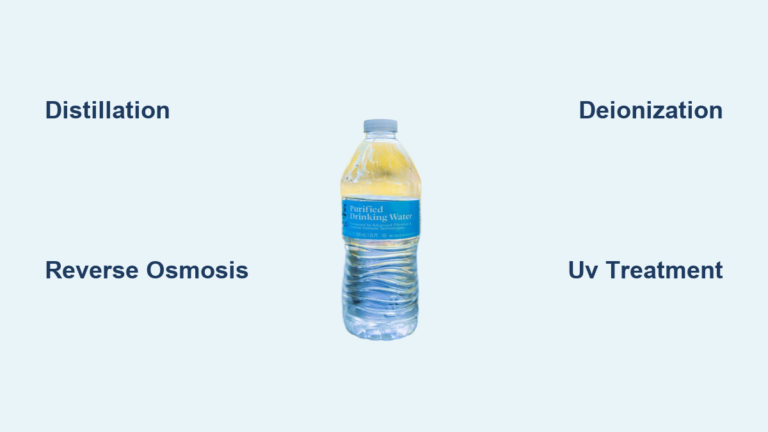
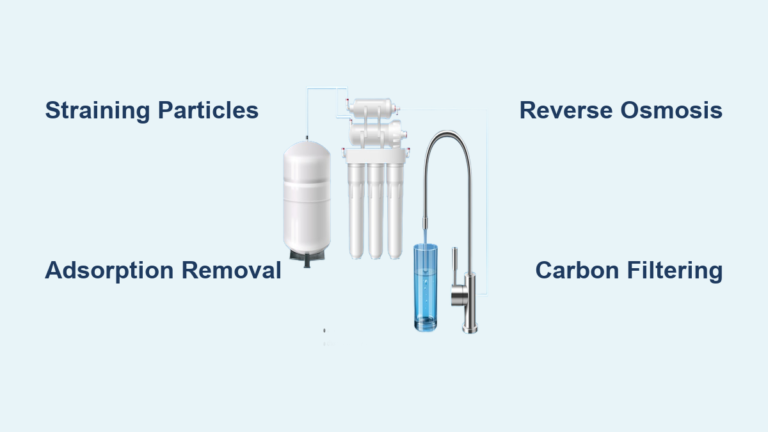
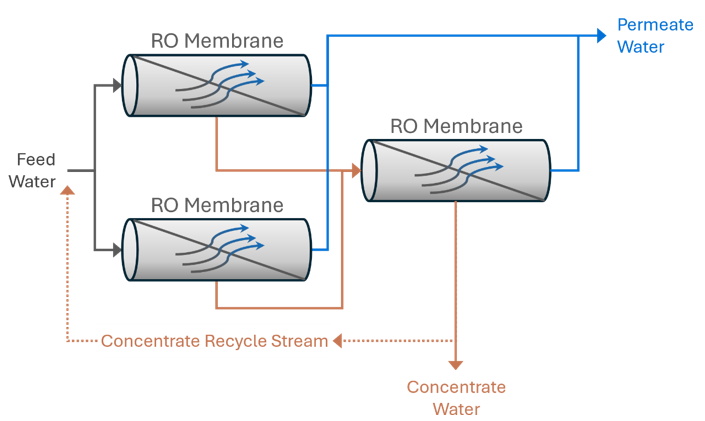
- Reverse Osmosis (RO): Forces water through a semi-permeable membrane that blocks salts, minerals, pesticides, and microorganisms.
- Distillation: Boils water into steam, then condenses it back into liquid, leaving contaminants behind.
- Deionization (DI): Removes charged mineral ions using ion-exchange resins.
- Ultraviolet (UV) Light: Kills bacteria and viruses without adding chemicals.
- Ozonation: Adds ozone gas to destroy microbes and break down organic pollutants.
- Carbon Polishing: A final activated carbon filter improves taste and removes residual odors.
Many commercial systems combine 10 to 12 of these steps to ensure maximum purity and consistency.
Purified vs. Spring vs. Tap Water: Key Differences
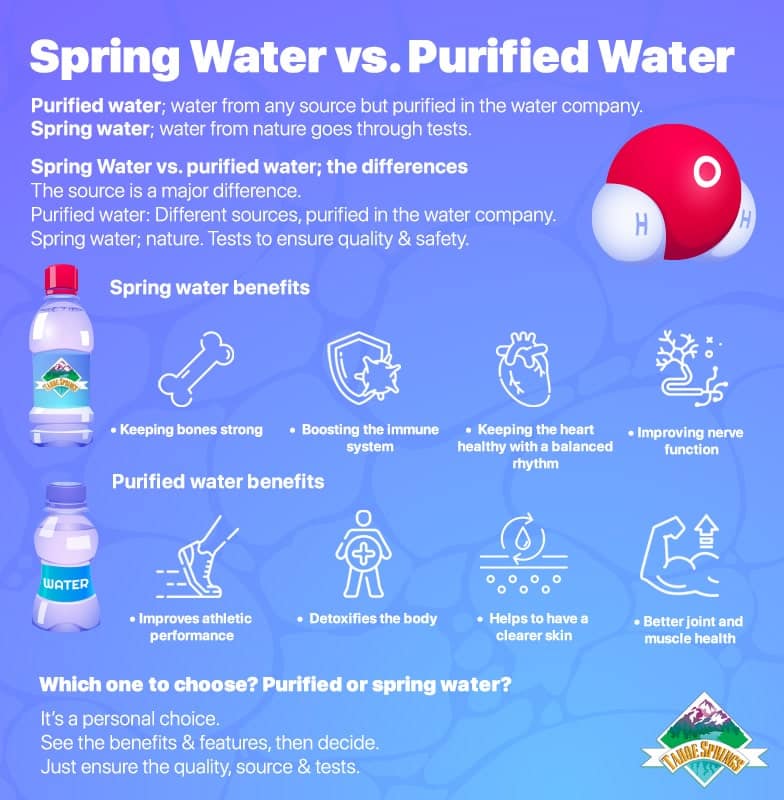
All three types must meet safety standards, but they differ in source, mineral content, taste, and treatment intensity.
Quick Comparison Table
| Feature | Purified Water | Spring Water | Tap Water |
|---|---|---|---|
| Source | Any (often tap) | Underground aquifer | Municipal supply |
| TDS Level | 0–10 ppm | 50–300+ ppm | 50–400 ppm |
| Minerals | Removed | Naturally retained | Varies |
| Taste | Neutral, flat | Crisp, mineral-rich | Often chlorinated |
| Regulation | FDA (bottled), EPA (tap) | FDA (bottled) | EPA |
Spring water picks up calcium, magnesium, and potassium as it flows through rock, giving it a distinct flavor. Purified water has those minerals stripped away, which is why it tastes neutral. Tap water quality depends on local infrastructure. Older pipes can introduce lead, copper, or microbial contaminants even after treatment.
Pro Tip: If you live in an area with aging plumbing, purified bottled water or a home RO system offers more consistent protection.
Does Purified Water Leach Minerals From Your Body?
This is one of the most common concerns about purified water, and the science is reassuring.
The Short Answer: No
There is no strong scientific evidence that drinking purified water depletes your body’s mineral stores. While purified water is mildly reactive due to its purity, your digestive system regulates mineral balance far more effectively than water alone ever could. The stomach’s acidic environment and the kidneys’ homeostatic control prevent any meaningful mineral loss.
The World Health Organization has noted that very low-mineral water might have minor effects in populations with poor diets, but it poses no risk to those eating balanced meals rich in fruits, vegetables, dairy, and whole grains.
Why Food Matters More Than Water
The human body absorbs the vast majority of essential minerals from food, not water. The small amount of calcium or magnesium in spring water is negligible compared to a serving of leafy greens, nuts, or dairy. If you eat well, the lack of minerals in purified water is simply not a health issue.
Who Should Drink Purified Water?
For most healthy adults, purified and spring water are equally safe choices. However, certain groups benefit more from ultra-clean water.
Infants and Baby Formula Preparation
Purified or distilled water is strongly recommended for mixing baby formula. Infants have developing immune systems and are more sensitive to contaminants like nitrates, bacteria, and heavy metals. Even low levels in tap or spring water can pose risks.
Medical Devices and Medications
CPAP machines, humidifiers, and nebulizers require distilled or purified water only. Tap or spring water contains minerals that build up as scale inside the device, reducing efficiency and potentially harboring bacteria. Purified water prevents scaling and ensures safe, clean vapor delivery.
Kidney Disease Patients
People with chronic kidney disease often need to limit potassium, phosphorus, and sodium. Since damaged kidneys struggle to filter excess minerals, purified water’s low dissolved solids help reduce the burden on these organs. Always consult a healthcare provider for personalized guidance.
Immune-Compromised Individuals
Anyone with a weakened immune system, whether from illness, medication, or medical treatment, benefits from the extra margin of safety that purified water provides.
Athletes and Heavy Sweating
Purified water hydrates just as effectively as spring water. However, during intense or prolonged exercise, you lose large amounts of sodium and potassium through sweat. Neither purified nor spring water contains enough electrolytes to replenish these losses. Add an electrolyte supplement regardless of water type to prevent cramps or hyponatremia.
Why Purified Water Tastes Flat (And How to Fix It)

Taste plays a huge role in how much water you actually drink. If you don’t enjoy the flavor, you’ll drink less, and dehydration becomes a risk.
The Reason Behind the Neutral Taste
Purified water lacks dissolved minerals like calcium and magnesium, which give spring water its crisp, refreshing character. Without these, purified water tastes neutral, clean, or sometimes “flat” or slightly sour.
This neutrality is actually a benefit when you’re brewing coffee, mixing protein powders, or cooking pasta, since it won’t interfere with other flavors.
Easy Ways to Improve the Flavor
- Infuse with fruit: Add lemon, lime, cucumber, or berries to a pitcher.
- Use mineral drops: Reintroduce trace electrolytes for flavor and balance.
- Store in glass: Plastic bottles can impart off-flavors over time.
- Chill thoroughly: Cold water masks flatness and feels more refreshing.
Blind taste tests consistently show split preferences. Some people love the crispness of spring water, others prefer the clean slate of purified. There’s no “better” taste, only what suits your palate.
Environmental and Cost Considerations
Purified water is safe and effective, but how you consume it matters for both your wallet and the planet.
Bottled Water: Expensive and Wasteful
- Cost: Roughly $1.50 per 16.9 oz bottle, which adds up to $550 or more per year for daily use.
- Plastic waste: Over 60 million plastic bottles are discarded daily in the U.S.
- Carbon footprint: Transporting heavy water long distances burns significant fossil fuels.
Bottled water is the most expensive and least sustainable way to stay hydrated.
Home Filtration: Smarter and Greener
:max_bytes(150000):strip_icc()/installing-a-reverse-osmosis-system-2718849-hero-4b9b0d7bbd3941eeb12d23d3ebd7296b.jpg)
Investing in a home system cuts costs and waste dramatically:
| Option | Upfront Cost | Annual Filter Cost | Output Quality |
|---|---|---|---|
| Faucet Filter | $30–$50 | ~$60 | Reduces chlorine, lead, improves taste |
| Reverse Osmosis | $200–$500 | ~$100 | Near-purified quality, very low TDS |
| Countertop UV System | $150–$300 | ~$80 | Kills microbes, retains some minerals |
A reverse osmosis system delivers purified-level water straight from your tap, without plastic waste or recurring bottle costs.
Storage Tips and Shelf Life
Water itself never expires, but its container can degrade over time.
Does Bottled Water Go Bad?
No, water doesn’t spoil. However, plastic bottles exposed to heat or sunlight can break down, potentially leaching microplastics or chemicals like BPA into the water. This may cause off-flavors, odors, or weakened structural integrity.
Most bottled water carries a “best by” date of 1 to 2 years, mainly to ensure plastic quality.
Best Storage Practices
- Keep bottles in a cool, dark pantry, not a hot car or garage.
- Avoid direct sunlight, which accelerates plastic breakdown.
- Use glass or stainless steel for long-term storage.
- Rotate stock so older bottles get used first.
For emergency preparedness, replace bottled water every 6 to 12 months to maintain optimal taste and safety.
What to Do If You Suspect Contamination
Contamination is rare but possible. If you experience nausea, vomiting, or diarrhea after drinking bottled water:
- Stop drinking it immediately.
- Contact your local health department.
- Report the brand, lot number, and symptoms.
This helps track potential outbreaks and protects other consumers.
Travel Safety Tips
In regions with questionable water infrastructure, such as parts of Mexico or Southeast Asia, tap water can become contaminated through old pipes or improper storage.
- Drink sealed bottled water only.
- Use portable filters like LifeStraw or Sawyer Mini.
- Boil water for at least one minute if no other option exists.
- Avoid ice unless you know it was made from purified water.
Purified bottled water is the safest bet for travelers, especially those with sensitive digestion.
Frequently Asked Questions About Purified Water Safety
Is purified water safer than tap water?
Purified water often exceeds tap water standards because it undergoes additional treatment like reverse osmosis or distillation. While U.S. tap water is generally safe, purified water offers extra protection against contaminants from aging pipes or local infrastructure issues.
Can drinking purified water cause mineral deficiencies?
No. Healthy individuals obtain the vast majority of essential minerals from food, not water. The kidneys and digestive system regulate mineral balance effectively, so the lack of minerals in purified water does not cause deficiencies in people with balanced diets.
Is purified water safe for babies?
Yes, purified or distilled water is strongly recommended for mixing baby formula. Infants have developing immune systems and are more sensitive to contaminants like nitrates and heavy metals that may be present in tap or spring water.
Why does purified water taste different from spring water?
Purified water tastes neutral or flat because the purification process removes dissolved minerals like calcium and magnesium. Spring water retains these minerals, which give it a crisp, slightly sweet, or earthy flavor.
Does purified water expire?
Water itself does not expire, but the plastic bottle can degrade over time, especially when exposed to heat or sunlight. Most bottled water has a “best by” date of 1 to 2 years to ensure container integrity.
Is it cheaper to buy a home filter or bottled purified water?
A home filtration system is significantly cheaper over time. Bottled water costs roughly $550 per year for daily use, while a faucet filter or reverse osmosis system costs $60 to $100 annually in replacement filters after the initial setup.
Final Verdict on Drinking Purified Water
Yes, drinking purified water is safe for nearly everyone. It meets or exceeds FDA and EPA standards, removes harmful contaminants, and provides reliable hydration. While it lacks the natural minerals found in spring water, this poses no health risk for people with balanced diets.
Key Points to Remember
- Purified water is rigorously treated and meets strict safety regulations.
- It hydrates just as effectively as spring or tap water.
- It’s the preferred choice for infants, medical devices, and immune-compromised individuals.
- Home filtration is more cost-effective and eco-friendly than bottled water.
Your Next Step
If you want maximum purity, are preparing formula, or live in an area with poor tap quality, purified water is an excellent choice. For a more sustainable and budget-friendly option, consider installing a reverse osmosis or quality faucet filter at home. No matter which route you choose, staying hydrated is what matters most, and purified water helps you do it safely.