How Purified Water Is Made: A Simple Guide

You grab a bottle labeled “purified water” at the store, or maybe you use a purifier at home, and you’ve wondered: how is purified water actually made? Unlike spring water, which flows from natural sources with minimal filtering, purified water is engineered to be nearly free of contaminants. Chemicals, microbes, dissolved minerals, and trace metals are all stripped away through deliberate processes. The starting point is often ordinary municipal tap water or groundwater, transformed into something far cleaner than what comes out of your kitchen faucet.
The goal isn’t simply cleanliness. It’s precision. Whether the water is destined for a pharmaceutical vial, a semiconductor fabrication line, or a lead-acid battery, purified water must meet strict technical standards. Purity is measured by conductivity: the fewer ions present, the lower the conductivity, and the purer the water. While tap water conducts electricity well due to dissolved minerals, highly purified water barely conducts at all, sometimes reaching as low as 0.055 μS/cm. In this guide, you’ll learn exactly how purified water is made, from distillation and reverse osmosis to deionization and UV treatment, plus how these methods compare and where each one shines.
Core Purification Technologies
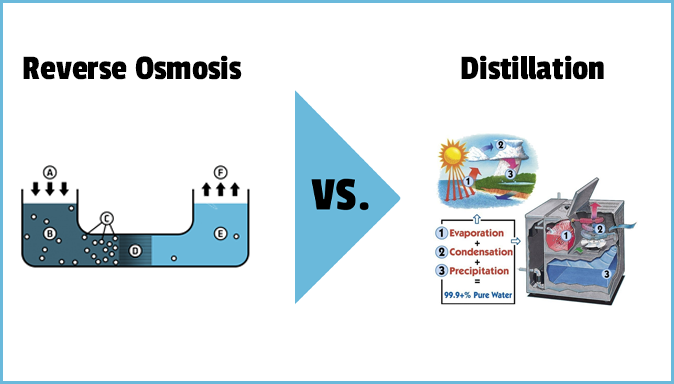
Several proven methods remove impurities from water to produce high-purity output. Most advanced systems combine multiple technologies for maximum effectiveness.
Distillation: Boil and Condense
Distillation removes impurities by heating water into steam, then cooling it back into liquid form in a clean container.
How it works:
Water is boiled in a chamber. As it turns to vapor, contaminants like heavy metals, bacteria, and minerals are left behind. The steam travels through a condenser, cools, and collects as purified water.
What it removes:
– Heavy metals (lead, mercury)
– Bacteria and viruses
– Nitrates, sulfates, and most chemicals
– Non-volatile organic compounds
Limitations:
The process consumes significant energy and leaves mineral scale in the boiling chamber, requiring regular cleaning. Distilled water must also be stored in sterilized containers to prevent bacterial re-contamination.
Best for:
Medical facilities, laboratories, and pharmaceutical production where chemical-free water is essential.
Reverse Osmosis: Force Water Through a Membrane
Reverse osmosis uses high pressure to push water through a semi-permeable membrane with pores as small as 0.0001 microns.
How it works:
Water is pressurized and forced through a thin-film composite membrane. Impurities, including ions, large molecules, and microorganisms, are rejected and flushed away as wastewater. Purified water passes through.
What it removes:
– Up to 99% of dissolved salts and ions
– Pharmaceuticals and pesticides
– Viruses, bacteria, and pyrogens
– Organic matter and turbidity
Efficiency factors:
RO performance depends on water pressure, temperature, and pre-filtration. A typical system includes sediment and carbon filters before the RO membrane to protect it from clogging.
Best for:
Bottled water production, home purification systems, and industrial pre-treatment for ultrapure water.
Deionization: Remove Ions Chemically
Deionization uses ion-exchange resins to strip charged particles from water.
How it works:
Water flows through two types of resin beads. Cation resins swap hydrogen ions (H⁺) for positively charged ions like calcium and sodium. Anion resins swap hydroxide ions (OH⁻) for negatively charged ions like chloride and sulfate. The H⁺ and OH⁻ then recombine to form pure H₂O.
Types of DI systems:
– Co-current: Lower efficiency with higher chemical use
– Counter-current: More efficient with less regenerant needed
– Mixed bed: Highest purity, used as a final polishing step
What it removes:
– Mineral ions (calcium, magnesium, chloride, sulfate)
– Conductivity drops to near-zero levels
Limitations:
Does not remove non-ionic contaminants like viruses, bacteria, or organic molecules unless paired with other methods.
Best for:
Laboratories, electronics manufacturing, and pharmaceutical processes requiring ultra-low conductivity.
Advanced and Supporting Methods
While distillation, RO, and DI form the backbone of purification, additional technologies refine water to meet the highest standards.
Ultraviolet Disinfection: Kill Microbes
UV light disrupts the DNA of microorganisms, rendering them inactive.
How it works:
Water flows through a chamber with a UV-C lamp emitting at 254 nm. Pathogens like E. coli, viruses, and molds are neutralized without adding chemicals.
Effectiveness:
– Destroys 99.99% of bacteria and viruses
– No residual effect, so contamination can occur post-treatment if stored improperly
Used in:
Final disinfection stages in bottled water plants, labs, and medical facilities.
Ozonization: Oxidize and Sanitize
Ozone (O₃) is a powerful oxidant that breaks down organic contaminants and kills microbes.
How it works:
Ozone gas is injected into water, where it reacts with organic compounds, bacteria, viruses, iron, and manganese. Ozone naturally decomposes to oxygen, leaving no chemical residue.
Benefits:
– Stronger disinfectant than chlorine
– Reduces need for chemical additives
– Helps prevent biofilm buildup in storage tanks
Used in:
Bottled water production, wastewater reuse, and high-purity industrial systems.
Carbon Filtration: Remove Chemicals and Improve Taste
Activated carbon adsorbs organic compounds and chlorine.
How it works:
Water passes through granular or block carbon filters. Contaminants like chlorine, chloramines, pesticides, and VOCs bind to the carbon surface.
Role in purification:
Often used as a pre-filter to protect RO membranes or as a post-filter to polish taste. Does not remove dissolved salts or microbes.
Best for:
Enhancing flavor in drinking water and protecting downstream equipment.
Multi-Stage Purification Systems
No single method produces the purest water. Most advanced systems combine technologies in sequence.
RO-DI: The Gold Standard for Ultrapure Water
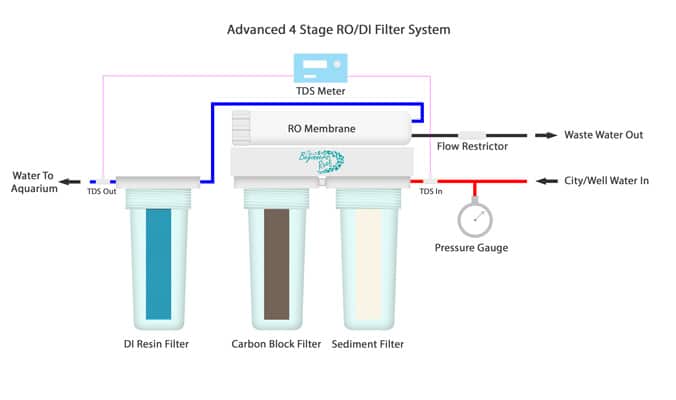
The RO-DI system combines reverse osmosis and deionization for maximum purity.
Process flow:
1. Sediment filter: Removes sand, rust, and particles
2. Carbon filter: Eliminates chlorine and organics
3. RO membrane: Removes 95–99% of ions and contaminants
4. DI resin: Polishes remaining ions to produce water with <0.1 μS/cm conductivity
Output quality:
Meets or exceeds Type I water standards (ASTM, ISO), ideal for molecular biology, HPLC analysis, and semiconductor rinsing.
Maintenance tip:
DI cartridges have a finite lifespan. Once exhausted, they stop removing ions. Monitor conductivity to know when to replace them.
Turning Wastewater Into Drinking Water: A Real-World Example
Facilities like Valley Water in San Jose demonstrate how purification can turn treated wastewater into safe drinking water.
Three-step advanced process:
1. Microfiltration (0.1 μm): Removes solids, bacteria, protozoa, and larger viruses
2. Reverse osmosis (0.0001 μm): Removes viruses, pharmaceuticals, salts, and pesticides
3. UV disinfection: Inactivates remaining pathogens
Future upgrade:
Adding hydrogen peroxide with UV (advanced oxidation) to destroy trace contaminants like endocrine disruptors.
Impact:
Produces 8 million gallons per day of drought-resilient water, reducing reliance on distant sources.
Water Quality Standards and Testing
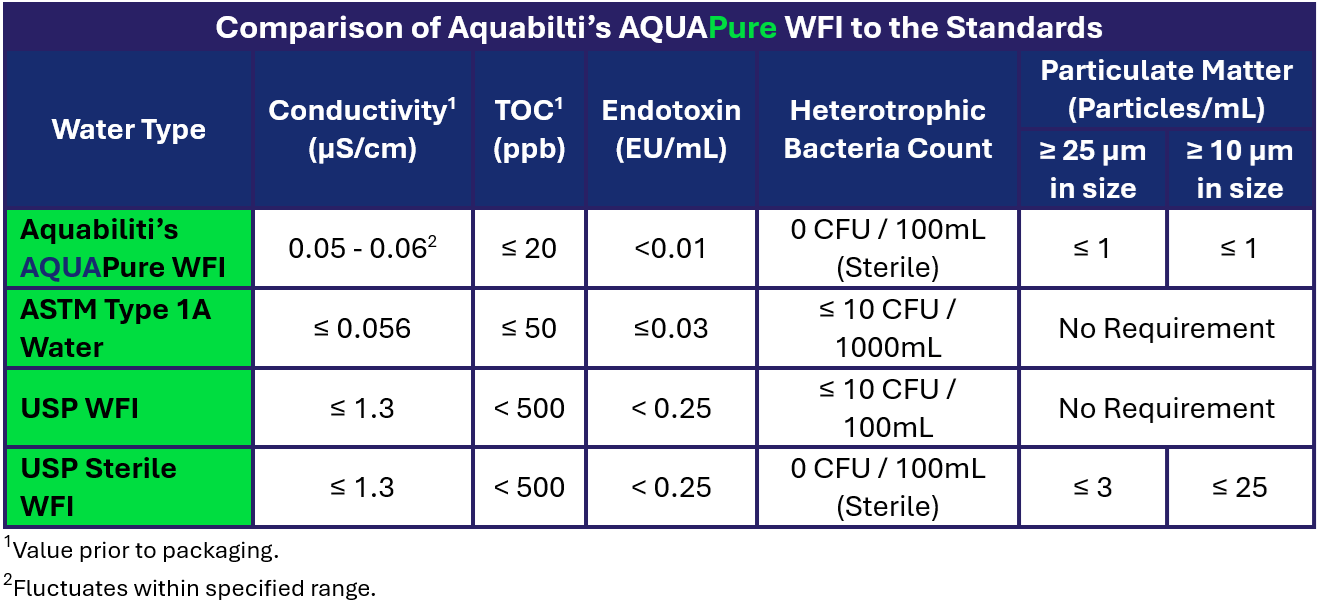
Purified water must meet defined technical standards based on resistivity, conductivity, organics, and microbial content.
Key Standards Compared
| Parameter | ISO Grade 1 | ASTM Type I | USP Purified Water | EP WFI |
|---|---|---|---|---|
| Conductivity | ≤0.1 μS/cm | ≤0.055 μS/cm | ≤1.3 μS/cm | ≤1.3 μS/cm |
| Resistivity | ≥10 MΩ·cm | ≥18.2 MΩ·cm | — | — |
| TOC (Organics) | — | ≤10 ppb | ≤500 ppb | ≤500 ppb |
| Bacteria | — | — | <100 CFU/mL | <10 CFU/100mL |
Note:
– Type I (ASTM) is the purest, used in trace analysis
– Water-For-Injection (WFI) requires stricter bacterial limits and is used in injectable drugs
– Ultrapure water often exceeds 18 MΩ·cm resistivity and is used in chip manufacturing
How to Measure Purity
- Conductivity meter: Most common tool. Lower readings mean purer water
- TOC analyzer: Measures total organic carbon
- Particle counters: Used in cleanrooms and semiconductor fabs
- Microbial testing: Membrane filtration followed by culturing
Pro tip:
Test water at the point of use. Piping and storage can introduce contamination.
Common Applications by Industry
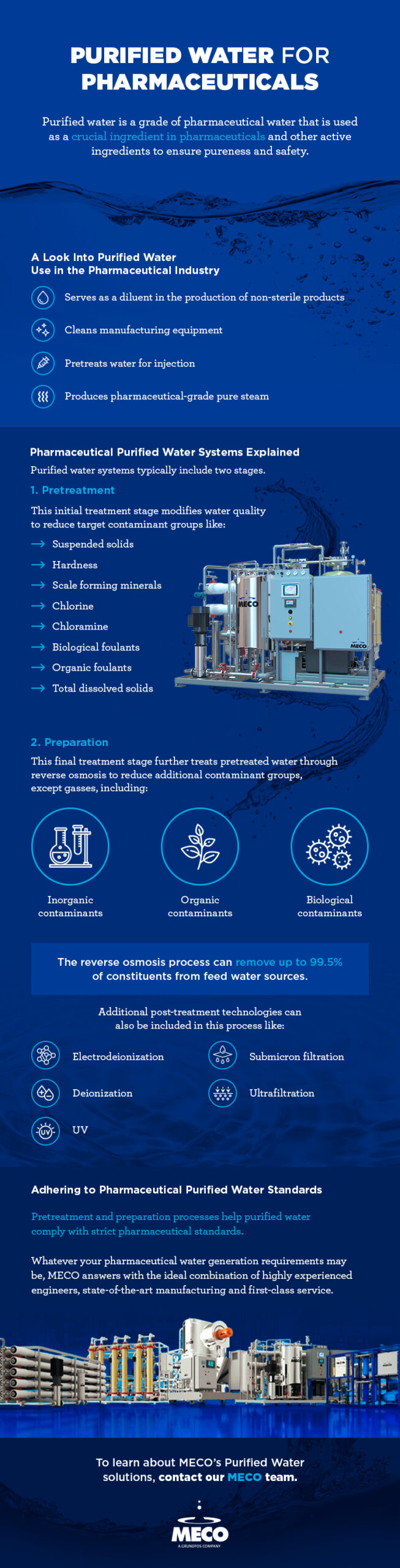
Purified water isn’t just for drinking. Its uses span industries where even trace impurities cause problems.
Pharmaceuticals and Medicine
- WFI (Water-For-Injection): Used in IV solutions and vaccines, made via distillation or RO plus distillation
- Cosmetics: Deionized water ensures product stability and prevents microbial growth
- Lab reagents: Type I water prevents false readings in sensitive assays
Electronics and Semiconductor Manufacturing
- Chip rinsing: Ultrapure water removes microscopic residues without leaving ions
- High dielectric strength: Used in pulsed power systems like Sandia’s Z Machine
- Risk: DI water can corrode copper and brass over time, so use compatible materials
Automotive and Batteries
- Lead-acid batteries: Only distilled or deionized water should be used. Tap water ions accelerate corrosion and reduce lifespan
- Cooling systems: Prevents limescale in radiators and HVAC units
- Engine water injection: In high-performance engines, purified water cools intake air, reducing knock
Beverage and Bottling
- Consistency: Brands use RO/DI water to maintain uniform taste across batches
- Bottle rinsing: Deionized water removes dust and particles before filling
- Purified vs. spring: Purified undergoes more rigorous treatment than spring water
Aquariums and Humidors
- Aquariums: RO/DI water prevents copper, chlorine, and phosphate buildup, but must be re-mineralized before use
- Humidors: Prevents mold and residue on cigars and humidifier pads
Health and Safety Considerations
While purified water is safe to drink, its lack of minerals raises questions about long-term health effects.
Is Purified Water Safe to Drink?
Yes, if your diet is balanced.
WHO findings (1980):
Long-term consumption of demineralized water may increase urine output, reduce serum potassium and magnesium, and affect electrolyte balance.
But:
Most minerals come from food, not water. For healthy individuals, drinking purified water poses no significant risk.
When It’s Especially Beneficial
- Immunocompromised individuals: Removes pathogens more effectively than standard filters
- Areas with poor tap water: Eliminates lead, nitrates, PFAS, and disinfection byproducts
- Home dialysis: Requires ultrapure water to prevent complications
Risks of Poor Maintenance
Home purification systems can become contamination sources if not maintained:
– Expired RO membranes allow bacteria and nitrates through
– Spent DI resins leach ions back into water
– Stagnant storage tanks grow biofilm
Solution:
Follow manufacturer guidelines for filter replacement and system sanitization.
Choosing the Right Type of Purified Water
Not all purified water is the same. The best choice depends on your needs.
Purified vs. Distilled vs. Deionized
| Feature | Purified | Distilled | Deionized |
|---|---|---|---|
| Method | RO, DI, distillation, UV | Boiling + condensation | Ion exchange |
| Minerals | Removed | Removed | Removed |
| Organics | Removed (with RO/UV) | Removed | Not removed |
| Conductivity | Very low | Very low | Very low |
| Best Use | Drinking, general use | Labs, medical | Electronics, labs |
Bottom line:
– For drinking: RO plus carbon filtration offers the best balance of purity and taste
– For labs: RO-DI or distillation meets Type I standards
– For batteries: Use distilled or DI, never tap water
Frequently Asked Questions About Purified Water
What is the difference between purified water and distilled water?
Purified water is any water that has been processed to remove impurities, using methods like reverse osmosis, deionization, distillation, or UV treatment. Distilled water is a specific type of purified water made only by boiling and condensation. Both remove most contaminants, but distilled water may still carry volatile organic compounds unless paired with a carbon filter.
Is purified water safe to drink every day?
Yes, for most healthy people. The WHO noted that long-term consumption of demineralized water may affect electrolyte balance, but most minerals come from food, not water. If you eat a balanced diet, drinking purified water daily poses no significant risk.
How does reverse osmosis purify water?
Reverse osmosis forces water under high pressure through a membrane with pores as small as 0.0001 microns. This removes up to 99% of dissolved salts, ions, bacteria, viruses, pharmaceuticals, and organic molecules. The rejected contaminants are flushed away as wastewater.
What is the purest type of water?
Ultrapure water, such as ASTM Type I, is the purest grade commonly produced. It has a resistivity of at least 18.2 MΩ·cm and conductivity of 0.055 μS/cm or lower. It is used in semiconductor manufacturing, molecular biology, and trace analysis.
Can home water filters make purified water?
Some can. Multi-stage home systems that combine sediment filtration, carbon filtration, and reverse osmosis can produce water that meets purified standards. However, without proper maintenance, filters can become contamination sources, so regular replacement is essential.
Why is purified water used in batteries?
Lead-acid batteries require distilled or deionized water because tap water contains minerals and ions that corrode the internal cells. These impurities drastically shorten battery lifespan. Deionized water is preferred because it removes more impurities than standard tap water.
Final Thoughts on How Purified Water Is Made
Purified water is made through a combination of physical, chemical, and thermal processes. Distillation, reverse osmosis, deionization, UV treatment, and carbon filtration each target specific contaminants. The result is water stripped of nearly all impurities, with conductivity so low it barely conducts electricity.
While safe for daily drinking with a balanced diet, the real power of purified water lies in precision applications. Pharmaceuticals, microchips, and medical devices all depend on water so clean that even a single ion can cause failure. As water scarcity grows, advanced purification, even from wastewater, offers a sustainable and resilient solution.
To get the most from purified water:
✅ Understand your specific needs
✅ Choose the right method for your application
✅ Maintain your system regularly
✅ Test purity at the point of use
From tap to ultra-pure, the journey of purified water is a triumph of engineering and a necessity in our modern world.