How Carbon Water Filters Work: Quick Guide
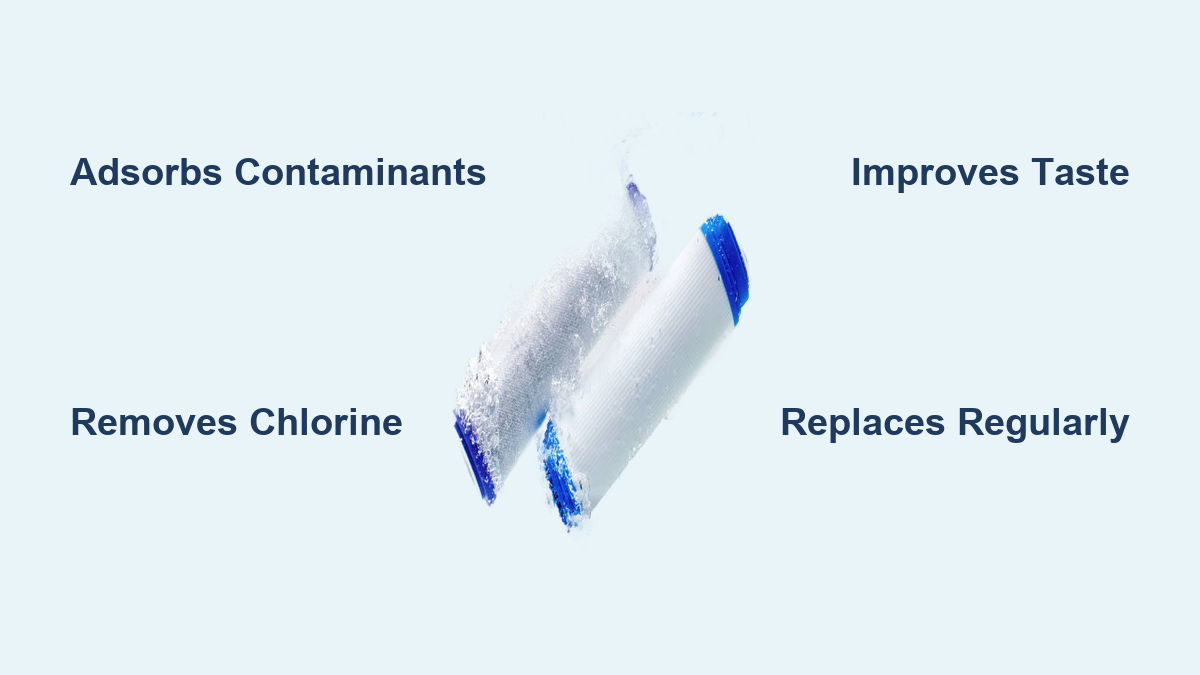
You turn on the tap expecting clean, fresh-tasting water, yet sometimes it smells like a swimming pool or carries a faint chemical aftertaste. If you’ve ever wondered how a simple filter can fix that, the answer lies in activated carbon, the powerhouse behind most home filtration systems. But how does a carbon water filter work? It’s not magic, it’s science. At its core, a carbon water filter removes contaminants through adsorption, a process where impurities stick to the surface of highly porous carbon. This mechanism effectively eliminates chlorine, volatile organic compounds (VOCs), bad tastes, and odors, making your water safer and more enjoyable to drink.
Unlike absorption, where a material soaks up a substance like a sponge, adsorption is a surface-level bond between contaminant molecules and the carbon. Thanks to an immense internal surface area (up to 1,500 square meters per gram), a tiny amount of activated carbon provides vast real estate for trapping pollutants. But not all carbon filters are the same. Differences in design, material, and pore structure determine what they can and cannot remove. Whether you’re using a pitcher, under-sink system, or whole-house unit, understanding how these filters function helps you choose the right one and maintain it properly. In this guide, you’ll learn the science behind carbon filtration, explore the different types, discover what they remove (and what they don’t), and get expert tips to maximize performance.
The Science Behind Carbon Adsorption

Why Activated Carbon Attracts Contaminants
Activated carbon works because of its extreme porosity and chemical affinity for organic pollutants. During manufacturing, raw materials like coconut shells or coal are heated in a low-oxygen environment, creating millions of microscopic pores. This activation process transforms ordinary carbon into a molecular maze with a surface area so large it could cover multiple tennis courts in just one spoonful.
When water flows through, contaminants such as chlorine, pesticides, and VOCs are drawn to the carbon surface and held there by weak intermolecular forces called van der Waals forces. This physical bonding is known as adsorption, and it’s the primary way carbon filters purify water. Additionally, some chemical reactions occur, especially with chlorine, which is reduced to harmless chloride ions. This dual action (physical adsorption and chemical reduction) makes carbon filters highly effective at improving taste, odor, and chemical safety.
Why Contact Time Determines Performance
Even the most advanced carbon media won’t work if water rushes through too quickly. Contact time, meaning how long water interacts with the carbon, is critical. The longer the exposure, the more contaminants get trapped. That’s why slow-flow systems like under-sink carbon blocks outperform high-flow granular filters in removal efficiency.
For example, a densely compressed carbon block forces water to take a winding path, increasing contact time and boosting adsorption. In contrast, granular activated carbon (GAC) allows faster flow but may let some contaminants slip through if the contact is too brief. To get the best results, choose a filter designed for adequate dwell time, especially if your water has high levels of VOCs or chloramine.
Surface Area: The Hidden Engine of Filtration
The effectiveness of any carbon filter hinges on its surface area. With up to 1,400 square meters per gram (per EPA data), activated carbon offers one of the highest surface-area-to-volume ratios of any material. More surface area means more binding sites for pollutants, leading to superior contaminant removal.
However, not all pores are equal. The distribution of pore sizes (micro, meso, and macro) depends on the source material. Coconut shell carbon, for instance, has more micropores ideal for small organic molecules, while coal-based carbon offers a broader range, better suited for larger industrial chemicals. Understanding this helps explain why filter performance varies and why source material matters.
Types of Carbon Filters Explained
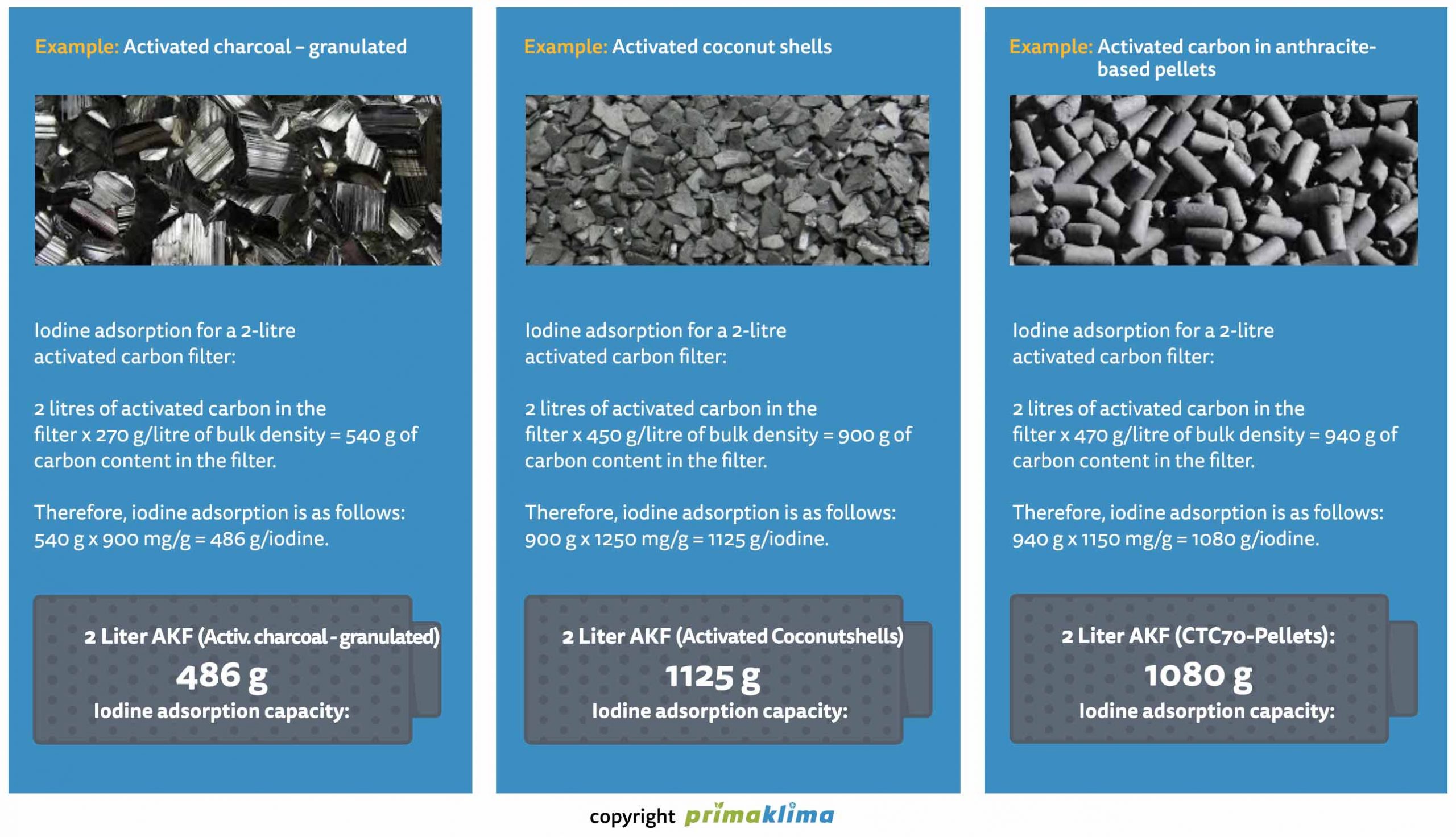
Granular Activated Carbon (GAC)
GAC filters use loose carbon granules packed into a housing. Water flows around the grains, allowing for high flow rates and low pressure drop. This makes GAC popular in whole-house systems and pitcher filters where volume matters.
While effective at removing chlorine and improving taste, GAC has a key weakness: channeling. Over time, water can carve preferred paths through the loose media, bypassing much of the carbon. This reduces contact time and lowers filtration efficiency. Additionally, GAC filters typically lack fine mechanical filtration, so they don’t trap sediment or cysts unless paired with a separate pre-filter.
Best for whole-house chlorine removal, basic taste and odor improvement, and as a polishing stage in RO systems.
Carbon Block Filters: Maximum Efficiency
Carbon block filters are made by compressing powdered activated carbon with a binding agent into a solid cylinder. This dense structure forces water through a tortuous path, dramatically increasing contact time and removal capacity.
These filters offer two benefits:
- Superior chemical reduction, especially for VOCs, THMs, and pesticides.
- Mechanical filtration, with pore sizes as small as 0.5 microns, allowing them to physically trap cysts, sediment, and even some bacteria.
Because of their high performance, carbon blocks are standard in under-sink systems, refrigerator filters, and high-end POU units. They do slow flow slightly, but the trade-off is cleaner, safer water.
Best for drinking water purification, lead reduction (when certified), and systems targeting a wide range of contaminants.
Catalytic Carbon for Chloramine Removal
Municipal water systems increasingly use chloramine (a mix of chlorine and ammonia) as a disinfectant because it lasts longer in pipes. But standard carbon struggles to remove it. Enter catalytic carbon, a specially treated form of GAC or carbon block that chemically breaks down chloramine into harmless byproducts.
This advanced media doesn’t just adsorb chloramine. It catalyzes a reaction that neutralizes it. It also resists fouling and lasts longer than regular carbon in chloraminated water. If your city uses chloramine, catalytic carbon isn’t optional. It’s essential.
Pro tip: Check your local water quality report (CCR) to confirm if chloramine is used. If so, ensure your filter is explicitly rated for chloramine reduction.
Powdered Activated Carbon (PAC) in Compact Filters
PAC consists of ultra-fine carbon particles, offering high surface area in a small volume. It’s commonly used in faucet-mount filters, inline refrigerator cartridges, and emergency filtration devices.
Due to its fine texture, PAC provides excellent contact efficiency but requires containment to prevent carbon fines from entering the water stream. It’s ideal for point-of-use applications where space is limited but performance still matters.
Limitation: Shorter lifespan due to smaller carbon volume. Replace more frequently than larger systems.
What Carbon Filters Remove (And What They Don’t)
Contaminants Effectively Removed
Carbon filters excel at eliminating organic chemicals and substances affecting taste and smell. Proven removals include:
- Chlorine and chloramine (with catalytic carbon)
- VOCs like benzene, toluene, and trichloroethylene
- Pesticides and herbicides from agricultural runoff
- THMs (disinfection byproducts linked to health risks)
- Hydrogen sulfide (rotten egg odor)
- PFAS (up to 73%, per Duke University research, with sufficient contact time)
- Radon (when present in water)
They also improve aesthetic qualities by removing dyes, tannins, and industrial solvents that affect taste and clarity.
What Carbon Filters Cannot Remove
Despite their power, carbon filters have clear limitations. They do not remove:
- Dissolved minerals like calcium and magnesium (so hardness remains)
- Total Dissolved Solids (TDS)
- Fluoride, nitrates, nitrites, or arsenic
- Most heavy metals (unless paired with KDF or ion exchange)
- Bacteria and viruses (unless the block is ≤1 micron and certified)
Important: Carbon filters do not kill microbes. They may even provide a breeding ground for bacteria if left unused for days. For microbial protection, pair carbon with UV or ceramic filtration.
When Carbon Blocks Can Remove Lead
Standard carbon doesn’t remove lead, but certified carbon block filters can. By combining fine pore structure with added media like KDF (copper-zinc alloy), these filters reduce lead through both adsorption and electrochemical reduction.
Look for NSF/ANSI Standard 53 certification for “lead reduction” to ensure your filter delivers on the claim. Without certification, don’t assume protection.
Coconut Shell vs. Coal-Based Carbon
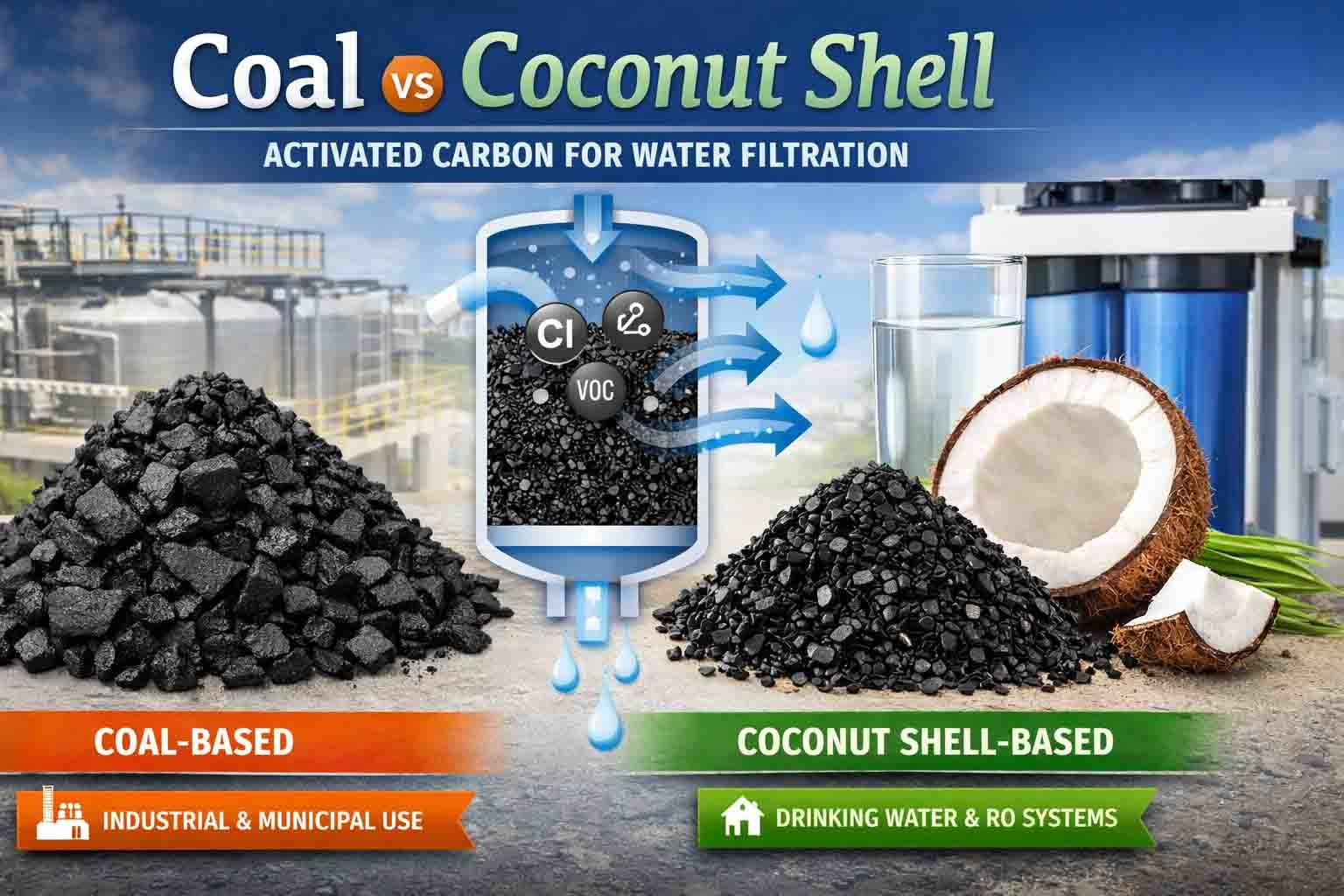
Coconut Shell: Cleaner and More Sustainable
Filters made from coconut shell carbon are increasingly favored for drinking water. Their natural structure creates a high density of micropores, ideal for capturing small organic molecules like chlorine and VOCs.
Benefits:
- Superior taste and odor removal
- Lower ash content (cleaner effluent)
- Renewable, eco-friendly source
- Often preferred in premium POU systems
Many users report a “crisper” taste with coconut-based filters, making them ideal for kitchen and drinking applications.
Coal-Based Carbon: Industrial Strength
Derived from bituminous or lignite coal, this carbon has a broader pore distribution, making it effective for larger organic contaminants often found in industrial wastewater.
Uses:
- Municipal water treatment
- Large-scale POE systems
- Applications requiring high capacity for bulk organics
Downsides: Non-renewable source, higher production waste, and slightly less refined taste compared to coconut carbon.
Best practice: Use coconut shell for drinking water, coal-based for pre-filtration or high-volume industrial use.
Where Carbon Filters Are Used
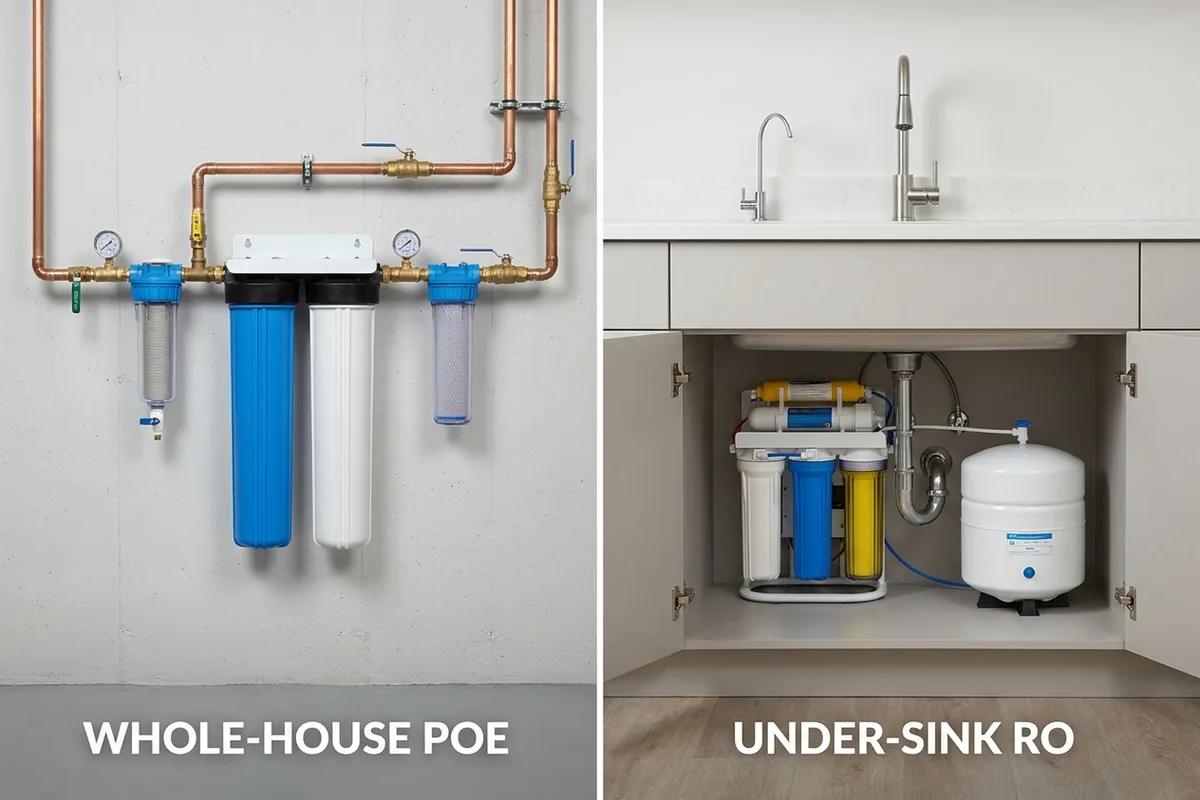
Whole-House (POE) Systems
Installed at the main water line, point-of-entry (POE) carbon systems filter all water entering your home. This means every shower, sink, and appliance gets dechlorinated water.
Key benefits:
- Eliminates chlorine vapor in showers (reducing inhalation risk)
- Protects water heaters, washing machines, and plumbing from chemical damage
- Prevents rubber gasket degradation caused by chloramines
These systems typically use large GAC tanks, sometimes in dual configuration for extended contact time. Ideal for homes with municipal water high in chlorine or chloramine.
Point-of-Use (POU) Filters
POU filters treat water at a single tap, most commonly for drinking and cooking. Examples include:
- Under-sink cartridges (carbon block)
- Faucet-mount filters (GAC or PAC)
- Refrigerator filters (often PAC or small carbon blocks)
- Water pitchers (GAC)
They’re cost-effective and easy to maintain but don’t protect against inhalation or skin absorption elsewhere in the home.
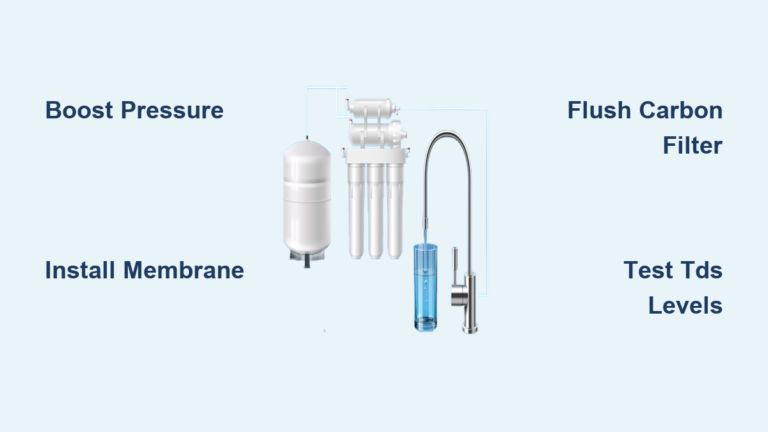
Role in Reverse Osmosis Systems
Carbon is essential in RO systems, playing two critical roles:
- Pre-filter: Removes chlorine to protect the RO membrane from oxidation damage.
- Post-filter: Polishes water by removing any residual taste or odor after membrane filtration.
Without carbon pre-filtration, an RO membrane can fail prematurely. Most multi-stage RO units include at least one, often two, carbon stages.
Hybrid Systems: Carbon + Other Technologies
To overcome carbon’s limitations, it’s often combined with other media:
- Sediment pre-filter: Prevents clogging and extends carbon life
- KDF media: Removes heavy metals like lead and inhibits bacterial growth
- Silver-impregnated carbon: Suppresses microbial growth within the filter
- Ceramic shell: Adds mechanical filtration for bacteria and cysts
- UV light: Destroys viruses and bacteria that carbon can’t catch
These combinations create comprehensive filtration solutions for well water or high-risk environments.
Maximizing Filter Performance
Install Only on Cold Water Lines
Never install a carbon filter on a hot water line. Temperatures above 100°F (38°C) can:
- Damage the carbon structure
- Degrade binding agents in carbon blocks
- Release trapped contaminants back into the water
Always place the filter before the water heater on the cold supply line. Even warm water reduces adsorption efficiency.
Replace Filters Every 6–12 Months
Carbon filters saturate over time. Once all adsorption sites are full, they stop working, and worse, they can leach trapped contaminants back into your water.
General replacement guidelines:
- GAC tanks: Every 6–12 months (or after 600,000 gallons, depending on model)
- Carbon blocks: Every 6 months (or 300–500 gallons)
- Pitchers and faucet filters: Every 2–3 months
Signs it’s time to replace:
- Return of chlorine taste or odor
- Cloudy water (if block is clogged)
- Reduced flow (in carbon blocks only)
Never exceed 12 months, even if water tastes fine.
Prevent Channeling and Bacterial Growth
In GAC systems, channeling (where water finds the path of least resistance) can render the filter ineffective. To prevent it:
- Size the system correctly for your water usage
- Use properly graded carbon media
- Consider upflow designs that reduce channeling risk
For bacterial growth:
- Use silver-impregnated carbon in stagnant systems
- Run water regularly; don’t let filters sit unused for days
- Store unused filters dry
Carbon vs. Reverse Osmosis: Choosing Right

Key Differences at a Glance
| Feature | Carbon Filtration | Reverse Osmosis |
|---|---|---|
| Mechanism | Adsorption | Membrane separation |
| Energy Use | None | Requires pressure/pump |
| Water Waste | None | 3–5 gallons wasted per 1 gallon |
| Minerals | Retained | Removed |
| PFAS/VOCs | Good removal | Excellent removal |
| Fluoride | No | Yes |
| Lead | Only with certified blocks | Yes |
When to Choose Carbon
Opt for carbon filtration if:
- You want to remove chlorine and improve taste
- You prefer mineral-rich water
- You’re focused on sustainability (no water waste)
- You need whole-house protection
- Your water is municipally treated and relatively safe
When RO Is Better
Choose RO if:
- Your water has high TDS, fluoride, or heavy metals
- You rely on well water with unknown contaminants
- You need maximum contaminant reduction, even at the cost of waste
Best approach: Use carbon as pre-treatment for RO to extend membrane life and improve overall system performance.
Frequently Asked Questions About Carbon Water Filters
Does a carbon water filter remove bacteria?
No, standard carbon filters do not kill or remove bacteria or viruses. They may even harbor bacterial growth if left stagnant. For microbial protection, choose a carbon block rated at 1 micron or less for cysts, or pair your filter with UV or ceramic filtration.
How long does a carbon water filter last?
Most carbon filters should be replaced every 6 to 12 months, regardless of water appearance. GAC tanks typically last up to a year, while carbon blocks and pitcher cartridges need replacement every 2–6 months depending on usage and water quality.
Can carbon filters make water safe to drink from a river or lake?
Not on their own. Carbon filters remove chemicals, chlorine, and odors, but they don’t eliminate all pathogens. For untreated natural water sources, combine carbon filtration with UV sterilization or a ceramic filter rated for bacteria and protozoa.
Do carbon filters remove beneficial minerals?
Yes, carbon filters preserve healthy minerals like calcium and magnesium. Unlike reverse osmosis, which strips water of dissolved solids, carbon filtration only targets organic compounds and chemicals, keeping your water mineral-rich.
Why does my filtered water taste different?
Carbon filters remove chlorine and other taste-altering chemicals, which often makes water taste “cleaner” or “crisper.” If you notice a flat taste, it’s because the chlorine masking natural flavors has been removed. This is normal and indicates the filter is working.
Is coconut shell carbon better than coal-based carbon?
For drinking water, coconut shell carbon is often preferred because it has more micropores for capturing small organic molecules, produces cleaner-tasting water, and comes from a renewable source. Coal-based carbon works better for industrial applications with larger contaminants.
Key Takeaways for Understanding Carbon Water Filtration
Carbon water filters purify drinking water through adsorption, a surface-level bonding process that traps contaminants on highly porous carbon particles. With surface areas reaching 1,400 square meters per gram, activated carbon offers unmatched capacity for removing chlorine, VOCs, pesticides, and odors while preserving healthy minerals.
The right filter depends on your water source and goals. Carbon blocks deliver the highest removal efficiency for drinking water, GAC systems provide high-volume whole-house treatment, and catalytic carbon is essential for chloramine removal. Always install on cold water lines, replace filters every 6–12 months, and pair carbon with other technologies when targeting microbes, heavy metals, or fluoride.
Start by testing your water or reviewing your local water quality report to identify which contaminants you need to target. Then match your filter type to those specific challenges. With proper selection and maintenance, a carbon water filter delivers cleaner, better-tasting water for pennies a day.