How to Purify Water with Bleach
When a storm knocks out your water supply or a flood contaminates your tap, clean drinking water becomes your top priority. Knowing how to purify water with bleach can protect your household from dangerous waterborne illnesses when boiling isn’t an option. This method has been used by emergency responders for decades and works against bacteria, viruses, and most protozoa.
But precision matters. The wrong bleach, the wrong dose, or skipping a step can leave you with unsafe water or a stomach full of chemicals. This guide walks you through every step, from filtering cloudy water to storing the finished product, based on official emergency protocols.
Check Your Water Source Before Adding Anything
Bleach only works on clean, clear water. If your water is murky, dirty, or smells bad, chlorine can’t reach the germs hiding inside the particles. Always inspect your water first.
Skip Unsafe Sources Entirely
Never try to disinfect water that:
– Has visible debris, oil slicks, or foam floating on top
– Looks dark or has a strong, foul odor
– Comes from a flooded private well until it’s been professionally tested
– May contain chemical runoff from farms, factories, or roads
Flowing water from streams is generally safer than stagnant puddles or ponds. If your tap is dry, melted ice, water from your hot water tank, or flushed pipes are good fallbacks.
Filter Cloudy Water Before Treatment
If the water isn’t crystal clear, take these steps first:
- Let it settle. Pour the water into a clean container and wait at least 30 minutes for sediment to sink to the bottom.
- Strain the top layer. Carefully pour through a clean cloth, coffee filter, or paper towel into a fresh container.
- Double the bleach later. If the water stays cloudy after filtering, you’ll need to use twice the normal amount of bleach.
Your goal is water that looks as clear as bottled water. If you can’t get it clear, find a better source.
Choose the Right Bleach for Water Treatment

Not every bottle under your sink is safe to drink. Only specific household bleaches are approved for emergency water disinfection.
What to Look For on the Label
Pick a bleach that meets all of these criteria:
– Active ingredient: Sodium hypochlorite only
– Concentration: Between 5.25% and 8.25%
– Scent: Unscented, with no added fragrances
– Additives: No cleaners, dyes, thickeners, or detergents
– Age: Less than one year old
Common brands that work include Clorox Regular-Bleach₂ at 6% and Clorox Germicidal Bleach at 8.25%.
Bleach Types to Avoid
Stay away from any product labeled as:
– Color-safe or splash-less
– Scented (lavender, lemon, fresh linen, etc.)
– Thickened gels or foaming formulas
– Multi-surface cleaners that contain bleach
These products have additives that can make you sick if ingested.
Tools You’ll Need
Gather these supplies before you start:
– A clean medicine dropper for measuring drops
– Measuring spoons (1/8 tsp, 1/4 tsp, 1/2 tsp) for larger batches
– Clean containers with tight-fitting lids
– A clean spoon or stick for stirring
Keep these tools separate from your kitchen utensils to avoid cross-contamination.
Use the Correct Bleach Dosage Every Time

The difference between safe water and a stomach ache is just a few drops. Too little won’t kill germs. Too much can cause nausea, throat irritation, or vomiting. Always measure carefully.
Standard Dosage for Clear Water
Use this chart for water you’ve already filtered:
| Water Volume | 6% Bleach | 8.25% Bleach |
|---|---|---|
| 1 quart / 1 liter | 2 drops | 2 drops |
| 1 gallon (3.8 L) | 8 drops (~1/8 tsp) | 6 drops (~1/8 tsp) |
| 2 gallons | 16 drops (1/4 tsp) | 12 drops (1/8 tsp) |
| 4 gallons | 1/3 tsp | 1/4 tsp |
| 8 gallons | 2/3 tsp | 1/2 tsp |
For anything over one gallon, measuring spoons are more accurate than counting drops.
Double the Dose for Compromised Water
If your water is cloudy, colored, very cold (below 50°F), or from an unknown source, double the amount of bleach. For example, one gallon of cloudy water with 6% bleach needs 16 drops instead of 8. When in doubt, always treat the water as if it were dirty.
Follow the 6-Step Purification Process
Stick to this exact sequence for safe, drinkable water.
Step 1: Filter Cloudy Water
If your water isn’t clear, settle it and strain it through a clean cloth or coffee filter before moving on.
Step 2: Confirm Your Bleach
Double-check that you’re using unscented bleach with 5.25% to 8.25% sodium hypochlorite, and that it hasn’t expired.
Step 3: Add the Precise Dose
Use your dropper or measuring spoon to add the exact amount based on the volume and clarity of your water. Label your dropper “Water Treatment Only” so it never gets mixed up with medicine droppers.
Step 4: Stir Thoroughly
Mix for about 30 seconds to spread the bleach evenly throughout the container. You can stir with a clean spoon or seal the lid and shake gently.
Step 5: Wait 30 Minutes
Cover the container and leave it undisturbed. This contact time is essential for chlorine to kill pathogens.
Step 6: Smell for Chlorine
After 30 minutes, sniff the water:
– Faint chlorine smell: Success. Your water is ready.
– No smell: Repeat the same dose and wait 15 more minutes. If you still smell nothing, the water may be too contaminated. Find another source.
The chlorine smell confirms that enough disinfectant is present to keep working.
Improve the Taste of Treated Water

Bleach-treated water can taste flat or chemical-heavy. A few simple tricks can help.
Aerate the Water
Pour the water back and forth between two clean containers 5 to 10 times. This adds air and reduces the chlorine taste.
Let It Sit Uncovered
Leave the water open for 1 to 2 hours in a cool spot. Some chlorine will evaporate on its own.
Add a Pinch of Salt
A small pinch of salt per quart can take the edge off the flat taste. Don’t add sugar or other flavorings unless you know the water is safe.
Store Treated Water the Right Way
Once your water is purified, protect it from getting contaminated again.
Use Clean, Labeled Containers
Wash containers with soap and hot water before filling. Stick to food-grade plastic or glass with tight lids. Write “Disinfected” and the date on each container so no one drinks the wrong one.
Know Your Shelf Life
- At room temperature: Use within 24 hours
- In the refrigerator: Safe for up to 7 days
For long-term emergency supplies, rotate your stored water every 6 months.
Keep It Cool and Dark
Sunlight and heat break down chlorine and encourage bacterial growth. Store containers in a cool, dark place away from direct sunlight.
Critical Safety Warnings
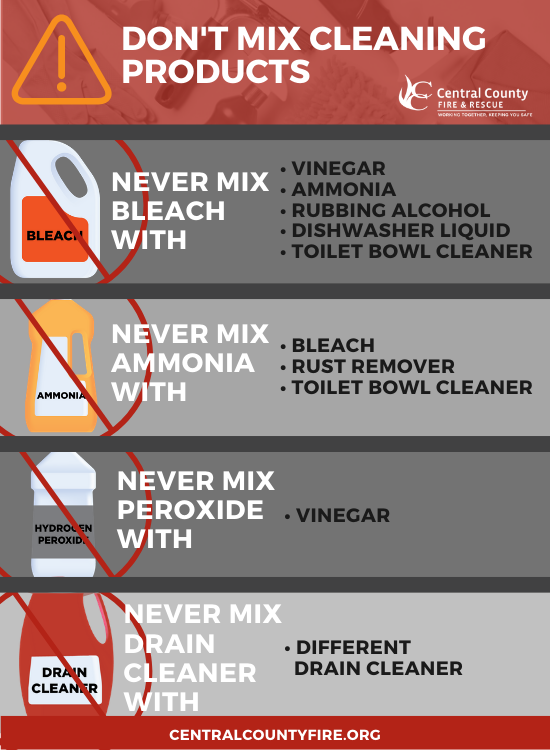
This method is safe only when you follow it exactly. Mistakes can be dangerous.
Never Mix Chemicals
Don’t combine bleach-treated water with iodine, other purifiers, or cleaning agents. Mixing can create toxic gases or harmful reactions.
Don’t Overdose
More bleach does not mean safer water. Excess chlorine can upset your stomach, irritate your throat, or cause vomiting. Follow the dosage chart exactly.
Avoid Old or Wrong Bleach
Bleach loses potency after a year. If yours is expired or you’re unsure how old it is, get fresh bleach if possible. In a true emergency, you can double the dose of old bleach, but this increases risk.
Handle HTH with Care
Granular calcium hypochlorite (HTH) is a powerful oxidizer. If you use it, wear eye protection, work in a ventilated area, and keep it away from children and fuel sources.
Alternatives When Bleach Isn’t Available
If you don’t have the right bleach, try one of these methods instead.
Boiling (Best Backup)
Bring water to a rolling boil for 1 minute. At altitudes above 5,000 feet, boil for 3 minutes. Let it cool naturally, then store properly. Boiling kills all pathogens but doesn’t remove chemicals.
Tincture of Iodine (2%)
Use 5 drops per quart for clear water or 10 drops per quart for cloudy water. Wait at least 30 minutes before drinking. Iodine is not safe for pregnant women or people with thyroid problems.
Disinfection Tablets
Chlorine, iodine, or chlorine dioxide tablets are portable and easy to use. Just follow the package directions.
What to Do If Your Private Well Flooded
Bleach treatment for drinking water won’t fix a flooded well. You need a different process.
- Stop using the well water right away.
- Disinfect the entire well system using shock chlorination, which is a separate procedure for whole-well treatment.
- Have your water tested by your local health department before anyone drinks it.
- Follow official guidance for flood-affected wells.
Troubleshoot Common Problems
No Chlorine Smell After 30 Minutes
The organic load in the water may have used up the chlorine. Add the same dose again and wait 15 more minutes. If you still smell nothing, the water is likely unsafe. Find another source.
Water Is Extremely Cold
Cold temperatures slow down disinfection. Double the bleach dose and keep the full 30-minute contact time. If you can warm the water slightly without boiling, that helps too.
Only Scented Bleach Is Available
Don’t use it. Scented bleaches contain chemicals that aren’t safe to drink. Boil the water, use iodine, or grab disinfection tablets instead.
Bleach Taste Is Too Strong
Pour the water between two clean containers several times to aerate it. Let it stand uncovered for a few hours, or add a pinch of salt per quart.
Frequently Asked Questions About Purifying Water with Bleach
How long does it take bleach to purify water?
Bleach needs at least 30 minutes of contact time to kill most pathogens. If there’s no chlorine smell after 30 minutes, repeat the dose and wait another 15 minutes.
Can I use bleach to purify water for a baby or infant?
Yes, but use the standard dosage exactly. If the chlorine taste is a concern, aerate the water or let it stand before mixing formula. When in doubt, use boiled and cooled water instead.
What happens if I add too much bleach to the water?
Excess bleach can cause nausea, vomiting, throat irritation, and stomach pain. Always measure carefully and never exceed the recommended dosage.
Does bleach remove chemical contamination from water?
No. Bleach only kills biological contaminants like bacteria, viruses, and protozoa. It does not remove heavy metals, salts, pesticides, or other chemical pollutants. If you suspect chemical contamination, do not drink the water.
How long does bleach-treated water stay safe?
At room temperature, use it within 24 hours. In the refrigerator, treated water stays safe for up to 7 days. For long-term storage, rotate your supply every 6 months.
Can I use pool shock or HTH instead of household bleach?
Yes, but only if you follow specific instructions. Mix 1 heaping teaspoon of granular calcium hypochlorite into 2 gallons of water to make a stock solution, then add 1 part stock solution to 100 parts water. Wear eye protection and work in a ventilated area.
Key Takeaways for Purifying Water with Bleach in an Emergency
Learning how to purify water with bleach is a skill that can keep your family safe when normal water supplies fail. The method works, but only when you follow every step with precision.
Remember these essentials:
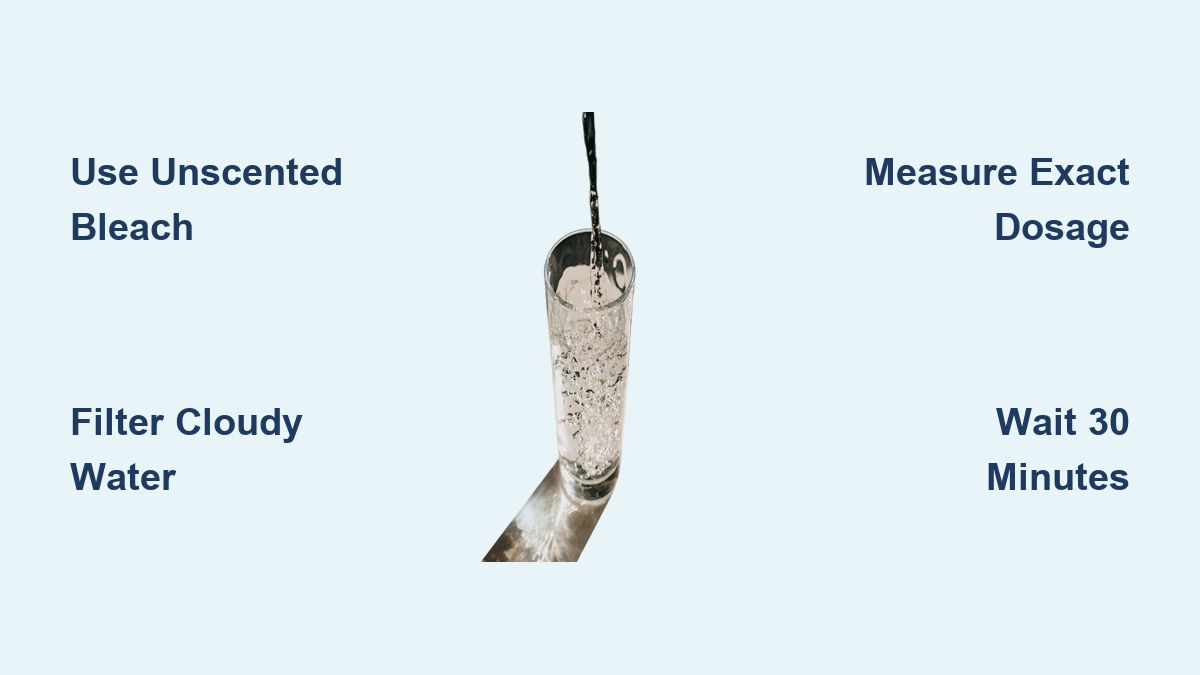
– Use only unscented bleach with 5.25% to 8.25% sodium hypochlorite
– Filter cloudy water first, then double the dose if needed
– Measure carefully using the dosage chart
– Wait 30 minutes and confirm a faint chlorine smell before drinking
Stock your emergency kit today with fresh unscented bleach, a clean dropper, measuring spoons, and airtight containers. Practice the steps now so you can move quickly when it matters. When disaster hits, you’ll be ready to turn questionable water into safe drinking water in just half an hour.