Does Reverse Osmosis Remove Iron? Facts

If your water leaves rust-colored stains on sinks, showers, and freshly washed laundry, or carries a metallic taste, iron contamination is almost certainly the cause. Many homeowners searching for a solution ask: does reverse osmosis remove iron? The short answer is yes, but only under specific conditions. A standard RO membrane can reject dissolved iron, yet without the right pre-filtration and system design, that iron will quickly destroy the membrane and leave you with costly repairs.
Reverse osmosis works best as an iron-removal solution when paired with specialized media like KDF85 and matched to your actual iron concentration. This guide explains exactly how RO tackles iron, the critical thresholds you must respect, and which system configurations actually deliver clean, great-tasting water without premature failure.
Understanding the 0.3 ppm Iron Threshold for RO Systems

Why 0.3 ppm Is the Safety Limit
Reverse osmosis membranes are delicate, and iron is one of their worst enemies. When dissolved iron concentrations exceed 0.3 ppm, standard RO systems face a high risk of fouling, reduced output, and permanent damage. This threshold matches the EPA’s secondary standard for iron, which is based on aesthetic concerns like staining and taste rather than health risks.
At levels above 0.3 ppm, dissolved ferrous iron begins oxidizing inside the RO housing and on the membrane surface. The resulting ferric particles coat the membrane, block flow paths, and drastically shorten system life. Most manufacturers will not honor warranties if you feed water above this limit into a basic unit.
What Happens When Iron Exceeds 1.0 ppm
If your well water contains over 1.0 ppm of iron, reverse osmosis alone is not your best first step. Even specialized iron-rated RO systems struggle at these concentrations. The smarter approach is whole-house pre-treatment, such as an oxidation filter or water softener, to remove the bulk of iron before water ever reaches your under-sink RO unit.
Once pre-treatment brings iron down to acceptable levels, a dedicated iron-removing RO system can polish drinking and cooking water to near perfection. This two-stage strategy protects your appliances, extends membrane life, and ensures clean water from every tap.
How Reverse Osmosis Actually Removes Iron
Ferrous vs. Ferric Iron: The Two Forms
Iron appears in water in two distinct forms, and RO handles them very differently:
- Ferrous iron (Fe²⁺) is dissolved and invisible in well water until it contacts oxygen. This “clear water iron” slips right through standard sediment filters.
- Ferric iron (Fe³⁺) is oxidized, visible, and appears as reddish-brown particles. This “red water iron” causes staining and turbidity.
RO membranes can reject both forms, but ferrous iron poses the real danger. It enters the system invisibly, then oxidizes inside the housing or on the membrane, creating scale, biofilm, and clogs that destroy performance over time.
Membrane Rejection and the 0.0001 Micron Barrier
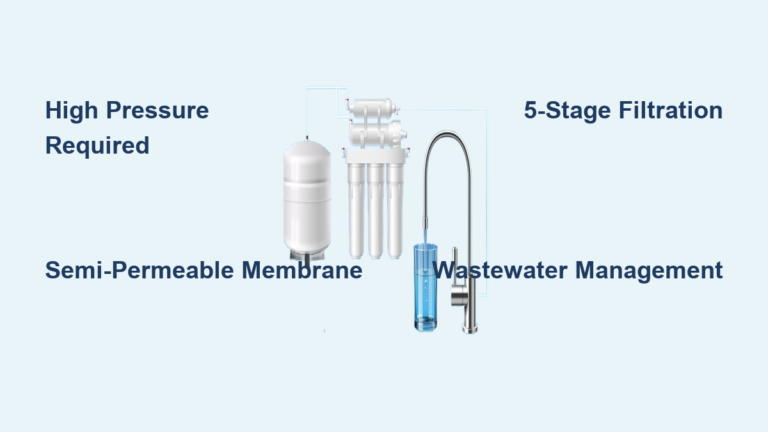
RO membranes force water through pores approximately 0.0001 microns in size, small enough to block iron ions along with other dissolved solids. High-quality DOW FilmTec membranes achieve 98–99% rejection of total dissolved solids, including iron, heavy metals, and nitrates.
However, rejection only works when the membrane stays clean. Iron buildup creates a barrier layer that reduces effective surface area, allowing contaminants to pass through. The result is rising TDS in your purified water, even when the system appears to function normally.
Specialized RO Systems Built for Iron Removal
KDF85 Pre-Filtration: The Essential Upgrade
To safely use RO for iron-rich water, KDF85 redox media is non-negotiable. This copper-zinc alloy uses an oxidation-reduction reaction to convert soluble ferrous iron into insoluble ferric iron, which then gets trapped in the pre-filter.
Unlike passive carbon blocks, KDF85 actively changes water chemistry. Systems like the Home Master Iron RO integrate 8.5 inches of combined carbon and KDF85 media, providing extended contact time for maximum iron conversion. Without this media, even trace amounts of dissolved iron will destroy a standard RO membrane within months.
Why Granular Media Outperforms Carbon Blocks
Many budget RO systems rely on thin-walled carbon block pre-filters. These work fine for chlorine but fail miserably with iron. Their dense structure restricts flow and lacks the catalytic power needed to oxidize dissolved iron.
Granular KDF85 and carbon blends deliver:
– Higher flow rates to the membrane
– Longer contact time for oxidation reactions
– Better iron conversion efficiency
– Reduced pressure drop across the system
This means more water reaches the membrane at optimal pressure, improving purification efficiency and extending membrane life in high-iron environments.
System Design Features That Matter for Iron

Storage Tank vs. Tankless Configurations
For iron removal, storage tank RO systems outperform tankless models in three key areas:
- No TDS creep: Tankless systems allow purified water to sit against the membrane when idle, causing dissolved solids to diffuse backward and raise TDS over time. Tanks with permeate pumps maintain constant pressure, preventing this problem.
- Faster dispensing: A tank system with a permeate pump fills an 8-oz glass in about 4.5 seconds, compared to roughly 18 seconds for most tankless units.
- No daily flushing waste: Tankless systems often require flushing before each use, wasting 1–2 gallons daily. Storage tanks keep fresh water ready at all times.
Permeate Pumps: The Efficiency Game-Changer
A non-electric permeate pump dramatically improves performance for iron-prone water:
– Reduces wastewater by up to 80%
– Increases production by up to 50%
– Achieves a near 1:1 purified-to-waste ratio
– Prevents backpressure and TDS creep
The pump harnesses energy from wastewater to push purified water into the tank, requiring no electricity. For any home dealing with iron or hard water, this upgrade pays for itself quickly.
Modular vs. Canister Filter Housings
Traditional canister-style filters require cleaning reusable housings during each filter change. Over time, these housings harbor biofilm, sediment, and iron bacteria, leading to leaks and contamination.
Modular filter designs combine the housing and media into a single disposable unit. You simply twist off the old filter and twist on the new one. This eliminates cross-contamination risks, reduces microbial growth, and saves valuable space under your sink.
Maintenance Requirements for Iron-Removing RO Systems
Annual Filter Replacement Schedule
In iron-removing RO systems, replace filters every 12 months or 3,000 gallons, whichever comes first. Warning signs include slower water flow, returning metallic taste, or visible discoloration in the filter housing.
KDF85 and carbon pre-filters lose effectiveness as they become saturated with oxidized iron. Delaying replacement risks breakthrough contamination reaching the membrane and shortening its lifespan significantly.
Tank Sanitization and Pressure Checks
The storage tank needs annual maintenance to function properly:
- Sanitize the tank: Add two drops of unscented bleach to the air valve, let sit for 2 minutes, then drain completely.
- Check air pressure: With the tank empty, use a tire gauge to verify 7.5 PSI at the Schrader valve. Recharge if the reading falls below this level.
A properly pressurized tank ensures full capacity and consistent flow. Neglecting this simple step leads to waterlogging and reduced performance.
Membrane Lifespan and Hardness Considerations
A high-quality DOW FilmTec membrane typically lasts 3–5 years with proper pre-filtration. However, hardness and iron both shorten membrane life:
- Standard 50 GPD membranes handle up to 10 gpg hardness
- Upgraded 75 GPD membranes tolerate up to 18 gpg hardness and higher iron levels
If your water is both hard and iron-rich, consider installing a water softener upstream or upgrading to a high-capacity membrane.
Alternative Iron Removal Methods to Consider
Water Softeners for High Iron Levels
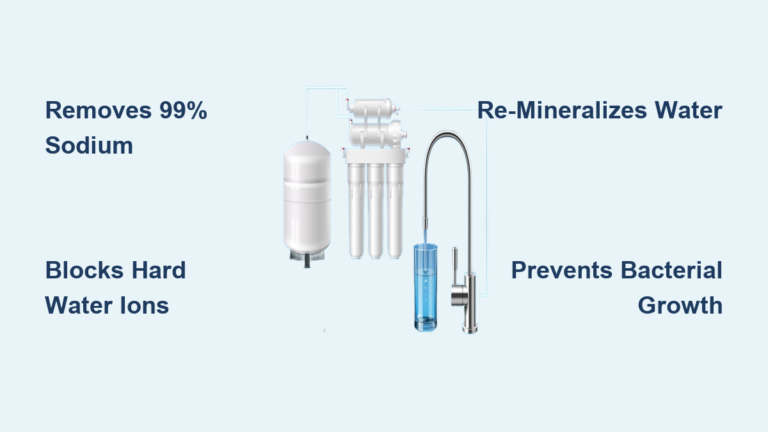
When iron exceeds 1.0 ppm, a salt-based water softener often makes the best first investment. It uses ion exchange to replace iron and hardness minerals with sodium or potassium.
Advantages:
– Handles up to 10 ppm iron with proper regeneration
– Softens water throughout the entire house
– Prevents scale buildup in pipes and appliances
Limitations:
– Adds sodium to drinking water
– Does not remove bacteria, sulfur, or arsenic
– Requires ongoing salt refills and maintenance
Place the softener before your RO system to protect the membrane from both iron and hardness.
Oxidation Filters for Whole-House Treatment
For well water containing iron, hydrogen sulfide, or manganese, oxidation filters (such as greensand or air-injection systems) provide effective whole-house treatment.
These systems inject oxygen or chlorine into the water, converting ferrous iron to ferric iron, then filter out the particles. They require periodic backwashing and occasional chemical dosing but handle high iron loads reliably. Pair one with an RO unit for spotless drinking water.
Installation Requirements and Operating Conditions
What You Need for Installation
Installing an iron-removing RO system requires:
– A ½-inch hole in the countertop or sink for the dedicated faucet
– Access to a cold water line only, since hot water damages RO membranes
– A ¼-inch drain saddle installed vertically before the P-trap
– Adequate under-sink space (modular systems are compact)
Granite or stone countertops may require professional drilling to avoid cracking.
Critical Operating Parameters
Ensure your water supply meets these specifications:
– Pressure: 40–90 PSI (35 PSI minimum with a permeate pump)
– Temperature: 40°F to 100°F
– Sediment: Under 5 NTU (requires a 5-micron pre-filter)
Low pressure or high turbidity reduces efficiency and strains system components.
Matching Your System to Your Iron Level

Choosing the right configuration based on your actual iron concentration prevents costly mistakes:
- Iron below 0.3 ppm: A standard high-rejection RO with a DOW membrane handles this easily.
- Iron between 0.3 and 1.0 ppm: You need a specialized iron RO with KDF85 pre-filtration to protect the membrane.
- Iron above 1.0 ppm: Install whole-house treatment first, then use RO for final polishing of drinking water.
For well water with iron, the optimal setup includes:
– A modular RO system with KDF85/carbon pre-filtration
– A 75 GPD DOW membrane for higher hardness and iron tolerance
– A storage tank with permeate pump to prevent TDS creep
– Annual maintenance including filter changes, tank sanitization, and pressure checks
Frequently Asked Questions About Reverse Osmosis and Iron
Can a standard RO system remove iron from well water?
Standard RO membranes can reject dissolved iron, but they are not designed to handle it. Without KDF85 pre-filtration, iron concentrations above 0.3 ppm will foul the membrane, reduce output, and cause premature system failure within months.
What iron level is safe for reverse osmosis?
Water entering a standard RO system should contain no more than 0.3 ppm of iron. Specialized iron-rated RO systems with KDF85 media can safely handle up to 1.0 ppm. Above that level, whole-house pre-treatment becomes necessary.
How does KDF85 media protect RO membranes?
KDF85 is a copper-zinc redox alloy that catalyzes the conversion of soluble ferrous iron into insoluble ferric iron. The ferric particles then get trapped in the pre-filter before they can reach and damage the delicate RO membrane.
Do I need a water softener before my RO system?
If your water exceeds 1.0 ppm iron or contains hardness above 10 gpg, a water softener upstream protects your RO membrane from both iron fouling and scale buildup. This extends membrane life and maintains purification efficiency.
How often should I replace filters in an iron-removing RO system?
Replace pre-filters every 12 months or 3,000 gallons, whichever comes first. The RO membrane typically lasts 3–5 years with proper pre-filtration. Annual tank sanitization and pressure checks keep the system performing optimally.
Will reverse osmosis remove the metallic taste from iron-heavy water?
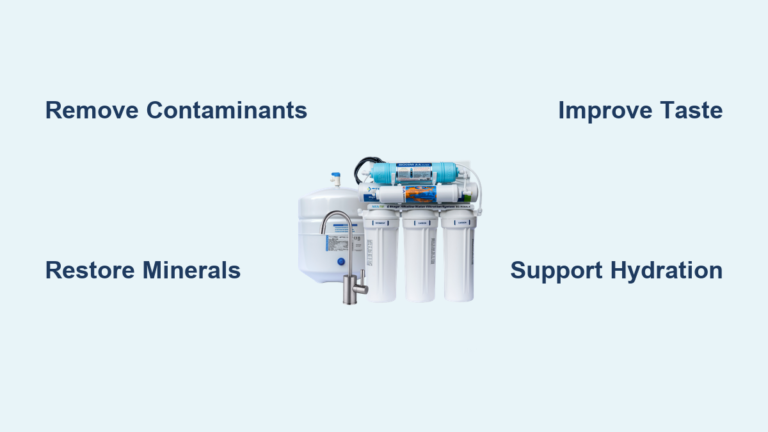
Yes, a properly configured RO system with KDF85 pre-filtration removes up to 98% of dissolved iron, eliminating the metallic taste and preventing stains on fixtures, laundry, and dishes.
Key Takeaways for Removing Iron with Reverse Osmosis
Reverse osmosis does remove iron, but success depends entirely on matching your system to your water’s iron content. Never feed water with more than 0.3 ppm iron into a standard RO unit, as the membrane will foul rapidly and fail prematurely.
For iron levels between 0.3 and 1.0 ppm, invest in a specialized system featuring KDF85 pre-filtration, a storage tank with a permeate pump, and a high-quality DOW FilmTec membrane. This combination delivers up to 98% iron removal while protecting your investment for years of reliable service.
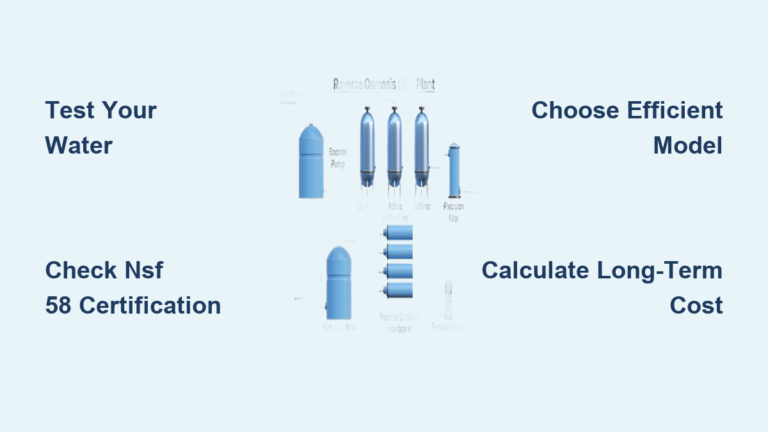
If your iron exceeds 1.0 ppm, start with whole-house treatment such as an oxidation filter or water softener, then add RO for final polishing at the tap. Test your water first, choose your system accordingly, and commit to annual maintenance. Your reward is clean, clear, great-tasting water free from stains, metallic taste, and the constant worry of iron damage to your plumbing and appliances.