Does Reverse Osmosis Remove Uranium?

Uranium in drinking water poses a serious health threat, especially for households using private wells or groundwater sources. Long-term exposure to even small amounts can harm your kidneys and increase cancer risk. Unlike lead from old pipes, uranium comes from the source water itself, leaching from bedrock into your supply. Flushing taps or boiling water won’t help. In fact, boiling concentrates uranium, making your water more dangerous.
Reverse osmosis is one of only two EPA-approved technologies for removing uranium, with the other being anion exchange. An RO system forces water through a semi-permeable membrane that blocks uranium using two physical mechanisms: size exclusion and charge repulsion. Under the right conditions, these systems achieve 90% to 99% uranium removal. This guide explains exactly how RO removes uranium, compares it to other options, and shows you how to choose and maintain a system that actually protects your family.
How RO Physically Blocks Uranium
Reverse osmosis works through pure physics, not chemical reactions. Knowing the science helps you maximize your system’s performance.
Size Exclusion Keeps Ions Out
Uranium in water exists mainly as uranyl ions ($UO_2^{2+}$), which bond with carbonates and other compounds. These dissolved complexes are much larger than water molecules. RO membranes have pores around 0.0001 microns wide, far too small for uranium compounds to squeeze through. The blocked contaminants get flushed away in the reject water.
Charge Repulsion Adds Extra Protection
Standard RO membranes, especially polyamide types, carry a negative surface charge. Uranyl ions carry a positive charge, so the membrane naturally repels them. This electrostatic barrier boosts rejection rates beyond what size filtering alone can achieve. The effect is strongest in neutral to slightly alkaline water.
Real-World Removal Rates
Lab tests show up to 99% removal, but your actual results depend on:
– Water pH
– Starting uranium concentration
– Membrane age and condition
– Total dissolved solids (TDS) levels
Even so, certified RO systems consistently deliver over 90% reduction, bringing most contaminated water below the EPA’s 30 ppb safety limit.
RO vs. Ion Exchange: Which Fits Your Needs?
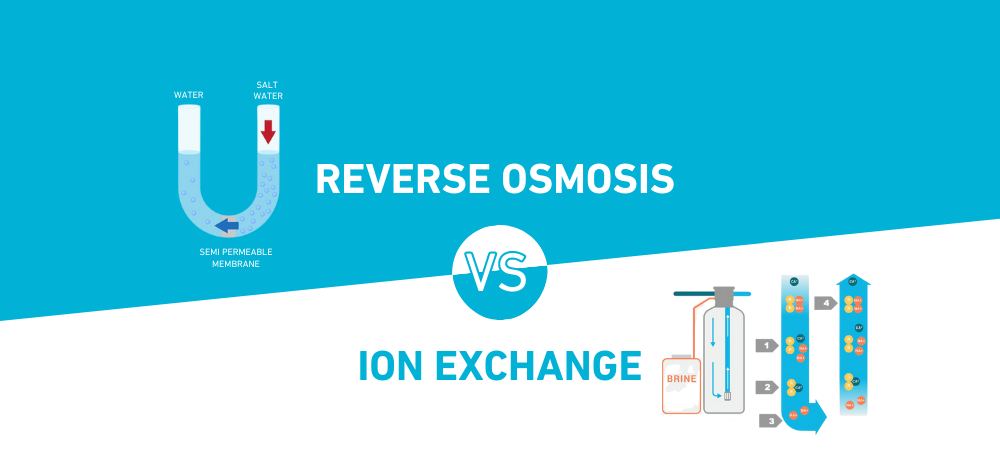
Both technologies work, but they suit different households. Your choice depends on budget, water usage, and how much protection you need.
RO Works Best for Drinking Water
Reverse osmosis shines as a point-of-use (POU) system, typically installed under your kitchen sink. It treats water for drinking and cooking, which covers your main ingestion risk.
Advantages:
– 90–99% uranium removal
– Lower upfront cost (~$300–$600)
– Compact and easy to maintain
Drawbacks:
– Wastes 3–5 gallons per gallon of clean water
– Slow flow rate
– Strips out healthy minerals like calcium and magnesium
Ion Exchange Covers the Whole House
Anion exchange systems work like water softeners but use special resin to capture uranium complexes. They install at your home’s entry point and treat every drop of water.
Advantages:
– Treats all water (showers, laundry, cooking)
– Minimal water waste
– Keeps beneficial minerals
Drawbacks:
– Higher initial cost ($2,000–$5,000)
– Needs regular salt refills
– Resin replacement every 3–5 years
Combining Both for Maximum Safety
If you live in a high-risk area with granite bedrock, experts suggest using both:
– Whole-house anion exchange for all water
– Under-sink RO for an extra barrier on drinking water
This dual approach protects you from both ingestion and skin absorption.
Install a Point-of-Use RO System
For most homeowners, a POU RO system is the smartest first investment. It targets your highest-risk water use without the huge cost of whole-house treatment.
Why Point-of-Use Makes Sense
POU RO systems cost about 80% less than whole-house RO while providing the same protection for drinking water. Since uranium risk comes mainly from ingestion, treating just your kitchen water is both practical and budget-friendly.
Key Parts of an RO System
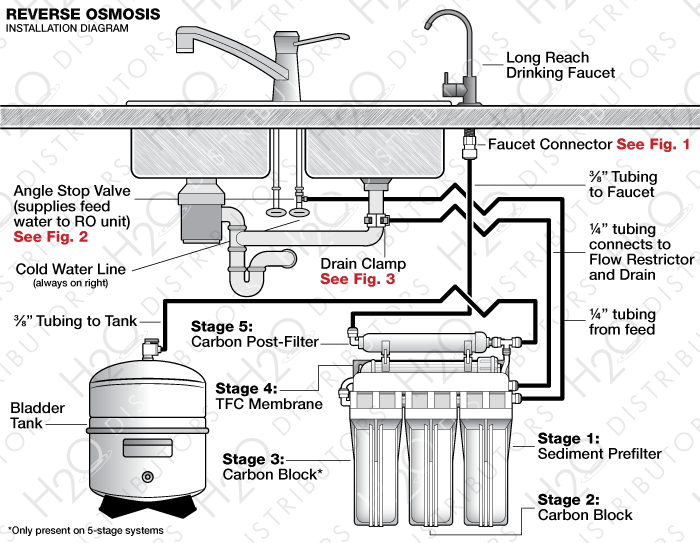
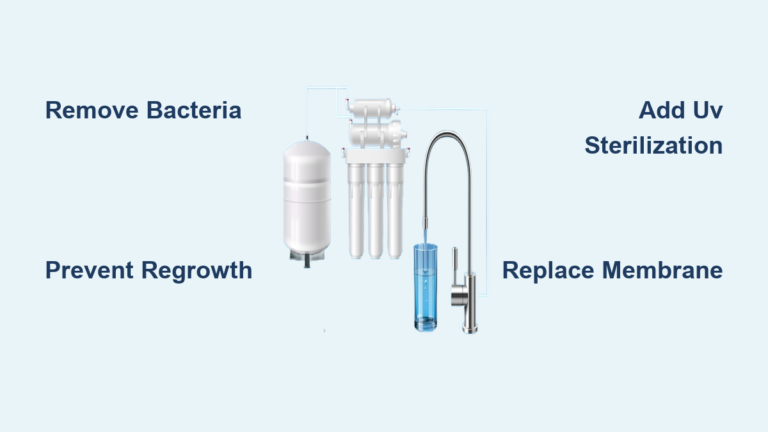
A standard under-sink RO unit includes:
1. Sediment pre-filter – Traps rust, sand, and particles
2. Carbon pre-filter – Reduces chlorine and organic compounds
3. RO membrane – Removes uranium, lead, arsenic, and nitrates
4. Post-carbon filter – Polishes taste and odor
5. Storage tank – Holds filtered water on demand
6. Dedicated faucet – Dispenses clean water separately
Each stage protects the membrane and maximizes contaminant rejection.
Installation Considerations
DIY kits exist, but professional installation is recommended because you’ll need to:
– Drill into your sink or countertop
– Connect to the cold water line
– Route a drain line for wastewater
– Ensure proper water pressure (40–80 psi required)
Poor setup can damage the membrane or slash efficiency.
Test Your Water Before Buying
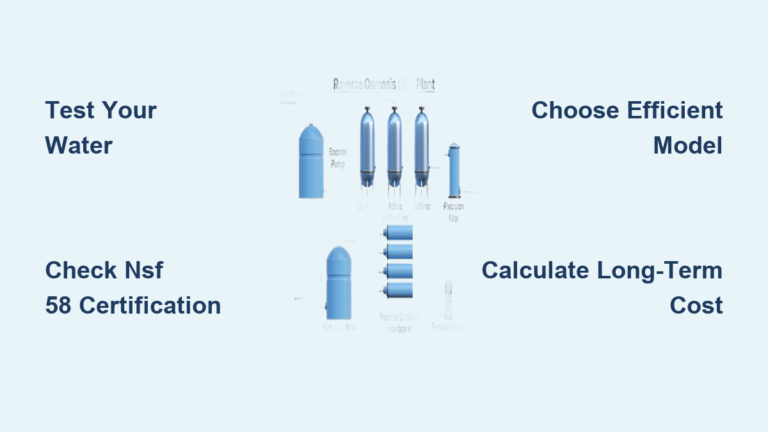
Never guess about uranium levels. Testing tells you exactly what you’re dealing with and prevents costly mistakes.
Get a Professional Uranium Test
Use a certified lab that tests via mass spectrometry. Home test strips aren’t accurate for uranium. The EPA limit is 30 ppb, though some states set stricter limits. Testing costs $50–$150 and is essential for proper system selection.
Check for Co-Contaminants
Uranium often shows up alongside:
– Radon (radioactive gas)
– Arsenic
– Iron
– Hardness minerals
These affect how your system performs. High iron clogs RO membranes, while radon needs separate treatment like aeration or activated carbon.
When to Retest
Retest every 3–5 years, or right away if you notice:
– Changes in taste or odor
– Nearby wells showing contamination
– New construction or mining nearby
Groundwater chemistry shifts over time.
Maintain Your RO System for Peak Performance
A neglected RO system loses efficiency and may let uranium slip through. Regular upkeep keeps your water safe.
Replace Filters on Schedule
Follow manufacturer guidelines, but adjust for your water quality:
– Sediment filter: Every 6–12 months
– Carbon filter: Every 6–12 months
– RO membrane: Every 2–3 years
– Post-filter: Every 6–12 months
Hard water or high sediment means more frequent changes.
Sanitize the Storage Tank Annually
Bacteria can grow inside the bladder tank. Once a year:
1. Shut off the water supply
2. Drain the tank completely
3. Flush with diluted 3% hydrogen peroxide or RO cleaner
4. Rinse thoroughly before reconnecting
Watch Your Flow Rate
A slow trickle from the RO faucet signals problems:
– Clogged pre-filters
– Low household water pressure
– A failing membrane
If flow drops more than 50%, inspect filters and pressure immediately.
Choose a Certified System You Can Trust

Not all RO systems actually remove uranium. Certification proves your unit performs as claimed.
Look for NSF/ANSI 58 Certification
NSF/ANSI Standard 58 certifies RO systems for health-related contaminant reduction. Certified units must prove they remove:
– Lead
– Nitrate
– Uranium
– Arsenic
– Fluoride
Always confirm uranium is specifically listed. Avoid uncertified “RO-style” filters that make vague claims.
Demand Third-Party Test Data
Reputable brands publish independent lab results showing:
– Initial and end-of-life uranium rejection
– Testing at multiple concentrations
– Performance in real water conditions
This transparency confirms your system works.
Avoid Common Marketing Traps
Stay away from systems that:
– Claim “99.9% removal” without naming contaminants
– Lack NSF 58 certification
– Offer no replacement parts
Your health depends on verified performance.
Understand Water Waste and Efficiency

RO systems produce wastewater, but newer designs cut waste significantly.
How Much Water Gets Wasted?
Traditional RO systems discharge 3–5 gallons of wastewater for every gallon of filtered water. This reject water contains concentrated uranium and other contaminants, which flow down your drain.
Cut Waste with Modern Designs
Newer zero-waste or permeate pump RO systems reduce wastewater by up to 80%. They recycle reject water or use pressure dynamics to boost efficiency. They’re pricier but ideal for drought-prone regions.
Safe Disposal of Reject Water
The wastewater contains concentrated uranium, but at levels far below hazardous waste thresholds. It’s safe to discharge into municipal sewers. On septic systems, ensure your drain field works properly, since high TDS can affect soil percolation over time.
Know the Real Health Risks
Uranium acts as a chemical toxin first, not a radioactive hazard.
Kidney Damage Is the Main Danger
Long-term ingestion damages kidney tubules, raising your risk of chronic kidney disease and kidney cancer. Children and people with existing kidney problems face higher danger.
Radiation Risk Is Minimal
While uranium decays into radium and radon, the radiation dose from drinking water is tiny compared to other sources. Chemical toxicity matters far more than radiological concerns in most cases.
Safe Doesn’t Mean Zero Risk
The EPA’s 30 ppb standard balances health protection with feasibility. Below this level, risks are very low. However, no amount of uranium is completely risk-free over decades of daily exposure.
Frequently Asked Questions About Reverse Osmosis and Uranium
What percentage of uranium does reverse osmosis remove?
Reverse osmosis removes 90% to 99% of uranium from drinking water under optimal conditions. Real-world performance depends on your water pH, uranium concentration, membrane condition, and total dissolved solids. Certified systems consistently bring contaminated water below the EPA’s 30 ppb safety limit.
Is RO the best filter for uranium?
RO is one of only two EPA-approved technologies for uranium removal, alongside anion exchange. For drinking water specifically, RO is often the most cost-effective and accessible choice. Whole-house protection may require anion exchange or a hybrid approach.
Can boiling water remove uranium?
No, boiling water does not remove uranium. In fact, boiling concentrates uranium as water evaporates, making your water more dangerous. You need point-of-filtration treatment like RO or anion exchange to remove it.
How do I know if my water has uranium?
Get a professional lab test that uses mass spectrometry. Home test strips aren’t accurate for uranium. Testing costs $50–$150 and should also screen for co-contaminants like radon, arsenic, and iron. The EPA limit is 30 ppb.
How often should I replace my RO membrane?
Replace your RO membrane every 2–3 years, depending on water quality and usage. Pre-filters and post-filters need changing every 6–12 months. If your flow rate drops more than 50%, inspect your system immediately. A failing membrane won’t block uranium effectively.
Does RO remove healthy minerals from water?
Yes, RO strips out beneficial minerals like calcium and magnesium along with contaminants. Some people add a remineralization filter to restore healthy minerals. If mineral content matters to you, anion exchange retains minerals while removing uranium.
Final Verdict on Using RO for Uranium Removal
Yes, reverse osmosis does remove uranium effectively, but only when you select, install, and maintain the system correctly.
Who benefits most from RO:
– Private well owners in high-risk geology
– Municipal water users with uranium levels near or above 30 ppb
– Families with children or kidney concerns
– Budget-conscious households wanting targeted protection
Who might need more than RO:
– Homes with multiple contaminants like uranium, radon, and arsenic
– Large families wanting whole-house treatment
– Areas with extremely high uranium levels above 100 ppb
Your action plan:
1. Test your water for uranium and co-contaminants
2. Install an NSF 58-certified point-of-use RO system if levels are elevated
3. Replace filters and the membrane on schedule
4. Retest every 3–5 years
Reverse osmosis isn’t perfect. It wastes water and removes minerals. But for uranium removal, it remains one of the most reliable, accessible, and cost-effective solutions available. With proper use, it delivers clean, safe water and peace of mind with every glass.