Does Reverse Osmosis Remove Salt?
If you’ve noticed a salty taste in your tap water or you’re worried about sodium from a water softener, you’re probably asking: does reverse osmosis remove salt? The short answer is yes, and it does so with impressive efficiency. Reverse osmosis (RO) systems typically eliminate 84% to 99% of sodium and other dissolved salts, making them one of the most reliable solutions for households seeking low-sodium drinking water.
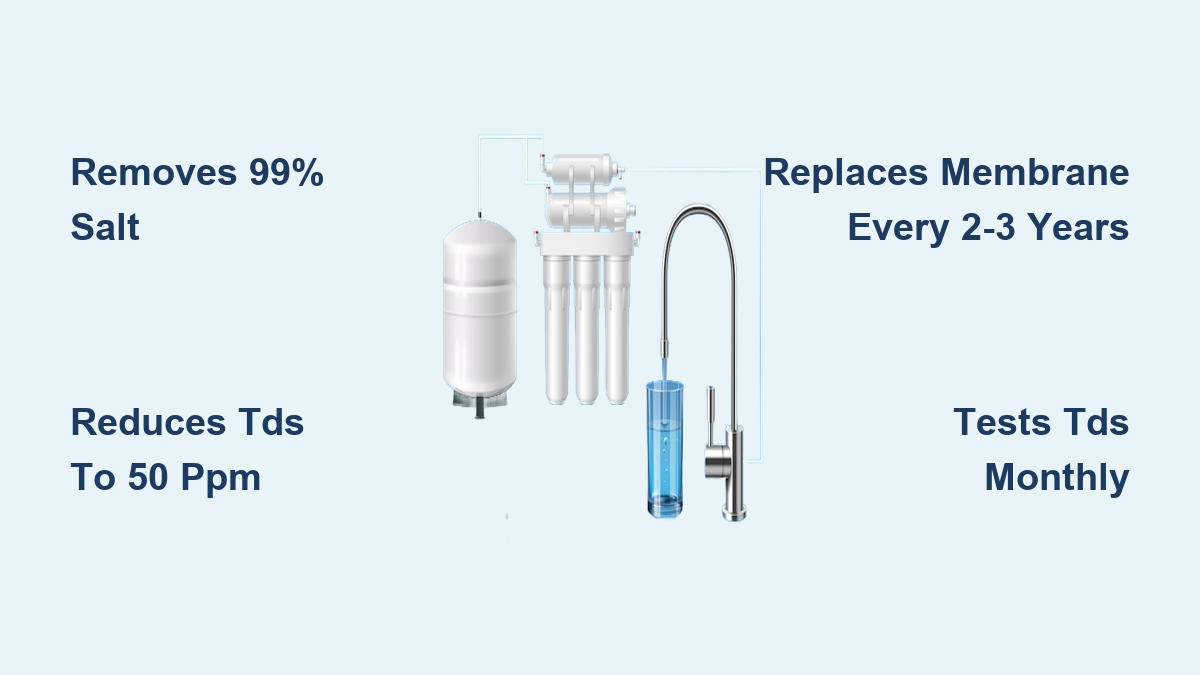
Beyond just salt, RO removes a wide range of contaminants, bringing Total Dissolved Solids (TDS) down to under 50 ppm. In this guide, you’ll learn exactly how RO removes salt, how to measure its effectiveness, what maintenance it requires, and how it compares to other filtration methods.
How Reverse Osmosis Blocks Salt Molecules

Reverse osmosis works through a semi-permeable membrane with pores so tiny (around 0.0001 microns) that water molecules pass through while dissolved ions like sodium and chloride are physically blocked. Since salt exists in water as charged ions too large to fit through these microscopic openings, they get separated and flushed away as wastewater.
Pressure-Driven Separation Process
RO relies on water pressure to push tap water through the membrane. Municipal water pressure (typically 40–80 psi) is usually sufficient, but homes with well systems may need a booster pump for optimal performance.
Multi-Stage Filtration Protects the Membrane
The RO process involves several stages designed to maximize salt removal and extend membrane life:
- Sediment Pre-filter: Catches sand, rust, and dirt that could clog the membrane.
- Carbon Pre-filter: Removes chlorine and VOCs that degrade membrane material.
- RO Membrane: The core stage where salt and dissolved solids are rejected.
- Post-carbon Filter: Polishes the water for improved taste and odor.
Skipping pre-filtration can cause rapid membrane fouling, reducing salt removal efficiency over time.
Why Membrane Pore Size Matters
Water molecules are small enough to pass through the membrane’s dense polymer structure, but hydrated sodium ions (about 0.72 nm in diameter) cannot. This physical barrier ensures consistent salt rejection as long as the membrane stays intact and well-maintained.
RO vs. Water Softeners: Key Differences
A common misconception is that water softeners reduce salt. In reality, they add it. Understanding this distinction is essential for effective water treatment.
Softeners Exchange Minerals for Sodium
Water softeners use ion exchange to replace calcium and magnesium with sodium or potassium. The water exiting a softener has higher sodium levels than the input water, which can significantly increase daily sodium intake for those on low-sodium diets.
RO Removes Softener-Added Salt
An RO system installed after a water softener removes the added sodium, along with remaining hardness minerals, heavy metals, and chemicals. The result is soft water for showers and appliances, plus sodium-free water from the kitchen tap.
Ideal Setup: Softener + RO Combination
Many homes benefit from using both systems together:
- Whole-house softener protects plumbing and appliances from scale.
- Under-sink RO delivers clean, low-sodium drinking water.
This dual approach addresses both aesthetic water quality and health-focused purification.
Measuring Salt Removal Effectiveness

Don’t assume your RO system is working. Test it regularly using one of these methods.
Use a TDS Meter for Quick Assessment
A Total Dissolved Solids (TDS) meter provides instant readings of all dissolved minerals and salts. While it doesn’t isolate sodium specifically, a significant drop in TDS indicates successful salt removal.
Testing Steps:
1. Test your tap water’s TDS (e.g., 300 ppm).
2. Test the RO-filtered water.
3. Calculate reduction: (Tap TDS – RO TDS) ÷ Tap TDS × 100
Example: (300 – 15) ÷ 300 = 95% reduction
- Target: RO output under 50 ppm
- Warning: Output above 100 ppm suggests membrane failure or poor maintenance
Confirm Sodium Levels with Lab Testing
Since TDS includes calcium, magnesium, and other minerals, it doesn’t isolate sodium. For medical or dietary concerns, precise sodium measurement is necessary.
Accurate Testing Options:
– Home sodium test strips: Convenient but less precise.
– Certified lab analysis: Most reliable; detects exact sodium concentration in mg/L.
– Success indicator: Sodium levels below 5 ppm in RO output.
Testing annually, or after filter changes, ensures your system continues protecting your health.
What Else RO Removes Besides Salt
Reverse osmosis doesn’t stop at sodium. Its semi-permeable membrane blocks a wide range of contaminants, making it one of the most comprehensive home water treatments available.
Heavy Metals Removed (95–98%)
RO systems effectively reduce:
- Lead
- Mercury
- Cadmium
- Arsenic
- Chromium
- Barium
These metals can leach into water from old pipes or industrial pollution, making RO especially valuable in older homes.
Nitrates and Fluoride Reduction
- Nitrates: 60–75% removed (important for infants and pregnant women)
- Fluoride: 85–92% removed (valuable for those avoiding fluoridated water)
While not 100%, these reduction rates significantly lower exposure compared to untreated tap water.
Microorganisms and Pathogens
RO membranes physically block:
- E. coli
- Giardia
- Cryptosporidium
- Hepatitis A virus
- Various bacteria and parasites
Unlike UV systems that kill but don’t remove organisms, RO physically eliminates them from the water.
Chemicals and Pharmaceuticals
RO also reduces:
- Pesticides and herbicides
- VOCs (benzene, MTBE)
- Detergents
- Drug residues (PPCPs)
RO is one of the few home systems capable of addressing trace pharmaceuticals found in municipal water supplies.
Maintaining Peak RO Performance
Even the best RO system fails without regular maintenance. Salt removal drops sharply when filters clog or the membrane degrades.
Replace Pre-filters Every 6–12 Months
Sediment and carbon pre-filters protect the RO membrane. If not replaced:
- Chlorine damages the membrane
- Sediment causes clogging
- Salt removal efficiency declines
Tip: Mark replacement dates on your calendar or choose systems with filter life indicators.
Change the RO Membrane Every 2–3 Years
The membrane is the heart of the system. Over time, scaling, biofouling, or physical damage reduce its ability to reject salt.
Signs of Membrane Failure:
– Rising TDS readings
– Reduced water flow
– Salty or off-taste water
Replacing the membrane restores performance and ensures continued low-sodium output.
Check for Leaks and Bypasses
A leaking fitting or worn O-ring can allow untreated water to mix with purified water. This bypass effect means you might be drinking salty tap water without realizing it.
Monthly Check:
– Inspect connections under the sink
– Listen for hissing sounds
– Test TDS regularly
Even a small leak can compromise the entire system.
Comparing Salt Removal Methods
While RO dominates residential use, other technologies exist. Here’s how they compare.
| Method | Salt Removal | Best For | Limitations |
|---|---|---|---|
| Reverse Osmosis | Up to 99% | Homes, drinking water | Wastewater produced; needs maintenance |
| Distillation | ~100% | Emergency use, labs | Slow; energy-intensive; flat taste |
| Electrodialysis | High (moderate salinity) | Industrial | Complex; not for homes |
| Standard Filters | 0% | Taste/odor only | Cannot remove dissolved salts |
Why RO Wins for Home Use
- Efficiency: Removes nearly all salt without boiling or electricity.
- Flow Rate: Delivers continuous filtered water, unlike slow distillation.
- Cost-Effectiveness: Lower operating cost than distillation or electrodialysis.
- Ease of Use: Automatic under-sink systems require minimal daily effort.
For most households, RO offers the best balance of performance, convenience, and reliability.
Health Benefits of Low-Sodium RO Water
Reducing sodium in drinking water can have real health impacts, especially for at-risk individuals.
Supports Heart and Kidney Health
Excess sodium intake is linked to:
- High blood pressure (hypertension)
- Increased risk of stroke and heart disease
- Fluid retention and edema
- Kidney strain and reduced function
For people with chronic kidney disease (CKD) or congestive heart failure (CHF), minimizing sodium in both food and water is critical. RO helps reduce total daily sodium load, supporting medical treatment plans.
Ideal for Low-Sodium Diets
Some softeners can add 10–15 mg of sodium per 8 oz glass. For someone on a 1,500 mg/day sodium restriction, that’s up to 10% of their daily limit from water alone. RO eliminates this hidden source, giving greater dietary control.
Safe Despite Mineral Removal
RO removes beneficial minerals like calcium and magnesium. However:
- The EPA and WHO confirm RO water is safe to drink.
- Most minerals come from food, not water.
- Re-mineralization filters can restore pH and taste if desired.
You get the safety of salt removal without sacrificing health.
Installation and System Options
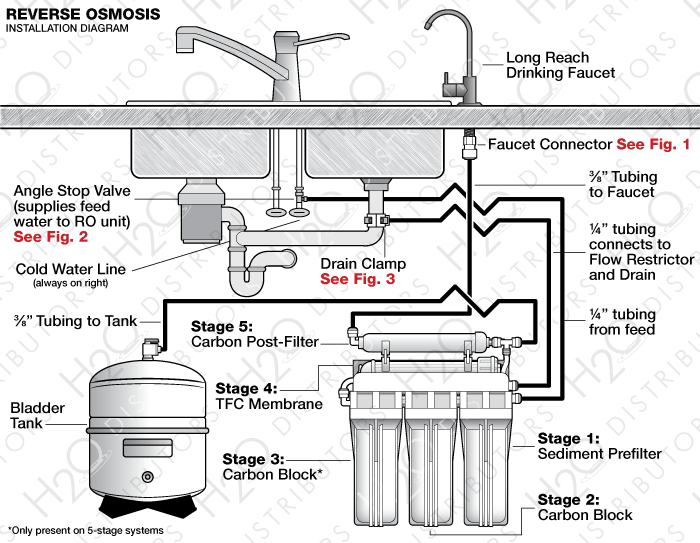
Choosing the right RO setup depends on your water quality and household needs.
Under-Sink RO Systems
The most common option, installed beneath the kitchen sink with a dedicated faucet.
Pros:
– Affordable ($150–$400)
– Easy DIY installation
– Space-efficient
Considerations:
– Requires under-sink space
– Needs drain connection for wastewater
Countertop and Portable Units
No plumbing required. Ideal for renters or temporary use.
Pros:
– No installation
– Portable
– Low upfront cost
Cons:
– Slower filtration
– Takes counter space
– May need manual filling
Whole-House RO (Rare)
Filters all water entering the home.
Challenges:
– Very high cost ($10,000+)
– Massive wastewater output
– Overkill for most needs
Typically used only in extreme salinity areas or medical-grade environments.
Debunking Common RO Myths
Despite proven effectiveness, misconceptions about reverse osmosis persist.
“RO Water Is Too Pure and Dangerous”
Myth: Removing minerals makes RO water harmful.
Fact: The human body gets minerals from food, not water. The WHO states that demineralized water is safe for long-term consumption. If desired, re-mineralization filters add back calcium and magnesium for taste and pH balance.
“RO Doesn’t Work on Softened Water”
Myth: Softened water damages RO systems.
Fact: Softened water actually protects RO membranes by preventing scale buildup. The RO system then removes the added sodium, making this combination highly effective.
“RO Wastes Too Much Water”
Myth: RO is wasteful.
Fact: While RO produces 1–4 gallons of wastewater per gallon of filtered water, modern low-waste RO systems with permeate pumps reduce this to near 1:1. Wastewater is typically safe for irrigation or flushing toilets.
Frequently Asked Questions About Reverse Osmosis and Salt Removal
Does reverse osmosis remove 100% of salt from water?
RO typically removes 84% to 99% of salt, depending on the system’s efficiency and membrane condition. While not always 100%, this level of reduction brings sodium concentrations to near zero (under 5 ppm), which is more than sufficient for health and taste purposes.
Can a reverse osmosis system handle seawater?
Standard residential RO systems are not designed for seawater. They are engineered for municipal water, groundwater, or softened water. Attempting to process raw seawater will likely cause immediate membrane failure and system damage. Seawater desalination requires specialized high-pressure systems.
How often should I replace my RO membrane?
The RO membrane should be replaced every 2–3 years, depending on usage and water quality. Signs of failure include rising TDS readings, reduced water flow, and salty-taste water. Pre-filters should be replaced every 6–12 months to protect the membrane.
Is RO water safe to drink long-term?
Yes. Both the EPA and WHO recognize RO water as safe for long-term consumption. While RO removes some beneficial minerals, these are primarily obtained from food. If desired, a re-mineralization filter can add calcium and magnesium back for improved taste and pH balance.
Does reverse osmosis remove sodium from softened water?
Yes. RO is specifically effective at removing the sodium added by water softeners. In fact, pairing a softener with an RO system is a common configuration: the softener protects plumbing from scale, and the RO removes the sodium the softener introduces.
How much wastewater does an RO system produce?
Traditional RO systems produce 1–4 gallons of wastewater per gallon of filtered water. However, modern low-waste systems with permeate pumps can achieve a near 1:1 ratio. The wastewater is generally safe for irrigation or toilet flushing.
Final Verdict: RO Is the Best Solution for Salt Removal
So, does reverse osmosis remove salt? Absolutely. With removal rates exceeding 90%, often reaching 99%, RO is the most reliable method for producing low-sodium drinking water at home. It outperforms all other residential technologies in both effectiveness and practicality.
Whether you’re dealing with water softener salt, natural salinity, or simply want the purest water possible, RO delivers. When paired with regular maintenance, including pre-filter changes, membrane replacement, and TDS testing, it provides years of safe, clean, sodium-free water.
Key Takeaways:
– RO removes 84–99% of salt, including sodium from softeners.
– TDS should drop below 50 ppm; sodium under 5 ppm.
– Use a TDS meter monthly to monitor performance.
– Combine with a water softener for whole-house benefits.
– Maintain filters every 6–12 months, membrane every 2–3 years.
For health-conscious households, those on low-sodium diets, or anyone tired of salty-tasting water, reverse osmosis isn’t just an option. It’s the solution. Start by testing your tap water’s TDS today to see how much salt you’re actually drinking.