Does Reverse Osmosis Remove Lead?
Yes, reverse osmosis removes lead from water, eliminating up to 99% of this dangerous contaminant. This matters because no level of lead exposure is safe, especially for young children and pregnant women. Even when municipal water leaves the treatment plant clean, lead can still leach into your tap water from old pipes, solder, and fixtures inside your home, particularly in houses built before 1986.
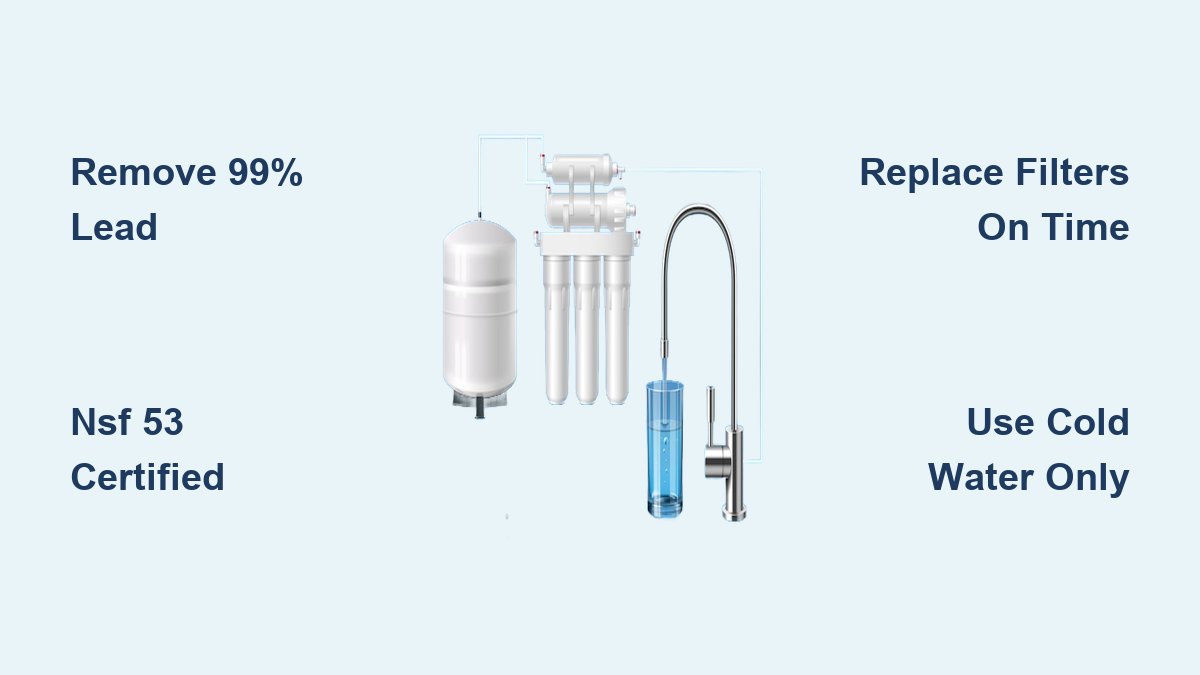
A point-of-use reverse osmosis system installed under your kitchen sink acts as a final barrier against lead and other harmful contaminants. It works by forcing water through a semipermeable membrane with pores so tiny that lead ions cannot pass through. This guide explains exactly how the process works, how RO compares to other filters, and how to choose and maintain a system that genuinely protects your family.
How Reverse Osmosis Removes Lead

Reverse osmosis uses pressure and a multi-stage filtration process to separate lead and other dissolved contaminants from your drinking water. Understanding each stage helps you appreciate why RO outperforms simpler filters.
The Multi-Stage Filtration Process
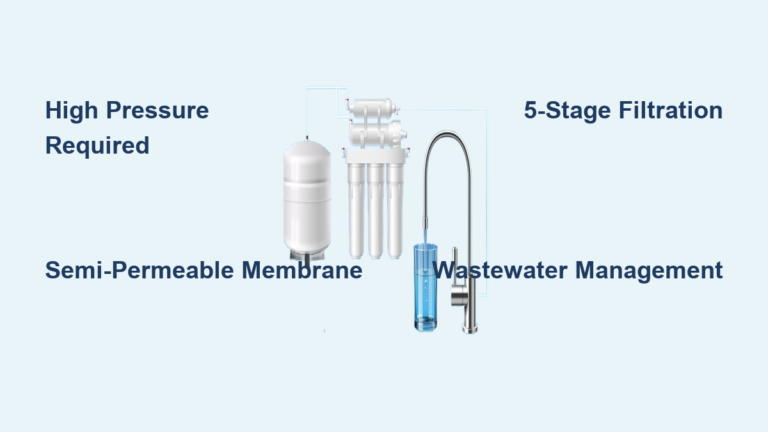
RO systems never rely on a single filter. Instead, they use a sequence of stages that progressively clean and protect the water:
- Sediment Pre-Filter: Traps dirt, rust, and particles that could clog or damage the RO membrane.
- Carbon Pre-Filter: Adsorbs chlorine and volatile organic compounds (VOCs), which can degrade the membrane over time.
- RO Membrane (Core Stage): Forces water through pores around 0.0001 microns, small enough to block lead, arsenic, nitrates, PFAS, fluoride, and dissolved solids.
- Post-Filter (Polishing Stage): A final carbon filter improves taste and removes any residual odors.
At the membrane stage, lead is rejected and flushed away in the concentrate stream, while purified water (called permeate) collects in a storage tank for use.
Why the Membrane Blocks Lead
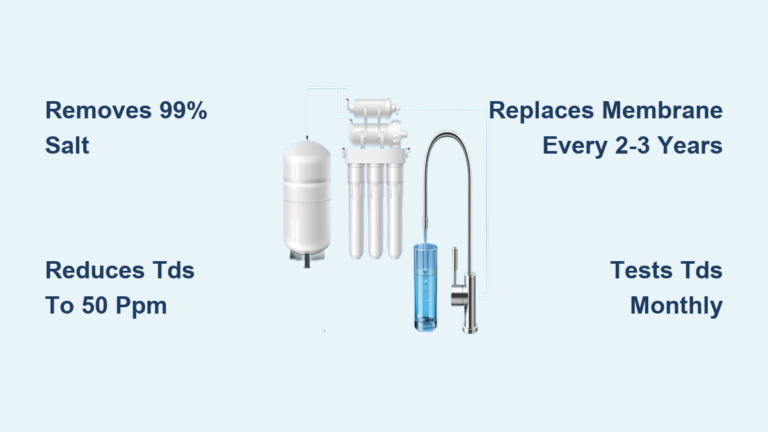
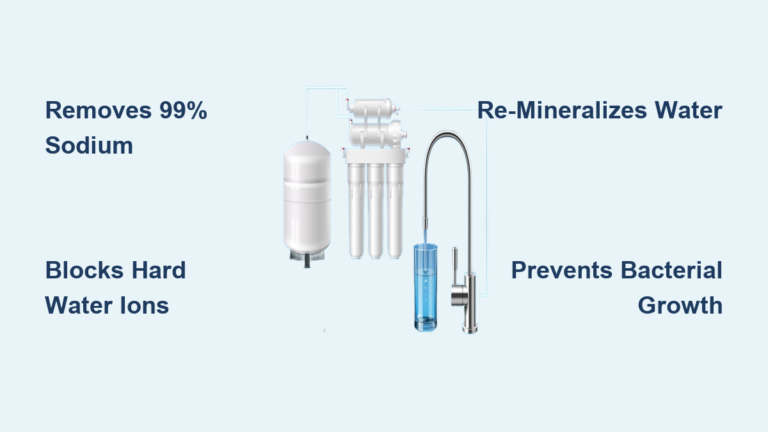
Lead in water exists primarily as dissolved Pb²⁺ ions. These charged particles are too large to pass through the dense polymer structure of the RO membrane. The membrane’s rejection rate for lead stays consistently at 98–99% when the system is functioning properly and filters are replaced on schedule.
Unlike basic carbon filters that may only reduce lead under certain conditions, RO removes it based on molecular size and charge exclusion, making it far more reliable for long-term protection.
Signs Your Water May Contain Lead
You cannot see, taste, or smell lead in water, so knowing your home’s risk level is essential. Here are key indicators that contamination may be present.
Home Built Before 1986?
Houses constructed before 1986 face elevated risk because lead solder was legally used to join copper pipes. Even homes built into the 1990s may contain fixtures with up to 8% lead under older regulations. If your house predates this era, assume lead could be present until you test.
Discolored or Metallic-Tasting Water
While not a definitive sign, cloudy, blue-tinged, or metallic-tasting water can signal corrosion inside your pipes. Running the tap may clear the appearance, but lead can still be present even in perfectly clear water.
Known Local Infrastructure Issues
Cities with aging water systems, like Flint, Michigan, have experienced serious lead leaching when water chemistry shifted. Check with your local water utility for Consumer Confidence Reports (CCRs) or public advisories about lead levels in your area.
Older Brass Fixtures
Many faucets, valves, and fittings contain leaded brass. Even “lead-free” fixtures manufactured after 1986 can legally contain up to 0.25% lead. Hot water increases leaching, so never use hot tap water for drinking or cooking.
Compare RO to Other Filtration Methods
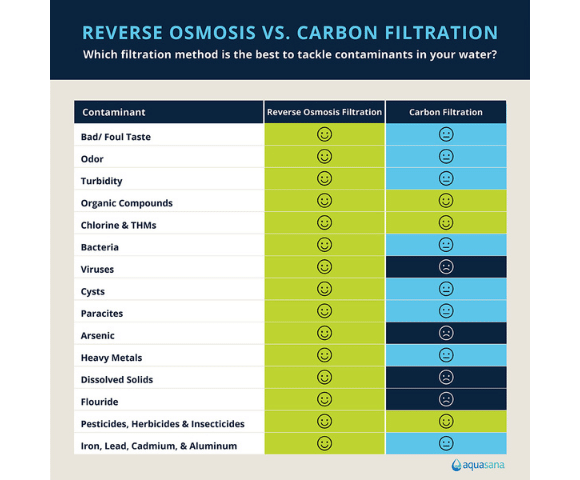
Not all water filters remove lead effectively. Knowing the differences helps you choose the right protection for your household.
RO vs. Carbon Filters
| Feature | Reverse Osmosis | Carbon Block Filter |
|---|---|---|
| Lead Removal | Up to 99% | Varies; only if NSF 53 certified |
| Dissolved Metals | Removes lead, arsenic, cadmium | Limited or no removal |
| PFAS / Chemicals | High reduction | Moderate to high |
| TDS Reduction | Yes (removes salts, minerals) | No |
| Wastewater | Yes (3:1 to 10:1 ratio) | None |
Carbon filters improve taste and remove chlorine but do not reliably remove dissolved lead unless specifically certified. Always check for NSF/ANSI 53 or 58 certification before purchasing.
RO vs. Whole House Systems
Whole house (point-of-entry) filters treat all water entering your home but focus on sediment, chlorine, and hardness. They do not remove dissolved heavy metals like lead effectively at the tap. RO, being a point-of-use system, delivers the highest purity where it matters most: your drinking and cooking water.
RO vs. Water Softeners
Water softeners use ion exchange to replace calcium and magnesium with sodium, reducing scale buildup. However, they do not remove lead unless paired with a separate filtration stage. Some hybrid systems combine softening with RO for comprehensive treatment.
Choose a Certified RO System
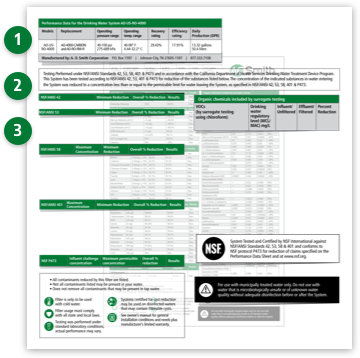
With so many options on the market, certification is your best guide to real performance and safety. Avoid any system that lacks independent verification.
Look for NSF/ANSI Standard 53
Only systems certified to NSF/ANSI Standard 53 are verified to reduce lead. This independent testing confirms the filter can lower lead levels from 15 ppb to below 10 ppb, meeting EPA action levels. Skip uncertified units, even if they claim to be “lead-reducing.”
Pick a WaterSense-Labeled Model
Standard RO systems waste significant water, sometimes up to 10 gallons wasted per 1 gallon purified. The EPA WaterSense label guarantees the system uses 2.3 gallons or less of wastewater per gallon of product water.
Choosing a WaterSense model saves:
– Over 3,100 gallons of water per year
– Nearly 47,000 gallons over the system’s lifetime
– Reduces environmental impact without sacrificing filtration performance
Check Performance Data
Before buying, review the manufacturer’s test reports for:
– Lead reduction percentage (aim for 98% or higher)
– Flow rate (how fast purified water fills the tank)
– Tank capacity (typically 3–4 gallons)
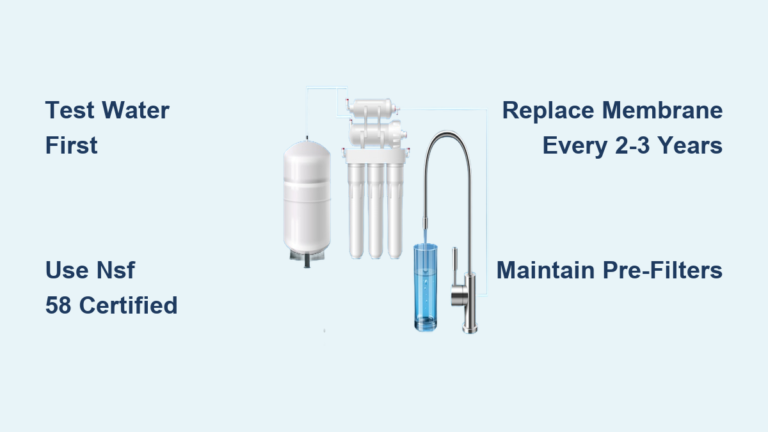
– Filter lifespan (pre- and post-filters: 6–12 months; membrane: 2–3 years)
Avoid systems with vague claims like “purifies water” without specific contaminant data.
Install and Maintain Your RO System Properly
Even the best RO system fails without correct installation and consistent upkeep. A neglected system can lose its lead removal effectiveness and even harbor bacteria.
Professional vs. DIY Installation
Most under-sink RO systems can be DIY-installed, but professional installation ensures:
– Correct water pressure (40–80 psi required)
– Leak-free connections
– Proper drain line routing
– Compliance with local plumbing codes
If you are unsure about any step, hire a licensed plumber or certified water treatment technician.
Replace Filters on Schedule
Neglecting maintenance reduces lead removal and risks bacterial growth inside the system.
Recommended Replacement Intervals:
– Sediment and Carbon Pre-Filters: Every 6–12 months
– RO Membrane: Every 2–3 years
– Post-Filter: Every 6–12 months, or after each membrane change
Set calendar reminders or choose a system with filter life indicators to stay on track.
Monitor System Performance
Watch for these warning signs that your RO system needs service:
– Slower flow from the dedicated faucet
– Reduced water pressure in the storage tank
– Unusual taste or odor in the filtered water
– Visible leaks under the sink
Test your filtered water every 6–12 months to confirm lead levels remain low.
Reduce Lead Exposure Beyond Filtration
RO is powerful, but it works best as part of a complete lead-reduction strategy. These habits multiply your protection.
Flush Your Pipes Daily
If water sits in pipes for 6 or more hours (overnight or after vacation), run the cold water tap for 30 seconds to 2 minutes before use. This flushes out water that may have accumulated lead from your plumbing.
- Do this every morning or before drinking or cooking
- Never use hot tap water for baby formula or cooking
Use Only Cold Tap Water
Hot water dissolves lead faster than cold water. Always:
– Use cold water for drinking, cooking, and making coffee or tea
– Remember that boiling water does not remove lead; it actually concentrates it
Test Your Water Regularly
Know your baseline. Get accurate results from:
– Certified lab testing (most reliable)
– Local water utility programs (often free or low-cost)
– Home test kits (less accurate but better than nothing)
Test your water if:
– Your home was built before 1986
– You have young children or are pregnant
– You notice plumbing issues or discoloration
Replace Lead Plumbing
For a permanent fix, consider replacing:
– Lead service lines (check with your city; some offer replacement programs)
– Old brass fixtures with lead-free certified ones (look for NSF 61-G or NSF 372)
– Solder joints in copper pipes
This is the only way to eliminate the source rather than just filter the symptom.
Save Water Without Sacrificing Safety
RO systems generate wastewater, but efficient models minimize the impact on both your water bill and the environment.
Understand the Water Waste
For every gallon of RO-purified water, the system sends concentrated wastewater down the drain. This is necessary to clean the membrane and prevent scaling.
- Older RO units: 5–10 gallons wasted per gallon made
- WaterSense models: 2.3 gallons or less wasted per gallon made
Use Reject Water Wisely
Do not let wastewater go to waste. Collect it in a bucket for:
– Watering ornamental plants (not edible ones)
– Mopping floors
– Flushing toilets
Avoid using reject water on food crops due to its concentrated contaminants.
Upgrade to High-Efficiency RO
Newer systems feature:
– Permeate pumps (reduce waste by up to 80%)
– Automatic shut-off valves (stop flow when the tank is full)
– Zero-waste RO designs (recirculate reject water; lower pressure but minimal waste)
These innovations make RO sustainable without compromising lead removal.
Frequently Asked Questions About Reverse Osmosis and Lead Removal
How effective is reverse osmosis at removing lead from water?
Reverse osmosis removes up to 99% of lead from drinking water when the system is certified to NSF/ANSI Standard 53 and filters are replaced on schedule. The semipermeable membrane blocks dissolved lead ions based on size and charge exclusion.
Can boiling water remove lead contamination?
No. Boiling water does not remove lead and actually concentrates it as water evaporates. Use cold water and a certified filtration system instead.
How often should I replace filters in my RO system?
Replace sediment and carbon pre-filters every 6–12 months, the post-filter every 6–12 months, and the RO membrane every 2–3 years. Always follow your manufacturer’s guidelines.
Do I need an RO system if I have a carbon filter?
Not necessarily, but standard carbon filters do not reliably remove dissolved lead unless certified to NSF/ANSI Standard 53. If you live in a home built before 1986 or have known plumbing issues, an RO system offers stronger protection.
What is the WaterSense label and why does it matter?
The EPA WaterSense label certifies that a reverse osmosis system uses 2.3 gallons or less of wastewater per gallon of purified water. Choosing a WaterSense model can save over 3,100 gallons of water per year compared to standard units.
Is RO water safe for babies and pregnant women?
Yes. RO water is safe for preparing infant formula and for consumption during pregnancy, provided the system is certified and well-maintained. Always use cold filtered water and flush taps after long periods of non-use.
Key Takeaways for Removing Lead with Reverse Osmosis
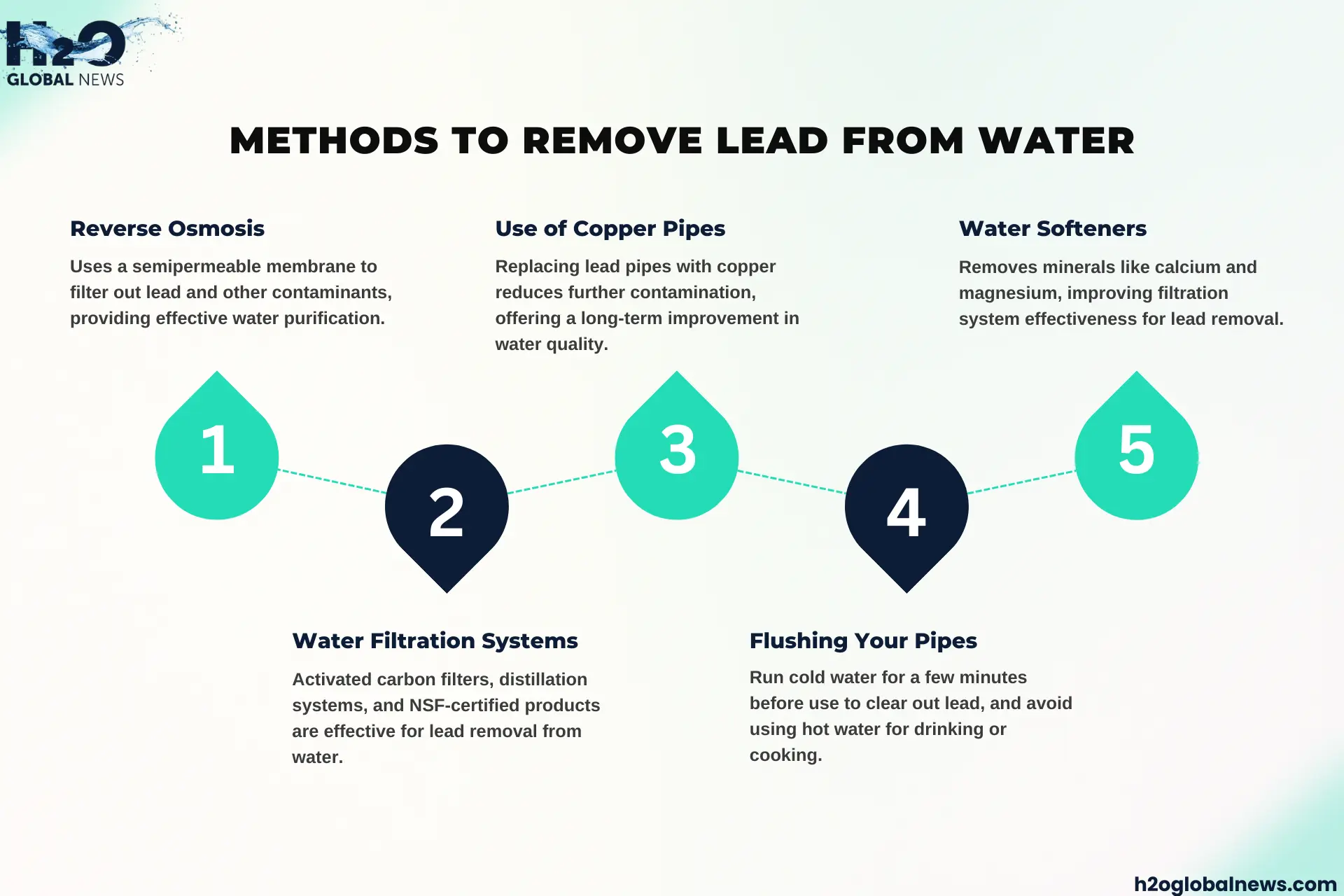
Reverse osmosis does remove lead from water, eliminating up to 99% of this toxic contaminant when you choose a certified, well-maintained system. For maximum protection, select an RO unit certified to NSF/ANSI Standard 53 and labeled with the EPA WaterSense mark for efficiency. Pair your system with smart daily habits: flush pipes after stagnation, use only cold water for drinking and cooking, and test your water every 6–12 months. While replacing lead plumbing is the only permanent fix, a quality RO system provides immediate, reliable defense against a toxin that causes irreversible harm, especially in children and pregnant women. Your family’s health is worth the investment.