Does Reverse Osmosis Remove Algae?
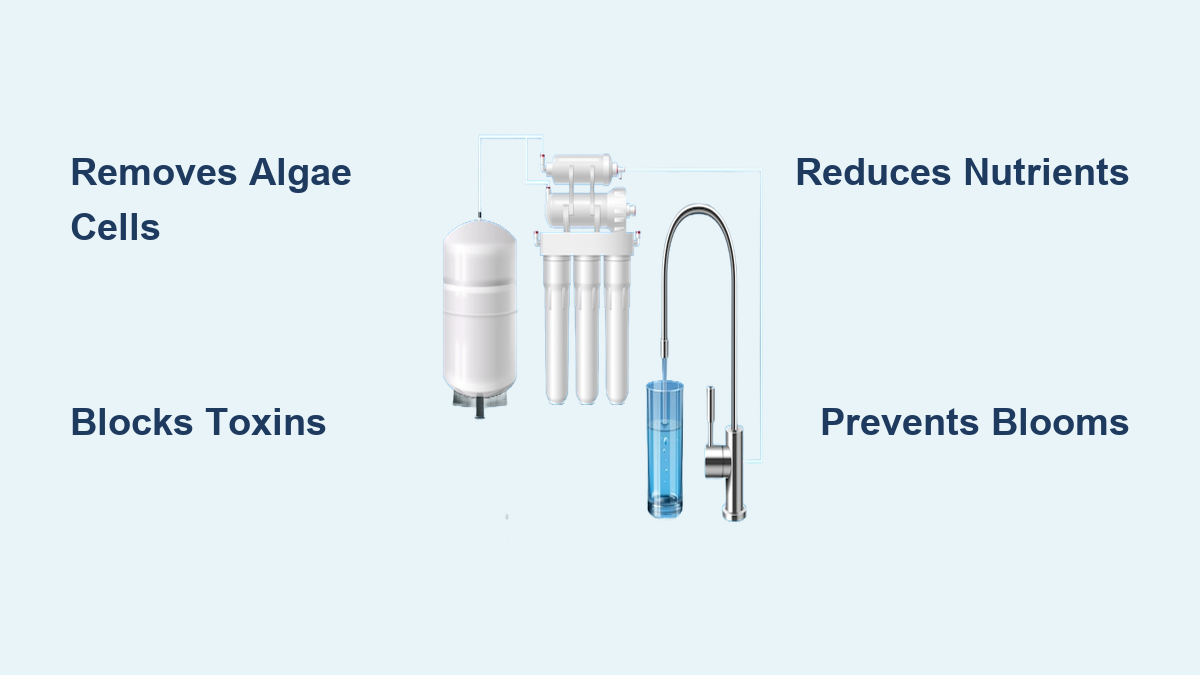
If you’ve noticed a green, scummy layer on a pond or caught a musty smell from your tap water, you’ve likely encountered algae, specifically cyanobacteria, often called blue-green algae. These organisms release dangerous toxins like microcystin and anatoxin-a, which pose serious health risks to humans and pets. So when it comes to protecting your drinking water or maintaining a clean aquarium, one question stands out: does reverse osmosis remove algae from water? The answer is a definitive yes, and more. Reverse osmosis (RO) doesn’t just kill or filter algae; it removes both the cells and their toxins, offering the most comprehensive protection available in home water treatment.
Unlike boiling, UV light, or basic carbon filters, RO uses a semi-permeable membrane with pores as small as 0.0001 microns, far smaller than the 4 to 6.5 micron size of cyanobacterial cells. This allows it to physically block algae, their spores, and even dissolved toxins. But RO’s power goes beyond immediate cleanup; it also prevents future blooms by stripping water of essential nutrients like nitrates and phosphates. In this guide, we’ll break down exactly how RO works against algae, compare it to other methods, and show you how to use it effectively in real-world scenarios.
How RO Eliminates Algae and Toxins

Reverse osmosis removes algae through a physical filtration process that stops both living cells and harmful byproducts. Unlike chemical or thermal treatments, RO doesn’t rely on killing organisms; it removes them entirely from the water column.
Physical Filtration at the Molecular Level
RO systems force water under pressure through a tightly woven membrane with pores measuring 0.0001 microns. This is over 40,000 times smaller than the average cyanobacteria cell. As a result, algae cells cannot pass through and are flushed away as wastewater. The same applies to bacterial spores and other microorganisms. What emerges on the other side is water stripped of nearly all contaminants, including minerals, heavy metals, and organic matter.
Because the membrane works by size exclusion and charge repulsion, even dissolved toxins like microcystin and anatoxin-a are blocked. These cyanotoxins range from 0.001 to 1.0 nanometers in molecular size, still too large to pass through the RO barrier. Studies confirm RO removes up to 99.9% of these toxins, making it the only household method that addresses both the source (algae cells) and the hazard (toxins).
Why Killing Algae Isn’t Enough
Many assume that killing algae through boiling or UV light is sufficient. But this approach can backfire. When cyanobacteria die, they rupture and release stored toxins into the water. Boiling accelerates this process and evaporates pure water, leaving behind a more concentrated toxin solution. UV light kills cells but leaves both dead matter and toxins in the water, requiring additional filtration.
RO avoids this risk entirely by removing intact cells before they can break down. This makes it uniquely safe for treating water during active algal blooms.
Compare: RO vs. Other Algae Removal Methods
No single filtration method matches RO’s dual ability to remove both algae cells and their toxins. Here’s how common alternatives stack up.
Boiling Water: Increases Risk
Boiling kills live algae but does not remove toxins. In fact, it makes them more dangerous. As water evaporates, toxin concentration rises. Microcystin levels can double after 10 minutes of boiling. Never boil water suspected of algae contamination.
UV Light: Limited Protection
UV systems disrupt algae DNA, preventing reproduction. However, they do nothing to remove dead cells or toxins. UV-treated water may look clear but still contain harmful microcystin. For full protection, UV should be paired with RO.
Carbon Filters: Partial Aid Only
Activated carbon can adsorb some organic compounds, including certain cyanotoxins. But it becomes saturated quickly and does not filter live algae cells. Used alone, it’s ineffective during blooms. In RO systems, carbon is a pre-filter; its role is to protect the membrane, not replace it.
Ultrafiltration (UF): Misses Toxins
UF membranes (0.01 to 0.1 microns) trap algae cells and sediment but are too porous to catch dissolved toxins. While useful for particulate removal, UF fails where RO excels: molecular-level purification.
Nanofiltration (NF): Incomplete Toxin Removal
NF (pore size ~0.001 microns) removes most cells and larger toxins but struggles with small molecules like anatoxin-a. It’s less effective than RO and not recommended for high-risk areas.
Prevent Algae Growth with RO Water

Beyond cleaning contaminated water, RO is a powerful preventive tool, especially in aquariums, ponds, and pools where algae thrive on nutrients.
Starve Algae of Nutrients
Algae need nitrogen and phosphorus to grow. Municipal tap water often contains nitrates and phosphates from agricultural runoff. RO strips these out, reducing TDS (Total Dissolved Solids) to under 10 ppm. Without nutrients, algae spores cannot establish or multiply.
This makes RO water ideal for:
• Freshwater aquariums prone to green water blooms
• Shrimp tanks (e.g., Caridina species)
• Planted tanks in hard-water regions
Control Water Chemistry
RO water has a neutral pH and zero hardness, giving you full control over your aquatic environment. You can remineralize it precisely for your species’ needs, adding calcium and magnesium without excess phosphate.
Many aquarists mix RO with tap water (e.g., 50/50) to balance softness and mineral content. This reduces algae risk while supporting plant growth.
Prevent Contamination at the Source
Using RO water eliminates algae introduction via tap water. Even if your local supply looks clean, it may carry dormant spores. RO acts as a barrier, ensuring new water added during changes is sterile and nutrient-free.
Install and Maintain RO for Algae Control
A poorly maintained RO system can fail or even become a contamination source. Follow these steps to ensure peak performance.
Choose the Right System
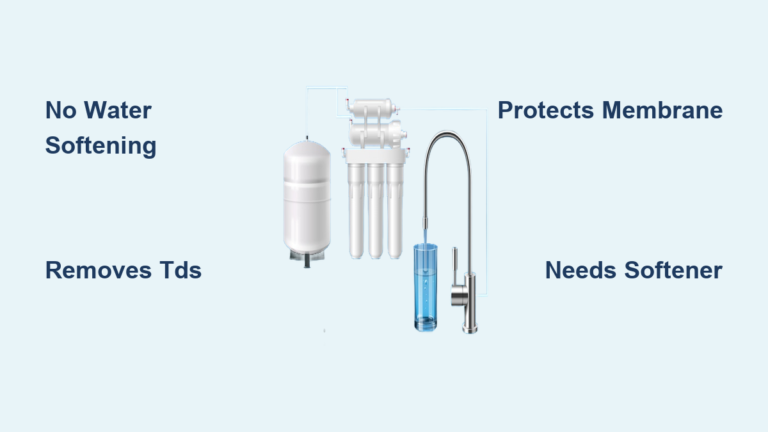
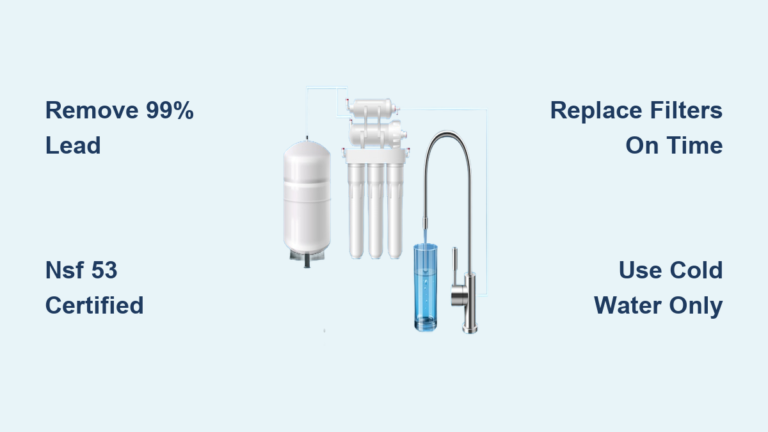
For algae protection, select a 5-stage RO system:
1. Sediment pre-filter, removes dirt and particles
2. Carbon block filter, reduces chlorine and organics
3. RO membrane (0.0001 µm), removes algae, toxins, nitrates
4. Post-carbon filter, polishes taste
5. Remineralization stage (optional but recommended), adds back healthy minerals for drinking water
Look for systems NSF/ANSI certified for cyst and algae reduction (Standard 58).
Install and Flush Properly
• Install under the sink or as a dedicated unit for aquatics
• Flush the membrane for 1 hour before first use to remove preservatives
• Connect a TDS meter to monitor output; pure RO water should read <10 ppm
Maintain to Prevent Failure
• Replace sediment and carbon filters every 6 to 12 months to prevent clogs and chlorine damage to the membrane
• Replace the RO membrane every 2 to 3 years to ensure pore integrity; failure means toxins pass through
• Clean the storage tank annually to prevent biofilm and bacterial growth
• Sanitize the system every 6 to 12 months to kill any microbes in lines or the tank
A sudden rise in TDS (e.g., from 7 to 50 ppm) means the membrane is failing. Replace it immediately.
Safe Uses of RO Water in Real Scenarios

Knowing when and how to use RO water can protect health and prevent costly algae problems.
Drinking Water During Algal Blooms
If your tap water smells earthy or looks cloudy:
• Stop using it for drinking, cooking, or brushing teeth
• Do not boil; this concentrates toxins
• Switch to bottled water or use RO-filtered water
• Install an under-sink RO system as a long-term safeguard
Municipal treatment plants may not detect or remove toxins in time. RO gives you personal control.
Filling Aquariums and Ponds
Tap water often triggers algae outbreaks due to phosphates and silicates. RO water prevents this:
• Use 100% RO water for sensitive shrimp or soft-water fish
• Mix with tap water to reduce hardness while limiting nutrients
• Always remineralize for aquatic life; aim for 77 to 120 ppm TDS
• Store RO water in dark, sealed containers to prevent light-induced growth
Swimming and Pet Safety
Avoid lakes or ponds with visible scum (blue, green, red). If your dog swims in suspect water:
• Rinse them immediately with clean water
• Watch for vomiting, lethargy, or seizures; seek vet care fast
• Provide RO-filtered drinking water for pets if local sources are at risk
Debunking Common Myths
Misinformation can lead to unsafe choices. Let’s clarify the facts.
“Boiling Makes Algae Water Safe”
False. Boiling kills cells but releases and concentrates toxins like microcystin. It increases health risks.
“RO Water Causes Algae Because It’s Too Pure”
False. Algae cannot grow in pure RO water because it lacks nutrients. Growth only occurs if water is stored in dirty containers or exposed to contaminants.
“My Tap Water Looks Clear, So It’s Safe”
False. Toxins are colorless and odorless at dangerous levels. Blooms can be upstream or seasonal. Testing or RO filtration is the only reliable protection.
“Carbon Filters Remove Algae Toxins”
Partially true, but misleading. Carbon can adsorb some toxins temporarily but becomes ineffective quickly. It does not remove cells or nitrates. Never rely on carbon alone.
Frequently Asked Questions About Reverse Osmosis and Algae Removal
Does reverse osmosis remove blue-green algae from drinking water?
Yes. RO membranes have a pore size of 0.0001 microns, while cyanobacterial cells measure 4 to 6.5 microns. The membrane physically blocks these cells, flushing them away as wastewater while allowing only clean water molecules to pass through.
Can boiling water remove algae toxins?
No. Boiling kills algae cells but ruptures them, releasing stored toxins into the water. As water evaporates, toxin concentration actually increases, making the water more dangerous to drink.
What toxins does reverse osmosis remove from water?
RO removes up to 99.9% of cyanotoxins, including microcystin, anatoxin-a, cylindrospermopsin, and BMAA. These dissolved molecules are too large to pass through the 0.0001-micron membrane.
Is RO water safe for aquariums and shrimp tanks?
Yes. RO water provides a nutrient-free “blank slate” that prevents algae blooms. However, you must remineralize it to 77 to 120 ppm TDS before adding fish or shrimp, as they need calcium and magnesium for health.
How often should I replace my RO membrane to ensure algae protection?
Replace the RO membrane every 2 to 3 years. Monitor output with a TDS meter; if readings jump above 10 ppm or suddenly spike, the membrane may be failing and allowing contaminants through.
Does a carbon filter alone protect against algae?
No. Activated carbon can adsorb some organic toxins but does not filter live algae cells or dissolved nutrients like nitrates and phosphates. Carbon works best as a pre-filter in a complete RO system.
Key Takeaways for Using Reverse Osmosis Against Algae
Reverse osmosis is the only home filtration method that removes both cyanobacteria cells and their dissolved toxins. With a pore size of 0.0001 microns, it outperforms boiling, UV, carbon, and ultrafiltration, all of which either fail to remove toxins or leave behind hazardous byproducts.
Beyond cleanup, RO water prevents future algae growth by eliminating nitrogen and phosphorus, starving spores before they bloom. This makes it invaluable for drinking water safety, aquarium maintenance, and pond management.
To stay protected, install a 5-stage RO system with remineralization for drinking, test output with a TDS meter regularly, replace filters and membranes on schedule, and never boil suspect water. Start by testing your tap water’s TDS and researching NSF-certified RO systems that fit your household’s daily water usage.