Does Reverse Osmosis Remove Bacteria?

If you’ve ever wondered whether your home water filter actually stops harmful bacteria, you’re not alone. The question does reverse osmosis remove bacteria is one of the most common concerns for households seeking safer drinking water. The direct answer is yes, reverse osmosis (RO) physically blocks bacteria with a filtration accuracy of 0.0001 microns, removing 99.9% to 99.995% of bacterial contaminants. Since most bacteria range from 0.2 to 10 microns, they are thousands of times larger than the membrane pores.
But here’s the catch: removal doesn’t automatically mean your water stays bacteria-free. Storage tanks, membrane damage, and post-filtration contamination can reintroduce pathogens after filtration. In this guide, you’ll learn exactly how RO eliminates bacteria, which pathogens it targets, where the system falls short, and the upgrades that turn a good filter into a complete purification solution.
How Reverse Osmosis Blocks Bacteria at the Membrane Level

Physical Size Exclusion: A Molecular Sieve
Reverse osmosis removes bacteria through pure physical filtration. The semi-permeable membrane contains pores measuring just 0.0001 microns (0.1 nanometers). When household water pressure forces water through this barrier, only water molecules pass through. Bacteria, viruses, heavy metals, and dissolved solids are physically trapped and flushed away as wastewater.
This mechanical approach is what makes RO so reliable. Unlike chemical treatments that kill microbes, RO acts like an ultra-fine sieve. Bacteria remain alive on the reject side but never reach your glass. The catch is that this barrier only works when the membrane stays intact and properly maintained.
The Multi-Stage Filtration Process
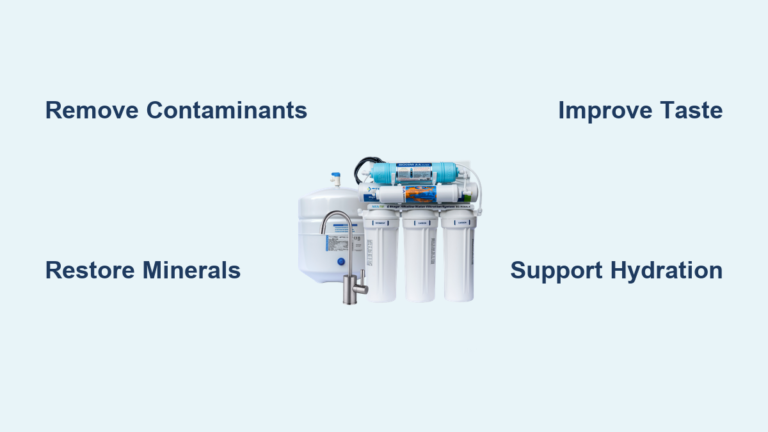
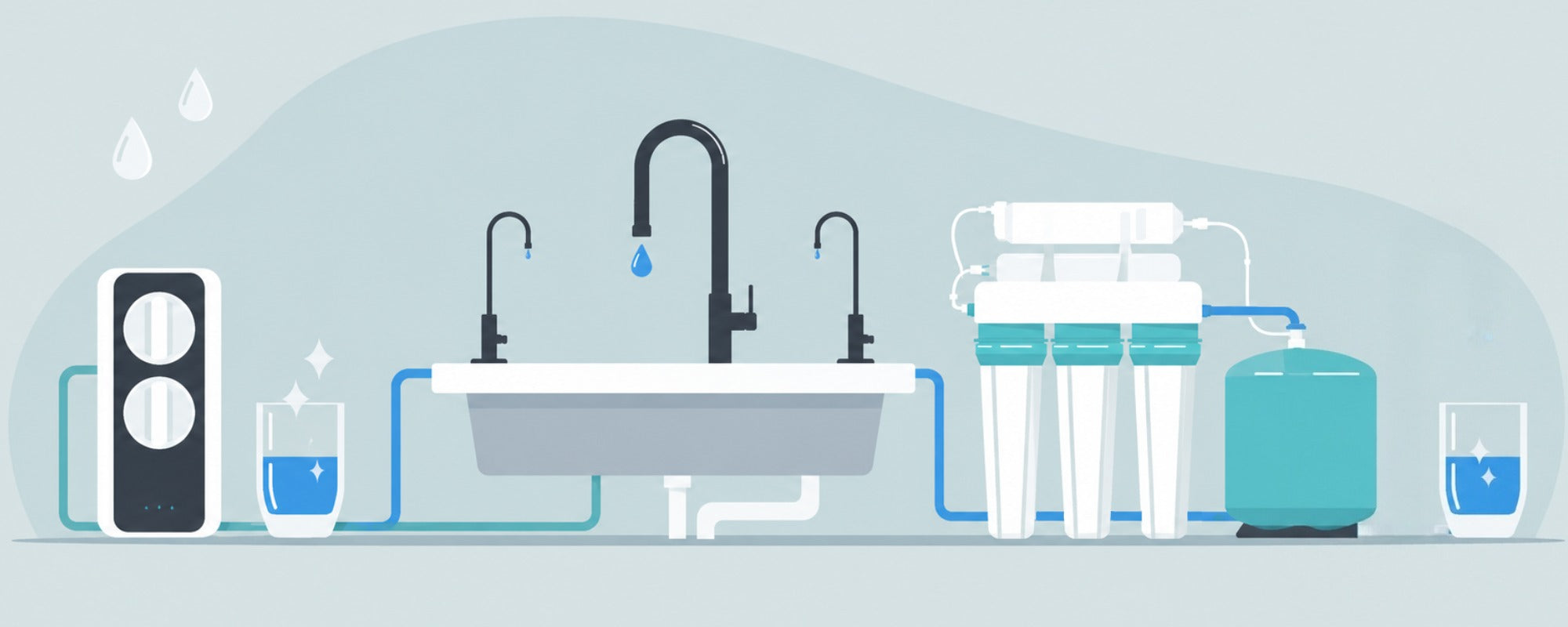
RO systems don’t rely on the membrane alone. A typical setup includes four protective stages:
- Sediment pre-filter: Captures dirt, rust, and particles that could damage the membrane.
- Carbon pre-filter: Removes chlorine and chloramines, which degrade membrane material over time.
- RO membrane: The core barrier that physically blocks bacteria and dissolved contaminants.
- Post-filter: Polishes taste and, in advanced systems, kills any residual bacteria.
Each stage protects the next. A failed carbon filter, for example, allows chlorine to attack the membrane and create micro-tears that bacteria can slip through.
Which Bacteria Does Reverse Osmosis Remove?
Common Pathogens Effectively Blocked
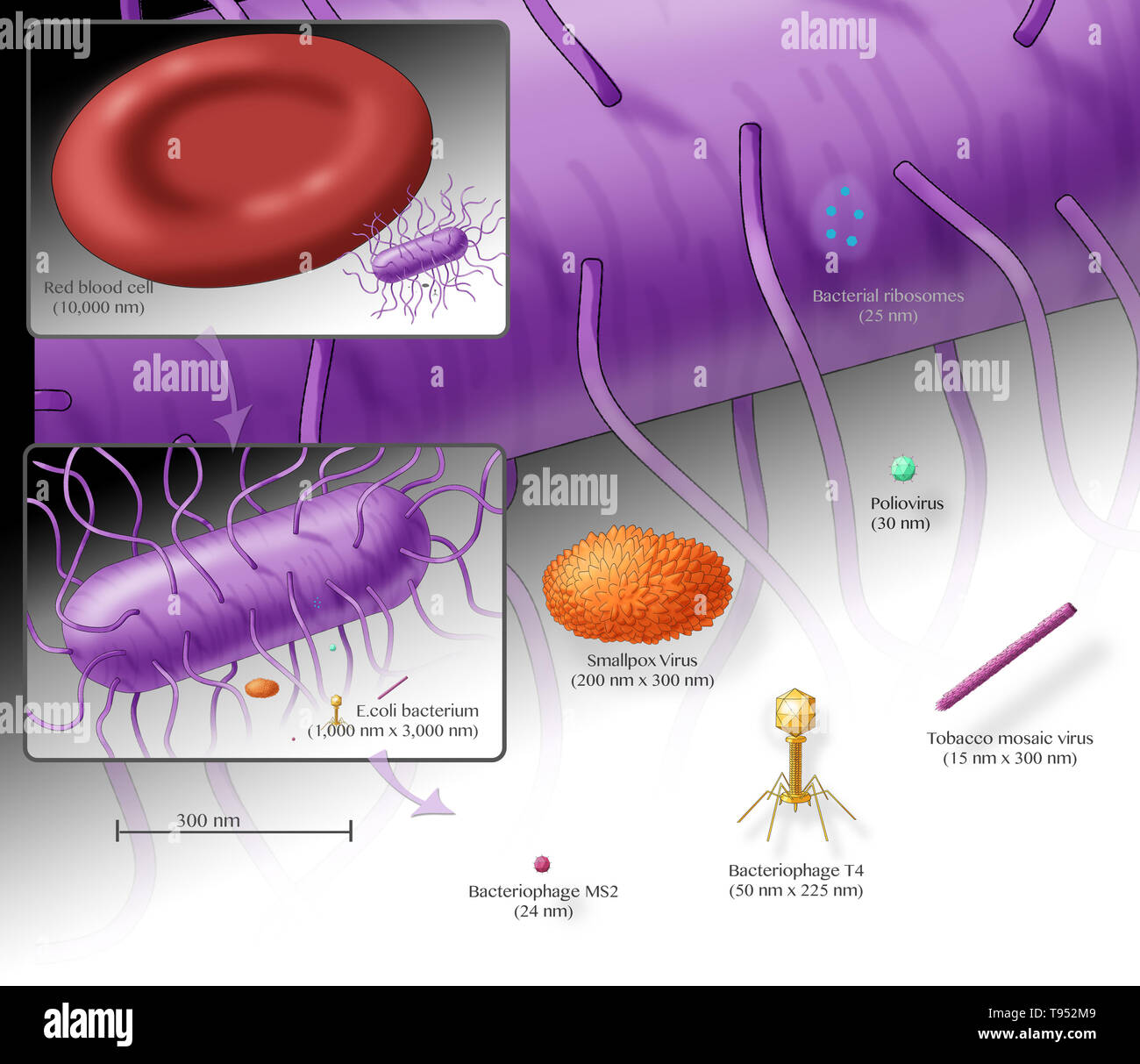
Because RO filtration works by size, any organism larger than 0.0001 microns gets blocked. Certified systems remove a wide range of dangerous bacteria:
- E. coli (0.5 x 2.0 microns)
- Salmonella (0.7–1.5 x 2.0–5.0 microns)
- Shigella (~0.5 x 1–3 microns)
- Vibrio cholerae (0.5 x 1–3 microns)
- Legionella (0.3–0.9 x 2–20 microns)
- Coliform bacteria (0.4–1.5 x 1–5 microns)
All of these pathogens are significantly larger than the membrane’s pore size, which is why high-quality RO systems achieve up to 99.995% bacterial rejection.
Why Coliform and E. coli Matter Most
The EPA uses coliform bacteria as a primary indicator of water contamination. Their presence signals possible fecal pollution and the potential for disease-causing pathogens. RO systems excel at removing coliforms, making them especially valuable for homes using well water or dealing with unreliable municipal supplies.
E. coli deserves special attention because it causes severe gastrointestinal illness. RO’s ability to eliminate E. coli with near-total efficiency makes it one of the most trusted home water treatment options available.
Can RO Remove Viruses Too?
Size Comparison: Viruses vs. Membrane Pores
Viruses are much smaller than bacteria, typically ranging from 0.02 to 0.3 microns (20–300 nanometers). Since RO membranes filter down to 0.0001 microns (0.1 nm), they are theoretically capable of blocking most viruses. But viral removal depends on more than just pore size.
Hepatitis A and E: Real-World Performance
Two waterborne viruses of major concern include:
- Hepatitis A (HAV): ~27–32 nm (0.027–0.032 microns)
- Hepatitis E (HEV): ~30–35 nm (0.030–0.035 microns)
Both viruses are well above the 0.1 nm threshold. Certified RO systems have demonstrated over 99% removal of Hepatitis A and E when the membrane is undamaged and properly installed.
Factors That Affect Viral Removal
Even with adequate pore size, viral filtration isn’t automatic. Key factors include:
- Membrane integrity: Cracks or wear let viruses bypass filtration entirely.
- System seals: Poor installation can allow unfiltered water to mix with purified water.
- Surface charge: Some viruses get repelled or adsorbed by the membrane’s electrostatic properties, though size exclusion remains the primary mechanism.
For maximum viral protection, especially in high-risk environments, pairing RO with UV sterilization provides an extra layer of defense.
Why Standard RO Systems Can Still Harbor Bacteria
Filtration Is Not Disinfection
The most critical distinction in water treatment is that RO filters but does not disinfect. It traps bacteria rather than killing them. This creates several vulnerabilities:
- Bacteria remain alive on the reject side of the membrane.
- If the system is opened for service, trapped pathogens can escape.
- The purified water contains no residual disinfectant because chlorine was removed upstream.
Without chlorine protection, filtered water has no defense against new bacterial contamination once it leaves the membrane.
Bacterial Regrowth in Storage Tanks
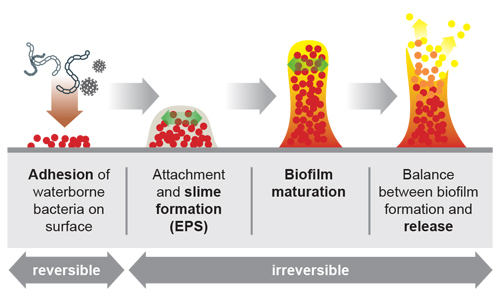
Traditional RO systems store purified water in pressurized tanks. This creates a perfect environment for bacterial multiplication:
- Stagnant water: Heterotrophic bacteria can double every 30 minutes under favorable conditions.
- Biofilm formation: Slimy bacterial colonies can develop on tank walls and tubing.
- Post-membrane contamination: Unsanitized faucets or final filters can introduce new bacteria.
This is why many users report bacterial growth in RO water despite the system’s high initial removal rate.
Membrane Damage and Bypass Risks
A damaged membrane is the most common cause of bacterial breakthrough. Common causes include:
- Chlorine exposure: A failed carbon pre-filter allows chlorine to oxidize and weaken the membrane.
- Sediment clogging: Particles erode or block the membrane surface.
- Low water pressure: Inadequate pressure reduces filtration efficiency.
- Age: Membranes degrade over 2–3 years and gradually lose rejection capability.
Even a microscopic tear can allow bacteria and viruses to pass through undetected.
How to Ensure Truly Bacteria-Free RO Water
Add UV Sterilization for Active Disinfection
Ultraviolet sterilization is the gold standard upgrade for complete microbial safety. UV systems use germicidal light at 254 nm to destroy the DNA of bacteria, viruses, and protozoa.
- Installation point: Place after the RO membrane and storage tank, just before the faucet.
- Effectiveness: Destroys 99.99% of microbes, including regrowth in the tank.
- Best applications: Well water, high-contamination areas, or homes with immunocompromised residents.
UV doesn’t change water taste or add chemicals. It works purely through physical light exposure.
Use Contact-Based Disinfection Media
Select Quantum Disinfection (SQD) offers an alternative to UV. This technology replaces the standard post-filter with a cartridge that kills bacteria on contact.
- Composition: Typically 90% activated carbon plus proprietary disinfection media.
- Advantages: No electricity required, no chemicals added, prevents tank-based regrowth.
- Cost: Adds approximately $50 per year to filter replacement expenses.
This converts a passive filtration system into an active bacteria-killing system.
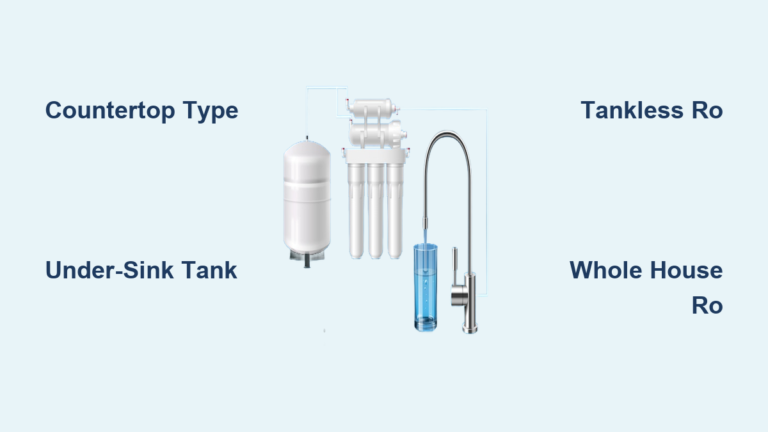
Switch to a Tankless RO System
To eliminate the risk of bacterial multiplication entirely, tankless RO systems filter water on demand.
- No storage tank: Water is purified only when you turn on the faucet.
- Fresher output: Every drop is freshly filtered, reducing stagnation risk.
- Space-saving design: Compact units fit under most sinks.
- Ideal users: Small households, frequent travelers, or anyone concerned about biofilm.
Tankless designs are increasingly popular for their hygiene benefits and efficiency.
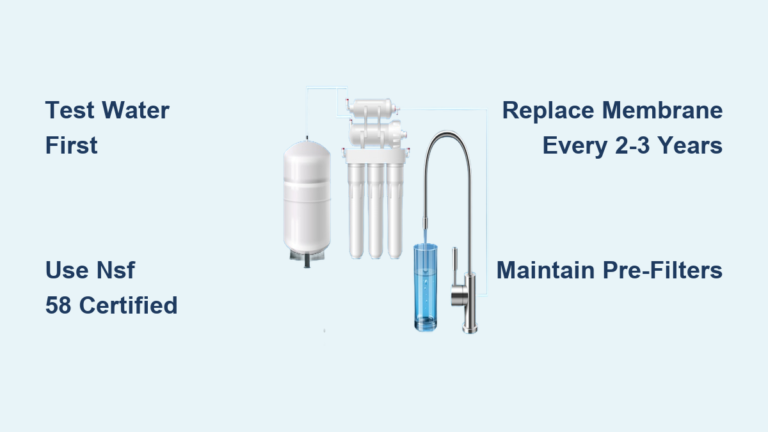
Follow a Strict Maintenance Schedule
No matter which setup you choose, maintenance is non-negotiable for bacterial safety.
Recommended Replacement Intervals:
| Component | Replacement Interval | Why It Matters |
|---|---|---|
| Sediment pre-filter | Every 6 months | Prevents clogging and membrane damage |
| Carbon pre-filter | Every 6–12 months | Protects membrane from chlorine |
| RO membrane | Every 2–3 years | Core filtration; failure means contamination risk |
| Post-filter (carbon or SQD) | Every 12 months | Final polish and disinfection |
| Storage tank (if used) | Sanitize every 6–12 months | Prevents biofilm and bacterial regrowth |
Skipping maintenance can turn a safe system into a contamination hazard.
What Else Does Reverse Osmosis Remove?
Broad-Spectrum Contaminant Rejection
RO doesn’t just target microbes. It removes a wide range of chemical and physical contaminants:
| Contaminant | Removal Rate | Notes |
|---|---|---|
| Lead | 95–98% | Critical for homes with old plumbing |
| Arsenic | 92–96% | Effective against toxic inorganic forms |
| Fluoride | 85–92% | Higher than most filters |
| PFAS (forever chemicals) | 90–99% | Among the most effective home solutions |
| Nitrates | 60–75% | Moderate removal; varies by system |
| Chlorine | 98% | Removed in pre-filter stage |
| Total Dissolved Solids (TDS) | 95–99% | Produces near-pure water |
This makes RO one of the most comprehensive home water treatment technologies available.
What RO Cannot Remove
Despite its power, RO has limitations:
- Dissolved gases like radon and CO₂ pass through the membrane.
- Some volatile organic compounds (VOCs) may require enhanced carbon filtration.
- Bacteria introduced after the membrane will not be stopped by filtration alone.
Always pair RO with appropriate pre- and post-filtration for full protection.
Certification Standards That Ensure Real Performance
NSF/ANSI 58 Certification
Not all RO systems deliver equal results. To verify bacterial removal effectiveness, choose a system certified to NSF/ANSI Standard 58.
This certification confirms:
- Contaminant reduction claims, including bacteria and chemicals
- Structural integrity under real-world conditions
- No leaching of harmful substances like BPA or lead
- Performance across over 400 laboratory tests
EPA and CDC Recommendations
The EPA recognizes RO as an effective method for reducing contaminants, though it does not mandate home treatment systems. For microbiologically unsafe water sources like private wells, the CDC recommends combining filtration with disinfection. This is exactly what upgraded RO systems with UV or SQD provide.
Frequently Asked Questions About Reverse Osmosis and Bacteria
Does reverse osmosis remove 100% of bacteria?
No system guarantees 100% removal, but certified RO systems remove 99.9% to 99.995% of bacteria when functioning properly. The remaining risk comes from post-filtration contamination or membrane damage, not the filtration process itself.
Can bacteria grow in reverse osmosis water after filtration?
Yes, bacterial regrowth is a known issue with traditional RO systems that use storage tanks. Stagnant water allows heterotrophic bacteria to multiply, sometimes doubling every 30 minutes. Tankless systems or UV upgrades eliminate this risk.
Is RO water safe to drink without boiling?
If your RO system is certified, properly maintained, and ideally paired with UV sterilization or disinfection media, the water is safe to drink without boiling. However, if you’re using well water or suspect system issues, boiling adds an extra layer of safety.
What’s the difference between RO filtration and UV disinfection?
RO filtration physically removes bacteria by trapping them on a membrane. UV disinfection actively kills bacteria and viruses by destroying their DNA. Combining both methods provides both removal and destruction for maximum protection.
How often should I replace my RO membrane to ensure bacteria removal?
Replace your RO membrane every 2–3 years, depending on water quality and usage. A worn membrane loses rejection capability and can allow bacteria to pass through. Follow manufacturer guidelines and test your water if you notice changes in taste or quality.
Do I need a UV light if I already have an RO system?
Adding UV light is strongly recommended if you use well water, have a storage tank, or want maximum protection against any bacteria that might regrow after filtration. UV provides active disinfection that RO alone cannot deliver.
Key Takeaways for Bacteria-Free Reverse Osmosis Water
So, does reverse osmosis remove bacteria? Absolutely, with the right setup. Certified RO systems physically block 99.9% to 99.995% of bacteria through size exclusion at the membrane level. Pathogens like E. coli, Salmonella, and coliforms are all reliably eliminated when the system functions properly.
However, standard RO has vulnerabilities. Storage tanks create breeding grounds for regrowth, and membrane damage can compromise the entire system. To achieve truly bacteria-free water, invest in a certified system, follow a strict maintenance schedule, and consider adding UV sterilization or switching to a tankless design.
Your next step: Check your current RO system’s certification status and maintenance log. If your filters are overdue or your system lacks disinfection capability, upgrading now ensures every glass of water you pour is as safe as possible.