Do Water Purifiers Remove Bacteria
You fill a glass from your kitchen tap, and it looks crystal clear. But harmful bacteria like E. coli or Salmonella are invisible to the naked eye and can cause serious illness. The unsettling truth is that most standard home filters do nothing to stop them.
The answer to whether water purifiers remove bacteria is yes, but only the right ones do. In this guide, you’ll learn which technologies actually eliminate germs, how to verify manufacturer claims, and what maintenance steps keep your system working as intended.
Filter vs. Purifier: Know the Critical Difference
What Makes a Device a True Purifier?
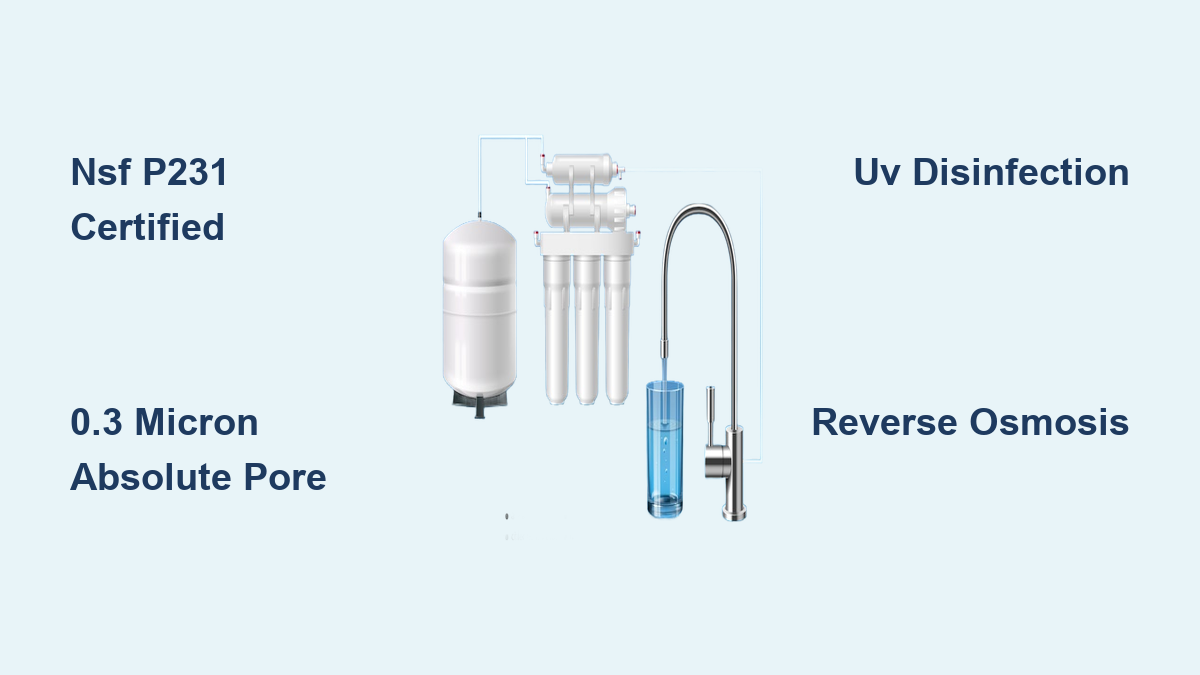
A genuine water purifier meets strict standards for removing or inactivating microorganisms. The U.S. EPA and NSF define a purifier as a device that removes 99.9999% (6-log) of bacteria and 99.99% (4-log) of viruses. Certification under NSF Protocol P231 is the recognized benchmark for microbiological purification.
This means a true purifier doesn’t just trap bacteria. It removes or destroys them entirely.
Why Most Filters Fail Against Bacteria
Standard activated carbon filters, including popular pitcher models, are not purifiers. They adsorb chlorine, heavy metals, and organic compounds, but their pores are too large to catch bacteria. Worse, removing chlorine (a natural disinfectant) without replacing it with another barrier can turn these filters into breeding grounds for bacterial growth.
Red flag: If your filter only cites NSF Standard 42, it improves taste and odor. It does not protect against germs.
Proven Technologies That Remove Bacteria

Ultrafiltration: Bacteria Removal Without Waste
Ultrafiltration (UF) uses hollow fiber membranes with absolute pore sizes of 0.01 to 0.1 microns, small enough to block nearly all bacteria. It requires no electricity and produces zero wastewater, making it ideal for daily use.
- Removes E. coli, Salmonella, Campylobacter, and Listeria
- Does not reliably remove viruses unless combined with other technology
- Retains healthy minerals like calcium and magnesium
- TAPP Water Ultra claims 99.95% bacteria removal with independent testing
Best for: Homes with municipal water seeking low-maintenance, eco-friendly protection.
Reverse Osmosis: Maximum Contaminant Removal

Reverse osmosis (RO) forces water through a semi-permeable membrane with pores around 0.0001 microns, blocking bacteria, viruses, chemicals, and dissolved solids.
- Removes over 99% of bacteria and viruses
- Also eliminates lead, fluoride, nitrates, and arsenic
- Wastes 3 to 5 gallons per gallon produced
- Strips beneficial minerals from water
Critical note: RO storage tanks can harbor bacteria if not sanitized regularly. Pairing RO with a UV stage eliminates this risk.
Best for: Areas with high contamination risk or private well water.
UV Disinfection: Kills Germs Without Removing Them
Ultraviolet (UV) systems use UV-C light to damage microbial DNA, preventing reproduction. They kill up to 99.99% of bacteria and viruses when properly sized.
- Instant disinfection with no chemicals added
- Works on chlorine-resistant Cryptosporidium
- Requires electricity and pre-filtration for clear water
- Does not remove dead organisms from the water
Must pair with sediment and carbon filters to prevent shadowing, where particles shield microbes from UV light.
Best for: Whole-house protection after primary filtration.
Distillation: Boil-and-Catch Purity
Distillation heats water into vapor, then condenses it back into liquid, leaving behind bacteria, viruses, and minerals.
- Removes 100% of bacteria and viruses
- Energy-intensive and slow (hours per batch)
- Produces flat, mineral-free water
- Not practical for high-volume daily use
Best for: Emergency backup or lab-grade purity needs.
Ceramic Filters: Time-Tested Mechanical Barrier
Ceramic filters have tiny pores (typically 0.2 to 0.5 microns) that physically block bacteria and cysts.
- Effective against E. coli, Giardia, and Cryptosporidium
- Can be cleaned and reused multiple times
- Often combined with silver to inhibit bacterial growth
Limitation: Most do not remove viruses due to larger pore size.
Best for: Off-grid living, camping, or developing regions.
Technologies That Don’t Remove Bacteria
Activated Carbon: Great for Taste, Not Germs
Activated carbon excels at removing chlorine, VOCs, pesticides, and improving taste, but it does not filter bacteria. Pore size is too large (often above 1 micron nominal), and removing disinfectants increases the risk of bacterial regrowth in plumbing.
Some models add silver to suppress growth, but this does not kill or remove pathogens.
Refrigerator and Pitcher Filters: Limited Protection
Most fridge and pitcher filters use activated carbon only and are certified under NSF Standard 42 for taste and odor improvement. Some newer models like LifeStraw Home now include ultrafiltration, but always check the label. “Removes bacteria” must be explicitly stated and certified.
How to Verify Bacteria Removal Claims

Check NSF/ANSI Certifications
Look for these labels on packaging or product specifications:
| Standard | What It Means |
|---|---|
| NSF 42 | Aesthetic effects only (taste, odor, chlorine) |
| NSF 53 | Health-related contaminants (lead, cysts, some bacteria) |
| NSF 58 | Reverse osmosis systems (chemical and microbial reduction) |
| NSF P231 | Microbiological purifier confirming virus and bacteria removal |
Only NSF P231 or NSF 53/58 with explicit claims guarantee germ protection.
Understand Absolute vs. Nominal Pore Size
Not all “0.5 micron” filters perform equally.
- Absolute pore size: Every pore is equal to or smaller than the stated size, guaranteeing removal of larger particles
- Nominal pore size: Represents an average; some pores may be larger, allowing bacteria to pass
For bacteria removal, you need 0.3 micron absolute or smaller. Bacteria like E. coli measure approximately 0.5 x 2 microns, and Legionella measures 0.3 to 0.9 microns. A 0.5 micron nominal filter may still allow pathogens through.
Log Reduction: Measure Real Performance
Manufacturers report effectiveness in log reduction:
| Log Reduction | Percentage Removed | Pathogens Left (per 1 million) |
|---|---|---|
| 3-log | 99.9% | 1,000 |
| 4-log | 99.99% | 100 |
| 6-log | 99.9999% | 1 |
A 6-log reduction is required for true purification. Multipure Aqualuxe achieves this under NSF P231 certification.
Common Bacterial Threats in Water
E. coli and Coliform Bacteria
Found in fecal matter, these bacteria indicate sewage or animal waste contamination and cause severe diarrhea, cramps, and vomiting. Municipal systems test for coliforms, and any presence triggers further investigation.
Salmonella and Campylobacter
Common causes of foodborne illness that also spread through water. These bacteria survive in water for weeks and pose high risk for children and the elderly.
Cryptosporidium and Giardia
Parasites resistant to chlorine that cause prolonged gastrointestinal illness. These require absolute filtration at 1 micron or smaller, or UV treatment.
Heterotrophic Bacteria (HPC)
Not usually harmful, but high levels signal poor sanitation and can interfere with pathogen testing. High HPC counts mean it’s time to clean or replace your system.
Who’s Most at Risk?
Certain groups face higher danger from bacterial contamination:
- Infants and young children
- Elderly individuals
- Pregnant women
- Immunocompromised people (cancer patients, HIV-positive individuals)
For these populations, certified purification is non-negotiable. The CDC recommends boiling or using NSF P231-certified devices for immune-vulnerable households.
Maintenance: Preventing Bacterial Regrowth
Replace Filters on Schedule
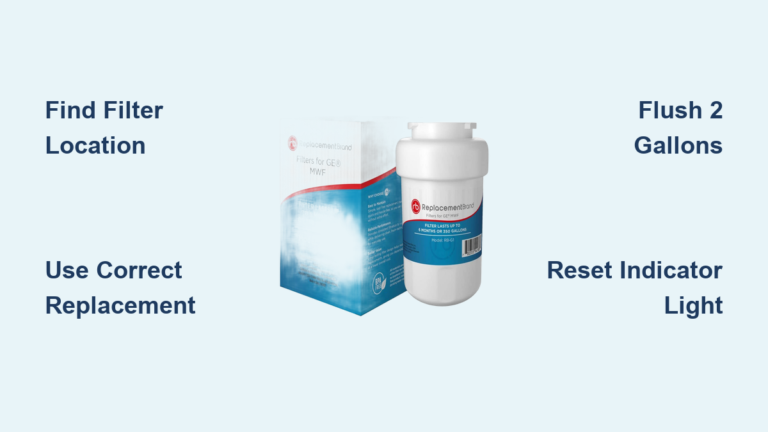
Even the best purifier fails if neglected. Old filters lose effectiveness, clog, and become incubators for bacteria. Follow manufacturer timelines strictly, typically every 3 to 12 months depending on usage.
Sanitize the System
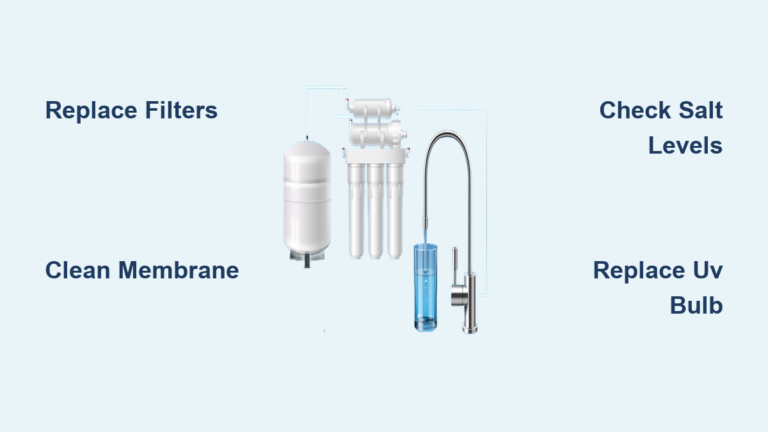
RO and UV systems require periodic sanitization using food-grade hydrogen peroxide or vinegar solution. Flush the entire system according to the manual, especially after long idle periods or filter changes.
Handle Cartridges Safely
Used filters contain concentrated bacteria. Wear gloves when replacing, wash hands thoroughly afterward, and dispose of cartridges promptly. Immunocompromised individuals should avoid handling used filters.
Choosing the Right System for Your Water Source
Municipal Tap Water
Generally safe due to chlorination, but aging pipes can introduce Legionella or Pseudomonas. Recommended options include ultrafiltration or RO with UV for maximum safety. Avoid whole-home carbon filters that remove chlorine without replacement disinfection.
Well Water
No municipal treatment means vulnerability to runoff, septic leakage, and wildlife contamination. A multi-stage system is required: sediment pre-filter, carbon filter for organics, then UV or RO/UF for microbial kill or removal. Test annually for coliforms, nitrates, and heavy metals.
Rainwater and Lake Water
High microbial load and organic debris promote pathogen growth. Full purification is essential, either UV combined with filtration or distillation. Portable options include LifeStraw Mission or Sawyer Complete with squeeze pump.
Emergency Preparedness: Safe Water When It Matters Most
During Boil Water Advisories
Boil water for 1 minute (3 minutes at high altitude), let it cool before storing, and use only for drinking, cooking, and brushing teeth. Alternatives include certified portable purifiers like LifeStraw Family, SteriPen, or Katadyn filters.
Long-Term Power Outages
UV and electric RO systems fail without power. Gravity filters like Berkey or LifeStraw Family work off-grid. Store purified water in clean, sealed containers.
Best Bacteria-Removing Products by Use Case

Best Overall Home Purifier: Multipure Aqualuxe
NSF P231 certified with 6-log bacteria removal using Nanomesh carbon block and submicron filtration. No electricity needed.
Most Sustainable Daily Option: TAPP Water Ultra
Ultrafiltration with 0.1 micron absolute pores and 99.95% bacteria removal. Eco-friendly refillable cartridges with low maintenance.
Best for Well Water: Aquasana EQ-600 with UV
Three-stage filtration plus UV chamber removes chemicals and kills 99.99% of germs for whole-house protection.
Best Portable Purifier: LifeStraw Mission
Removes bacteria, parasites, microplastics, and some viruses with 4,000-liter capacity. Ideal for travel, camping, and emergencies.
Frequently Asked Questions About Water Purifiers and Bacteria
Do all water filters remove bacteria?
No. Standard activated carbon filters in pitchers and refrigerators do not remove bacteria. Only systems with absolute pore sizes of 0.3 microns or smaller, or those using UV disinfection, reverse osmosis, or distillation, effectively remove bacteria.
What pore size is needed to remove bacteria?
You need an absolute pore size of 0.3 microns or smaller. Nominal pore size ratings are unreliable because some pores may be larger than stated, allowing bacteria to pass through.
Is boiling water as effective as a purifier?
Yes, boiling for 1 minute (3 minutes at high altitude) kills bacteria and viruses effectively. However, boiling is impractical for daily use and is recommended primarily as an emergency measure.
Does reverse osmosis remove bacteria?
Yes, reverse osmosis removes over 99% of bacteria and viruses due to its 0.0001 micron pore size. However, RO storage tanks can harbor bacteria if not sanitized regularly, so pairing RO with UV disinfection is recommended.
Can bacteria grow in water filters?
Yes, especially in carbon filters that remove chlorine without replacing it with another disinfection barrier. This is why regular filter replacement and system sanitization are critical for preventing bacterial regrowth.
Is municipal tap water safe without a purifier?
Municipal water is generally safe due to chlorination, but aging infrastructure can introduce contaminants like Legionella. A final barrier such as ultrafiltration adds security against resistant cysts and pipe contamination.
Final Answer: Yes, But Only With the Right Technology
Do water purifiers remove bacteria? Yes, but only if they are true purifiers. Standard filters do not. To be safe, choose a system with absolute pore size of 0.3 microns or smaller, NSF P231, 53, or 58 certification, and proven log reduction of at least 4-log (6-log is ideal).
Technologies that work include ultrafiltration, reverse osmosis, UV disinfection, distillation, and ceramic filters with 0.2 micron absolute pores. Technologies that don’t work include activated carbon alone and standard pitcher or fridge filters.
Key Takeaways for Choosing Bacteria Protection
- Not all purifiers are equal: Verify certifications before purchasing.
- Pore size matters: Look for absolute ratings, not nominal.
- Municipal water isn’t foolproof: A final barrier adds safety against aging pipes.
- Maintenance prevents regrowth: Replace filters and sanitize systems on schedule.
- Test your water: Especially important for well or rainwater sources.
- Boiling works in emergencies: But purification systems offer daily convenience.
When it comes to bacteria in water, assumption is dangerous. Choose certified protection, maintain it diligently, and drink with confidence.