How to Soften Hard Water at Home: Quick Steps
Hard water affects nearly every home at some point, especially in areas where groundwater carries high levels of calcium and magnesium. When these minerals exceed 7 grains per gallon (GPG), you start seeing the classic symptoms: chalky buildup on faucets, spotty dishes, stiff laundry, and skin that never quite feels clean. While safe to drink, hard water quietly shortens the life of your water heater, dishwasher, and washing machine.
The fix doesn’t require a plumber on speed dial or a huge budget. There are simple ways to soften hard water at home that range from quick DIY tricks to permanent whole-house systems. This guide walks you through how to test your water, pick the right method for your situation, skip products that don’t work, and keep your system running smoothly for years.
Confirm Your Water Is Actually Hard
Before buying anything, make sure hardness is the real problem. Dry skin, dull hair, and appliance buildup can sometimes trace back to other issues like poor ventilation or low water pressure.
Check Your Local Water Report
If you get water from a municipal supply, your utility publishes an annual Consumer Confidence Report (CCR). Many of these reports list hardness in mg/L or GPG. Anything above 7 GPG qualifies as hard water worth treating.
Use At-Home Test Strips
For a faster answer, grab water hardness test strips from a hardware store or online retailer. Dip one in cold tap water, wait for the color change, and compare to the included chart. These give a general range rather than lab precision. Well owners should send a sample to a state-certified lab for accurate results.
Watch for These Common Signs
You can often diagnose hard water without any testing:
– White, crusty residue on faucets and showerheads
– Soap scum that wipes off only with effort
– Cloudy glassware straight from the dishwasher
– Laundry that feels rough or looks dingy
– Weak water pressure from mineral-clogged fixtures
If several of these show up in your home, softening will likely improve your daily routine.
Install a Salt-Based Ion Exchange Softener
:max_bytes(150000):strip_icc()/installing-a-water-softener-2718669-FINAL-1-ee8de137dcf84b5db1e28f84a7dec11b.png)
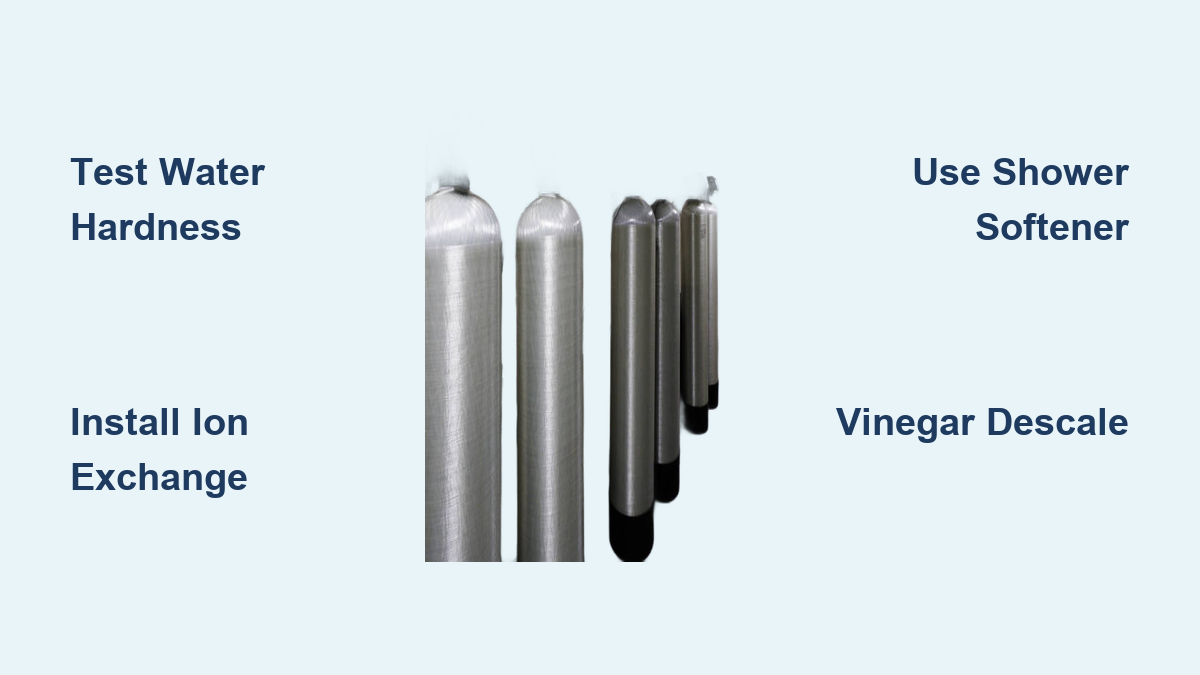
For whole-house results, salt-based ion exchange softeners remain the most reliable solution. They’re the only method proven to actually remove calcium and magnesium from your water.
How the Process Works
Water flows through a tank packed with resin beads charged with sodium ions. As hard water passes through, calcium and magnesium stick to the resin while sodium enters the water. The result is soft, scale-free water flowing to every tap.
Regeneration Keeps It Effective
Every few days, the unit runs a regeneration cycle. It flushes the resin with a brine solution, washes the trapped minerals down the drain, and recharges the beads for another round. Modern systems automate this based on usage. You only need to refill the salt tank every 4–6 weeks.
Where and How to Install
Mount the softener where your main water line enters the house, typically in a basement, garage, or utility room. Follow these guidelines:
– Place it after the main shutoff valve
– Include a bypass valve for easy maintenance
– Use PEX piping for leak-resistant connections
– Route outdoor spigots around the unit to protect plants from sodium
Watch Your Sodium Intake
Softened water adds about 417 mg of sodium per day, roughly equal to three slices of bread. For most people, this poses no issue. If you’re on a low-sodium diet, two simple fixes exist:
– Switch to potassium chloride instead of regular salt
– Install a bypass line to the kitchen tap for unsoftened drinking water
With proper care, a salt-based softener lasts 10–15 years and pays for itself through longer appliance life and lower energy bills.
Add a Shower Softener for Skin and Hair
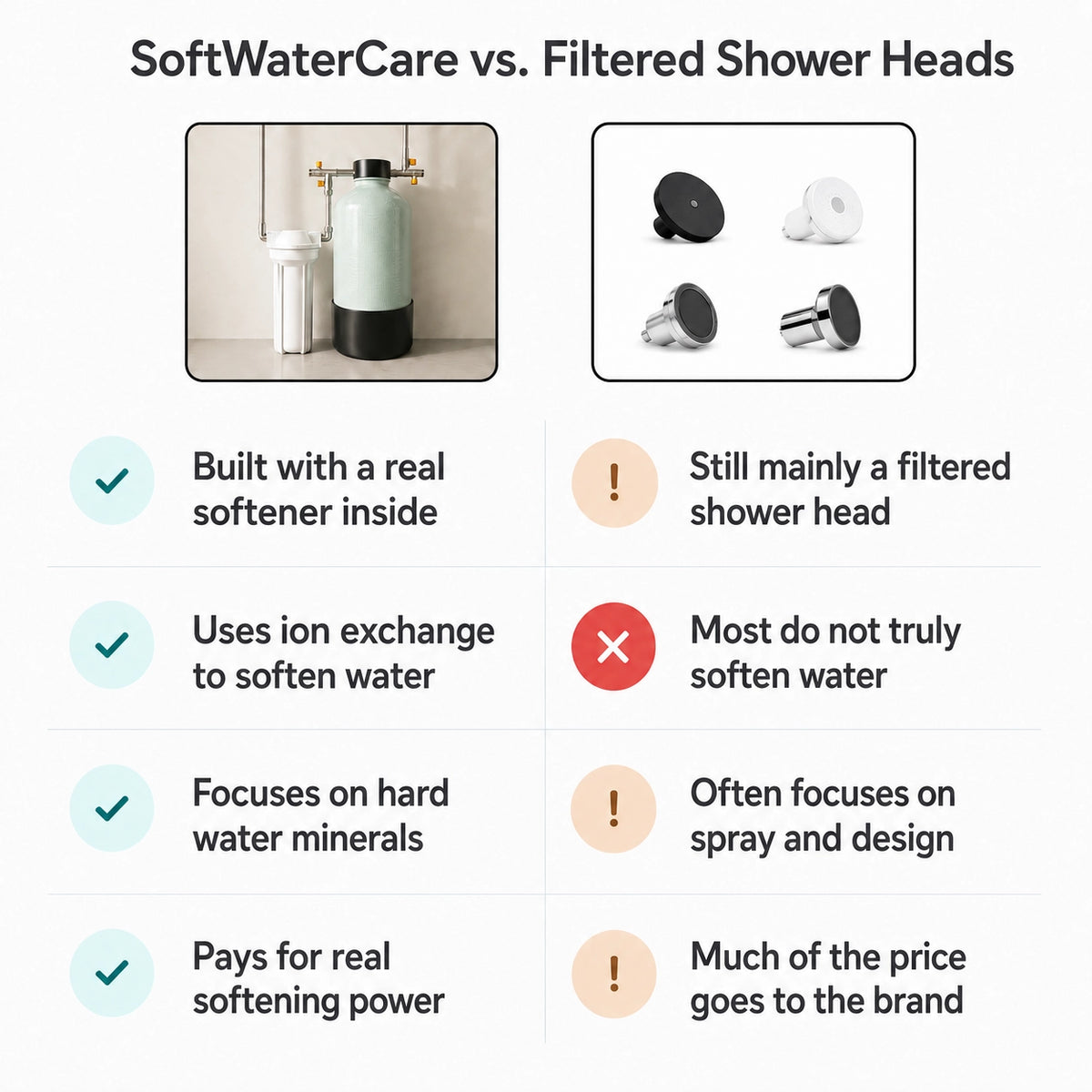
If a whole-house system isn’t in your budget, a point-of-use shower softener delivers fast relief where you need it most.
Pick the Right Style
Two main options work well:
– In-line softeners: Install between the pipe and your existing showerhead
– Filtered showerheads: Combine the showerhead with a built-in cartridge
Both use resin or chelating media to reduce hardness and chlorine on contact.
What You’ll Notice Right Away
Users commonly report:
– Softer skin with less itching
– Smoother, shinier hair
– Less soap scum clinging to shower walls
These units don’t help your laundry or dishes, but they solve the most personal side effects of hard water.
Stay on Top of Cartridge Changes
Most shower filters need a new cartridge every 3–6 months, depending on your hardness level. Look for models that specify high-capacity resin and are tested for hard water regions.
Use Natural Additives for Small Tasks
For drinking water, cleaning, or spot treatments, natural additives offer a cheap and accessible option. These methods only work for small batches, not whole-house flow.
Boil Water to Drop Temporary Hardness
Boiling causes calcium and magnesium to settle out as sediment. Let the water cool, then carefully pour off the clear top layer and discard the chalky residue. Great for kettles and cooking water, but not practical for showers or laundry.
Clean With Vinegar
White vinegar’s acetic acid dissolves mineral buildup. Add 1 cup per gallon for these tasks:
– Run an empty dishwasher or washing machine cycle
– Soak showerheads and faucet aerators overnight
– Descale a kettle by filling it, waiting one hour, then boiling and rinsing
Vinegar won’t soften flowing water, but it excels at removing existing scale.
Boost Laundry With Baking Soda
Add 1 teaspoon per gallon to your wash cycle. Baking soda:
– Neutralizes minerals in the water
– Helps detergent work more effectively
– Leaves clothes feeling softer and looking brighter
Avoid using too much, since excess baking soda raises pH and can damage fabrics.
Try Lemon Juice for Cleaning
The juice of one lemon per gallon adds citric acid that slightly softens water while leaving a fresh scent. It’s a great addition to mop water or cleaning sprays.
Skip Epsom Salt for Hard Water
Epsom salt binds minerals but adds more magnesium to the mix, which defeats the purpose. Use it sparingly, if at all.
Steer Clear of Unproven Gadgets
Many products promise soft water without salt or effort. Most lack scientific backing and deliver disappointing results.
Magnetic Softeners Don’t Remove Minerals
These devices clamp onto pipes and claim to rearrange minerals using magnetic fields. Studies show no real reduction in calcium or magnesium levels. Any improvement people notice usually comes from altered scale formation, not actual softening.
Electronic Anti-Scale Devices Fall Short
Also called “descalers,” these units send electrical pulses through your plumbing. They don’t remove minerals and do not lower water hardness. Since they produce no waste water, they’re not performing ion exchange, which means the minerals stay right where they are.
Water Softening Pillows Have Limited Use
Small cartridges designed for water tanks or pitchers. They might soften a few gallons but can’t keep up with household flow rates. Stick to them only for very small, batch-style needs.
For real results, choose ion exchange, filtration, or proven natural cleaners over unverified technology.
Build a Multi-Stage System for Well Water

If you rely on well water or deal with iron alongside hardness, a multi-stage filtration system provides thorough treatment.
Greensand Filters Address Iron and Some Hardness
Greensand media can reduce iron, manganese, and mild hardness. However:
– The media clogs quickly, lasting only about 9,000 gallons in high-mineral water
– Frequent replacements drive up long-term costs
– It works best as one piece of a larger system rather than a standalone softener
Combine Technologies for Complete Treatment
Layer these components for the best results:
1. Sediment filter: Catches rust and debris first
2. Salt-based softener: Removes hardness minerals
3. UV filter: Kills bacteria, essential for well water
4. Reverse osmosis (RO): Delivers pure drinking water at the kitchen sink
Many modern systems include app monitoring, leak detection, and automatic regeneration scheduling for added convenience.
Keep Your System Running Smoothly
Even the best softener fails without routine care. A few simple habits will extend its life and maintain performance.
Refill Salt on Schedule
Check the brine tank every 4–6 weeks. Keep salt levels at least half full and break up any salt bridges (hardened crusts) with a broom handle.
Replace Filters When Due
- Shower filters: Swap every 3–6 months
- Sediment pre-filters: Change every 3–6 months
- RO membranes: Last 2–3 years; check TDS readings annually
Retest Your Water Twice a Year
Test hardness every 6–12 months to confirm your system is working. If spots return or soap stops lathering well, your softener may need servicing.
Match the Solution to Your Situation

The best method depends on your water hardness, budget, and living situation. Use this quick guide to find your fit:
You Have Very Hard Water (>10 GPG)
Install a salt-based softener. Only ion exchange handles high mineral levels effectively and prevents long-term scale damage.
You’re Renting or Short on Cash
Go with a shower filter or point-of-use softener. Prices range from $20–$150, installation takes minutes, and you’ll notice softer skin and hair immediately.
You Live Where Salt Discharge Is Restricted
In parts of California or Texas, salt-based softeners face limits. Try an exchange tank service, where a company swaps your tank and regenerates it off-site.
You Use Well Water
Combine sediment filtration, softening, UV, and reverse osmosis for safe, soft water from every tap.
You Just Need to Clean Appliances
Use vinegar or baking soda for descaling kettles, running cleaning cycles, and removing faucet buildup. Cheap, simple, and effective for maintenance.
Frequently Asked Questions About Softening Hard Water at Home
What is the easiest way to soften hard water at home?
The simplest approach for small tasks is adding vinegar or baking soda to water. For whole-house results, installing a salt-based ion exchange softener delivers the most reliable, long-term fix.
Do magnetic water softeners actually work?
No. Studies show magnetic devices don’t reduce calcium or magnesium levels in water. Any perceived improvement comes from altered scale patterns, not actual mineral removal.
How much sodium does softened water add to my diet?
Softened water adds about 417 mg of sodium per day, similar to three slices of bread. If you’re on a low-sodium diet, switch to potassium chloride or bypass the kitchen tap.
Can I soften hard water without a salt-based system?
For drinking or cleaning, you can use boiling, vinegar, or lemon juice in small batches. For whole-house softening without salt, consider an exchange tank service if available in your area.
How often should I test my water hardness?
Test your water every 6–12 months to confirm your softener is working properly. If you notice returning spots or reduced soap lather, test sooner.
What’s the best option for renters?
A showerhead filter or point-of-use softener is ideal. It costs between $20 and $150, installs in minutes without permanent modifications, and improves skin and hair immediately.
Key Takeaways for Softening Hard Water at Home
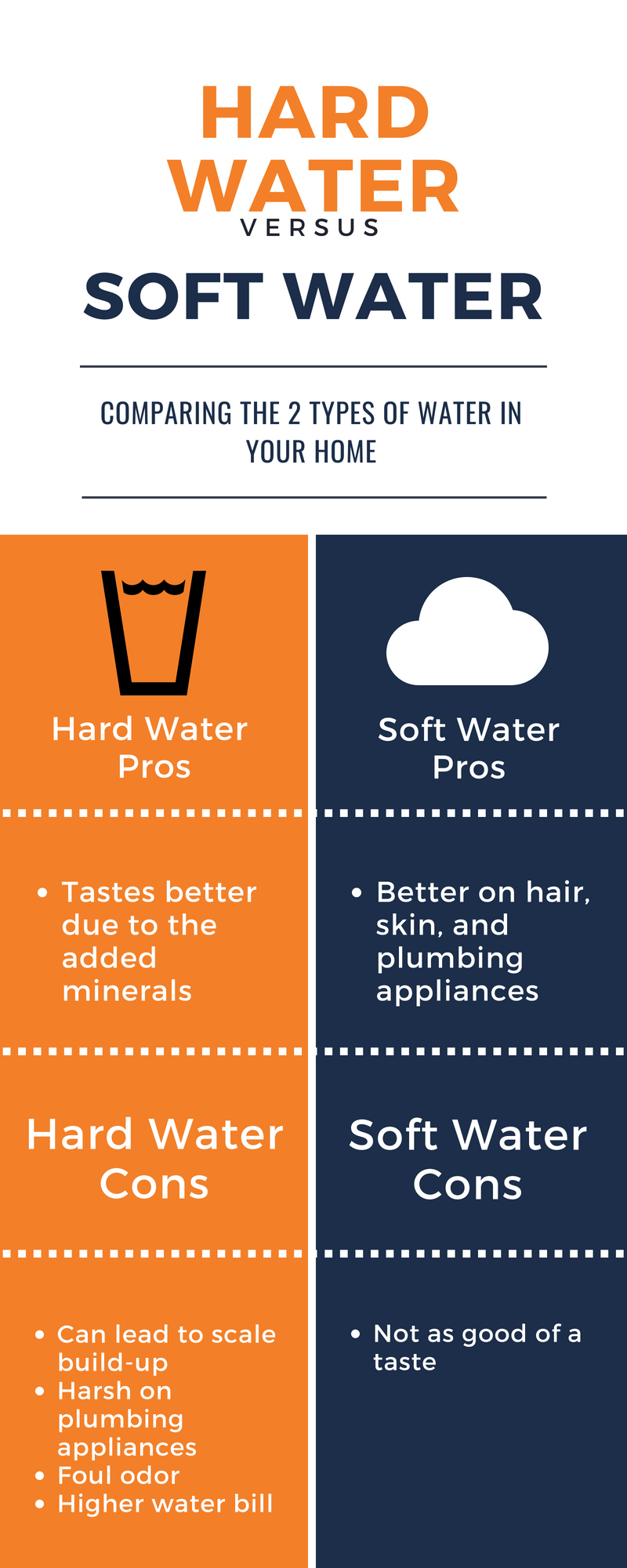
Softening hard water doesn’t have to be complicated or expensive. Salt-based ion exchange systems remain the most reliable whole-house solution, while shower filters and natural additives offer affordable, targeted relief. Skip magnetic and electronic gadgets, since they don’t actually remove minerals. Start by testing your water, choose a method that fits your home and budget, and stick to a simple maintenance routine. With the right approach, you’ll enjoy softer skin, cleaner dishes, longer-lasting appliances, and plumbing that stays free of scale for years to come.