Fix Brondell Circle Reverse Osmosis Slow Flow
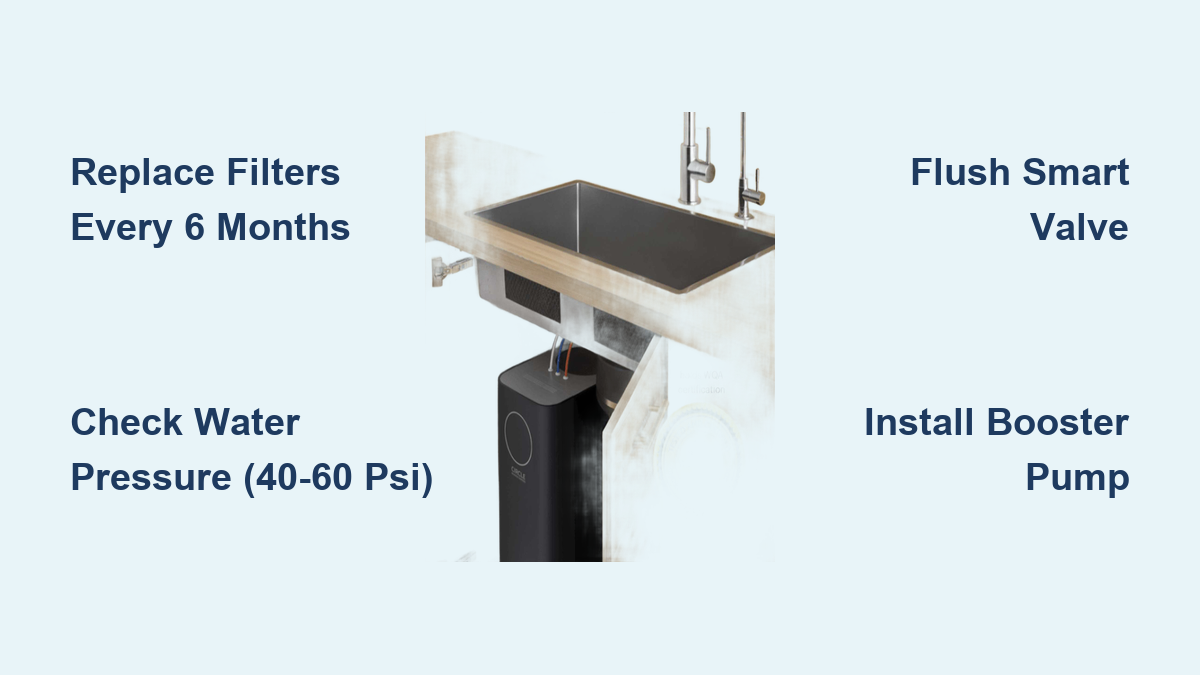
If your Brondell Circle reverse osmosis system has started delivering only a trickle of water, especially after several months of use, you are far from alone. The Brondell Circle RO slow flow issue ranks among the most frequently reported problems with this otherwise well-regarded system. While every reverse osmosis unit naturally produces water slower than a standard tap, a progressive decline into an unusable drip signals something deeper. This guide breaks down the real causes of slow flow, how to diagnose the exact culprit, and which fixes actually restore performance.
You will learn whether the problem stems from clogged filters, low household water pressure, the patented Smart Valve, or a failing membrane. More importantly, you will discover proven steps to bring back usable flow, and when it makes sense to add a booster pump or replace the system entirely.
Decode the Flow Rate Issue
Normal vs. Problematic Slow Flow
All RO systems reduce water pressure because water must pass through multiple filtration stages. With the Brondell Circle, filling a 12 oz glass in roughly 15 seconds is considered normal operation. That is by design.
But if it now takes 3 to 5 minutes to fill a small bottle, or water drips for the first two minutes before resuming, you are dealing with a malfunction rather than typical slow flow.
Key signs of a real issue:
- Flow improves temporarily after filter changes but degrades within 2 to 5 months.
- Dripping persists even with brand new filters installed.
- Water pressure starts strong, then drops to a trickle mid-use.
- No visible kinks or leaks in the tubing.
This pattern points to degradation, not design.
Check Your Filter Replacement Schedule

Replace Sediment and Carbon Filters Every 6 Months
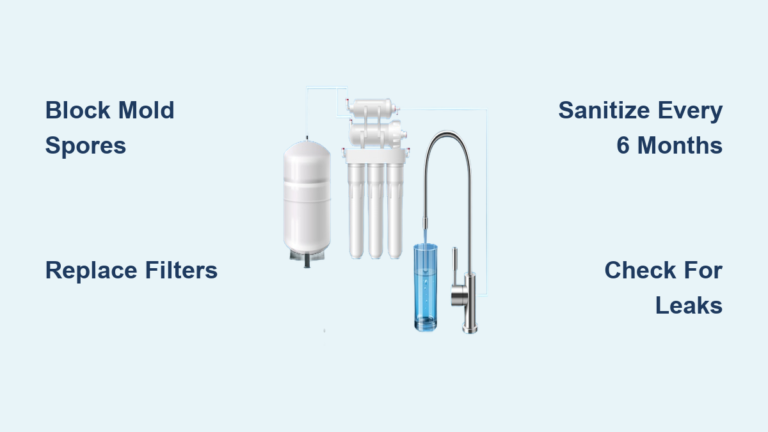
Clogged pre-filters are the most common cause of slow flow in the Brondell Circle. The system uses a four-stage filtration process:
- Sediment filter traps rust, sand, and particles.
- Pre-carbon filter removes chlorine and volatile organic compounds.
- RO membrane targets lead, arsenic, and total dissolved solids.
- Post-carbon filter polishes taste and odor.
The first two filters should be replaced every 6 months. Skipping this schedule allows sediment to accumulate and choke water flow before it ever reaches the membrane.
Pro tip: Even if the LED faucet indicator has not lit up, replace filters on time. The indicator can lag, and waiting too long places extra strain on the membrane.
Inspect the RO Membrane Every 2 Years
The RO membrane is rated for 24 months, but in homes with hard water or low pressure, it can foul earlier. A failing membrane restricts flow and reduces overall efficiency.
Symptoms of a bad membrane include:
- Low water production despite fresh pre-filters.
- Rising TDS levels in purified water.
- Persistent slow flow after other troubleshooting steps.
To test the membrane:
- Shut off the input water supply.
- Drain the storage tank completely.
- Disconnect the tube from the membrane housing.
- Turn water back on and observe flow into the membrane.
– Weak flow here indicates an upstream issue (filters or pressure).
– Strong flow but slow tank filling suggests the membrane itself is clogged.
Replace the membrane every 2 years, or sooner if flow declines rapidly.
Test Your Input Water Pressure

Ideal Pressure: 40 to 60 PSI
RO systems need sufficient line pressure to push water through the membrane. The Brondell Circle relies entirely on household water pressure, since it has no built-in booster pump.
If your home pressure falls below 40 PSI, the system will struggle from the day it is installed.
How to test your pressure:
- Purchase a water pressure gauge for around $10.
- Attach it to an outdoor spigot or laundry sink faucet.
- Open the valve fully and read the PSI.
If pressure reads below 40 PSI:
- Install a booster pump, such as the Waterdrop WD-RO-PUMP.
- Users who switched from the Brondell to pump-assisted systems report immediate flow restoration.
- A booster pump compensates for the Brondell pressure sensitivity, especially as components age.
Investigate the Smart Valve
Patented Valve May Restrict Flow
The Brondell Circle uses a Smart Valve to reduce wastewater by up to 75 percent, one of its major selling points. However, this same valve may contribute to slow flow over time.
How the Smart Valve works:
- It monitors tank pressure.
- It shuts off feed water when the tank is full.
- It minimizes waste and extends membrane life.
Why it may cause slow flow:
- Debris or mineral buildup can cause the valve to stick or close prematurely.
- Aging seals may reduce flow capacity.
- In low-pressure homes, the valve may not open fully.
Troubleshooting steps:
- Shut off water and drain the system.
- Disconnect tubing from the Smart Valve.
- Flush both ends with clean water.
- Reconnect and test flow.
If flow improves temporarily but degrades again, the valve may be failing.
Rule Out Kinks and Connection Issues
Inspect Tubing and Fittings
Even small kinks in the food-grade tubing can restrict flow. The Brondell uses color-coded, pre-cut tubing, but it can become pinched during installation or shifted over time.
Quick visual check:
- Pull the unit out from under the sink.
- Trace the white (product water), blue (drain), and green (feed water) lines.
- Look for sharp bends, compression under brackets, or twisting.
Also check:
- The T-Valve connection at the cold water line, ensuring it is fully seated.
- The drain clamp, since a clogged or improperly installed clamp can create backpressure.
- The faucet aerator, where mineral buildup can mimic slow RO flow.
Pro tip: Disconnect and reconnect all quick-fit fittings. A loose seal can create air locks or flow restrictions that clear with a simple reseat.
Address the Flexible Storage Tank

Tank Bladder May Be Failing
The Brondell uses a 2.5-gallon flexible tank that expands as it fills. Over time, the internal bladder can degrade, reducing pressure and flow.
Signs of a bad tank:
- Short bursts of water followed by a long wait.
- Tank feels squishy or will not hold pressure.
- The system takes hours to refill.
How to test tank pressure:
- Turn off water and drain the tank completely.
- Use a tire pressure gauge on the air valve (the silver stem on the tank).
- The reading should be 5 to 7 PSI when empty.
If pressure is below 5 PSI, use a bike pump to repressurize. If it drops again quickly, the bladder is ruptured and the tank needs replacement.
Prevent Leaks That Reduce System Pressure
Plastic Filter Caps Can Crack and Leak
While not a direct cause of slow flow, cracked plastic filter housings are a known failure point. A major leak reduces system pressure and can damage under-sink components.
Why it matters:
- Leaks often go unnoticed because of the sealed enclosure.
- Water can spew from cracked caps, soaking cabinets within hours.
- A leaking system loses pressure, which reduces flow at the faucet.
Prevention steps:
- Install a water leak sensor under the sink.
- Remove the outer case every 6 months to inspect plastic caps for cracks.
- Replace compromised components promptly to maintain system pressure.
Weigh Long-Term Reliability
Flow Issues Often Return After 2 to 3 Years
User data reveals a recurring pattern:
- First 6 to 12 months: Great taste, good flow, high satisfaction.
- 18 to 30 months: Flow degrades, leaks appear, filters become costly.
- 3+ years: Many users replace the system entirely.
Why does this happen?
- Plastic components degrade with age.
- The Smart Valve and membrane wear out.
- Filter costs add up to roughly $75 every 6 months.
The 1-year manufacturer warranty does not cover most failures, but Costco’s 100% satisfaction guarantee provides a critical safety net if issues arise early.
Upgrade or Replace?
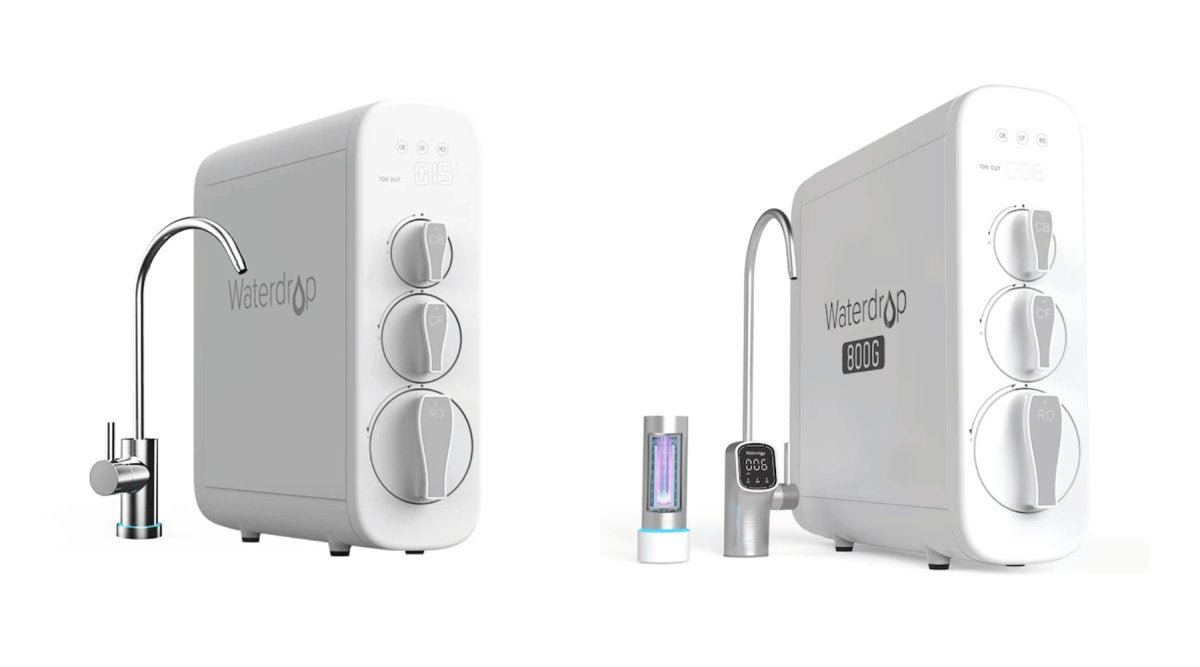
When to Add a Booster Pump
If your water pressure is low or flow keeps slowing despite consistent maintenance, adding a booster pump is the most effective fix.
Recommended setup:
- Install the pump between the pre-filters and the RO membrane.
- This ensures consistent 60+ PSI to the membrane.
- It eliminates pressure-dependent flow drops.
Users report that after months of trickle output, adding a booster pump restored instant and strong flow.
Consider a Pump-Integrated RO System
If troubleshooting feels like a constant battle, switching to a pump-assisted RO system may offer long-term relief. Popular options include:
- Waterdrop G3P800
- APEC RO-90
- iSpring RCC7P
These systems deliver faster flow from the start, perform better in low-pressure homes, and often feature longer filter life and improved durability. Many former Brondell users made this switch and never looked back.
Optimize Your Maintenance Routine
Stick to the Filter Schedule
| Filter Stage | Lifespan | Estimated Cost | Action |
|---|---|---|---|
| Sediment and Carbon (Stages 1 & 2) | 6 months | $75 | Replace together |
| RO Membrane (Stage 3) | 24 months | $85 | Test TDS annually |
| Post-Carbon (Stage 4) | 6 to 12 months | Included in kit | Replace with pre-filters |
Tip: Order filters in advance. Costco does not always stock them in-store, so online ordering is often necessary.
Frequently Asked Questions About Brondell Circle Slow Flow
Why does my Brondell Circle RO trickle after a few months of use?
Progressive slow flow is typically caused by clogged sediment or carbon pre-filters, a fouled RO membrane, or low household water pressure. The system has no internal pump, so it depends entirely on line pressure to push water through the membrane. Replacing filters on schedule and testing your home pressure are the first steps.
How do I know if my RO membrane needs replacement?
If slow flow continues even after fresh pre-filters are installed, the membrane is likely fouled. Testing the output water with a TDS meter can confirm it; rising TDS readings indicate the membrane is no longer filtering effectively. Membranes typically last 24 months but may fail sooner in hard water conditions.
Can a booster pump fix Brondell Circle slow flow?
Yes. A booster pump installed between the pre-filters and the RO membrane raises pressure to 60+ PSI, which compensates for the system’s pressure sensitivity. Many users report immediate flow restoration after adding a pump.
What should tank pressure be on the Brondell Circle?
When the tank is empty, the air valve should read between 5 and 7 PSI. Lower readings mean the bladder may have lost pressure or ruptured, which reduces flow at the faucet. A bike pump can repressurize the tank if it holds air.
Are leaks common with the Brondell Circle?
Plastic filter caps have been reported to crack, sometimes causing significant water damage. Because the system is enclosed, leaks can go unnoticed. Installing a leak sensor under the sink and inspecting the unit every 6 months is strongly recommended.
Is the Brondell Circle worth keeping if I have low water pressure?
The system performs best with consistent pressure above 40 PSI. If your home pressure is low and you prefer not to add a pump, a pump-integrated RO system may be a better long-term fit.
Key Takeaways for Fixing Brondell Circle RO Slow Flow
The Brondell Circle reverse osmosis slow flow problem is widespread but often fixable with the right approach.
Start here:
- Replace sediment and carbon filters every 6 months.
- Check home water pressure (needs 40 to 60 PSI).
- Inspect tubing, fittings, and tank pressure.
- Flush the Smart Valve and reseat connections.
If flow still degrades:
- Add a booster pump to overcome pressure limitations.
- Replace the RO membrane or storage tank if they are old.
- Consider upgrading to a pump-assisted RO system for long-term reliability.
The Brondell Circle excels in efficiency and design, but its reliance on line pressure and plastic components makes it vulnerable to slow flow over time. With proactive maintenance and smart upgrades, you can restore performance. However, if you live in a low-pressure home or want hassle-free operation, a modern pump-driven RO system may be the better long-term fit.