Does RO System Soften Water: Quick Guide
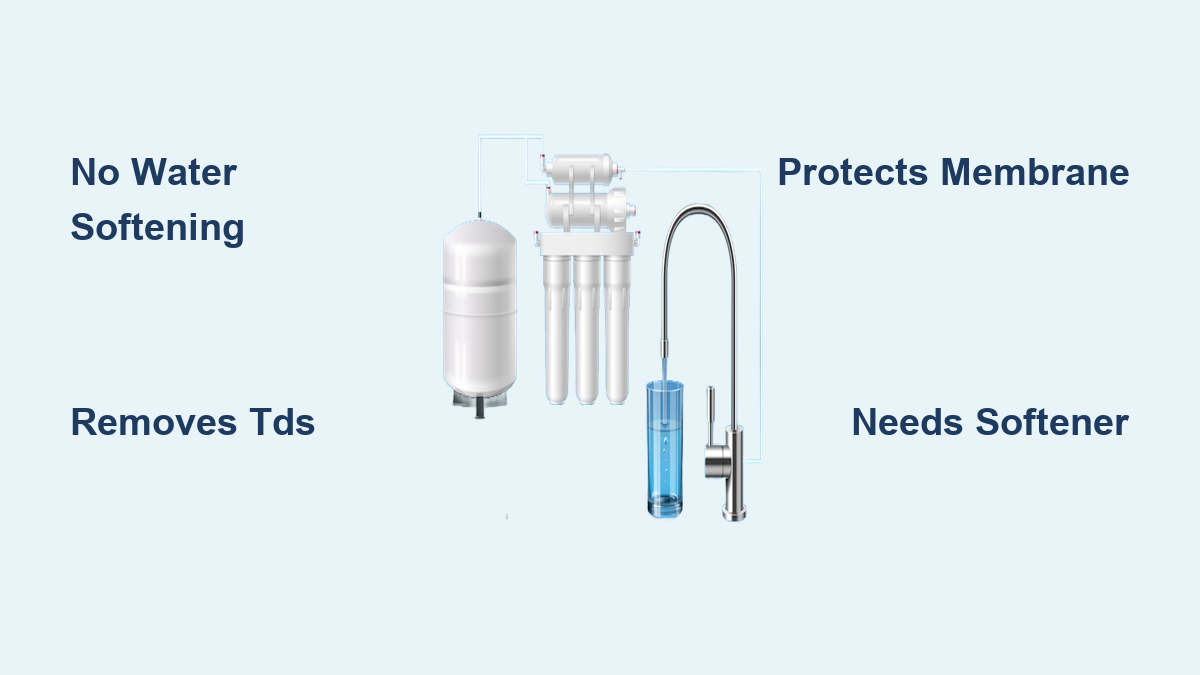
If you’ve spotted chalky buildup on your faucets, noticed your soap won’t lather properly, or felt dryness on your skin after every shower, you may be asking: does an RO system soften water? The clear answer is no. A reverse osmosis system does not function as a water softener, even though it removes some of the same minerals that cause hardness.
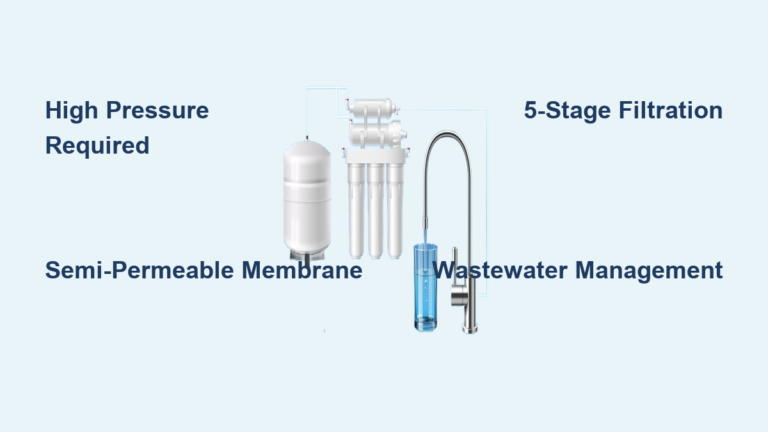
Hard water contains elevated levels of calcium and magnesium. These minerals create limescale in pipes, reduce appliance efficiency, and leave residue on dishes and skin. Water softeners solve this through ion exchange, swapping hardness minerals for sodium. RO systems use a semi-permeable membrane to filter impurities at a single tap, but they don’t treat your entire home’s water supply.
In this guide, you’ll learn how RO and water softeners differ, why RO can’t replace a softener, and how combining both delivers the cleanest, scale-free water possible. You’ll also get maintenance tips, myth-busting facts, and the ideal setup for your home.
Core Functions: RO vs. Water Softener

RO Purifies, Not Conditions
Reverse osmosis is a filtration technology built to produce clean drinking water. It forces water through a fine membrane under pressure, blocking contaminants while letting pure H₂O pass. This process removes up to 99% of lead, arsenic, nitrates, chlorine, PFAS, and microplastics.
However, RO does not alter water chemistry the way a softener does. It doesn’t use resin beads or salt to exchange ions, and it can’t handle the high mineral load of very hard water. Over time, calcium and magnesium can clog the RO membrane, shortening its lifespan. While RO lowers Total Dissolved Solids (TDS), including some hardness minerals, it’s not designed to soften water for whole-house protection.
Softeners Target Hardness Only
A water softener’s single purpose is eliminating hardness through ion exchange. As water flows through a tank of charged resin beads, calcium and magnesium ions are captured and replaced with sodium or potassium. The result is water that won’t form scale, lathers better, and protects your appliances.
Unlike RO, softeners don’t remove contaminants like lead, bacteria, or chemicals. They add a small amount of sodium to the water, which is negligible for most people but worth noting for those on sodium-restricted diets. Softeners treat all water entering your home, ensuring consistent results across every fixture.
How RO Affects Hard Water Minerals
Partial TDS Reduction
RO systems can reduce TDS by 85–99%, depending on membrane quality and pre-filtration. Since calcium and magnesium contribute to TDS, they are partially removed during filtration. Your RO tap water will have lower hardness than the incoming supply.
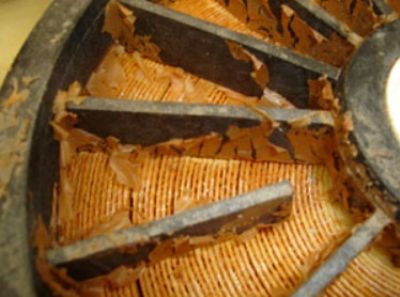
But this reduction is incidental, not functional softening. The system only treats a small fraction of your home’s water, typically 1–5 gallons per day. The rest of your plumbing stays exposed to hard water effects. If your feed water is very hard, the membrane becomes prone to scaling and needs more frequent replacement.
Membrane Vulnerability to Scale
Hard water is one of the biggest threats to RO membrane longevity. When calcium and magnesium precipitate inside the membrane, they form scale that restricts flow and reduces efficiency. This leads to:
- Lower water production
- Poor contaminant rejection
- Increased wastewater
- Premature membrane failure (as early as 1–2 years)
Without proper pre-treatment, even high-end RO systems struggle with hard water. Experts recommend installing a water softener before the RO unit in areas with hardness above 7–10 grains per gallon (gpg).
Why RO Isn’t a True Water Softener
No Ion Exchange Mechanism
The defining feature of water softening is ion exchange, a chemical process RO systems don’t perform. Softeners actively replace hardness ions with sodium; RO systems mechanically filter particles. This fundamental difference means RO cannot regenerate itself like a softener can.
Softeners have a brine tank and regeneration cycle that flushes accumulated minerals from the resin. RO systems lack this self-cleaning ability. Instead, they rely on pre-filters and periodic membrane replacement, making them unsuitable for continuous, whole-house conditioning.
Limited Flow Rate and Capacity
RO systems are built for point-of-use applications. Their flow rates are low (typically 50–100 gallons per day), and they produce water slowly due to pressure-driven filtration. They also generate wastewater, often 2–3 gallons for every 1 gallon purified.
Water softeners deliver whole-house treatment at full plumbing pressure, handling hundreds of gallons per day without waste. They’re designed for volume and durability, not precision filtration.
Signs You Need a Softener (Not Just RO)

Visible Scale Buildup
White, chalky deposits on showerheads, faucets, or inside kettles signal hard water. This scaling happens when calcium and magnesium precipitate out of heated water. RO systems won’t stop this because they don’t treat hot water lines or bathroom fixtures.
A true water softener prevents scale formation across all plumbing, keeping appliances efficient and surfaces spot-free.
Soap Scum and Spotty Dishes
Hard water reacts with soap to form sticky residue known as soap scum. It clings to bathtubs, sinks, and skin, making cleaning harder and leaving hair dull and skin dry. Dishes and glassware often come out of the dishwasher with cloudy spots from mineral deposits.
Softened water eliminates these issues by removing the minerals that interfere with cleaning. RO-treated water may taste better, but it won’t improve lather or prevent spots on dishes.
Stiff Laundry and Appliance Wear
Hard water makes laundry feel stiff and look faded. It also reduces detergent efficiency, requiring more product per load. More critically, scale buildup inside water heaters, washing machines, and dishwashers shortens their lifespan and increases energy costs.
Only a whole-house softener can protect these appliances. RO systems play no role in this type of protection.
Ideal Setup: Combining RO and a Water Softener

Feed RO with Softened Water
The best-performing systems use a staged approach: a whole-house softener first, followed by a point-of-use RO system. This setup offers multiple benefits:
- Extends RO membrane life by eliminating scale-forming minerals
- Improves RO efficiency and flow rate
- Reduces maintenance frequency
- Delivers sodium-free drinking water, since RO removes the sodium added by the softener
Contrary to common belief, softened water does not make RO output salty. The RO membrane removes over 95% of sodium, ensuring the final drinking water is clean and low in minerals.
Correct Plumbing Configuration
Many homes are plumbed incorrectly, sending hard water directly to the kitchen sink to avoid sodium in drinking water. This outdated practice harms the RO system and defeats the purpose of whole-house treatment.
Instead, follow these steps:
- Connect the main water line to the softener first
- Route softened water to all fixtures, including the RO feed
- Install the RO unit on the softened cold line under the sink
Some homeowners worry about sodium in softened water. For drinking, the RO system removes it. For cooking and bathing, sodium levels are typically too low to pose health risks.
Maintenance and Cost Comparison
RO System Upkeep
RO systems require regular maintenance to function properly:
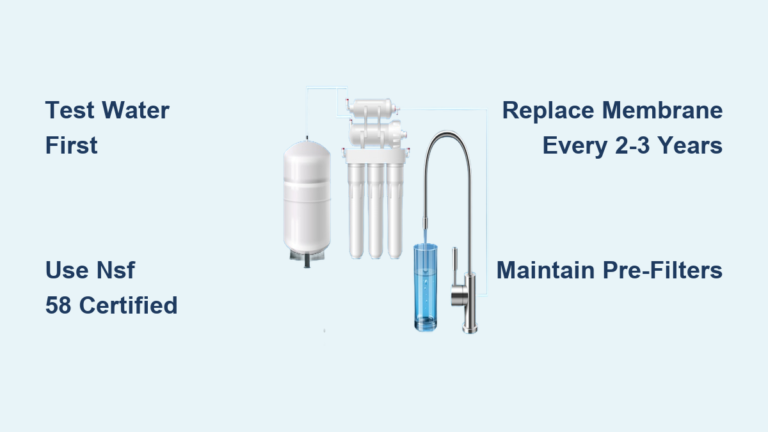
- Pre-filters: Replace every 6–12 months (sediment and carbon)
- Membrane: Replace every 2–5 years (longer with softened feed)
- Post-filter: Replace annually for taste polishing
- Sanitization: Perform yearly to prevent microbial growth
Ongoing costs are moderate, with filter kits ranging from $50–$150 per year depending on model and water quality.
Water Softener Maintenance
Softeners need less frequent but more involved care:
- Add salt pellets every 1–3 months, depending on hardness and usage
- Clean the brine tank annually to prevent mold or caking
- Check resin bed condition every few years
Salt costs are low, typically $5–$10 per month. Demand-initiated models optimize regeneration, saving water and salt.
Debunking Common Myths
“RO Removes Healthy Minerals”
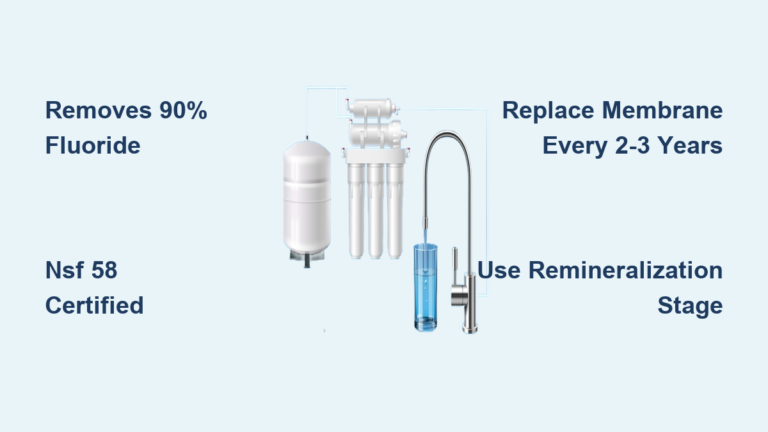
While RO removes trace minerals like calcium and magnesium, you get most of your dietary minerals from food, not water. The health risks of contaminants like lead, arsenic, and PFAS far outweigh the minimal mineral loss. For those concerned about taste, remineralization filters can add back beneficial minerals post-RO.
“Softened Water Is Unsafe”
The sodium added by softeners is generally minimal. For example, water with 10 gpg hardness gains about 80 mg of sodium per quart after softening, less than a slice of bread. Since RO removes sodium, your drinking water remains low-sodium.
“RO Softens Water”
This is a widespread misconception. RO reduces TDS, but it doesn’t prevent scale, improve lather, or protect plumbing. Calling RO a softener confuses purification with conditioning, two distinct goals requiring different technologies.
When to Choose Each System
Choose RO If You Have:
- Contaminated water (lead, nitrates, PFAS)
- High TDS affecting taste
- Microbial concerns
- Goal: Clean, safe drinking and cooking water
Choose a Softener If You Have:
- Hardness above 7 gpg
- Scale on fixtures or appliances
- Soap scum, spotty dishes, dry skin
- Goal: Protect plumbing and improve cleaning
Best Solution: Use Both
For comprehensive water treatment, combine:
- Whole-house softener at the main line
- Point-of-use RO at the kitchen sink
- Optional pre-filters for iron, chlorine, or sediment
This ensures every drop is protected and every glass is pure.
Frequently Asked Questions About RO and Water Softening
Does an RO system actually soften hard water?
No. An RO system reduces Total Dissolved Solids (TDS), which includes some calcium and magnesium, but it does not perform ion exchange. It cannot prevent scale buildup throughout your home or treat the full volume of water your household uses.
Can I use an RO system instead of a water softener?
If your primary concern is hard water damage to pipes, appliances, and fixtures, an RO system alone won’t help. RO only treats a small fraction of your water at one tap. A water softener is needed for whole-house scale prevention.
Will softened water damage my RO membrane?
No, softened water actually protects your RO membrane. By removing calcium and magnesium before they reach the RO unit, you extend membrane life and improve performance. Softened water is the ideal feed source for RO systems.
Does drinking softened water add too much sodium?
The sodium added by a softener is minimal for most hardness levels. For example, water at 10 gpg hardness gains about 80 mg of sodium per quart, less than a slice of bread. If you install an RO system downstream, it removes over 95% of that sodium from your drinking water.
How often do I need to replace RO filters?
Pre-filters and post-filters should be replaced every 6–12 months. The RO membrane typically lasts 2–5 years, but feeding it softened water can extend its life significantly. Annual sanitization is also recommended.
Can I install an RO system and softener at the same time?
Yes. The ideal setup is a whole-house softener at the main water line, followed by a point-of-use RO system at the kitchen sink. This configuration protects your plumbing, extends RO membrane life, and delivers the purest drinking water possible.
Key Takeaways for Understanding RO and Water Softening
An RO system does not soften water. It purifies it. If your goal is to eliminate scale, protect appliances, and improve cleaning, you need a water softener. If you want contaminant-free drinking water, RO is unmatched. For the best of both worlds, install a softener first, then feed your RO system with softened water. This powerful combination delivers complete water treatment, optimized performance, and peace of mind. Start by testing your water hardness and contaminant levels, then build your system from there.