Reverse Osmosis System Cost: 2026 Price Guide
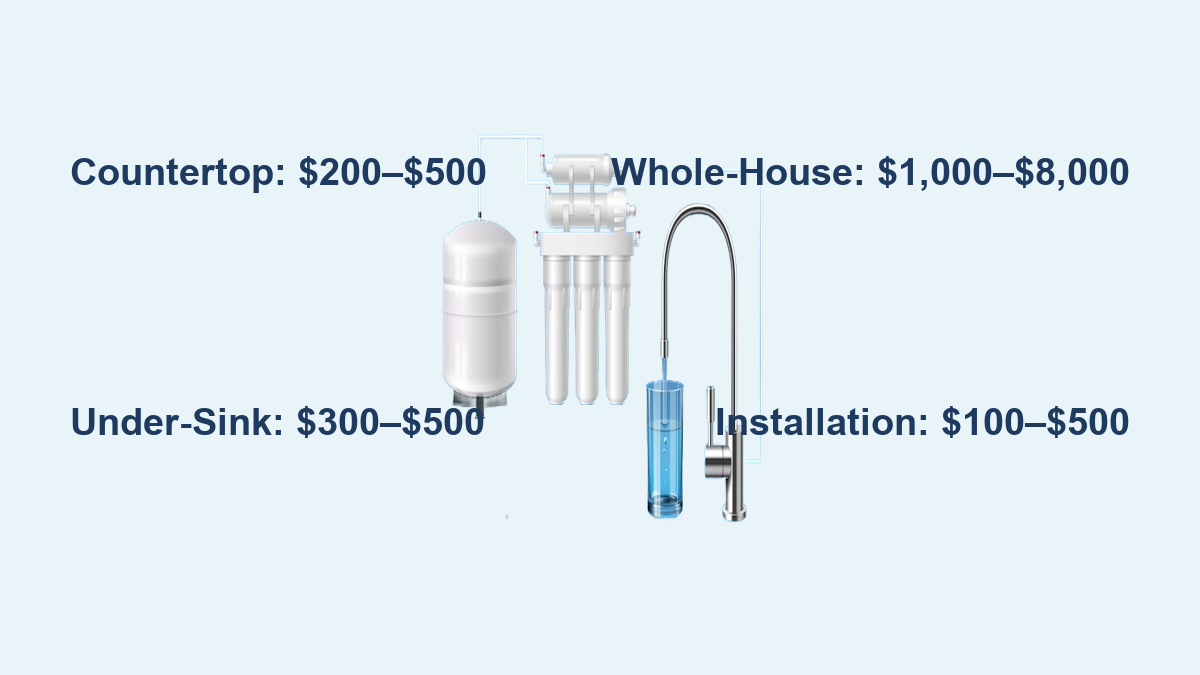
If you’re researching how much a reverse osmosis system costs, you’re likely weighing cleaner drinking water against a significant home investment. Prices in 2026 range from about $200 for a portable countertop unit to more than $8,000 for a whole-house setup. The wide gap reflects differences in capacity, filtration stages, and installation complexity.
This guide breaks down every expense tied to reverse osmosis system cost, including equipment, installation, maintenance, and long-term savings. You’ll learn what drives pricing, when DIY makes sense, and how to avoid overspending on features you don’t need.
Countertop Reverse Osmosis System Cost
Budget-Friendly and Portable Pricing
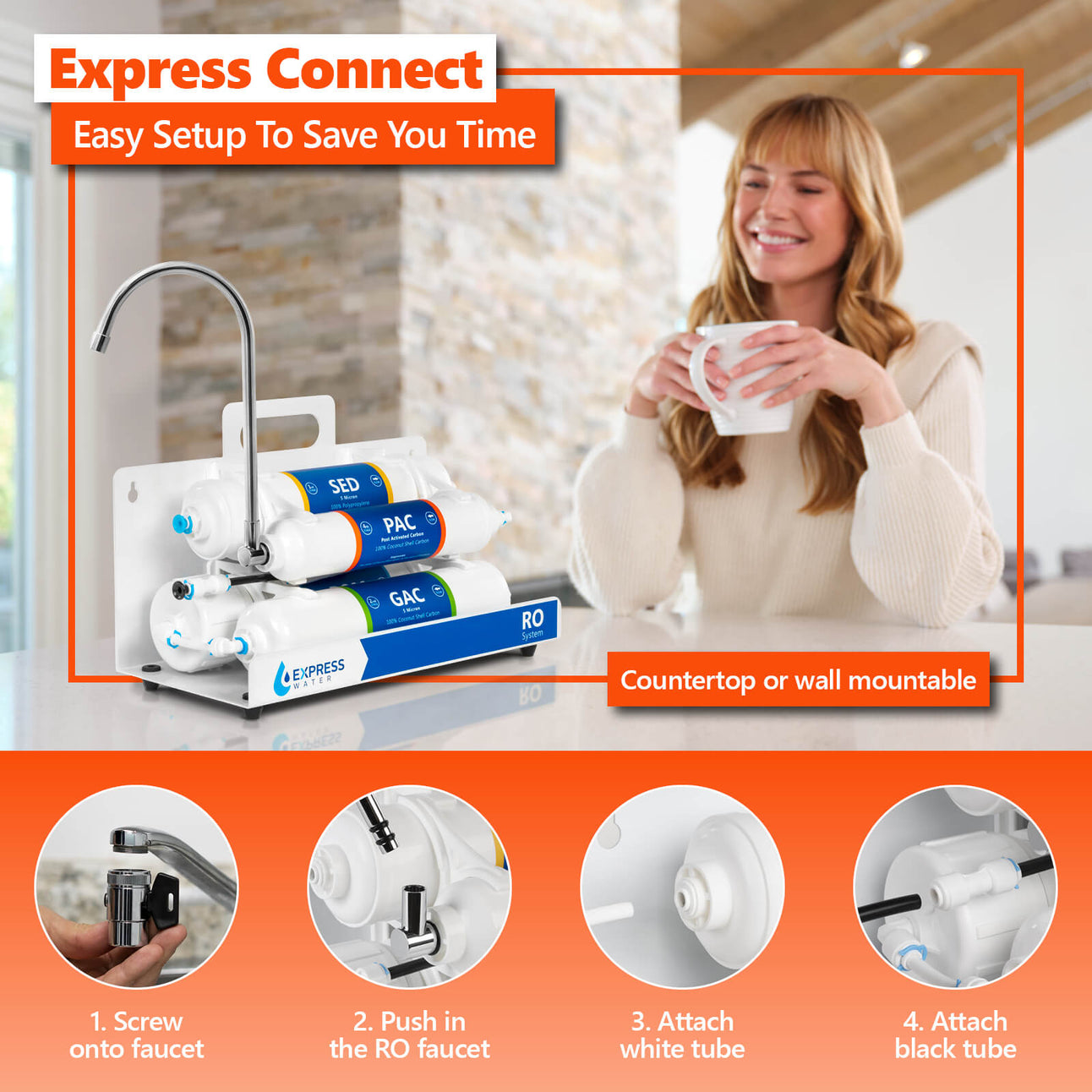
Countertop reverse osmosis systems are the most affordable entry point, typically priced between $200 and $500. These units sit on your counter and connect directly to your faucet through a diverter valve. No plumbing modifications are required, which makes them ideal for renters, small apartments, or temporary living situations.
High-end models with extras like TDS monitoring or instant hot and cold dispensing range from $300 to $800. They lack the hidden look of under-sink units, but their mobility and zero installation cost are hard to beat.
Zero Labor Costs
Because countertop systems attach to an existing faucet, professional installation is unnecessary. You save $300 to $500 in labor, and most manufacturers include setup guides that walk you through the process in under an hour.
Pro Tip: These systems produce roughly 50 to 100 gallons per day, making them best suited for one or two people. Larger households may find the output limiting.
Under-Sink Reverse Osmosis System Cost
Standard Tank vs. Tankless Models
Under-sink systems are the most popular choice for homeowners. Prices span $150 to $600 for traditional tank models and $350 to $1,200 for advanced tankless units.
- Tank models store filtered water for consistent flow at tap pressure. They cost less upfront but require cabinet space.
- Tankless models deliver water on demand. They cost more but save space and eliminate concerns about stagnant water sitting in a tank.
Professional Installation Adds $100 to $500
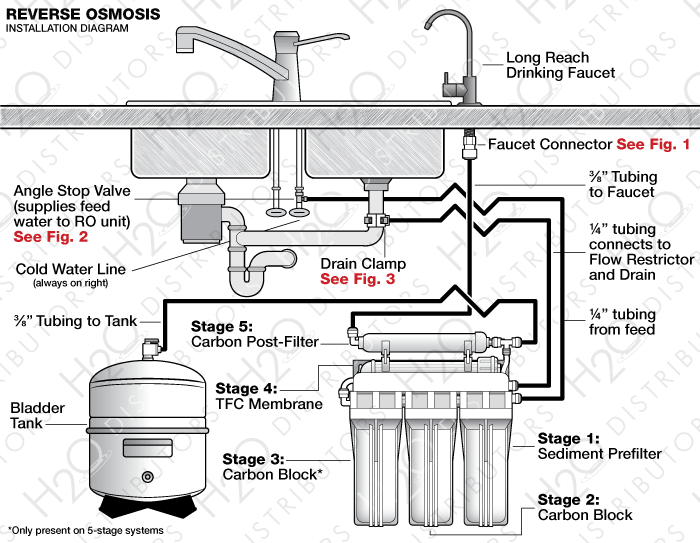
Most under-sink installations involve connecting to the cold water line, a drain, and a dedicated faucet. DIY is possible and saves $300 to $500, but complications can drive costs higher:
- Drilling through granite or quartz countertops: +$150 to $600
- Adding a new drain line or air gap: +$100 to $200
- Low water pressure below 45 psi: Requires a booster pump (+$100 to $300)
Warning: Always check your feed pressure and drain access before purchasing to avoid surprise expenses.
Choosing the Right Model
Ask yourself these questions before buying:
- Do you want instant hot water? (Adds $100 to $200)
- Is cabinet space limited? (Choose tankless)
- Do you value smart features like filter life tracking?
For most families, a $300 to $500 under-sink system with professional installation, totaling roughly $700 to $900, offers the best balance of performance and value.
Whole House Reverse Osmosis System Cost

Price Range: $1,000 to $8,000+
Whole house reverse osmosis systems treat every drop of water entering your home. They are ideal for well water, high TDS levels, or severe contamination. These are complex systems with significant upfront costs:
- Standard systems (200 to 2,500 GPD): $1,000 to $6,000
- High-capacity systems (4,000 to 7,000 GPD): $4,800 to $8,000+
- Average homeowner spend: Around $2,500 including installation
Materials account for roughly 89% of the cost, while labor makes up about 11%. However, installation complexity can still push labor into the thousands.
Space and Plumbing Requirements
Whole-house systems need:
- Access to the main water line
- A booster pump if pressure falls below 45 psi
- A storage tank ranging from 165 to 500 gallons
- A dedicated electrical outlet
Critical: Measure doorways and installation areas before purchase. A 500-gallon tank measures 64 inches in diameter and will not fit through narrow hallways.
When Whole-House RO Makes Sense
Consider this investment if:
- Your water contains lead, arsenic, or TDS above 1,000 ppm
- You rely on well water
- You want filtered water for showers, laundry, and appliances
For most city water users, a drinking-only under-sink system is far more cost-effective.
Filtration Performance and Efficiency
What Contaminants Does RO Remove?
Reverse osmosis forces water through a semipermeable membrane, removing up to 98.5% of sodium chloride along with a wide range of impurities:
- Heavy metals: Lead, arsenic, cadmium
- Chemicals: Chlorine, fluoride, pesticides, herbicides
- Microorganisms: Bacteria and viruses (with a UV add-on)
- Dissolved solids: Sulfates, nitrates, hardness minerals
Limitation: Standard RO membranes do not fully remove VOCs or dissolved gases without additional carbon filtration.
Wastewater Ratio: 3:1 vs. 2:1
Traditional RO systems waste 3 to 5 gallons for every 1 gallon of purified water. High-efficiency models like the Waterdrop G3P600 achieve a 2:1 ratio, cutting water waste nearly in half.
Impact: A family using 5 gallons of RO water daily may generate 10 to 25 gallons of wastewater. This can noticeably affect your water bill, especially with whole-house systems.
Flow Rate and Storage Considerations
- Tankless models dispense water slowly at first but improve over time.
- Tank models deliver water at tap speed once the tank fills.
- Large homes need higher GPD ratings (1,000+) to keep up with demand.
Key System Components and Upgrades
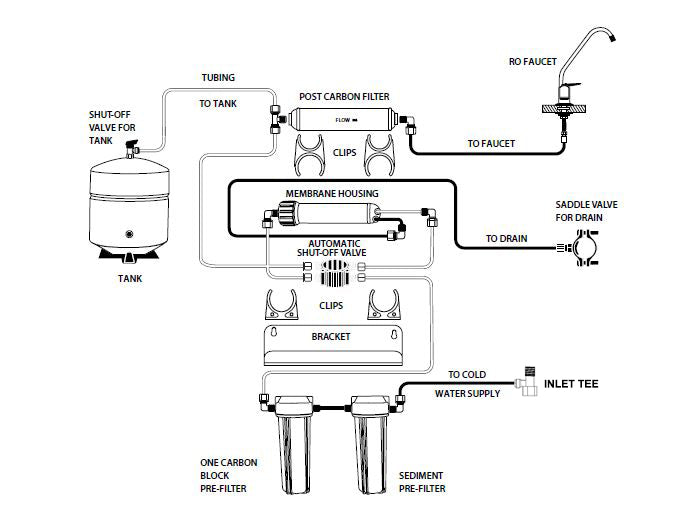
Standard 4-Stage Filtration Process
Every RO system includes these core stages:
- Sediment prefilter: Removes sand, rust, and silt
- Carbon block filter: Eliminates chlorine and bad tastes
- RO membrane: Removes dissolved solids (sizes range from 2.5″ to 4″)
- Post-filter: Polishes water and optionally remineralizes
Essential Upgrades for Whole-House Systems
- Remineralization filter: Adds calcium and magnesium, raises pH, and prevents pipe corrosion
- 300 to 2,500 GPD: Single Big Blue alkalizer
- 7,000 GPD: 2.0 cubic feet system
- UV sterilizer (12 GPM): Kills bacteria and viruses
- Booster pump: Required for low-pressure homes or high TDS water
Expert Note: Pure RO water has a pH below 6.4, making it corrosive to copper pipes. Always install a remineralizer in whole-house setups.
Maintenance and Long-Term Costs
Filter Replacement Schedule
Regular maintenance keeps your system running and your water safe:
- Prefilters (sediment and carbon): Replace every 6 to 12 months ($20 to $60 each)
- RO membrane: Replace every 2 to 3 years ($50 to $200)
- Annual maintenance cost: $100 to $300
Pro Tip: Subscribe to “Subscribe & Save” programs for 5% off filter deliveries.
Professional Inspections: $100 to $200 Per Year
Whole-house systems benefit from annual checkups. A plumber can:
- Test water pressure and flow
- Inspect for leaks
- Verify membrane performance
- Clean or replace filters
System Lifespan: 10 to 20 Years
With proper care, an RO system lasts 15 to 20 years. Membranes are the main wear item, while stainless steel pumps and housings endure for decades. Check warranty support before buying, as some brands offer 3 to 5 year coverage.
Installation: DIY vs. Professional
When to DIY
You can install these systems yourself:
- Countertop systems: 100% DIY
- Under-sink systems: If you have basic plumbing skills
- No drilling, no new lines, adequate space
Savings: $300 to $500 in labor.
Tools needed: Wrench, drill, tubing cutter, Teflon tape.
Most brands offer video tutorials and phone support to guide you.
When to Hire a Professional
Call a plumber if you need:
- Drilling through stone countertops
- Installing a whole-house system
- Feed pressure below 45 psi (booster pump needed)
- No nearby drain or electrical outlet
Labor for whole-house RO can exceed $1,000 due to complexity.
Pre-Installation Checklist
Before you buy:
- Test your water: $20 to $50 for a home kit or $50 to $250 for lab testing
- Check water pressure: Must be above 45 psi
- Measure cabinet or utility space
- Confirm drain access and power outlet availability
Cost vs. Alternatives: Is RO Worth It?
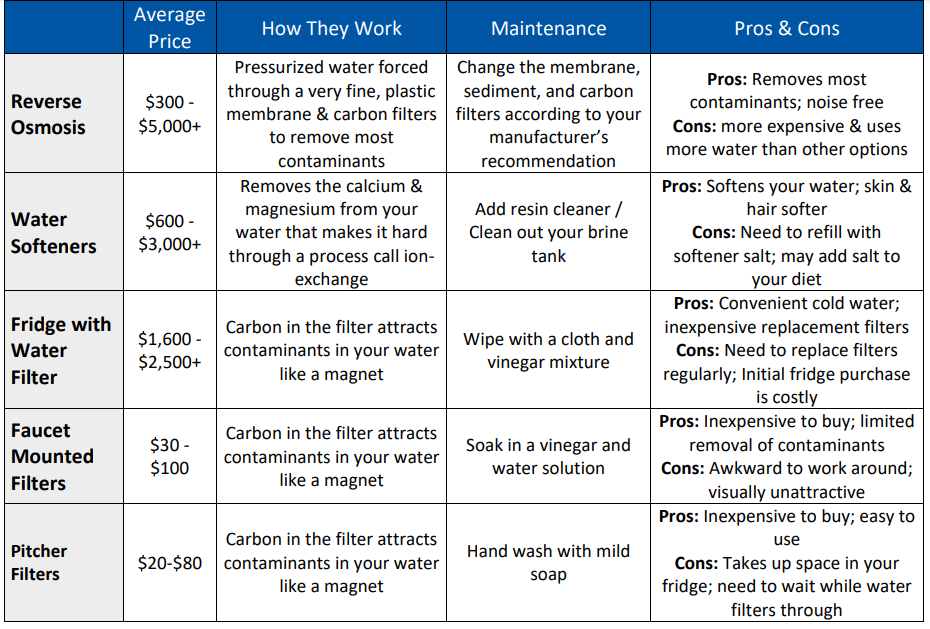
RO vs. Other Filtration Systems
| System Type | Cost Range | Best For |
|---|---|---|
| Reverse Osmosis | $150 to $8,000+ | Complete purification (metals, chemicals, microbes) |
| Activated Carbon | $300 to $900 | Taste, odor, chlorine removal |
| UV Sterilizer | $500 to $1,500 | Killing bacteria and viruses only |
| Water Softener | $600 to $5,000 | Hard water only (no chemical filtration) |
| Well Water System | $1,000 to $5,000 | Iron, sulfur, sediment removal |
Key Insight: RO is the only system that removes both dissolved solids and heavy metals effectively. For homes with unsafe water, it often replaces multiple systems, delivering long-term savings.
Return on Investment
- Eliminates bottled water: Saves $500 to $1,000 per year for a family
- Protects appliances: Reduces scale in coffee makers and ice machines
- Improves skin and hair: Soft, filtered water is gentler
- Pays for itself in 2 to 5 years for heavy bottled water users
Smart Buying Tips to Save Money
Assess Your Real Needs
Avoid overspending by asking:
- Do you need whole-house filtration or just drinking water?
- Is your water municipal or well?
- Are your concerns chemicals, metals, or hardness?
Most homes only need an under-sink RO system, totaling $700 to $1,200 with installation.
Look for Certified Systems
Choose models with NSF/ANSI certifications:
- Standard 42: Taste and odor
- Standard 53: Health contaminants (lead, cysts)
- Standard 58: RO system performance
- Standard 401: Emerging contaminants (pharmaceuticals)
Certified systems prove their claims, unlike uncertified alternatives.
Time Your Purchase for Deals
Big discounts happen during:
- Black Friday and Cyber Monday
- Prime Day (July)
- Earth Day (April)
- Labor Day
Look for bundle deals with free filters or installation credits.
Environmental and Health Benefits
Cut Plastic Waste
The average American uses 156 plastic bottles per year. An RO system eliminates that waste, saving thousands of bottles over its lifespan.
Improve Water Taste
RO water tastes clean but can feel flat due to mineral removal. Adding a remineralization filter restores a smooth, balanced flavor while protecting your plumbing.
Prevent Health Risks
RO removes lead, arsenic, nitrates, and other toxins linked to:
- Developmental issues in children
- Cancer
- Kidney damage
For families, the health value far outweighs the upfront cost.
Frequently Asked Questions About Reverse Osmosis System Costs
How much does a reverse osmosis system cost on average?
Most homeowners spend between $700 and $1,200 for an under-sink system with professional installation. Countertop units average $200 to $500, while whole-house systems range from $1,000 to $8,000+ depending on capacity.
Are reverse osmosis systems expensive to maintain?
Annual maintenance typically costs $100 to $300, including prefilters ($20 to $60 each, replaced every 6 to 12 months) and membrane replacement ($50 to $200 every 2 to 3 years).
Can I install a reverse osmosis system myself?
Yes, countertop and most under-sink systems are DIY-friendly. You can save $300 to $500 in labor. However, whole-house systems and installations requiring granite drilling should be handled by a professional.
Do reverse osmosis systems waste a lot of water?
Traditional systems waste 3 to 5 gallons per gallon of purified water. High-efficiency models achieve a 2:1 ratio, cutting waste significantly. Whole-house systems can noticeably increase monthly water bills.
Is a reverse osmosis system worth the investment?
For households buying bottled water or dealing with contaminants like lead or arsenic, RO pays for itself in 2 to 5 years through bottled water savings, appliance protection, and health benefits.
Key Takeaways for Budgeting Your Reverse Osmosis System
The reverse osmosis system cost in 2026 ranges from $200 for a countertop model to $8,000+ for whole-house setups. Most homeowners spend $700 to $1,200 for an under-sink system with professional installation. High-efficiency models reduce wastewater, and proper maintenance keeps long-term costs manageable.
Before purchasing, test your water, measure your installation space, and confirm your feed pressure. Choose NSF/ANSI certified systems, time your purchase around major sales, and decide whether you need drinking-water filtration or whole-house treatment. With the right system, you’ll enjoy safe, great-tasting water and a strong return on your investment for 15 to 20 years.

