How to Purify Dirty Water
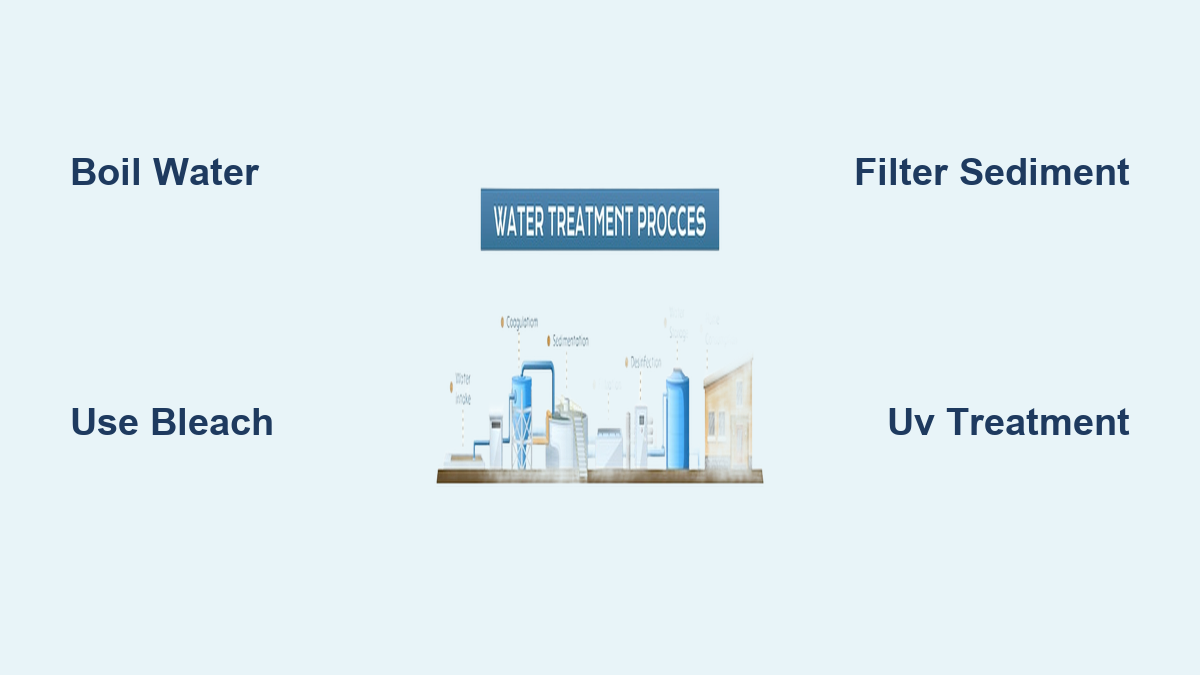
You’re stranded after a storm, hiking off-trail, or prepping for emergencies, and your water source is murky, possibly contaminated, and undrinkable as-is. The good news is that with the right knowledge, you can purify dirty water using accessible tools and techniques, from boiling to DIY filters. Even crystal-clear streams can harbor invisible threats like Giardia, E. coli, or viruses. No natural water should ever be consumed without treatment.
This guide breaks down proven, science-backed methods to purify dirty water, step by step. You’ll learn how to pre-filter sediment, kill pathogens with heat or chemicals, remove toxins, and build emergency systems when gear fails. Whether you’re in a survival situation or stocking your emergency kit, these techniques ensure safe hydration. We’ll also reveal which methods work alone and which must be combined, because relying on the wrong one could make you sick.
Source Selection and Pre-Filtration

Before purification, start with the safest possible water source and remove visible debris. Skipping this step reduces the effectiveness of boiling, chemicals, and filters.
Choose the Cleanest Water Source
Prioritize flowing water like mountain springs, fast-moving streams, or rainwater collected in clean containers. Flowing water is less likely to host stagnant pathogens than ponds or swamps. Avoid water near animal trails, campsites, or agricultural runoff, which may contain fecal bacteria or chemicals.
If collecting from a lake, gather from the surface near the shore or inlet, and avoid shallow, muddy edges. Even clear-looking water can carry Cryptosporidium or viruses, so always treat it before drinking.
Use Cloth or Coffee Filters to Pre-Filter
Pour dirty water through a clean cloth, coffee filter, bandana, or paper towel to remove leaves, silt, and organic matter. This step is critical because turbid water shields microbes from UV light and reduces chemical disinfection efficiency.
For heavily cloudy water, let it sit in a container for 1–2 hours. Sediment will settle, and you can carefully pour off the clearer top layer for treatment. Never skip pre-filtration, as it extends the life of filters and ensures disinfectants work properly.
Boiling Water for Safety
Boiling is the most reliable method to kill bacteria, viruses, and parasites. It requires only heat and time, but it won’t remove chemicals or heavy metals.
Boil at Correct Altitude
At sea level to 6,500 feet, bring water to a rolling boil for 1 minute. Above 6,500 feet, extend to 3 minutes due to lower boiling points. Use a lid to speed up boiling and conserve fuel.
After boiling, let water cool before drinking. Boiling destroys pathogens but concentrates non-volatile contaminants like lead or nitrates. If chemical pollution is suspected, combine boiling with carbon filtration.
Use Stone Boiling Without Metal Pots
No heat-safe container? Try stone boiling. Heat dry, non-porous stones in a fire for 10–15 minutes. Use wooden tongs to transfer them into a wooden, stone, or leather vessel filled with water.
Add stones one by one until the water boils. Let it sit for 5 minutes after the last stone. Remove cooled stones and let water cool. This method works when standard pots aren’t available. Just avoid wet river rocks that may crack or explode.
Use Chemical Disinfection Correctly
Chemical treatments are lightweight and effective but require precise dosing and wait times. They don’t remove particles, so pre-filter first.
Treat With Household Bleach
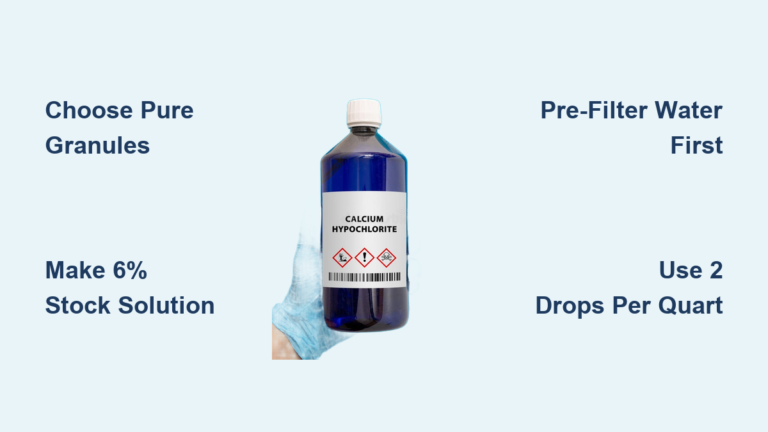
Use unscented bleach with 5–8% sodium hypochlorite (no dyes, fragrances, or thickeners). For 1 gallon (3.78 L) of clear water, add 4 drops (1/8 tsp). For cloudy water, double to 8 drops.
Stir well and wait 30 minutes. A faint chlorine smell should be detectable. If not, repeat the dose and wait another 30 minutes. Bleach kills most bacteria and viruses but is less effective against Cryptosporidium.
Store bleach in a cool, dark place because heat and sunlight degrade it. Replace every 6–12 months.
Apply Iodine With Caution
Iodine tablets or drops kill bacteria and viruses but not Cryptosporidium. Use 2 tablets per liter of clear water, 3 for cloudy. Wait 30 minutes; if water is cold (below 5°C), wait 1 hour.
To reduce the harsh taste, add vitamin C (ascorbic acid) or a neutralizing tablet after treatment. Do not use iodine if pregnant, if thyroid issues exist, or for more than 3 weeks continuously.
Avoid expired iodine because it loses potency and may not disinfect.
Choose Chlorine Dioxide for Broad Protection
Chlorine dioxide tablets are the gold standard for chemical treatment. They kill bacteria, viruses, and Cryptosporidium. Drop one tablet per liter, stir, and wait 30 minutes to 4 hours depending on brand and water conditions.
Follow package instructions exactly. These tablets are ideal for long hikes or uncertain water sources. They leave little aftertaste and work well in cold water.
Use Physical Filtration Systems

Filters remove particles, bacteria, and protozoa, but not all remove viruses. Choose based on pore size and design.
Pick Filters With 1-Micron Pore Size
For backpacking or emergencies, use a 0.2 to 1-micron absolute filter. These remove Giardia, Cryptosporidium, and bacteria. Brands like Sawyer, LifeStraw, or Katadyn meet this standard.
Squeeze filters or gravity systems (e.g., MSR Guardian) are ideal for groups. Straw-style filters work for immediate drinking, but never store filtered water in them.
Note: Most portable filters do not remove viruses unless labeled “virus-removing” or paired with UV or chemical treatment.
Use Activated Carbon for Chemical Removal
Many filters include activated carbon (often from coconut shells) to adsorb chlorine, pesticides, herbicides, and industrial chemicals. Carbon blocks are more effective than granular carbon due to longer contact time.
While carbon improves taste and safety from toxins, it does not kill microbes. Use after mechanical filtration or in multi-stage systems like Berkey or LifeStraw Mission.
Replace carbon filters as recommended, because once saturated, they stop working and can leach contaminants.
Deploy Reverse Osmosis for Total Purity
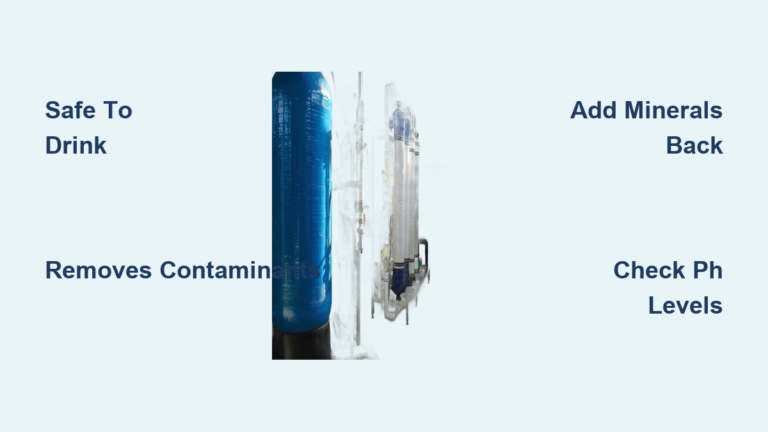
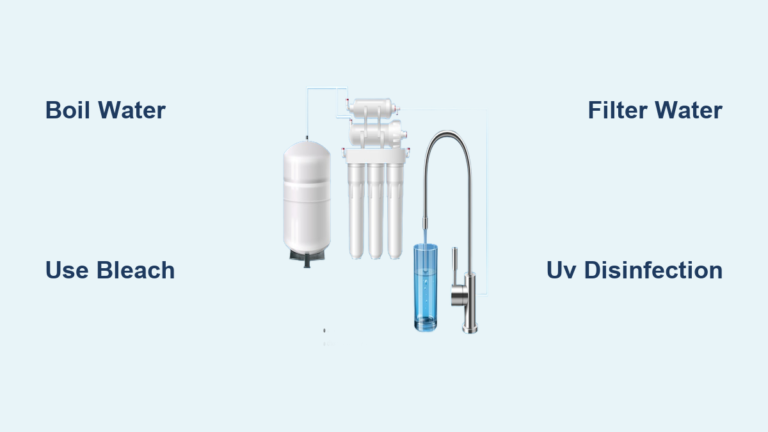
Reverse osmosis (RO) forces water through a semi-permeable membrane, removing up to 99% of contaminants, including salts, heavy metals, nitrates, and microbes.
RO systems are not portable without special gear but are ideal for home emergency setups or desalination. They waste 3–5 gallons for every gallon purified and remove beneficial minerals, so consider remineralizing afterward.
For coastal survival, portable RO units (e.g., Survivor 06) can turn seawater into drinkable water with manual pumping.
Try Solar and UV Purification
Sunlight and UV light can disinfect water, but only under the right conditions.
Use SODIS in Sunny Conditions
Solar Water Disinfection (SODIS) uses UV-A rays and heat to kill pathogens. Fill clear PET plastic bottles with pre-filtered water. Place them on a reflective surface (like metal or sand) in direct sunlight.
- 6 hours in full sun
- 2 full days if cloudy
Water must be low in turbidity. If you can’t see through the bottle, pre-filter first. SODIS does not remove chemicals and won’t work with glass or colored plastic.
This method is ideal for humanitarian or off-grid use with no electricity.
Use UV Pens With Clean Water
UV purifiers (e.g., SteriPEN) emit UV-C light that destroys microbial DNA. Stir the device in 1 liter of water for 45–90 seconds, depending on model.
Critical: Water must be clear and pre-filtered. Particles can shield microbes. Ensure batteries are fully charged, because low power means incomplete disinfection.
UV works fast and leaves no taste but adds no residual protection. Treat water just before drinking.
Build a DIY Water Filter
No filter? Build one from common materials. These systems remove sediment and some chemicals, but must be followed by disinfection.
Construct a Bottle Filter
- Cut the bottom off a plastic bottle. Poke 4–5 small holes in the cap.
- Layer from bottom to top:
– Cloth or cotton (prevents media leakage)
– Fine sand (traps small particles)
– Crushed activated charcoal (rinsed well to remove chemicals)
– Coarse sand and gravel
– Large rocks and top cloth (distributes flow) - Pour water slowly into the top. Collect output below.
- Filter twice for better clarity. Then boil or treat chemically before drinking.
Use aquarium sand and rinsed charcoal from old filters or grills. Never use charcoal from fireplaces.
Use Natural Materials Wisely
Some plants aid filtration:
- Crushed coconut husk improves flow and adsorption
- Oregon grape bark contains antimicrobial berberine
- Citrus seeds have mild purifying compounds
Warning: Only use if you can positively identify plants. Mistakes can introduce toxins.
Compare Methods With Contaminant Matrix
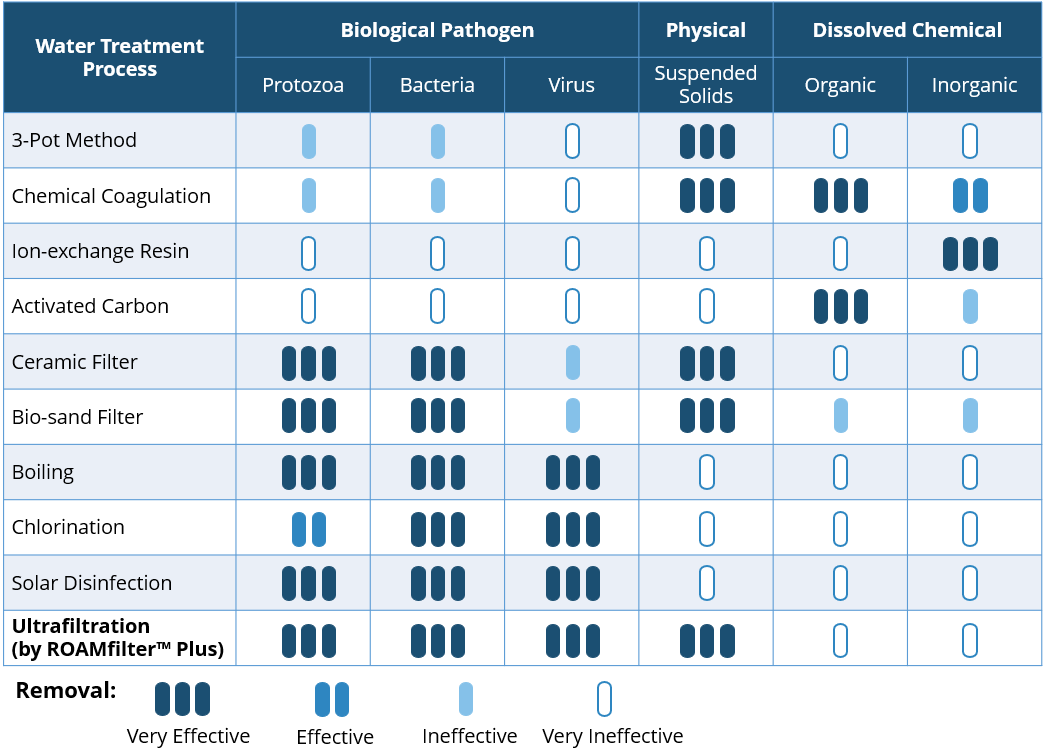
Not all methods remove all threats. Use this guide to pick the right combination:
| Contaminant | Best Removal Method |
|---|---|
| Bacteria (E. coli) | Boiling, chlorine, filter, UV |
| Viruses (Norovirus) | Boiling, chlorine, chlorine dioxide, UV, RO |
| Protozoa (Giardia) | Boiling, filter (1 micron), chlorine dioxide |
| Chemicals (pesticides) | Carbon filter, RO, distillation |
| Heavy Metals (lead) | RO, distillation, Berkey-style filters |
| Salt (seawater) | RO, distillation |
| Sediment (mud) | Cloth, sand filter, gravity system |
No single method removes everything. Combine approaches for full protection.
Follow Safety and Storage Rules
Even properly treated water can become unsafe if stored incorrectly.
Avoid Health Risks From Chemicals
- Iodine: Not for pregnant women or thyroid patients
- Bleach: Use only food-safe, unscented types
- DBPs: Pre-filter organic matter to reduce disinfection byproducts
If you suspect industrial pollution or heavy metals, do not drink. Find another source.
Store Purified Water Safely
Use clean, sealed containers made of food-grade plastic or glass. Sanitize with bleach (1 tsp per gallon) before filling.
Add a pinch of chlorine (1–2 drops per gallon) to prevent recontamination during long storage. Keep containers out of sunlight and heat.
Replace stored water every 6 months.
Build a Complete Emergency Water Plan
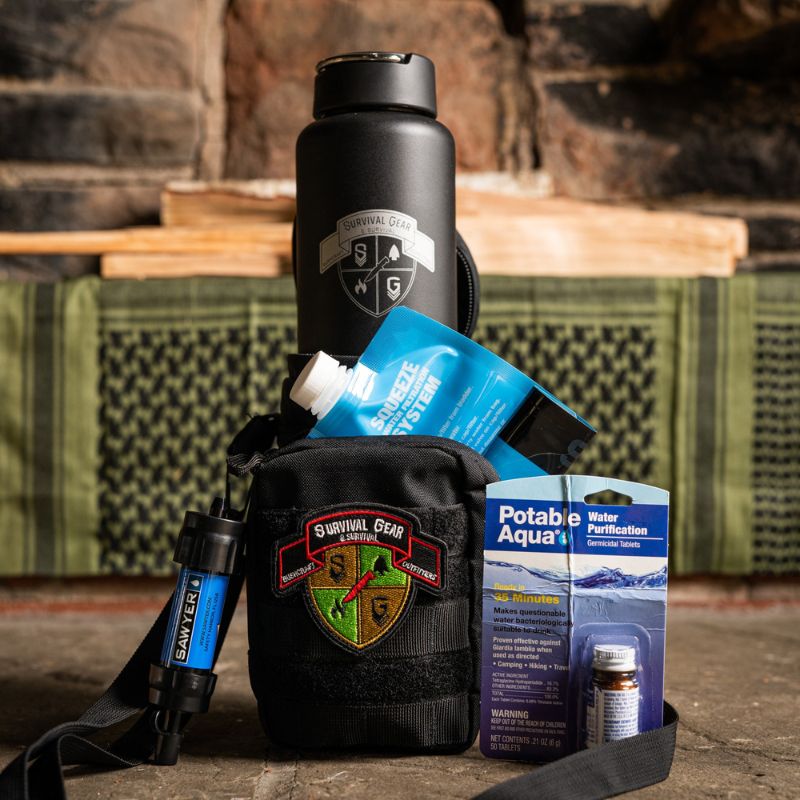
Relying on one method is risky. Use a multi-barrier approach for safety.
Combine 3 Layers of Protection
- Pre-filter with cloth or sand to remove debris
- Disinfect with boiling, chlorine dioxide, or UV
- Polish with carbon to remove chemicals and improve taste
Example: Filter river water through a bandana, treat with chlorine dioxide, then pour through a carbon filter.
Prepare For Home and Wilderness
- At home: Store water, add a gravity filter (e.g., Berkey), and keep backup chemical tablets
- In the wild: Carry a Sawyer filter, chlorine dioxide tablets, and a metal bottle for boiling
Practice all methods before an emergency. Knowing how to purify dirty water could save your life.
Frequently Asked Questions About Water Purification
What Is the Fastest Way to Purify Water in an Emergency?
Boiling is the fastest and most reliable method when fuel is available. Bring water to a rolling boil for 1 minute (3 minutes above 6,500 feet). If no heat source exists, chemical disinfection with chlorine dioxide tablets works in 30 minutes to 4 hours.
Can You Purify Dirty Water With Household Bleach?
Yes, but only use unscented bleach with 5–8% sodium hypochlorite. Add 4 drops per gallon of clear water or 8 drops for cloudy water. Wait 30 minutes. Bleach kills bacteria and viruses but is less effective against Cryptosporidium.
Do Water Filters Remove Viruses?
Most portable filters do not remove viruses because viruses are smaller than bacteria. To remove viruses, you need a filter specifically labeled “virus-removing,” reverse osmosis, or you must combine filtration with boiling, UV light, or chemical treatment.
Is Boiled Water Safe to Drink Immediately?
Yes, once it cools to a drinkable temperature. Boiling kills pathogens but does not remove chemicals or heavy metals. If you suspect chemical contamination, use carbon filtration in addition to boiling.
How Long Does Purified Water Stay Safe in Storage?
Properly stored purified water in clean, sealed containers can last up to 6 months. Add 1–2 drops of bleach per gallon for long-term storage and keep containers out of sunlight and heat.
Key Takeaways for Purifying Dirty Water Safely
You now have the complete toolkit to purify dirty water anywhere, anytime. Always start with the cleanest source, pre-filter to remove sediment, then apply heat, chemicals, or filtration. When in doubt, combine methods because no single technique removes every contaminant.
Boiling kills pathogens, carbon removes toxins, and filters clear cloudiness. Store treated water in clean, sealed containers and replace it every 6 months. Practice these methods before an emergency so you can act quickly under pressure.
Your next step: Build a basic emergency kit with a portable filter, chlorine dioxide tablets, and a metal pot for boiling. Test each method at home so you’re ready when it counts.