How to Choose a Water Purifier
If you’ve ever poured a glass of tap water and noticed an odd smell, cloudy appearance, or metallic taste, you’re not alone. Millions of households face similar concerns—whether from aging pipes, industrial runoff, or unregulated well water. But how to choose a water purifier that actually fits your situation? With so many models, technologies, and marketing claims, the decision can feel overwhelming. The truth is, there’s no one-size-fits-all solution. Choosing the right water purifier starts with understanding your water, not the product brochure.
This guide cuts through the noise using data-driven steps so you can make a confident, informed choice. You’ll learn how to test your water, match technology to specific contaminants, pick the right form factor, verify certifications, and avoid common mistakes that waste money.
Test Your Water Before Buying Anything

Before purchasing any filter, know what you’re filtering. Assuming your tap water is safe—or assuming it’s dangerous—can lead to poor choices and wasted money.
Get Your Water Quality Report
Start with your Consumer Confidence Report (CCR). If you’re on municipal water, your utility must send this annually. It lists detected contaminants like lead, nitrates, and disinfection byproducts, along with levels compared to EPA standards.
Be cautious: this report reflects water quality before it enters your home. If your house has lead pipes (common in homes built before 1986), the water at your tap could be far more contaminated than the report suggests.
Test Well or Suspect Water
No CCR? You likely have a private well and full responsibility for safety. Test annually for coliform bacteria and nitrates. For a complete profile, use a certified lab kit to check for:
- Lead
- Arsenic
- PFAS (forever chemicals)
- VOCs (pesticides, solvents)
- Hardness and silica
Don’t rely on test strips. They’re inaccurate for health-critical contaminants. A $50 lab test can prevent a $500 mistake.
Measure TDS Levels
Use a TDS meter (under $20) to measure Total Dissolved Solids. This number guides your technology choice:
- Under 200 ppm: Low mineral content; RO may be overkill
- 200–500 ppm: Moderate; consider nanofiltration or sensing systems
- Over 500 ppm: High dissolved solids; RO likely needed
WHO recommends 100–300 ppm for ideal drinking water. High TDS isn’t just about taste; it signals potential heavy metals and salts requiring advanced filtration.
Match Technology to Your Specific Contaminants
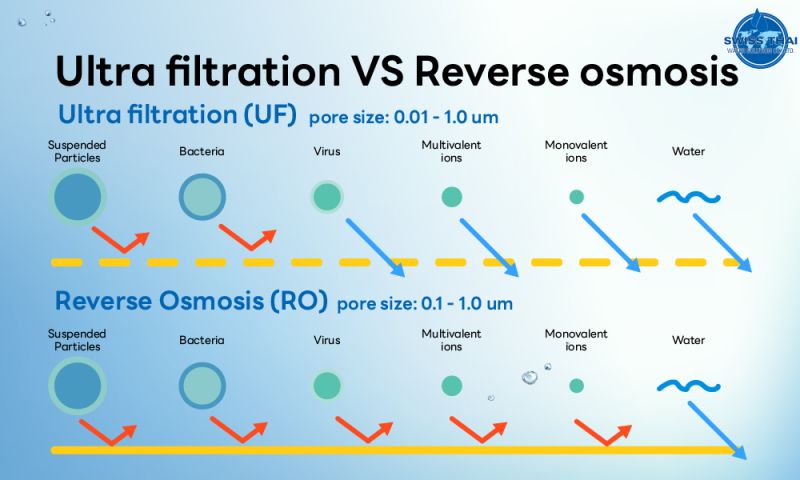
No single filter removes everything. Pick the technology that targets your actual threats.
Remove Heavy Metals and PFAS: Use Reverse Osmosis
Reverse Osmosis (RO) is the gold standard for chemical and heavy metal removal. It forces water through a 0.0001-micron membrane, removing:
- 99% of lead, arsenic, and fluoride
- Over 95% of PFAS, nitrates, and perchlorate
- Most bacteria and viruses
However, RO has downsides:
- Wastes 3–5 gallons for every 1 gallon purified
- Removes beneficial minerals like calcium and magnesium
- Requires electricity and under-sink space
Best for groundwater, borewells, or homes with confirmed lead or PFAS. Avoid if your TDS is under 500 ppm—RO wastes water and strips minerals unnecessarily.
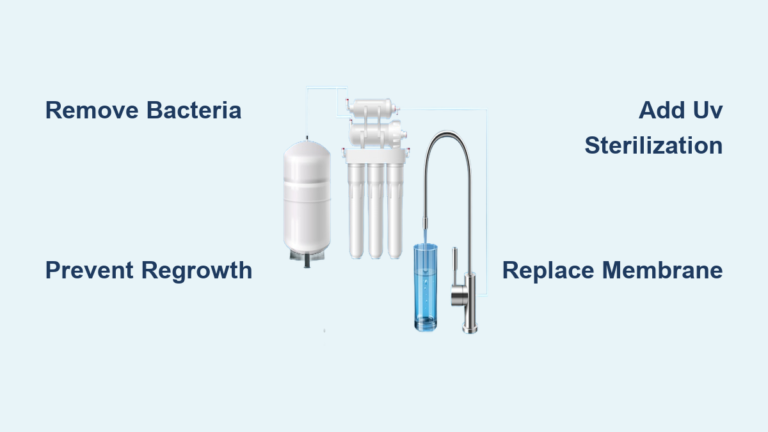
Kill Bacteria and Viruses: Use UV or UF
If microbiological safety is your main concern, UV or Ultrafiltration (UF) is smarter than RO.
UV Purification:
- Uses UV-C light to destroy pathogen DNA
- Removes 99.99% of bacteria and viruses
- Requires electricity and clear water (pre-filter needed)
- Does not remove chemicals or TDS
Ultrafiltration (UF):
- 0.01-micron pores block bacteria, cysts, and sediment
- No electricity or pressure needed
- Retains minerals and doesn’t waste water
- Less effective against viruses without additional treatment
Best for municipal water with low TDS but microbial risk. Often paired with carbon for full protection.
Improve Taste and Remove Chlorine: Use Carbon
Activated carbon excels at removing:
- Chlorine and chloramine
- VOCs (pesticides, solvents)
- Bad tastes and odors
It’s often used as a pre- or post-filter in RO/UV systems. Limitations include inability to remove inorganic contaminants like arsenic, fluoride, or dissolved salts. Best for final polishing in hybrid systems or standalone use in low-risk areas.
Soften Hard Water: Use Ion Exchange
Hard water causes scale buildup. A water softener uses ion exchange to replace hardness ions with sodium or potassium.
- Typically a whole-house (POE) system
- Protects plumbing and appliances
- Not a drinking water solution alone—pair with carbon or RO
Choose the Right Form Factor for Your Situation

Your living situation, space, and usage determine the best setup.
For Renters or Small Spaces: Pitchers or Countertop
Water Filter Pitchers:
- Cost: $20–$140
- Pros: No installation, portable, fridge-friendly
- Cons: Slow, small capacity, frequent filter changes
- Best for tackling taste, chlorine, or light lead—ideal for one or two people
Countertop Filters:
- Cost: $30–$300
- Pros: No plumbing, larger capacity, better filtration than pitchers
- Cons: Takes counter space, may need manual filling
- RO models (like AquaTru) offer lab-grade filtration without under-sink setup
Best for renters needing strong filtration without permanent changes.
For Homeowners: Under-Sink or Whole-House
Under-Sink Filters:
- Cost: $86–$700+
- Pros: Hidden, high flow, dedicated faucet, removes lead, PFAS, VOCs
- Cons: Requires installation, uses cabinet space
- Best for families, high water use, serious contamination
Whole-House (POE) Systems:
- Cost: $1,000–$3,500+ installed
- Pros: Filters all water—shower, laundry, kitchen
- Cons: Expensive, needs professional install
- Best for homes with hard water, high sediment, or iron
Add a shower filter ($50–$150) to reduce chlorine exposure during bathing.
Verify Certifications—Don’t Trust Marketing Alone

“Removes 99% of contaminants” means nothing without proof. Always check for NSF/ANSI certifications.
Key Certifications to Look For:
- NSF 42: Taste, odor, chlorine, sediment
- NSF 53: Lead, asbestos, cysts, VOCs
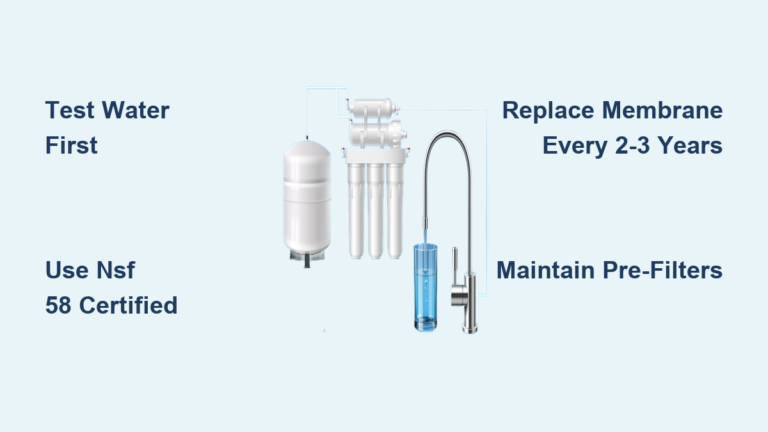
- NSF 58: Reverse Osmosis performance (arsenic, fluoride, PFAS)
- NSF 401: Emerging contaminants (pharmaceuticals, pesticides)
- PFOA/PFOS Reduction: Specific PFAS removal claim
Red flags:
- “Lab tested” without third-party certification
- Unrecognized lab names or fake seals
- “BPA-Free” highlighted as a filtration benefit (it’s about plastic safety, not purification)
Avoid Common Mistakes That Waste Money
Even the best purifier fails if you skip critical steps.
Don’t Ignore Maintenance
A clogged or expired filter is worse than no filter—it can leach trapped contaminants back into your water.
- Pitchers: Replace every 2 months
- Faucet/Countertop: Every 3–6 months
- Under-sink/RO: Pre-filters every 6–12 months; membrane every 2–5 years
Set phone reminders or choose models with filter life indicators.
Don’t Assume Boiling Is Enough
Boiling kills bacteria but concentrates lead, nitrates, and chemicals. It does not purify chemically contaminated water.
Don’t Use Counterfeit Filters
Cheap third-party filters may look identical but perform poorly. Stick to certified replacements.
Don’t Overpay for Gimmicks
Alkaline Filters: Claim to boost pH for health. No strong evidence of benefit; may interfere with digestion.
TDS Adjusters: Mix raw water back into purified water. If raw water has contaminants, you’re recontaminating it.
Copper Infusion: Adds copper ions for wellness. Excess copper is toxic—only use if you can disable the feature.
Exception: Mineral cartridges that add calcium/magnesium to RO water improve taste and balance pH safely.
Calculate Total Cost of Ownership
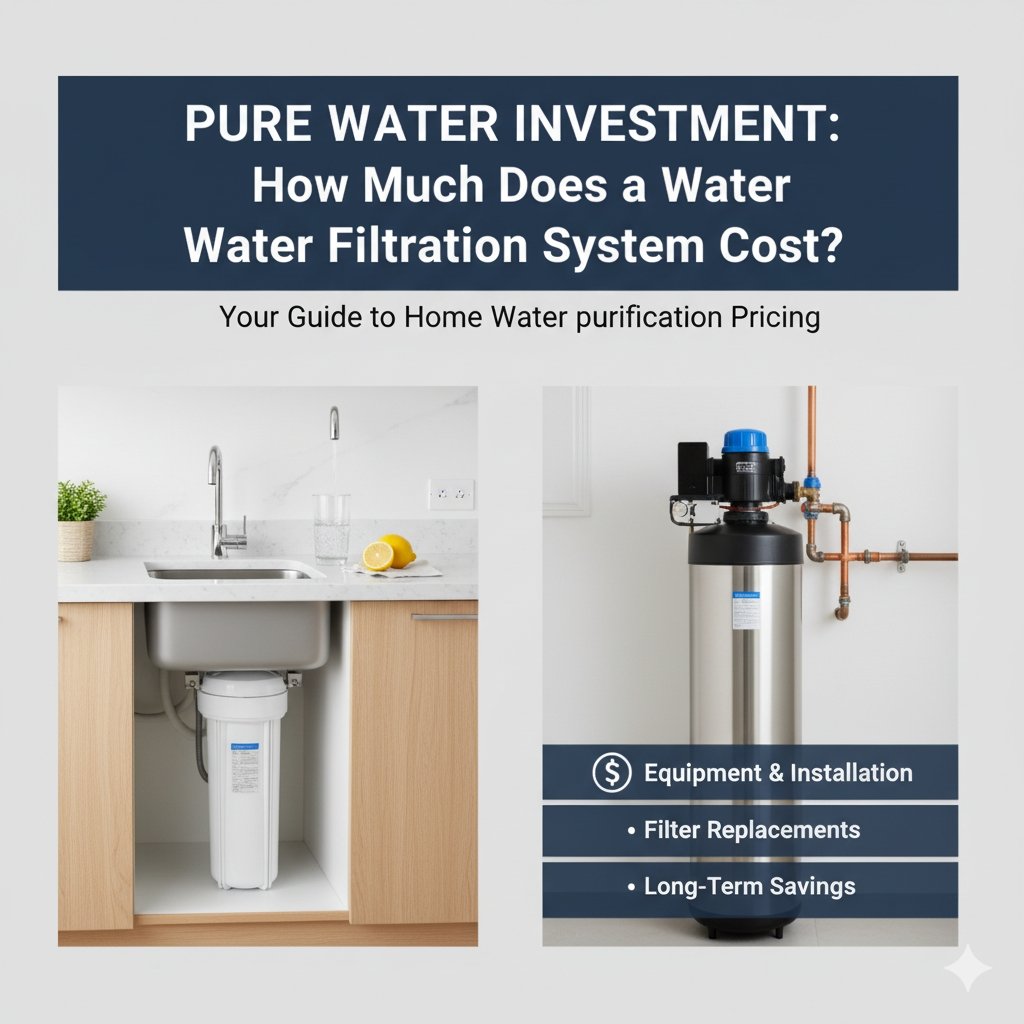
The sticker price is just the beginning. Over 5 years, filter replacements can cost more than the unit.
| System Type | Initial Cost | 5-Year Filter Cost | Total |
|---|---|---|---|
| Pitcher | $30 | $200 | $230 |
| Faucet Mount | $40 | $250 | $290 |
| Countertop | $150 | $300 | $450 |
| Under-Sink RO | $500 | $600 | $1,100 |
Avoid brands with proprietary filters that lock you into high-cost replacements. Choose systems with generic or certified compatible options.
Final Decision Checklist
Use this step-by-step guide to make your choice:
- Test your water – Get a CCR or lab test; measure TDS
- List key contaminants – Lead? PFAS? Bacteria? Hardness?
- Pick the right tech – RO for chemicals, UV/UF for microbes, carbon for taste
- Choose form factor – Pitcher for renters, under-sink for homeowners, whole-house for full protection
- Verify certifications – Look for NSF 42, 53, or 58
- Check compatibility – Water pressure (5–40 PSI), space, power
- Plan maintenance – Set filter change reminders; budget for replacements
Frequently Asked Questions About Water Purifiers
Do I really need a water purifier if I have municipal water?
Municipal water meets EPA standards at the treatment plant, but contamination can occur in distribution pipes or your home’s plumbing—especially in homes built before 1986 with lead pipes. A purifier adds a critical safety layer against lead, chlorine, and microbial risks.
Is RO water safe to drink长期?
RO removes beneficial minerals along with contaminants, which can make water taste flat. Consider adding a mineral cartridge to restore calcium and magnesium. RO is safe and highly effective, but mineral re-addition improves taste and balance.
How often should I replace my water filter?
Replacement frequency depends on usage and water quality. Pitchers need new filters every 2 months; faucet and countertop units every 3–6 months; under-sink pre-filters every 6–12 months; RO membranes every 2–5 years. Check your model’s manual and set reminders.
What’s the difference between TDS and hardness?
TDS (Total Dissolved Solids) measures all dissolved substances including minerals, salts, and metals. Hardness specifically measures calcium and magnesium. High TDS doesn’t always mean hard water, and hard water contributes to TDS but isn’t the only factor.
Can a single filter remove both bacteria and lead?
No single technology removes everything effectively. RO systems with UV or carbon stages can address both, but standalone carbon filters won’t remove bacteria, and UV alone won’t remove lead. Hybrid systems are often necessary for comprehensive protection.
Are expensive water purifiers worth the cost?
Price doesn’t always equal performance. A $200 pitcher with NSF certification may serve a renter better than a $1,500 whole-house system. Match the system to your water test results, space, and budget—then verify certifications rather than trusting price tags.
Key Takeaways for Choosing the Right Water Purifier
Choosing a water purifier isn’t about buying the most expensive model—it’s about matching the right technology to your water. Start with a test, not a sales pitch. If you have high TDS or heavy metals, RO is your best bet. If you’re on clean municipal water but hate the chlorine, a carbon pitcher or faucet filter suffices. Renters can get strong protection with countertop RO or gravity filters. Homeowners should consider under-sink systems or whole-house filters for comprehensive coverage.
Above all, verify certifications, maintain your system, and avoid gimmicks. A well-chosen purifier doesn’t just improve taste—it protects your family from invisible threats like lead, PFAS, and pathogens. Your next step: order a water test kit or download your CCR today, then use the decision checklist above to narrow your options. Clean, safe water is within reach—no matter your budget or living situation.