Does Reverse Osmosis Remove Everything?
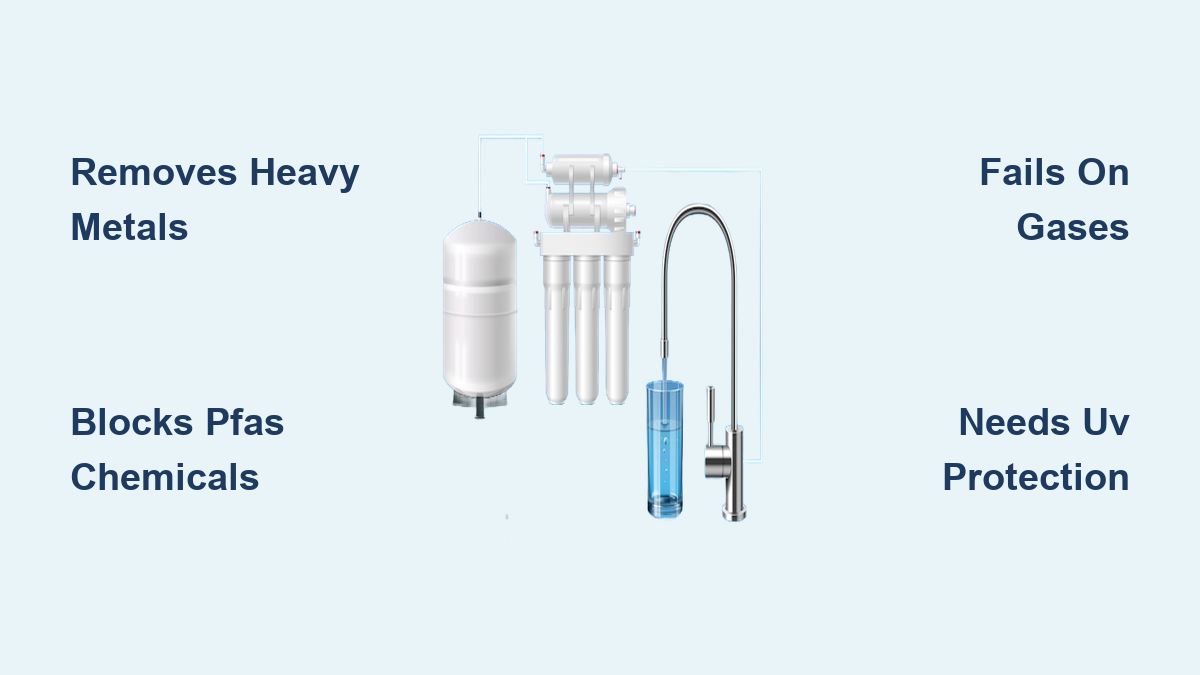
Reverse osmosis (RO) is one of the most powerful home water filtration methods available, but does it really remove everything? The short answer is no. While RO systems eliminate up to 99% of many contaminants, including lead, arsenic, PFAS, and dissolved salts, they are not a one-size-fits-all solution. Certain substances slip through, especially if the system lacks proper pre- or post-filtration stages.
Millions of households rely on RO for cleaner drinking water, particularly in areas with aging infrastructure or contaminated well supplies. Yet, misunderstandings persist about its limits. Some assume RO removes all impurities, while others worry it strips water of essential minerals. In reality, RO is highly effective, but its performance depends on system design, maintenance, and what is in your source water.
In this guide, you’ll learn exactly what reverse osmosis removes, what it does not, and how to maximize its effectiveness. From volatile organic compounds to viruses and dissolved gases, we break down the science behind RO filtration so you can make informed decisions about your water quality.
What Reverse Osmosis Removes Effectively

Reverse osmosis excels at removing a broad spectrum of contaminants by forcing water through a semi-permeable membrane with pores as small as 0.0001 microns. This physical barrier blocks most impurities while allowing only water molecules to pass.
When combined with pre- and post-filters, RO systems deliver some of the purest drinking water possible in a residential setting. However, the key to success lies in proper system configuration and maintenance.
Heavy Metals and Toxic Elements
RO is exceptionally effective at removing dangerous heavy metals, which pose serious health risks even at low levels.
- Lead: Removed at 95% to 98% efficiency, critical for homes with old plumbing.
- Arsenic (Type V): 92% to 96% removal, vital in regions with natural groundwater contamination.
- Mercury and Cadmium: Both removed at 95% to 98%, protecting against neurological and kidney damage.
- Barium, Nickel, Zinc, Iron: All reduced by 94% to 98%, improving taste and preventing staining.
These high rejection rates make RO a top choice for households concerned about industrial pollution or corroded pipes leaching metals into tap water.
Chemical Contaminants and Pesticides
RO tackles synthetic chemicals commonly found in municipal and well water.
- Pesticides, Herbicides, Insecticides: Removed at 97% to 99%, thanks to carbon pre-filters trapping organic compounds before the membrane stage.
- PFOS and PFAS (“Forever Chemicals”): 90% to 99% removal, making RO one of the few home methods effective against these persistent pollutants.
- Chlorine and Chloramines: While the RO membrane does not fully block them, the activated carbon pre-filter removes up to 98%, protecting the membrane and improving taste.
- Sulfates and Phosphates: Reduced by 96% to 98%, helping prevent scale buildup and unpleasant odors.
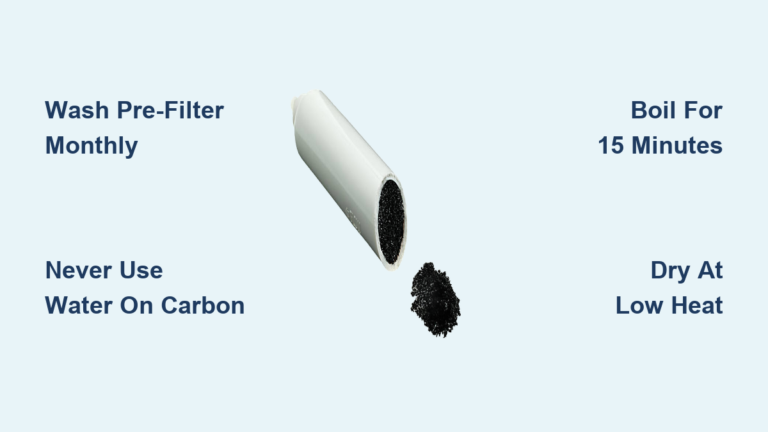
Carbon filtration plays a crucial role here. Without it, many chemical contaminants could bypass the system.
Dissolved Minerals and Salts
RO significantly reduces total dissolved solids (TDS), making it ideal for softening hard water.
- Calcium and Magnesium (hardness minerals): Removed at 94% to 98%, reducing scale in appliances.
- Sodium: Reduced by 85% to 94%, beneficial for those on low-sodium diets.
- Potassium: Removed at 85% to 95%, though dietary intake remains unaffected.
While demineralization raises concerns for some, experts agree that essential minerals should come from food, not water.
Microorganisms
RO can remove most pathogens due to its ultrafine pore size.
- Bacteria: Effectively blocked, since most bacteria range from 0.2 to 10 microns, far larger than the 0.001-micron membrane.
- Protozoa (like Giardia and Cryptosporidium): Easily removed by size exclusion.
- Viruses: More variable. Many are smaller (0.02 to 0.3 microns) and may pass if the membrane is damaged or improperly maintained.
For absolute pathogen safety, pairing RO with UV sterilization is recommended in high-risk environments.
Contaminants Not Fully Removed by RO

Despite its power, reverse osmosis has clear limitations. Some substances are too small, gaseous, or chemically resistant to be caught by the membrane alone.
Understanding these gaps is essential to avoid false confidence in your water’s purity.
Volatile Organic Compounds (VOCs)
VOCs like benzene, toluene, and trichloroethylene are common in industrial runoff and gasoline byproducts.
- The RO membrane alone does not reliably remove VOCs, as they can evaporate or diffuse through.
- Activated carbon pre-filters are essential to adsorb these compounds before they reach the membrane.
- Without carbon, VOC removal drops significantly, potentially leaving harmful chemicals in your water.
This is why multi-stage systems always include carbon filters. They handle what RO cannot.
Dissolved Gases
Gases dissolve in water and pass freely through the semi-permeable membrane.
- Carbon Dioxide (CO₂): Passes through, contributing to slightly acidic pH in RO water.
- Oxygen: Also passes, though harmless.
- Hydrogen Sulfide: Causes “rotten egg” smell and is not removed by RO. It requires aeration or specialized filtration.
- Radon: A radioactive gas not removed by standard RO. It requires granular activated carbon or venting systems.
These gases highlight a key limitation: RO is designed for particulates and dissolved solids, not gaseous contaminants.
Specific Chemical Exceptions
Certain stubborn compounds challenge RO performance.
- Disinfection Byproducts (DBPs): Such as trihalomethanes (THMs), are reduced but not fully eliminated without robust carbon filtration.
- Small Molecular Solvents: Some industrial solvents with low molecular weight can slip through.
- Non-Ionic Pesticides: Those without an electrical charge may not bind well to the membrane or carbon, requiring advanced pre-treatment.
System design matters. Basic RO units may miss these nuances unless upgraded.
Viruses: A Conditional Risk
While RO membranes can block many viruses, integrity is everything.
- A damaged, aged, or poorly sealed membrane can allow viral passage.
- Smaller viruses (e.g., norovirus, hepatitis A) are close in size to the pore rating, increasing risk.
- For well water or areas with sewage contamination, add UV disinfection for guaranteed protection.
RO alone should not be relied upon for complete viral removal in high-risk scenarios.
Recontamination Risks After Filtration
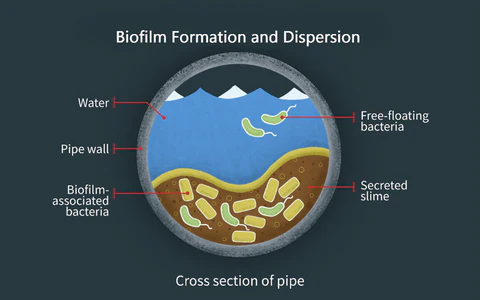
Even perfectly filtered water can become unsafe if stored improperly. RO systems include a pressurized storage tank, which can harbor bacteria if not maintained.
Bacterial Growth in Storage Tanks
- Stagnant water in tanks creates ideal conditions for biofilm formation.
- Over time, bacteria and mold can grow inside the tank or tubing.
- This leads to recontamination, where clean water becomes unsafe before reaching your glass.
Solution: Sanitize the tank and lines every 6 to 12 months using manufacturer-approved procedures.
Post-Filter Contamination
- The final carbon filter polishes taste but can become a breeding ground if water sits too long.
- In systems with infrequent use, microbial growth in post-filters is a real concern.
Tip: Run the system regularly or install antimicrobial post-filters to reduce risk.
Health Impacts of RO Water
Many wonder: is demineralized RO water safe to drink?
Mineral Loss: Fact vs. Fear
- RO removes calcium, magnesium, potassium, and other dissolved minerals by design.
- Removal rates exceed 94% for key nutrients like calcium and magnesium.
- However, nutritionists emphasize that humans get less than 10% of essential minerals from water. The rest comes from food.
So while RO water is “soft” and mineral-free, it does not cause deficiencies in healthy individuals.
Is RO Water Acidic?
- RO water often has a slightly lower pH (5 to 6.5) due to CO₂ absorption.
- This mild acidity is not harmful. Your stomach is far more acidic (pH ~1.5 to 3.5).
- No evidence links RO water to bone loss or other health issues.
Still, some prefer re-mineralization filters to improve taste and balance pH.
Who Should Be Cautious?
- Infants on formula: Use RO water cautiously and consult pediatricians about mineral balance.
- Athletes or those in hot climates: May need electrolyte-rich fluids, since RO water alone is not ideal for prolonged hydration.
- Long-term exclusive consumption: Consider adding minerals back via diet or filtration upgrades.
For most people, RO water is safe, clean, and healthier than unfiltered tap water.
Maintenance for Optimal Performance
An RO system only works as well as its upkeep allows. Neglect leads to reduced efficiency, membrane damage, and contamination risks.
Filter Replacement Schedule
- Sediment pre-filter: Replace every 6 months to prevent clogging.
- Carbon pre-filter: Replace every 6 to 12 months. This is critical for VOC and chlorine removal.
- Post-carbon filter: Replace every 12 months to maintain taste and prevent microbial growth.
Skipping replacements risks chlorine damage to the membrane and chemical breakthrough.
Membrane Care and Lifespan
- The RO membrane lasts 2 to 5 years, depending on water quality.
- Signs of failure: rising TDS levels, slow flow, metallic taste.
- Test output water annually with a TDS meter ($10 to $20) to monitor performance.
If TDS increases by more than 10% to 15%, inspect or replace the membrane.
System Sanitization
- Clean the storage tank and internal tubing every 6 to 12 months.
- Use a hydrogen peroxide or bleach solution as per manufacturer instructions.
- Flush the system thoroughly afterward.
This simple step prevents biofilm and ensures long-term safety.
How to Maximize RO Effectiveness

To get the purest, safest water, treat RO as one part of a complete system, not a standalone fix.
Test Your Water First
- Know your contaminants before choosing a system.
- Use a certified lab to test for lead, arsenic, nitrates, VOCs, hardness, and bacteria.
- Results guide filter selection. For example, add iron pre-filters if iron exceeds 0.3 ppm.
Without testing, you are guessing, and gaps can be dangerous.
Choose a Multi-Stage System
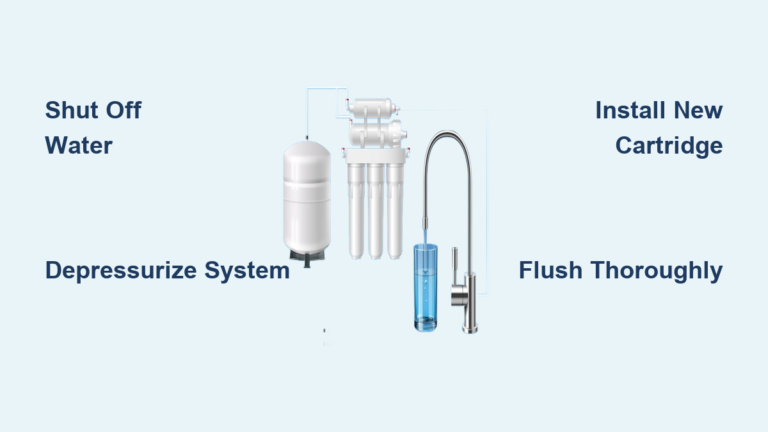
A complete RO setup includes:
- Sediment filter – Removes rust, sand, silt.
- Carbon block filter – Adsorbs chlorine, VOCs, pesticides.
- RO membrane – Removes dissolved solids and heavy metals.
- Post-carbon filter – Polishes taste.
- Optional UV light – Destroys viruses and bacteria for absolute safety.
- Re-mineralization filter – Adds back calcium and magnesium for taste and pH balance.
More stages mean greater protection.
Add UV for High-Risk Sources
If using well water or surface water, add UV sterilization after RO.
- UV kills 100% of bacteria and viruses, including chlorine-resistant strains.
- It is the only way to guarantee microbiological safety.
Pairing RO with UV creates one of the most comprehensive home water systems available.
Frequently Asked Questions About Reverse Osmosis Filtration
Does reverse osmosis remove 100% of contaminants?
No. RO removes up to 99% of many contaminants, including heavy metals, dissolved salts, and certain chemicals, but it does not eliminate everything. Dissolved gases, some volatile organic compounds, and certain viruses may pass through, especially without carbon pre-filtration or UV sterilization.
Does reverse osmosis remove bacteria and viruses?
RO effectively blocks most bacteria and many viruses due to its 0.0001 to 0.001 micron pore size. However, smaller viruses can pass through if the membrane is damaged or improperly maintained. For high-risk water sources, adding UV sterilization is recommended for complete protection.
Does reverse osmosis remove PFAS and forever chemicals?
Yes. RO is one of the most effective residential methods for removing PFOS and PFAS, with rejection rates between 90% and 99%. The semi-permeable membrane blocks these persistent contaminants while allowing water molecules to pass.
Does reverse osmosis remove beneficial minerals from water?
Yes. RO removes 94% to 98% of calcium and magnesium, along with other dissolved minerals. However, health experts note that humans obtain the vast majority of essential minerals from food, not water. The loss is nutritionally negligible for most people.
Does reverse osmosis remove chlorine?
The RO membrane alone does not reliably block chlorine. Instead, the activated carbon pre-filter removes up to 98% of chlorine. This step also protects the membrane from chemical damage.
Does reverse osmosis make water acidic?
RO water often has a slightly lower pH (5 to 6.5) due to CO₂ absorption. This mild acidity is not harmful to health, though some users install re-mineralization filters to improve taste and raise pH.
Key Takeaways on What Reverse Osmosis Really Removes
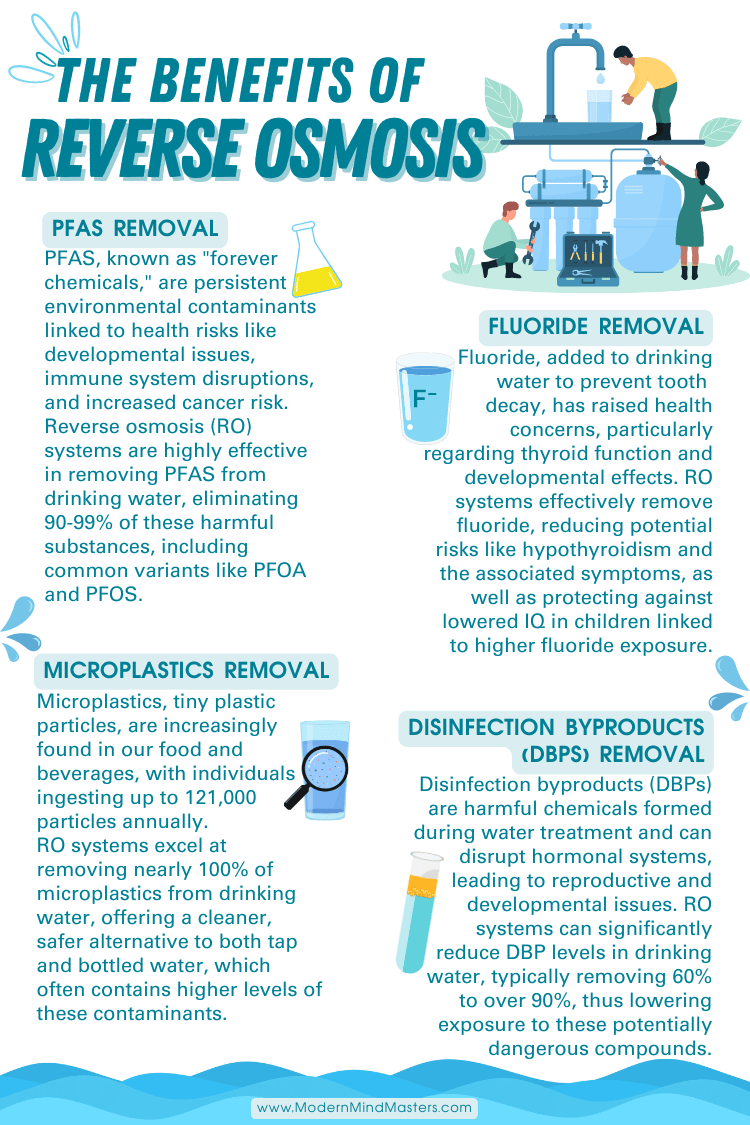
Reverse osmosis removes up to 99% of many dangerous contaminants, including lead, arsenic, PFAS, pesticides, and dissolved minerals, making it one of the most effective home filtration methods available. However, it does not remove everything. Dissolved gases like radon and CO₂, certain volatile organic compounds without carbon pre-filtration, and small viruses under compromised membrane conditions can still pass through.
To maximize safety, pair your RO system with activated carbon pre-filters, post-filters, and UV sterilization if your water source is high-risk. Test your water before installation, replace filters on schedule, and sanitize the storage tank annually to prevent recontamination.
Your next step: order a certified water test for your home. Knowing exactly what is in your water allows you to configure the right RO system and close any gaps in protection.