How Long Does Purified Water Last
You’ve stocked up on purified water for daily hydration, emergency kits, or travel, but now you’re staring at that bottle wondering if it’s still good. The answer might surprise you: how long does purified water last depends less on the water itself and more on the bottle holding it.
Pure H₂O is chemically stable and never truly expires. Unlike juice or milk, purified water won’t grow mold or spoil on its own. However, the plastic container, storage temperature, and exposure to light all affect quality over time. The FDA doesn’t require expiration dates on bottled water, yet most brands print “Best By” dates anyway, usually 1 to 2 years from bottling. These dates signal freshness, not safety deadlines.
In this guide, you’ll learn exactly how long purified water stays fresh unopened, opened, and in emergency storage. You’ll also discover how to spot contamination, avoid chemical leaching, and store your supply for maximum safety.
Shelf Life by Storage Status

Unopened Bottled Water
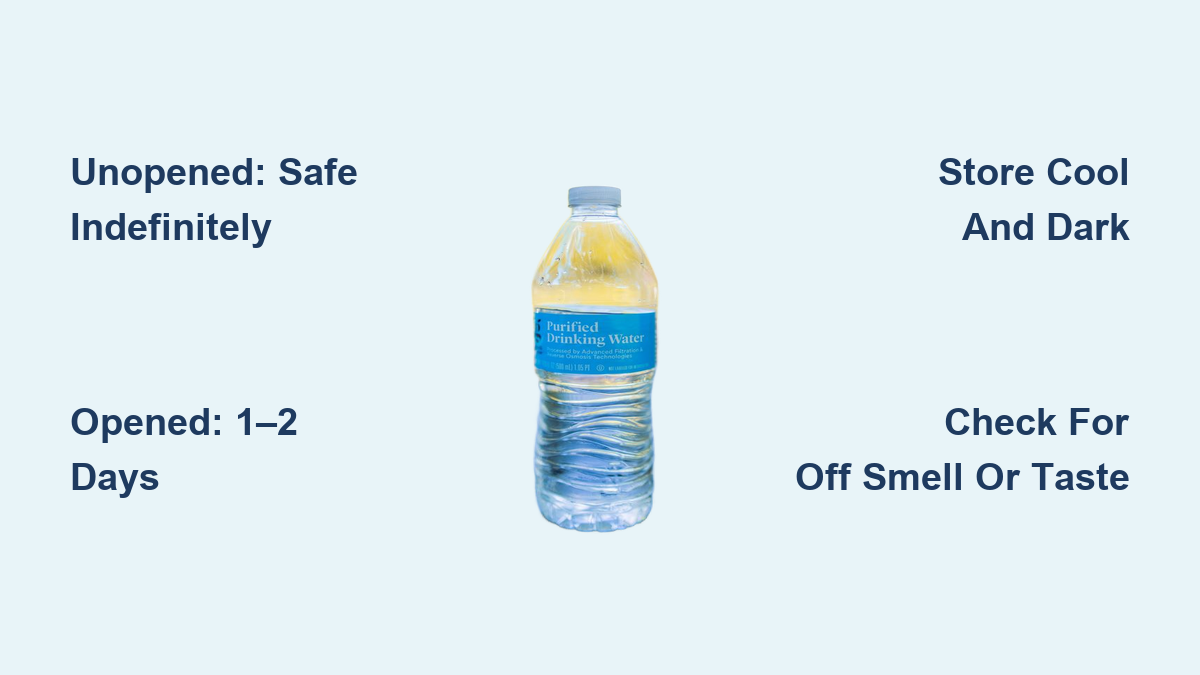
Unopened purified water remains safe indefinitely, but quality gradually declines. Most manufacturers recommend drinking it within 1 to 2 years for the best taste and minimal chemical exposure.
The weak link is the bottle itself. Most purified water comes packaged in polyethylene terephthalate (PET), identified by recycling code #1. Over time, especially when exposed to heat or sunlight, chemicals like antimony and microplastics can leach into the water. These levels are typically low, but long-term consumption raises health concerns.
In an emergency, unopened water stored beyond 2 years is likely safe if:
– The bottle remains intact
– It was kept cool and dark
– There’s no off smell or taste
Many preppers report safely drinking 5+ year-old sealed bottles during crises.
Opened Bottled Water
Once you break the seal, purified water’s lifespan shrinks dramatically due to bacteria from your mouth, hands, and air exposure.
- At room temperature: Drink within 1–2 days
- In the refrigerator: Safe for 3–6 days, ideally within 5
Even BPA-free bottles develop microscopic scratches after repeated use, creating hiding spots for bacteria. Always cap the bottle tightly and avoid touching the rim.
Emergency Stockpile Longevity
For disaster preparedness, purified water is a top choice. FEMA recommends storing 1 gallon per person per day for at least 3 days, though longer supplies are better in high-risk areas.
While the water itself won’t expire, rotate your stock every 1 to 2 years to:
– Maintain fresh taste
– Prevent plastic breakdown
– Ensure seal integrity
Use a “first-in, first-out” system: drink older bottles first and replace them with fresh stock.
Proper Storage Conditions
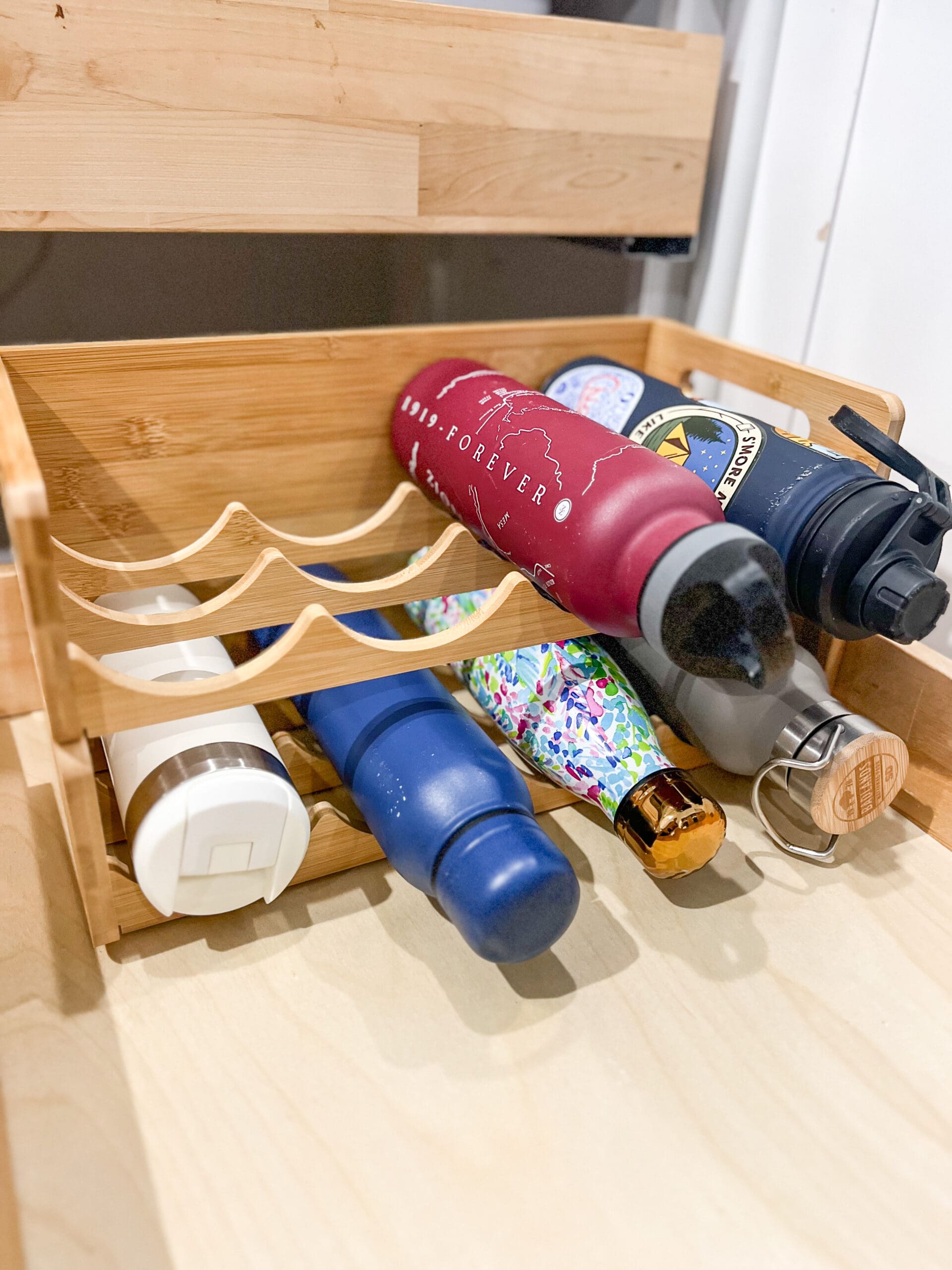
Ideal Temperature Range
Store purified water at room temperature or cooler, ideally under 75°F (24°C).
Heat accelerates chemical leaching from PET plastic. Research shows that exposure to 167°F (75°C) for just 5 days significantly increases microplastic release. Never leave bottled water in:
– Hot cars
– Sunlit windowsills
– Garages during summer
– Attics or outdoor sheds
Even short-term heat exposure can alter taste and safety.
Avoid Freezing Bottled Water
Despite what you might think, do not freeze purified water in plastic bottles.
When water freezes, it expands. This causes:
– Cracks or warping in the plastic
– Compromised seals
– Micro-fractures that increase leaching when thawed
If freezing is necessary, use wide-mouth containers with extra headspace, or transfer water to glass or freezer-safe stainless steel.
Block Light Exposure
UV rays break down plastic and may encourage algae growth if spores are present.
Store purified water in:
– Dark pantries
– Basements
– Closed cabinets
– Opaque containers
Clear bottles should never sit in direct sunlight, even for a few hours.
Keep Away From Chemicals
Plastic is slightly porous. Over time, vapors from household chemicals can seep through the bottle wall.
Never store purified water near:
– Gasoline or fuel cans
– Paints and solvents
– Cleaning supplies
– Pesticides or lawn chemicals
Even strong-smelling items like perfumes or air fresheners can taint the taste.
Maintain Seal Integrity
An unbroken seal is critical. Once compromised, contamination risk rises sharply.
Before storing:
– Confirm the cap is tight
– Check for dents, cracks, or bulging
– Ensure the tamper ring is intact
Inspect bottles monthly for leaks or cloudiness.
Signs Purified Water Has Gone Bad
Water doesn’t spoil like food, but it can become unsafe or unpleasant due to contamination.
Smell Test: Detect Off Odors
Open the bottle and sniff. Discard if you notice:
– A musty or damp smell (mold)
– A plastic or chemical odor (leaching)
– A stale or flat scent (CO₂ loss)
Even clear water with a bad smell is unsafe to drink.
Taste Check: Identify Contamination
Take a small sip. Stop immediately if the water tastes:
– Bitter or metallic (chemical leaching)
– Flat or dull (low oxygen, old age)
– Sour or funky (bacterial growth)
Rinse your mouth and discard the bottle.
Visual Inspection: Spot Cloudiness or Particles
Look for:
– Cloudiness or haziness
– Floating specks or fibers
– Algae or biofilm on bottle walls
Clear water isn’t always safe, but cloudy water is always a red flag.
Packaging Damage: Check for Cracks
Inspect the bottle for:
– Cracks or leaks
– Swelling or bloating (gas buildup)
– Discolored or brittle plastic
Any structural flaw means the water is no longer protected.
Plastic Safety and Reuse Risks

Why PET Bottles Aren’t Meant for Reuse
Most purified water comes in PET plastic, which is designed for single use only.
Repeated use increases risks:
– Bacterial buildup: Scratches trap microbes that resist washing
– Chemical leaching: Heat and wear accelerate antimony and microplastic release
– Degradation: Plastic becomes cloudy and brittle over time
Even hand-washing with soap can’t fully sanitize microscopic pores.
Safer Reuse Alternatives
For daily hydration, switch to:
– Stainless steel bottles: Non-porous, durable, no leaching
– Glass containers: Inert and easy to clean, though fragile
– BPA-free reusable plastics: Look for Tritan or #5 PP (polypropylene)
Avoid putting any single-use bottle in the dishwasher or filling it with hot liquids.
Emergency Water Storage Best Practices

Calculate Your Needs
FEMA and Homeland Security recommend:
– 1 gallon per person per day
– Minimum 3-day supply
– Include water for drinking, cooking, and hygiene
Adjust for:
– Children, elderly, or sick individuals
– Hot climates (increase by 50%)
– Physical activity or medical needs
A family of four needs at least 12 gallons for 3 days, though 24+ gallons is better for longer emergencies.
Rotate and Maintain Stock
Create a rotation system:
1. Label bottles with purchase date
2. Store in a cool, dark, elevated location
3. Use oldest bottles first
4. Replace every 1–2 years
Pair bottled water with backup purification methods:
– Portable filters (LifeStraw, Sawyer)
– Boiling capability
– Water purification tablets
This ensures access even if stored water is compromised.
Regulatory Facts and Safety Standards
FDA vs. EPA Oversight
- Bottled water is regulated by the FDA as a food product
- Tap water is regulated by the EPA
Both follow strict contaminant limits, but bottled water avoids local infrastructure risks like lead pipes. In emergencies, bottled water offers reliable, consistent quality.
Does Purified Water Expire?
No, not legally or chemically. The FDA does not require expiration dates on water. Dates printed on bottles are manufacturer quality guidelines, not safety cutoffs.
Water past its “Best By” date is usually safe if:
– Unopened
– Properly stored
– Free of sensory defects
When in doubt, throw it out.
Quick Reference: Purified Water Shelf Life Guide
| Condition | Shelf Life | Notes |
|---|---|---|
| Unopened, ideal storage | Indefinite (safe), 1–2 yrs (best quality) | Store cool, dark, dry |
| Unopened, hot environment | Risk increases after weeks | Avoid >75°F (24°C) |
| Opened, room temp | 1–2 days | Bacteria grow fast |
| Opened, refrigerated | 3–6 days | Keep capped, sanitize hands |
| Frozen in plastic | Not recommended | Causes cracks and leaching |
| Emergency stockpile | Rotate every 1–2 years | Use FIFO system |
Frequently Asked Questions About Purified Water Shelf Life
Does purified water actually expire?
No. The FDA does not require expiration dates on bottled water because purified water is chemically stable and does not spoil. Dates printed on bottles are quality guidelines from manufacturers, typically indicating a 1–2 year window for peak taste and freshness.
Is it safe to drink purified water that has been opened for a week?
Probably not. Once opened, purified water at room temperature should be consumed within 1–2 days. Refrigerated opened water lasts 3–6 days. After a week, bacterial growth makes it unsafe, even if it looks and smells normal.
Can old bottled water make you sick?
It’s unlikely if the bottle was sealed and properly stored. However, water stored in hot conditions or for many years may contain higher levels of antimony or microplastics from the PET container. Always check for off smells, tastes, or cloudiness before drinking.
How can you tell if bottled water has gone bad?
Use your senses. Smell for musty, chemical, or stale odors. Look for cloudiness, particles, or algae. Taste for bitterness, metallic notes, or flatness. Also inspect the bottle for cracks, bulging, or compromised seals. Any of these signs means the water should be discarded.
Is it better to store purified water or tap water for emergencies?
Purified bottled water is generally safer for long-term emergency storage because it’s commercially sealed, sanitary, and regulated by the FDA. Tap water can be stored but requires careful sanitization of containers and rotation every 6–12 months.
Key Takeaways for Storing Purified Water Safely
Purified water itself lasts forever, but the plastic bottle holding it does not. For unopened bottles, you have an indefinite safety window, though quality is best within 1–2 years. Once opened, drink within days. For emergency stockpiles, rotate every 1–2 years to maintain freshness and container integrity.
Store your supply in a cool, dark location away from chemicals and heat sources. Inspect bottles regularly for damage, and trust your senses: if the water smells, looks, or tastes off, discard it. When in doubt, throw it out.
Bottom line on how long purified water lasts:
– Unopened: Indefinitely safe, best within 1–2 years
– Opened: 1–2 days at room temp, 3–6 days refrigerated
– Emergency stock: Rotate every 1–2 years
Store smart, inspect often, and stay hydrated safely.