How to Purify Water While Camping
You crest a ridge after hours of hiking, parched and exhausted, and find a stream tumbling over mossy rocks. The water looks pristine, cold, and inviting. But that crystal-clear flow could be carrying Giardia, E. coli, or other invisible threats from animal waste miles upstream. Drinking untreated backcountry water is one of the fastest ways to turn a dream trip into a nightmare of vomiting and dehydration. Learning how to purify water while camping is not optional; it’s a survival skill.
Every natural water source carries risk, no matter how clean it appears. Pathogens enter streams from wildlife, livestock, and human activity, and ingesting even a small number can cause days of debilitating illness. The good news is that with the right knowledge and tools, you can turn any questionable water source into safe drinking water in minutes. This guide covers source selection, proven purification methods, gear maintenance, and field-tested strategies for every camping scenario.
Choose the Right Water Source
Prioritize Flowing Water
Moving water is your safest bet. Streams and rivers are naturally aerated and less likely to harbor stagnant algae or concentrated bacteria. Flowing water also dilutes contaminants and discourages mosquito breeding, making it a far better choice than still ponds or lakes.
Avoid High-Risk Locations
Steer clear of water sources near visible contamination:
– Dead animals or livestock
– Heavy algae blooms
– Human or animal latrines
– Agricultural fields or industrial sites
After heavy rain, wait 24 to 48 hours before collecting. Storm runoff washes bacteria, fecal matter, and silt into streams, dramatically increasing contamination and turbidity.
Collect Water Away from Shore
Microorganisms concentrate near banks where animals drink and defecate. Use a long-handled pot or bottle to scoop water at least 6 to 10 feet from the edge. For murky sources, collect from the clearest section and let sediment settle before treating the top layer.
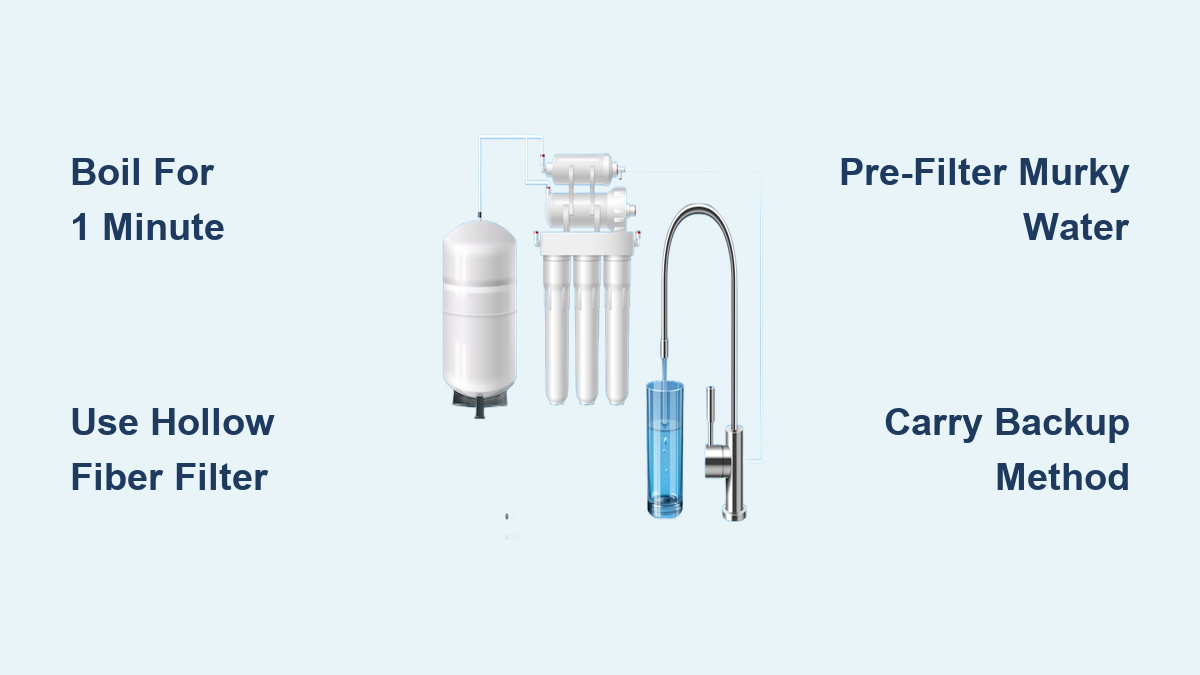
Pre-Filter Murky Water
Strain Before You Treat
If your source contains silt, leaves, or floating debris, pre-filter it through a bandanna, coffee filter, or dedicated pre-filter sock. This step protects your main filter from clogging and ensures UV light can penetrate during purification.
Let Sediment Settle
Pour turbid water into a pot and let it sit for 10 to 15 minutes. Most particles will sink to the bottom. Carefully decant the clearer top layer for treatment, leaving the mucky sediment behind.
Boil Water for Maximum Safety
Kill All Pathogens with Heat
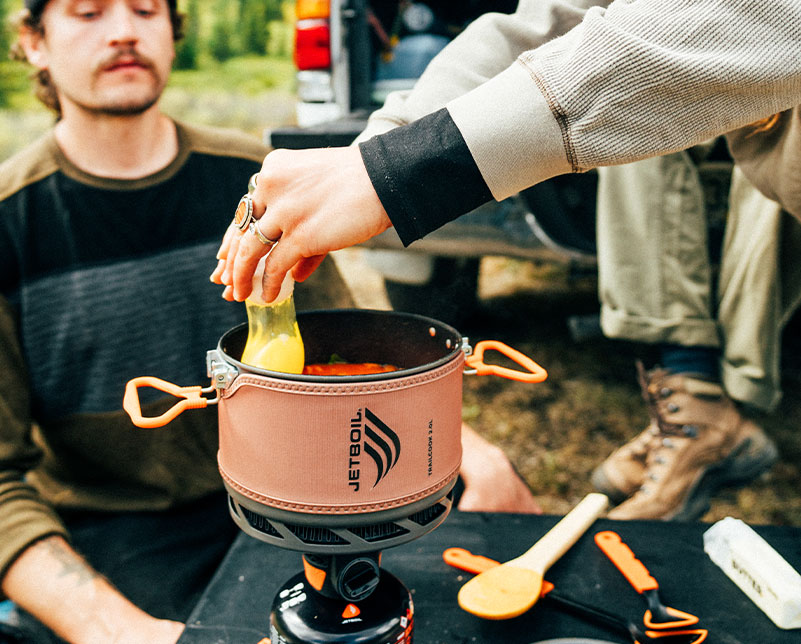
Boiling is the most reliable method to eliminate all biological threats, including protozoa, bacteria, and viruses. It requires nothing more than a heat source and a pot, making it ideal for emergencies or group camping.
Follow Safe Boiling Times
- Bring water to a rolling boil.
- Boil for 1 minute at elevations below 6,500 feet.
- Boil for 3 minutes above 6,500 feet, since water boils at lower temperatures at altitude.
- Let cool before drinking.
Never eat snow directly; melt and boil it first to kill any bacteria or pathogens trapped in the ice.
Pros and Limitations
Pros:
– 100% effective against all microbes
– No special gear needed beyond a stove and pot
– Works in freezing conditions
Cons:
– Uses fuel and time
– Does not remove sediment or chemicals
– Hot water is not immediately drinkable
Use a Hollow Fiber Filter
Remove Bacteria and Protozoa Fast
Filters like the Sawyer Squeeze or Katadyn BeFree use microscopic pores (0.1 to 0.2 microns) to physically block bacteria and protozoa such as Giardia and Cryptosporidium. They deliver clean water instantly with no waiting.
How to Use a Squeeze Filter
- Fill a dirty water bag from your source.
- Attach the filter to the bag.
- Connect a clean bottle or hydration bladder to the outlet.
- Squeeze to force water through the filter.
Many models thread directly onto standard 28mm bottles like Smartwater.
Maintain Flow Rate
Filters clog over time. Restore performance by backflushing with clean water using the included syringe, especially for Sawyer models. Do this every few days or whenever flow slows noticeably.
Avoid Freeze Damage
Hollow fiber filters cannot freeze. Ice expands inside the fibers, rupturing them and allowing pathogens to pass straight through. In cold weather, always store your filter inside your sleeping bag or jacket.
Treat Water with Chemicals

Kill Viruses When Filtering Isn’t Enough
Most filters do not remove viruses because they are too small to be caught by physical pores. In high-risk areas near livestock, popular trails, or international destinations, add virus protection using chemical treatment.
Use Chlorine Dioxide for Broad Protection
Aquamira or chlorine dioxide tablets are the gold standard for chemical disinfection:
– Kills bacteria, protozoa, and viruses including norovirus
– Effective against Cryptosporidium with longer contact time
Follow Activation Steps
- Mix Part A and Part B if using liquid; wait 5 minutes until the solution turns light green.
- Add to 1 liter of water.
- Wait 15 minutes for clear, warm water.
- Wait 30 to 40 minutes for cold or cloudy water.
- For Cryptosporidium assurance, wait up to 4 hours in cold conditions.
Pre-filter cloudy water first, since chemicals do not remove sediment.
Avoid Iodine When Possible
Iodine tablets kill bacteria and viruses but fail against Cryptosporidium. They also leave a strong taste and are unsafe for pregnant women or those with thyroid issues. Use iodine only as a short-term backup.
Use UV Light for Fast, Taste-Free Purification
Zap Pathogens with UV-C
A SteriPEN or similar UV device uses ultraviolet light to destroy the DNA of microorganisms. It works in about 60 seconds and leaves no aftertaste.
Ensure Water Clarity First
UV light cannot penetrate cloudy water. If your source is murky, pre-filter it through a bandanna or switch to another method. Otherwise, UV treatment will be ineffective.
Power Matters
UV pens require batteries or charging. Carry spare batteries or a small solar charger. Cold temperatures reduce battery life, so keep the device warm inside your jacket.
Match Method to Your Trip

Lightweight Solo Hiking
For long-distance trails like the PCT or AT, prioritize weight and speed:
– Primary: Sawyer Micro Squeeze (2.5 oz)
– Backup: Aquamira drops for virus protection or if the filter freezes
This combo offers filtration, virus protection, and freeze resistance.
Winter or Sub-Zero Camping
Filters are vulnerable to freezing. Instead:
– Use chlorine dioxide drops, which won’t freeze and remain effective
– Carry a backup stove for boiling if needed
– Never let your filter sit outside your sleeping bag
Group or Basecamp Trips
When serving multiple people:
– Use a pump filter like the MSR MiniWorks for high-volume output
– Or boil large pots of water over a camp stove
Pump filters handle dirty water better but are heavier and require more maintenance.
International or High-Traffic Areas
Viral contamination is more common outside North America and Europe. Use a true purifier, not just a filter:
– Boiling
– Chlorine dioxide
– UV light
– Purifier-specific filters like the LifeStraw Flex with purifying cartridge
Standard backpacking filters do not protect against viruses.
Prevent Cross-Contamination
Keep Clean and Dirty Separate
One of the most common mistakes is recontaminating treated water:
– Never pour untreated water into a clean bottle
– Wash hands with sanitizer after handling dirty water
– Rinse bottle caps and threads with treated water before sealing
Label Bottles Clearly
Use color-coded or labeled containers:
– Red cap for untreated water
– Blue cap for treated water
This prevents accidental mixing, especially in low light or when you’re exhausted.
Maintain Your Equipment
Backflush Filters Regularly
For Sawyer-type filters:
1. Fill the syringe with clean water.
2. Attach to the filter outlet.
3. Push water backward through the filter.
4. Repeat until flow improves.
Do this every few days or after using silty water.
Store Filters Properly
After use:
– Rinse with clean water
– Store dry or in a clean mesh bag
– Never leave a wet filter sealed in a plastic bag, as this promotes bacterial growth
Replace When Needed
Filters have a lifespan; the Sawyer Squeeze is rated for 100,000 gallons. Replace if:
– Flow cannot be restored by backflushing
– O-rings are cracked
– The filter has been frozen
Always Carry a Backup Method
Plan for Failure
Filters clog, break, or freeze. UV pens run out of battery. Stoves fail. Always carry a secondary method:
– Chemical tablets like Aquamira or chlorine dioxide
– Lightweight backup filter such as a mini straw
– Metal pot for boiling
This redundancy ensures you are never left without safe water.
Special Considerations
For Pregnant or Immunocompromised Campers
Avoid iodine entirely. Stick to:
– Boiling
– Chlorine dioxide
– UV purification
– Hollow fiber filtration
For maximum safety, use a combination method such as filtering first and then treating with chemicals.
Children and Sensitive Stomachs
Kids are more vulnerable to dehydration. Use reliable methods like boiling or chlorine dioxide. Avoid untested streams and always pre-filter.
Frequently Asked Questions About Water Purification While Camping
What is the safest way to purify water while camping?
Boiling is the most reliable method because it kills all pathogens including bacteria, protozoa, and viruses. Bring water to a rolling boil for 1 minute at low elevations or 3 minutes above 6,500 feet.
Do water filters remove viruses?
Most standard backpacking filters do not remove viruses because viruses are too small to be caught by physical pores. For virus protection, use boiling, chlorine dioxide, UV light, or a purifier specifically designed to remove viruses.
Can I drink water straight from a mountain stream?
No. Even crystal-clear mountain streams can carry Giardia, Cryptosporidium, and bacteria from animal waste upstream. Always treat water from any natural source before drinking.
How do I keep my filter from freezing?
Store hollow fiber filters inside your sleeping bag, jacket, or an inner pocket close to your body heat. If a filter freezes, the ice can rupture the microscopic fibers and render it useless.
Is iodine safe for water purification?
Iodine kills bacteria and viruses but is ineffective against Cryptosporidium. It is also unsafe for pregnant women, people with thyroid issues, and should not be used for more than a few weeks at a time.
What should I do if my water is very muddy?
Pre-filter the water through a bandanna, coffee filter, or pre-filter sock to remove sediment. Then use a pump filter or boiling, since UV light and squeeze filters will clog or fail in turbid conditions.
Key Takeaways for Safe Water Purification in the Backcountry
Knowing how to purify water while camping is a non-negotiable outdoor skill. Assume every natural source is contaminated, regardless of how clean it looks. Choose flowing water away from shore and contamination sources, pre-filter murky water, and treat it using boiling, filtration, chemicals, or UV light based on your trip’s demands.
Always carry a backup method in case your primary system fails, and never let your filter freeze in cold weather. With the right preparation and gear, you can stay hydrated, healthy, and focused on the adventure ahead. Safe water means a safer, more enjoyable wilderness experience.