How to Use Powdered Alum to Purify Water
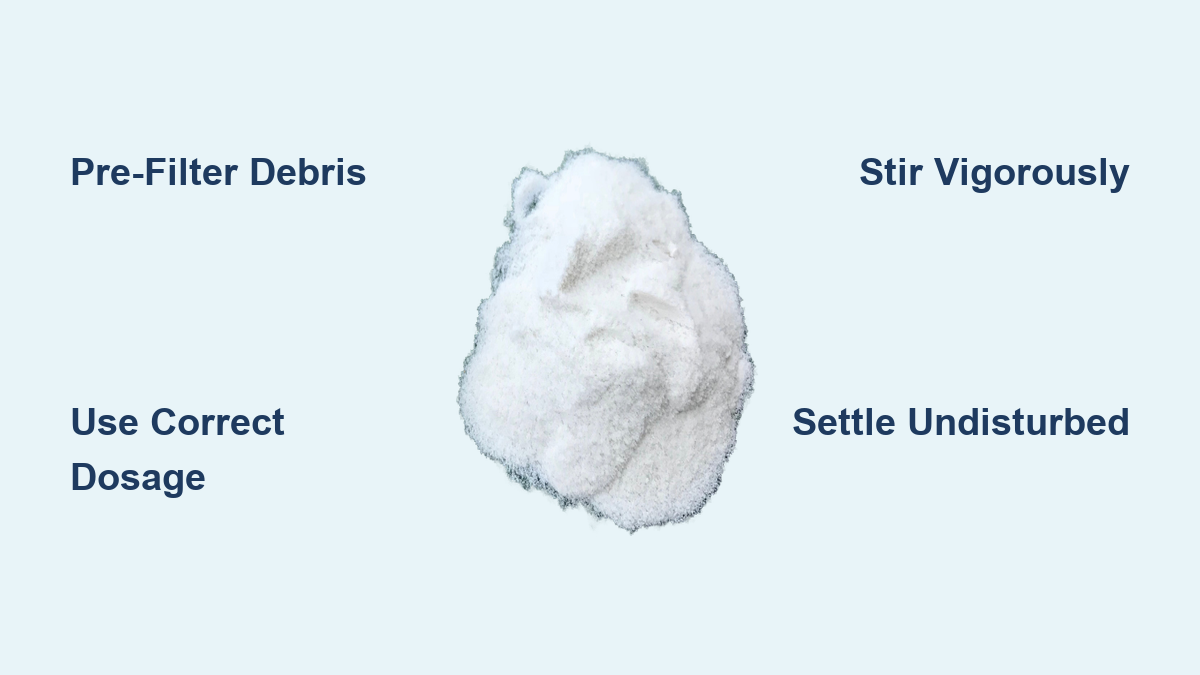
Picture yourself at a silty riverbank after heavy rain. Your pump filter clogs within minutes, and boiling murky water leaves you with gritty, undrinkable liquid. Powdered alum solves this exact problem by pulling suspended particles out of suspension before you filter or boil. It is lightweight, cheap, and scientifically proven, used by everyone from ancient Egyptians to modern survivalists.
This guide walks you through the exact steps, correct dosages, and critical safety measures. You will learn how to turn muddy creek water into crystal-clear liquid ready for disinfection, plus how to avoid common mistakes that ruin the process.
Clarify Water With Alum: Step-by-Step

Success depends on following a precise sequence: pre-filter, dose, mix, settle, decant, and disinfect. Skipping any step risks cloudy water or unsafe drinking conditions.
Pre-Filter Muddy Water First
Remove large debris before adding alum. Pour the water through a clean bandana, coffee filter, or fine mesh cloth. This step prevents leaves and twigs from contaminating your sediment layer and keeps your decanting process smooth. Think of it as clearing the canvas before you start painting; clean input produces better results.
Add Correct Alum Dosage
Use 1 gram of powdered alum per 10 liters of water. If measuring by volume, that equals roughly ¼ to ½ teaspoon per gallon (4 liters). For highly turbid water, you may need up to 1 gram per liter, but always start low and adjust. Overdosing clouds the water again; under-dosing leaves it murky. When uncertain, add a small amount, stir, and watch for flocs to form.
Pro Tip: Carry a small labeled bag of food-grade alum. A teaspoon holds roughly 4–5 grams, enough for 40–50 liters of moderately dirty water.
Stir Vigorously for 1–2 Minutes
After adding alum, stir fast using a stick, spoon, or dedicated stirring rod. This spreads the aluminum ions evenly and encourages particles to collide and stick together. Without strong mixing, flocs fail to form properly. Two minutes is ideal: long enough to activate coagulation, short enough to conserve energy. You should see tiny clumps forming within 30 seconds.
Let Water Sit Undisturbed for 30–60 Minutes
Stop stirring and leave the container alone. Flocs grow as they trap more particles, then sink to the bottom. Wait at least 30 minutes. For best results, wait 60 minutes, especially in cold weather, which slows the process. If camping overnight, let it sit for several hours. The longer it settles, the clearer the water becomes.
Visual Cue: When done correctly, you will see a sharp line between crystal-clear water on top and a dense layer of sludge below.
Decant Carefully Without Disturbing Sludge
Once settled, pour or siphon the clear water off the top. Never scoop from the bottom; that sludge contains concentrated contaminants, bacteria, and heavy metals. Pour slowly, or use a siphon tube positioned just below the surface. If your bucket has a spigot, drain only until the sludge approaches the outlet. Leave the last inch or two behind.
Warning: Even a small swirl can re-suspend particles. Move gently and avoid bumping the container.
Choose the Right Alum Type
Not all alums perform equally. Some varieties are better suited for water treatment than others.
Use Potash Alum or Aluminum Sulfate
Potassium aluminum sulfate (potash alum) is the gold standard for portable water treatment. It is highly effective, widely available as “pickling alum” in grocery stores, and leaves no metallic aftertaste when used correctly. Aluminum sulfate is common in municipal systems and works well but can taste harsher if overdosed. Both are safe for occasional use.
Buy Tip: Look for “food grade” or “USP grade” alum to ensure purity.
Avoid Impure or Unknown Sources
Natural white crystals found under rock overhangs or in caves may be alum, but they could also be toxic salts like nitrates or sulfates. Unless you are trained in mineral identification, do not harvest wild deposits. Stick to store-bought, labeled products.
Skip Ammonium or Sodium Alum
While chemically similar, ammonium alum and sodium alum are less stable and less effective for water clarification. They may release ammonia or alter pH unpredictably. Stick to potassium alum or aluminum sulfate for reliable results.
Why Alum Works: The Science Simplified
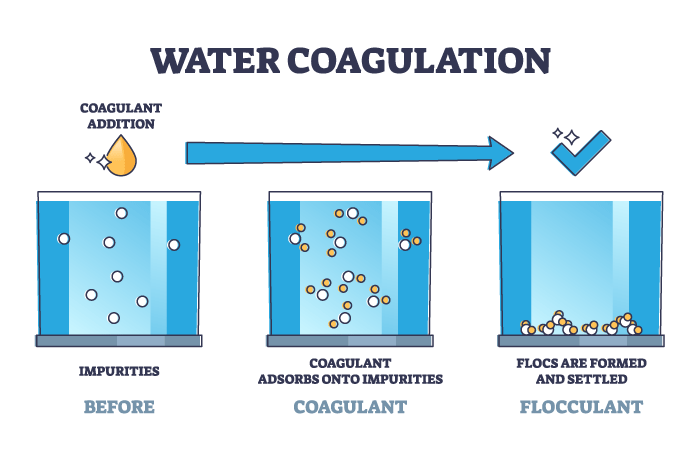
Understanding the chemistry helps you troubleshoot and optimize the process. Alum acts as a particle magnet, not a filter.
Neutralize Particle Charges
Muddy water stays cloudy because clay and silt particles carry a negative electrical charge. Like magnets with the same pole, they repel each other and never settle naturally. When alum dissolves, it releases positively charged aluminum ions (Al³⁺). These attract and neutralize the negative charges on the particles, breaking the repulsion.
Trigger Flocculation and Sedimentation
Once neutralized, weak intermolecular forces pull particles together into tiny clumps, a process called coagulation. As you stir, these clumps collide and grow into visible flocs, like snowballs rolling downhill. These heavy flocs sink due to gravity, dragging bacteria, viruses, and organic matter with them. The result is clear water above and sludge below.
Analogy: Think of alum as a glue that makes invisible dirt sticky enough to fall out of the water.
Post-Treatment: Disinfect or Filter
Alum makes water clear, but it does not make water safe to drink. Pathogens remain alive in the clarified liquid. You must disinfect before consumption.
Boil for 1 Minute
Bring the decanted water to a rolling boil for 1 minute (3 minutes above 6,500 ft / 2,000 m). This kills all bacteria, viruses, and protozoa. It is the most reliable method and works perfectly after alum treatment.
Filter With a Portable Device
Run the clear water through a quality filter like a Katadyn Hiker Pro or Sawyer Squeeze. Alum pre-treatment prevents clogging, extends filter life, and improves flow rate. Without it, silty water can ruin a filter in minutes.
Use Chemical or UV Treatment
Chlorine dioxide tablets or drops work well on clear water. UV pens like SteriPEN are fast, but only effective if water is clear. Alum makes UV treatment possible where it would otherwise fail.
Never skip this step: Clear does not mean safe. Always disinfect.
Avoid Common Mistakes
Even small errors can ruin the entire process.
Don’t Overdose Alum
Too much alum reverses the charge, making particles negative again. The result is water that clears, then clouds back up. If this happens, dilute with more raw water; do not add more alum.
Don’t Stir After Settling
Agitation breaks flocs apart. Once you stop stirring, leave the container alone. Even walking nearby or wind can disrupt the process.
Don’t Use Hot Water for Mixing
While alum dissolves faster in hot water, it is unnecessary and risky. Always treat at ambient temperature. If boiling is your disinfection method, do it after alum treatment.
Don’t Drink the Sludge
The sediment at the bottom contains concentrated contaminants. Dispose of it away from water sources and camp areas to prevent animal exposure or recontamination.
Optimize for Field Use
Make alum treatment fast, reliable, and lightweight.
Prepare a Concentrated Stock Solution
For group trips or long expeditions, mix 1 to 1.5 ounces of alum per quart of water and store in a small bottle. To treat a 5-gallon bucket, add two capfuls of stock solution and stir. This saves time and ensures consistent dosing.
Stabilize Your Bucket
Commercial foldable buckets tip easily during stirring. Prevent spills by:
– Using a homemade bucket with side batons for stability
– Hanging the bucket from a branch
– Placing it in a rock crevice or between logs
Backcountry Hack: Cut notches in two sticks to cradle the bucket handles. This keeps it upright on uneven ground.
Pack the Right Tools
Carry:
– A small measuring scoop or marked bottle cap
– A lightweight stirring stick
– A clean cloth or bandana for pre-filtering
– A siphon tube or second container for decanting
Keep it minimal. Alum treatment adds almost no weight to your pack.
When to Use Alum: Ideal Scenarios
Not every water source requires alum. Know when it is essential.
Turbid Rivers After Rain
Rainwater runoff turns rivers into soup. Alum lets you treat these sources instead of carrying all your drinking water. Paddlers on the Darling River (NSW) rely on it to avoid hauling 20+ liters per person.
Dry Creek Beds With Muddy Pools
In arid zones like the Australian outback, surface water appears only after rain, and it is thick with silt. Alum makes these temporary pools usable.
Emergency Water Sources
After floods or disasters, tap water may be unavailable, and available water is often muddy. Alum is a key component in emergency kits like P&G Purifier of Water, combining flocculation and disinfection in one package.
Pro Tip: Pair alum with chlorine dioxide tablets for a complete, lightweight emergency system.
Safety and Health Considerations
Used correctly, alum is safe. However, long-term or improper use poses risks.
Limit Long-Term Consumption
Chronic intake of aluminum is linked to health concerns. Use alum only when necessary, not as a daily water treatment method. In normal conditions, rely on modern filters or municipal treatment.
Watch for Bitter Taste
An astringent or bitter flavor means too much alum was used. Reduce dosage next time. If water tastes off, do not drink it; start over.
Handle Powder Safely
Avoid inhaling the dust and store in a sealed container. While not acutely toxic, concentrated alum can irritate skin or eyes. Wash hands after handling.
Compare Alum to Other Methods
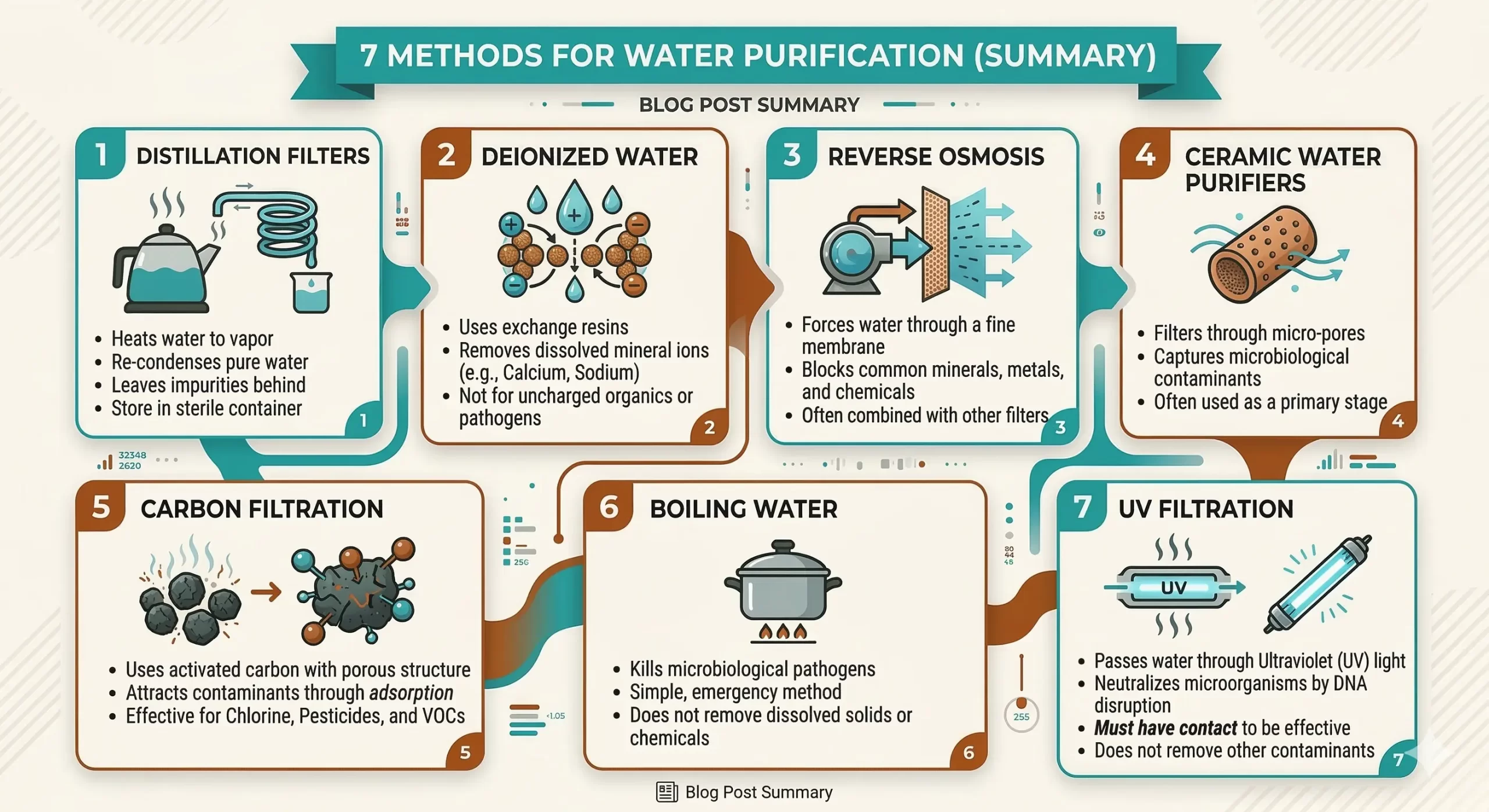
How does alum stack up against alternatives?
vs. Boiling Alone
Boiling muddy water works, but slowly. Particles settle only after cooling, and decanting hot water is difficult. Alum clarifies without fuel, saving time and weight.
vs. Commercial Purifier Packs
Products like Chlor-Floc combine alum and chlorine in one tablet. They are convenient but less flexible. With powdered alum, you control dosage and can pair it with your preferred disinfectant.
vs. DIY Sand Filters
Homemade filters take time to build, clog easily, and are bulky. Alum is faster, lighter, and more effective at removing fine colloids.
Winner for Turbidity: Alum beats all alternatives for speed, simplicity, and reliability in silty water.
Troubleshoot Failed Treatments

Water still cloudy? Here is how to fix it.
Water Won’t Clear
Cause: Under-dosing or poor mixing.
Fix: Add a small extra amount (¼ tsp per gallon), stir vigorously for 1 minute, and wait another 30 minutes.
Water Clears Then Clouds Again
Cause: Overdosing.
Fix: Dilute with more raw water at a 1:1 ratio, stir gently, and wait. Do not add more alum.
Flocs Form But Don’t Sink
Cause: Cold water or insufficient initial mixing.
Fix: Extend settling time to 2 hours. Ensure the next batch gets a full 2-minute stir.
Filter Still Clogs
Cause: Incomplete settling or no pre-filter.
Fix: Always pre-filter and wait the full 60 minutes. Decant slowly from the top.
Frequently Asked Questions About Using Powdered Alum To Purify Water
Does alum kill bacteria and viruses in water?
No. Alum only removes suspended particles that cause cloudiness. It does not kill pathogens like bacteria, viruses, or protozoa. You must always follow alum treatment with boiling, filtration, or chemical disinfection.
How much alum should I use per gallon of water?
Use approximately ¼ to ½ teaspoon of powdered alum per gallon (4 liters) of water. For highly turbid water, you may increase the dose slightly, but start low and watch for floc formation.
Can I drink alum-treated water without boiling it?
No. Even crystal-clear water after alum treatment can contain live pathogens. Always boil for 1 minute, filter through a quality device, or treat with chlorine dioxide or iodine before drinking.
Where can I buy food-grade alum?
Look for “food grade alum,” “pickling alum,” or “USP grade alum” in the spice aisle of grocery stores, camping supply shops, or online retailers. Avoid industrial or unknown sources.
Is alum safe for long-term daily water treatment?
No. Chronic consumption of aluminum poses potential health risks. Use alum only as a temporary solution for clarifying turbid water in wilderness or emergency settings, not as a primary daily treatment method.
What should I do with the sludge left at the bottom?
Do not drink it or pour it back into a water source. The sludge contains concentrated contaminants, heavy metals, and pathogens. Dispose of it away from camp and water sources to prevent recontamination.
Can I harvest natural alum crystals in the wild?
It is not recommended unless you have chemical identification skills. White crystals under rock overhangs may be alum, but they could also be toxic salts. Stick to store-bought, labeled products for safety.
Key Takeaways for Purifying Water With Powdered Alum
Powdered alum is a powerful tool for transforming muddy, undrinkable water into clear liquid ready for disinfection. The process relies on simple chemistry: alum neutralizes particle charges, allowing them to clump and sink. Use 1 gram per 10 liters, stir vigorously for 1–2 minutes, and let the water settle undisturbed for 30–60 minutes.
Always remember that clarity is not safety. Alum removes turbidity but leaves pathogens alive. Follow every treatment with boiling, filtration, or chemical disinfection. Pack a small bag of food-grade alum, a measuring scoop, and a stirring stick on your next backcountry trip. This lightweight addition expands your access to water sources that would otherwise be unusable and keeps you safe when modern systems fail.