How to Remineralize Reverse Osmosis Water
Reverse osmosis (RO) systems strip away up to 99% of contaminants, including lead, arsenic, nitrates, and heavy metals. But this thorough purification also removes beneficial minerals like calcium, magnesium, and potassium, leaving water that tastes flat and slightly acidic. While RO delivers unmatched purity, long-term consumption of demineralized water may affect hydration quality and overall mineral balance.
Remineralization solves this problem by reintroducing key minerals to restore flavor, stabilize pH, and make your purified water more biologically beneficial. Whether you drink RO water daily, brew specialty coffee, or simply want better-tasting hydration, there’s a remineralization method that fits your needs.
This guide breaks down six practical approaches, from budget-friendly DIY tricks to automated inline filters, so you can choose the best option for your home, budget, and health goals.
Compare Remineralization Methods Before You Start

Not all remineralization methods deliver the same results. Some offer precision and portability; others provide automation and consistency. Your ideal choice depends on daily water volume, taste preferences, installation comfort, and budget.
Before selecting a method, consider these key factors:
– Daily consumption: High-volume households benefit most from automated systems
– Sodium sensitivity: Avoid salt-based methods if you follow a low-sodium diet
– Taste control: Manual drops give precise mineral adjustment
– Installation ability: Inline cartridges require basic plumbing skills
– Budget: Balance upfront cost against long-term value
Now let’s explore each method in detail.
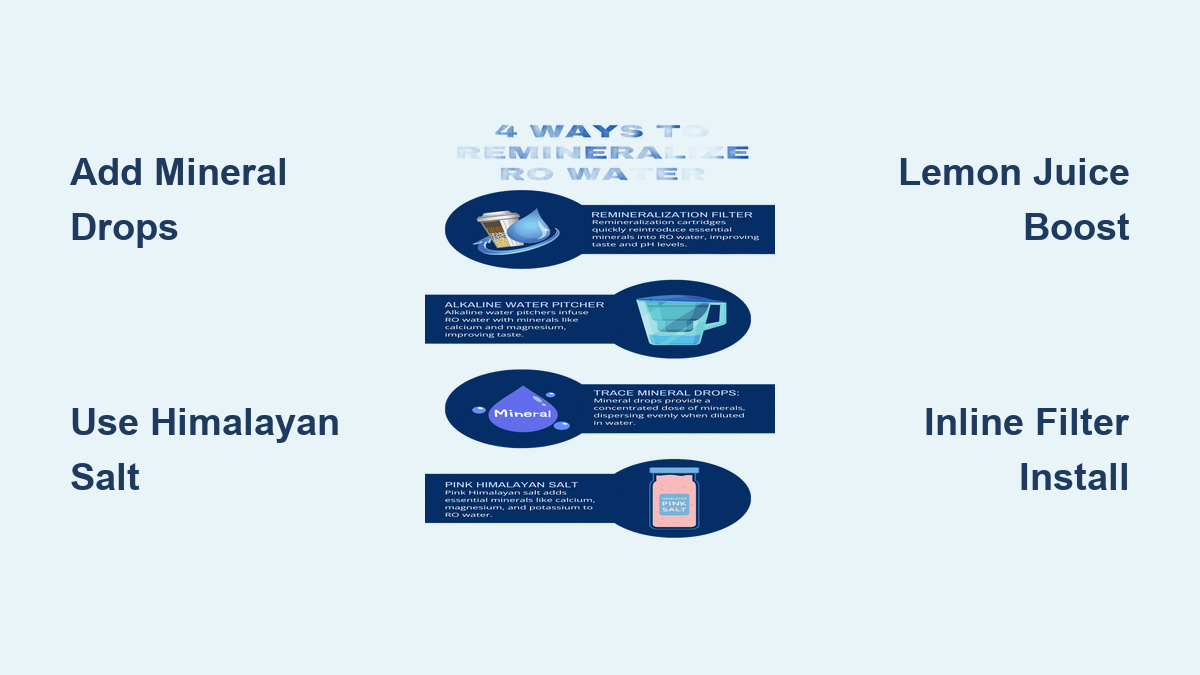
Add Mineral Drops for Precise Dosing
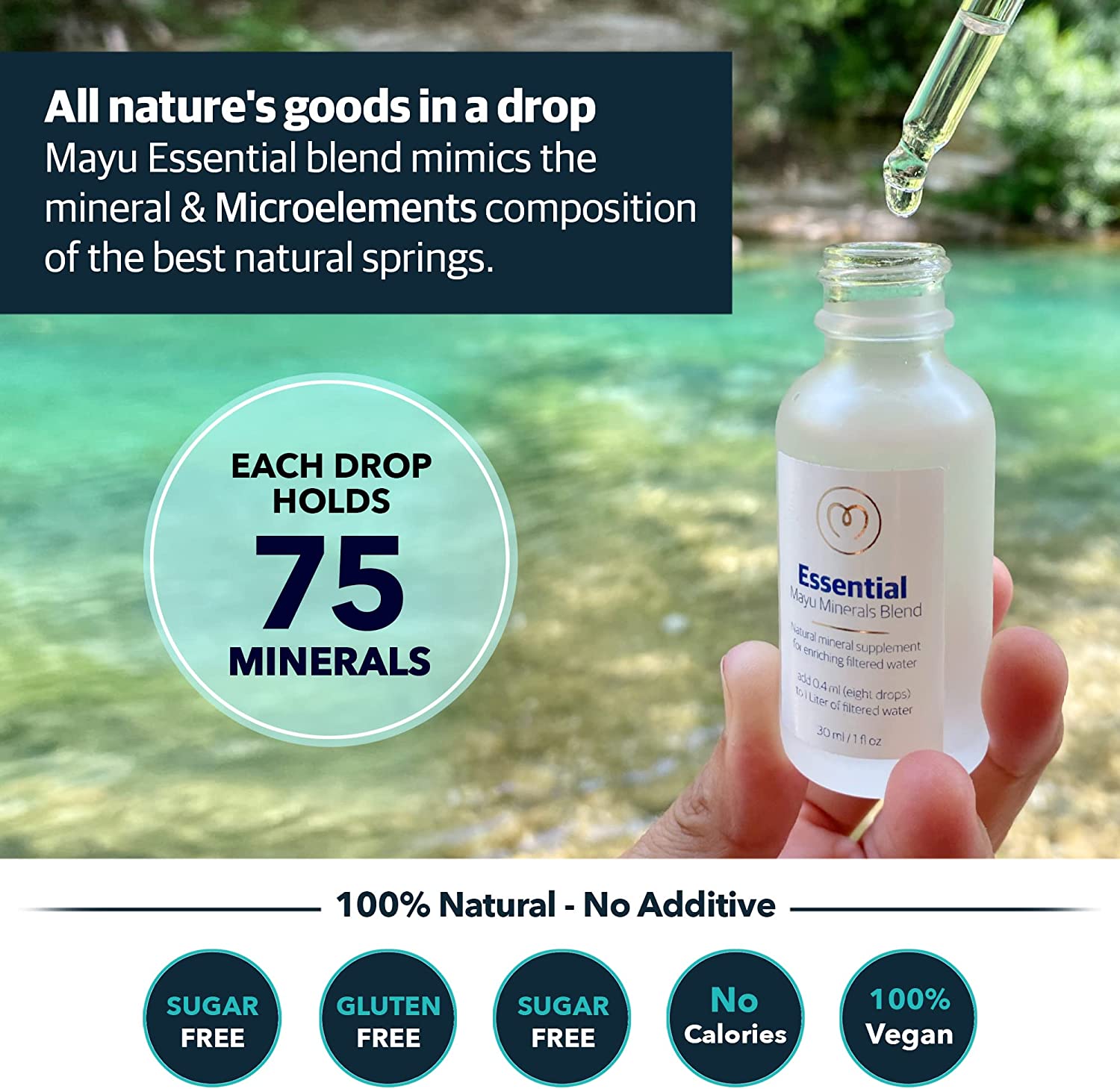
Mineral drops are liquid blends containing bioavailable calcium, magnesium, potassium, and over 75 ionic trace minerals. They offer one of the most accurate ways to remineralize reverse osmosis water without any equipment.
Follow the Standard Dosage
Add 3–5 drops per liter of RO water, then shake or stir gently. Some brands, like Mayu Essential Blend, recommend up to 8 drops per liter depending on your desired mineral content.
Key benefits of mineral drops:
– Full control over mineral levels and taste intensity
– Easy absorption thanks to ionic mineral form
– No setup required, ideal for renters or travel
– Flexible adjustment based on activity level or hydration needs
Watch for overuse: Exceeding the recommended dosage can make water taste bitter or metallic. Always follow label instructions.
Pro tip: Store drops in a cool, dark place and use within 6 months of opening to preserve potency.
Use Himalayan Salt for Budget-Friendly Remineralization
Pink Himalayan salt is a low-cost, natural option containing calcium, magnesium, potassium, and over 80 trace elements. It’s an accessible way to boost mineral content without specialized equipment.
Create a Remineralizing Brine
For consistent dosing, follow this simple recipe:
1. Fill a clean jar ¼ full with Pink Himalayan salt crystals
2. Add RO water and seal the jar tightly
3. Shake daily for 24 hours until the salt fully saturates the water
4. Use 1 teaspoon of brine per 8 oz cup of water
Alternatively, add a tiny pinch directly to each glass, or mix ¼ teaspoon per 4.5 liters (1 gallon) for batch treatment.
Caution: This method increases sodium intake, so avoid it if you’re on a sodium-restricted diet or managing hypertension.
Weigh the Pros and Cons
While cost-effective and simple, salt-based remineralization lacks precision. You can’t measure exact calcium or magnesium output, and the taste may not appeal to everyone.
Expert note: Pair salt water with a squeeze of lemon juice to mask saltiness while adding potassium and vitamin C.
Boost Flavor with Fresh Lemon Juice
Lemon juice won’t fully remineralize water like mineral salts, but it adds calcium, magnesium, potassium, and antioxidants while enhancing palatability. It’s an excellent option for improving hydration motivation, especially for kids or those who dislike flat-tasting RO water.
Squeeze Half a Lemon Per Glass
Add fresh juice from half a lemon to one full glass (8–12 oz) of RO water. Remove seeds first to prevent bitterness.
Best for: Occasional use, flavor variety, and added vitamin C
Time required: About 1 minute per serving
Protect Your Tooth Enamel
Lemons are acidic (pH 2–3), and frequent consumption can erode tooth enamel. Reduce this risk by:
– Drinking through a reusable straw
– Rinsing your mouth with plain water afterward
– Limiting intake to 1–2 glasses per day
This method works well as a rotating option for taste enhancement but isn’t ideal for daily remineralization.
Install an Alkaline Pitcher for Easy Convenience
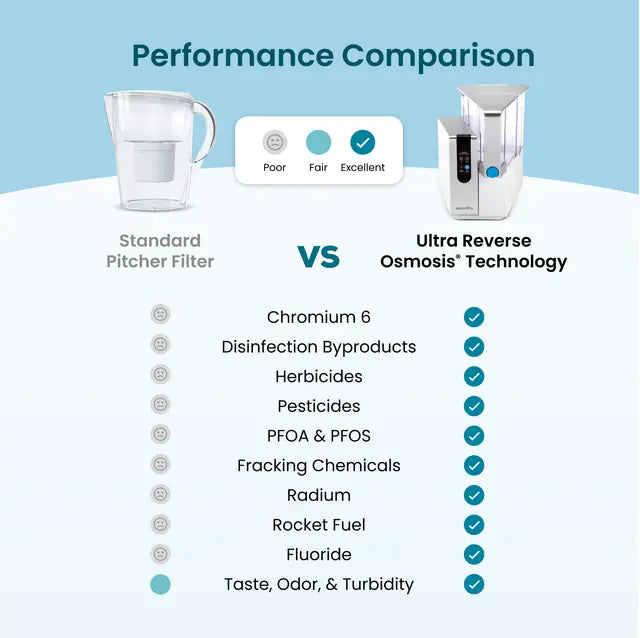
Alkaline water pitchers combine filtration with remineralization in a compact, fridge-friendly design. They raise pH and add minerals via a built-in cartridge containing calcite, magnesium oxide, or mineral stones.
Pour and Drink Automatically
Fill the pitcher with RO water and let it pass through the filter. Most models treat 6–10 cups at a time, delivering slightly alkaline water (pH 7.5–9.0) with enhanced mineral content in minutes.
Best for: Renters, small households, and low-effort users
Cost: $30–$50 upfront, plus $20–$40 every 2–6 months for replacement filters
Understand the Limitations
Despite their convenience, alkaline pitchers have notable drawbacks:
– Redundant filtration: RO water is already pure, so re-filtering wastes cartridge life
– Inconsistent output: Mineral release varies by brand and flow rate
– Short filter life: Frequent replacements increase long-term cost
Check certifications: Look for NSF/ANSI 42 certification to verify claims about taste and odor improvement.
Upgrade to an Inline Remineralization Filter

For hands-free, consistent remineralization, an inline cartridge is the gold standard. Installed as the final stage of your RO system, it automatically adds minerals to every drop of purified water.
Install as the Final RO Stage
Water flows from the RO membrane into the remineralization filter, where it contacts specialized media:
– Calcite (calcium carbonate): Adds calcium and raises pH
– Magnesium oxide (MgO): Boosts magnesium and accelerates pH stabilization
– Proprietary mineral blends: Used in premium systems for balanced output
Brands like Aquatru and Waterdrop X12 include integrated remineralization. For standard under-sink RO units, retrofit kits are widely available.
Installation time: 20–45 minutes for most DIY-friendly systems
Cost: $80–$150 upfront, lasting 6–12 months before replacement
Enjoy Automated Benefits
Inline filters deliver significant advantages:
– Zero daily effort: Water comes out balanced and great-tasting
– Stable pH (7.5–8.5): Prevents corrosion in plumbing
– Appliance protection: Balanced water reduces scaling and metal leaching
– Long-term savings: Cheaper per liter than drops or pitchers
Pro insight: Inline filters improve the Langelier Saturation Index (LSI), making water less aggressive toward copper pipes and faucets.
Optimize Water for Specialty Coffee Brewing

If you brew espresso or pour-over coffee, generic remineralization won’t deliver optimal results. Specialty coffee requires precise mineral balance to extract flavor without damaging equipment.
Target the Ideal Coffee Profile
Start with RO water (TDS below 10 ppm) and add:
– Calcium: 50–80 ppm for body and sweetness
– Magnesium: 10–20 ppm for extraction efficiency
– Bicarbonate: 50–100 ppm to buffer pH and prevent sourness
Too little mineral content produces flat, under-extracted coffee. Too much causes scale buildup in boilers.
Choose Your Mixing Method
Option 1: DIY mineral salts
Combine food-grade calcium chloride, magnesium sulfate, and sodium bicarbonate. Follow recipes from Barista Hustle or Water for Coffee to hit target ppm levels.
Option 2: Commercial products
Use pre-balanced formulations like Barista Battles Water Drops, Third Wave Water Mineral Packets, or Water Wise Reagent Kits for simplified dosing.
Maintenance tip: Even with optimized water, flush your espresso machine boiler monthly to prevent minor scale accumulation.
Avoid Common Remineralization Mistakes
Even effective methods fail when used incorrectly. Steer clear of these frequent errors.
Don’t Overshoot the pH
Using oversized calcite or MgO filters can push pH above 9.0, creating bitter-tasting water and potential scaling. Always match cartridge capacity to your flow rate and daily usage.
Fix: Install a smaller cartridge or blend treated water with untreated water using a mixing valve.
Prevent Inconsistent Dosing
With manual methods like drops, salt, or lemon juice, forgetting to add minerals results in flat, acidic water that defeats the purpose.
Solution: Create a routine. Store drops next to your water bottle or label your pitcher as a visual reminder.
Never Skip System Maintenance
All remineralization filters degrade over time. An expired cartridge may not release enough minerals or could harbor bacteria.
Replacement schedule:
– Inline filters: every 6–12 months
– Alkaline pitcher filters: every 2–6 months
– RO membrane: every 2–5 years
Pro tip: Use a $10 TDS meter and pH test strips monthly to verify your system is performing correctly.
Don’t Expect Tap-Like TDS Levels
Remineralized RO water should have modest TDS (100–200 ppm), not the 300+ ppm of hard tap water. High TDS defeats the purpose of RO filtration.
Goal: Achieve balance and improved taste, not replication of tap water.
Frequently Asked Questions About Remineralizing RO Water
Is remineralizing reverse osmosis water necessary?
Remineralization isn’t mandatory, but it’s highly recommended. While the human body gets most minerals from food, drinking mineral-rich water supports hydration, improves taste, and stabilizes pH. If you find flat-tasting RO water discouraging your hydration habits, remineralization makes a noticeable difference.
What minerals should be added back to RO water?
The most important minerals to restore are calcium, magnesium, and potassium. Bicarbonate helps buffer pH and prevents acidic water. Trace minerals like those found in Himalayan salt or quality mineral drops provide additional benefits, though in smaller amounts.
Can I use regular table salt to remineralize water?
No. Refined table salt lacks the trace minerals found in Pink Himalayan salt or quality sea salt. Table salt is primarily sodium chloride with added anti-caking agents, offering minimal remineralization value. Stick to unrefined mineral salts for better results.
How long do inline remineralization filters last?
Most inline remineralization cartridges last 6–12 months, depending on water usage and source quality. Check the manufacturer’s Performance Data Sheet (PDS) for specific guidance. Monitor TDS and pH monthly to identify when replacement is needed.
Will remineralization make RO water hard like tap water?
No. The goal of remineralization is modest mineral addition (TDS 100–200 ppm), not replication of hard tap water (often 300+ ppm). Remineralized RO water remains much softer than typical tap water while gaining improved taste and balanced pH.
Does remineralized water taste different from spring water?
Remineralized RO water can taste very similar to spring water when properly balanced. High-quality mineral drops are specifically formulated to mimic natural spring water profiles. The taste difference from untreated RO water is typically noticeable immediately.
Key Takeaways for Remineralizing Reverse Osmosis Water
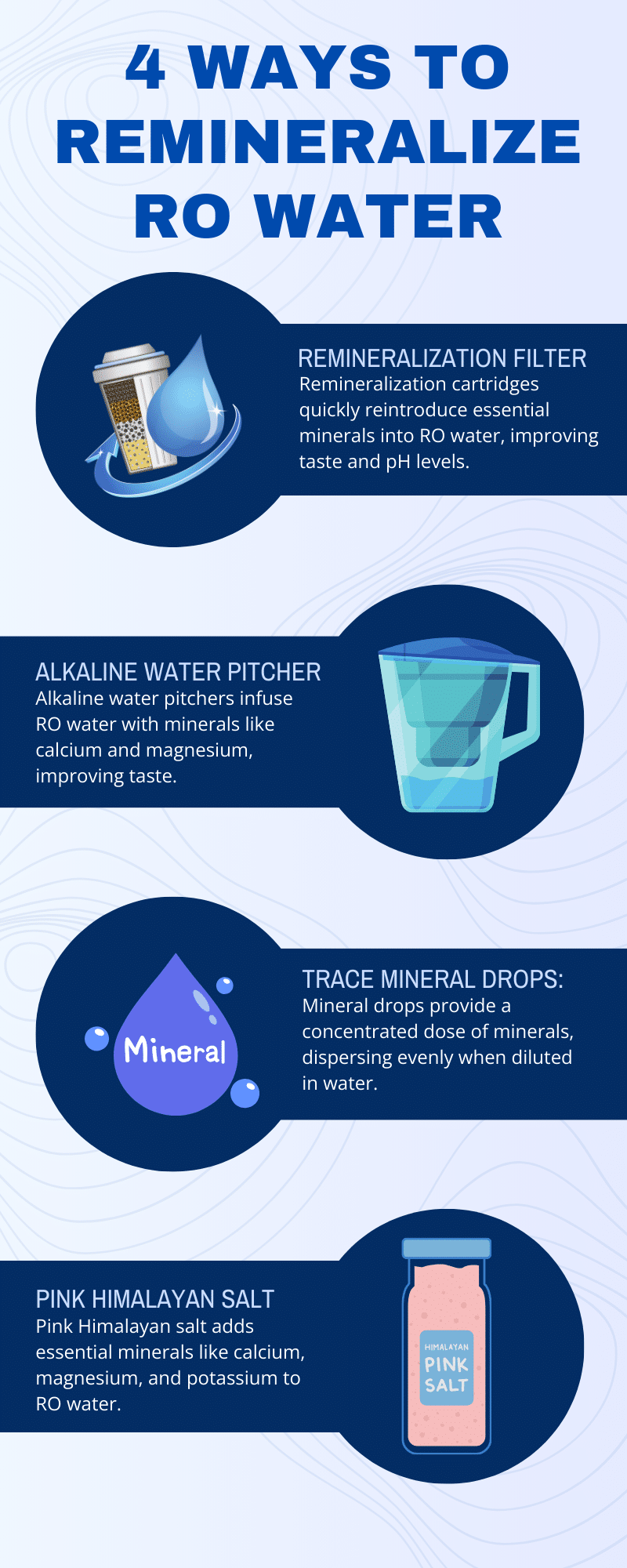
Remineralizing RO water transforms flat, acidic purified water into balanced, great-tasting hydration. The best method depends on your priorities: inline cartridges offer the most consistent results for daily drinkers, mineral drops provide precision for travelers and renters, and Himalayan salt delivers the lowest cost per liter.
Start by testing your current RO water with a TDS meter and pH strips to establish a baseline. Then choose a method that matches your budget, installation comfort, and taste preferences. Monitor your water monthly and adjust as needed.
Your next step: Pick one method from this guide and try it for two weeks. Track the taste, measure your TDS, and notice how much more enjoyable your hydration becomes when your RO water has the minerals it deserves.