pH of Reverse Osmosis Water: Quick Guide
You fill a glass from your reverse osmosis tap, test the pH, and see a reading of 5.8. Your first thought might be that something is wrong with your filter, or that this acidic water could harm your health. The pH of reverse osmosis water almost always lands between 5.5 and 6.5, and this reading is a natural result of the purification process, not a warning sign of contamination.
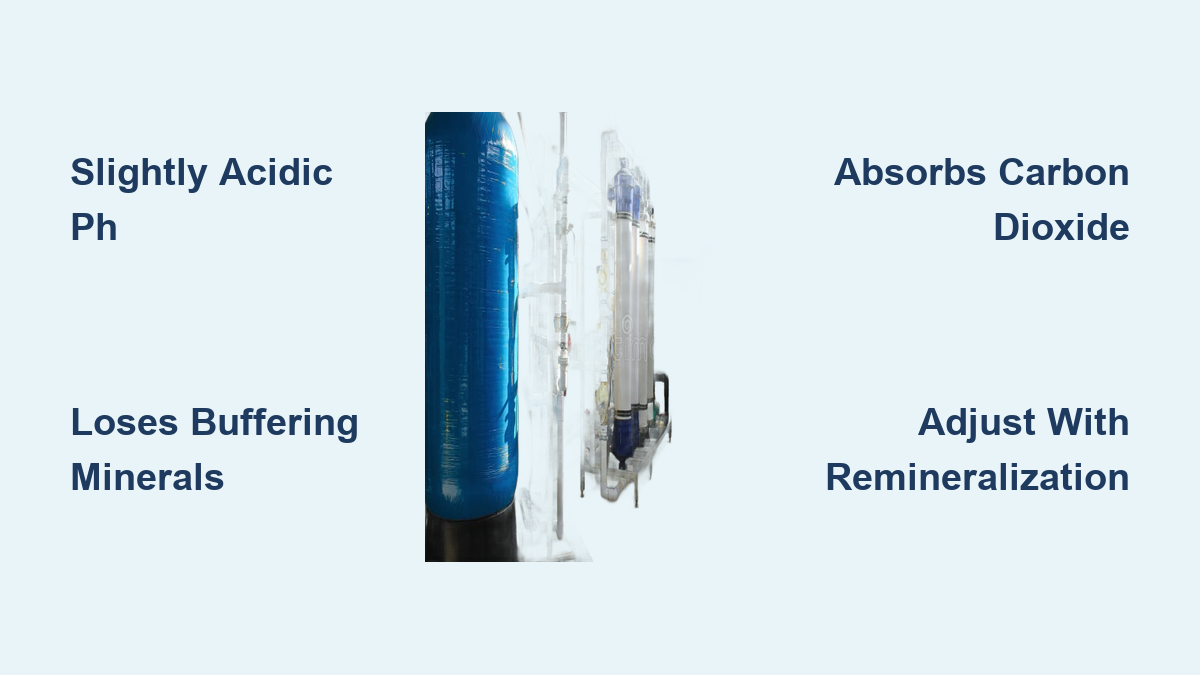
This slightly acidic profile happens because RO membranes strip out the alkaline minerals (calcium, magnesium, and bicarbonates) that normally buffer water against pH shifts. Without those minerals, the purified water absorbs carbon dioxide from the air and forms weak carbonic acid. The result is clean, safe water that simply behaves differently from mineral-rich tap water. In this guide, you will learn the science behind this pH shift, how it affects taste and plumbing, and when (or if) you need to adjust it.
Why RO Water Becomes Slightly Acidic
The Role of Removed Buffering Minerals
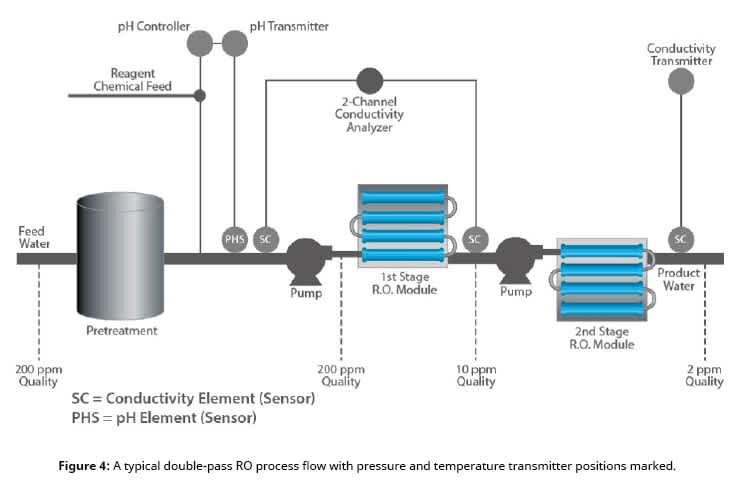
RO membranes block nearly all dissolved solids, including the very ions that keep tap water stable. Calcium, magnesium, bicarbonates, and carbonates act as natural buffers, meaning they neutralize acids and resist sudden pH changes. Once these ions are removed, the water loses its buffering capacity and becomes chemically “hungry,” reacting easily to environmental influences.
This demineralized state explains why some people describe RO water as tasting “flat” or “crisp.” There are simply no minerals left to add flavor or texture to the water.
Carbon Dioxide Absorption Explained
Once RO water is exposed to air, it begins absorbing carbon dioxide (CO₂), which dissolves and forms carbonic acid. In regular tap water, bicarbonate ions would neutralize the hydrogen ions produced by this reaction. In RO water, no such buffer exists, so the pH drops.
Freshly produced RO water, if sealed from air, may read near pH 7.0. However, within 24–48 hours of exposure, it stabilizes around pH 5.5–6.5, depending on ambient CO₂ levels and temperature.
Real-World pH Variability
Do not be surprised if your pH meter shows different readings at different times. RO water pH is dynamic, not fixed. Key factors include:
- Exposure time to air: Longer exposure leads to lower pH
- Container type: Open pitchers accelerate CO₂ absorption; sealed tanks slow it
- Agitation: Pouring or stirring increases gas exchange
- Measurement tools: Low-conductivity water can confuse consumer pH meters
For reliable results, test immediately after drawing water and allow the meter to stabilize fully, preferably using a device designed for purified water.
Safety and Health Myths Debunked

Is Acidic RO Water Harmful?
No. The pH of reverse osmosis water in the 5.5–6.5 range poses no health risk. The World Health Organization sets an acceptable drinking water pH range of 6.5–8.5, but explicitly states that values outside this window are not inherently dangerous. The guideline primarily addresses aesthetic qualities and plumbing concerns, not human health.
Your body maintains blood pH within a tight range (7.35–7.45) regardless of what you drink. Stomach acid, at pH 1.5–3.5, is vastly more acidic than RO water and neutralizes any incoming fluid instantly.
Tooth Enamel and Bone Health
Claims that RO water erodes teeth or leaches calcium from bones are scientifically unfounded:
- Tooth erosion requires prolonged exposure to strong acids (pH below 4.0), like those in soda or citrus juice. RO water lacks the corrosive strength to damage enamel.
- Bone health is unaffected by water pH. No credible studies show that slightly acidic water impacts calcium metabolism or bone density.
The term “acidic” is technical; anything below pH 7.0 qualifies. But mild acidity does not equal harm.
Taste vs. pH Confusion
Some users report a “metallic” or “flat” taste in RO water. This is not caused by low pH, but by the lack of minerals. Natural water contains trace amounts of sodium, potassium, and magnesium that enhance flavor. RO strips these out, leaving a neutral profile that some find bland.
Many popular bottled waters (such as Aquafina and Dasani) have pH levels similar to RO water and use post-filtration mineral blends to improve taste, just like remineralization filters do.
How RO Systems Affect pH: Feed vs. Product Water

Feed Water pH Matters for Efficiency
While the product water (what comes out of your tap) is slightly acidic, the feed water (incoming source) pH is critical for system performance. RO membranes operate best when feed water is between pH 6.5 and 7.5:
- Low feed pH (below 6.0): Can reduce salt rejection efficiency and cause charge reversal on thin-film composite membranes
- High feed pH (above 8.0): Increases scaling risk, especially calcium carbonate precipitation
Maintaining optimal feed pH ensures maximum contaminant removal (97–99%) and extends membrane life.
Membrane Tolerance and Longevity
Modern RO membranes tolerate a wide pH range (2.0–11.0) during operation and cleaning. However, long-term exposure to extremes accelerates degradation:
- High pH: Promotes hydrolysis of polyamide layers
- Low pH: Increases risk of organic fouling and biofilm growth
For best results, keep feed water in the 6.5–7.5 sweet spot and use antiscalants when needed.
Preventing Scaling and Corrosion
Langelier Index and Scaling Risk
Scaling occurs when calcium and carbonate ions exceed solubility and form solid deposits on the membrane. The Langelier Saturation Index (LSI) predicts this risk by comparing actual pH to saturation pH:
- LSI below -0.5: Non-scaling (safe)
- LSI 0 to +0.5: Balanced
- LSI above +0.5: High scaling potential
To prevent scaling, target feed water alkalinity of 50–150 mg/L and bicarbonate of 60–180 mg/L. Use antiscalant dosing at 2–8 ppm depending on TDS levels.
Corrosion in Plumbing Systems
Slightly acidic RO water (pH below 6.0) can corrode copper pipes over time, especially if water sits stagnant. This may lead to blue-green staining or metallic taste.
Solutions include:
– Install a calcite contactor to raise pH to 7.0–7.5
– Use plastic (PEX, PVC) or stainless steel plumbing
– Flush lines regularly if water is not used daily
Modern homes with non-metallic piping face minimal risk.
Adjusting RO Water pH: When and How

Remineralization for Taste and Stability
If you prefer neutral-tasting water or want to protect plumbing, remineralization is the best solution.
Calcite Contactors
– Slowly dissolve calcium carbonate into water
– Output pH: 7.0–7.5
– Best for whole-house systems
– Refill media annually
Alkaline Filter Cartridges
– Contain blends of calcium, magnesium, and potassium
– Output pH: 8.0–9.0
– Lifespan: 6–12 months
– Add 30–60 mg/L of beneficial minerals
– Cost: €50–100 per unit
Manual and Chemical Adjustment
Baking Soda (Sodium Bicarbonate)
– Add a pinch per liter to raise pH
– Increases sodium content, so avoid for low-sodium diets
Mineral Drops or Sea Salt
– Inexpensive way to remineralize small batches
– Cost: €15–30 per bottle
– Requires manual dosing
Automated Chemical Injection
– Used in commercial systems
– Injects precise amounts of NaOH or food-grade acids
– Paired with pH sensors for real-time control
Applications: Tailoring pH to Use Case
Drinking Water Optimization
For home use, RO water is safe as-is, but remineralization improves taste and adds dietary minerals. Target pH 7.0–7.5 for optimal balance. Many users install a dedicated remineralization stage after the RO membrane.
Hydroponics and Plant Growth
RO water is ideal for hydroponics because it provides a blank slate, free of contaminants and variable minerals.
- Ideal pH range: 5.5–6.5 (matches most nutrient solutions)
- Challenge: Low buffering means pH can swing rapidly
- Solution: Use a pH controller (€200–500) with automatic dosing
Aquariums and Aquaculture
Fish are sensitive to pH shifts. RO water allows full control over water chemistry.
- Mix RO with tap water to achieve desired hardness
- Use buffer solutions (such as KH+ additives) to stabilize pH
- Monitor regularly, especially in soft-water species tanks
Irrigation and Agriculture
Slightly acidic RO water (pH 5.5–6.5) benefits alkaline soils by preventing nutrient lockout of iron and phosphorus. For large-scale farming, use sulfuric acid injection to lower pH further if needed, or apply gypsum to adjust calcium without raising pH.
Maintaining Accuracy: pH Testing Tips
Calibrate for Reliable Readings
Standard pH meters can drift in low-conductivity RO water. For accurate results:
- Calibrate monthly (critical systems) or quarterly (residential)
- Use two-point calibration with pH 4.0 and 7.0 buffers
- Choose a meter designed for ultrapure water
- Replace sensors annually or if drift exceeds 0.3 pH units
Troubleshooting Fluctuating Readings
If your pH meter shows inconsistent values:
- Bypass the remineralization filter. If pH drops, the media is spent.
- Check the storage tank seal. Air exposure lowers pH.
- Test fresh vs. stored water. Expect a 0.5–1.0 drop over 24 hours.
- Verify meter function by testing in buffer solution.
Persistent instability may indicate membrane failure. Check TDS levels.
System Care for Consistent Output
Daily and Monthly Maintenance
RO system performance affects water quality, including pH stability.
Daily Checks:
– Monitor inlet pressure
– Verify flow rate
– Check TDS of product water
Monthly Tasks:
– Sanitize system with hydrogen peroxide
– Inspect pre-filters for clogging
– Clean storage tank if needed
Annual Tasks:
– Replace membranes if rejection drops below 95%
– Service pumps and valves
– Rebuild pressure tanks if necessary
Protecting the Membrane
To maximize lifespan:
- Remove chlorine using a carbon pre-filter (0 ppm free chlorine)
- Control SDI and keep it below 3.0 to prevent fouling
- Limit temperature and keep feed water under 85°F (29°C)
- Use antiscalant for hard water sources
Comparing RO to Other Water Types

RO vs. Bottled Water
- Purity: RO removes 97–99% of TDS, often exceeding bottled water standards
- pH: Many bottled waters have pH 5.0–6.5, nearly identical to RO
- Sustainability: Home RO reduces plastic waste and carbon footprint
RO vs. Alkaline Water
- RO water: Slightly acidic (5.5–6.5), mineral-free, high purity
- Alkaline water: pH above 7.0, often produced via electrolysis or remineralization
Health claims about alkaline water lack scientific backing. The body regulates pH independently of water intake. RO water with post-filtration remineralization offers the best of both worlds: purity plus balanced pH and taste.
Frequently Asked Questions About RO Water pH
What is the typical pH of reverse osmosis water?
The pH of reverse osmosis water typically falls between 5.5 and 6.5 after exposure to air. Freshly produced RO water sealed from air may read near 7.0, but it drops to the 5.5–6.5 range within 24–48 hours as it absorbs carbon dioxide.
Is RO water with a pH of 6.0 safe to drink?
Yes. RO water at pH 6.0 is safe for consumption. The WHO recommends a range of 6.5–8.5 for aesthetic reasons, but explicitly states that water outside this range is not harmful. Stomach acid (pH 1.5–3.5) is far more acidic and neutralizes any incoming fluid instantly.
Why does my RO water taste flat or metallic?
The flat or metallic taste comes from the absence of minerals, not from the pH itself. RO strips out calcium, magnesium, and other ions that normally add flavor. Installing a remineralization cartridge can restore taste and raise pH to 7.0–7.5.
Can acidic RO water corrode copper pipes?
Yes, if pH stays below 6.0 for extended periods and water sits stagnant in copper lines. To prevent corrosion, install a calcite contactor, switch to PEX or PVC plumbing, or flush lines regularly if water is not used daily.
How do I raise the pH of my RO water?
The most common methods are calcite contactors (which raise pH to 7.0–7.5), alkaline filter cartridges (which raise pH to 8.0–9.0), or adding a small amount of baking soda. For whole-house systems, a calcite contactor offers the best balance of cost and effectiveness.
Does RO water pH affect hydroponic nutrient uptake?
Yes. Most hydroponic nutrients are formulated for the 5.5–6.5 range, which aligns naturally with RO water. However, because RO water has low buffering capacity, pH can swing rapidly once nutrients are added. Using a pH controller with automatic dosing helps maintain stability.
Key Takeaways for Understanding RO Water pH
The pH of reverse osmosis water is naturally slightly acidic due to mineral removal and CO₂ absorption, but this is a sign of purity, not danger. The water is safe, clean, and highly controllable for any application.
Your next step depends on your goals. If you are happy with the taste and have modern plumbing, no action is needed. If you want better flavor or protect older copper pipes, add a remineralization stage to bring pH to 7.0–7.5. For hydroponics or labs, use the natural 5.5–6.5 range as your baseline and invest in a pH controller for precision. Understanding the science behind RO water pH empowers you to use your system with confidence.