How to Choose a Reverse Osmosis System
Choosing a reverse osmosis system can feel overwhelming with dozens of models claiming to be the best. The truth is that the right system depends entirely on your water quality, household size, and budget. Reverse osmosis remains the most thorough home filtration method available, stripping out up to 99% of contaminants including lead, arsenic, PFAS, and fluoride.
This guide walks you through a practical, evidence-based process for selecting a reverse osmosis system. You will learn how to test your water, compare system types, verify certifications, and calculate true long-term costs so you can invest with confidence.
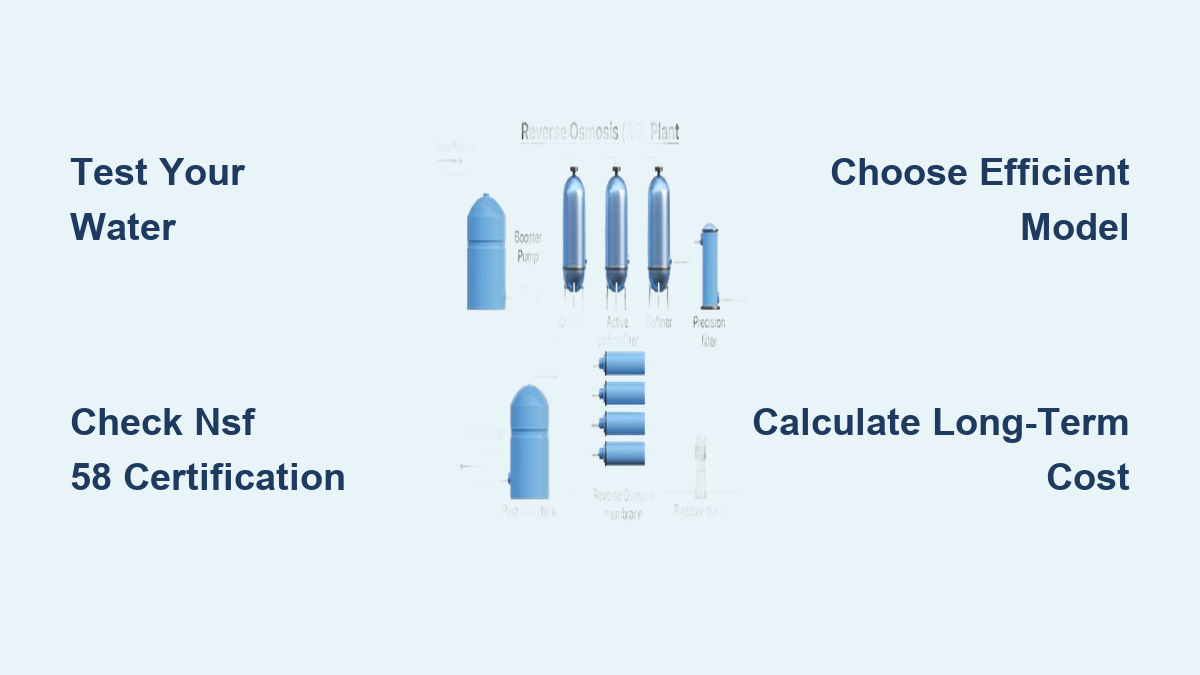
Test Your Water Before Buying Anything

You cannot remove what you do not know is there. Water testing is the essential first step when learning how to choose a reverse osmosis system that actually fits your needs.
Why Your Water Source Changes Everything
Municipal water reports offer general data, but they do not reflect what is coming out of your specific pipes. Well water carries even more uncertainty, with potential risks from bacteria, radon, iron, and heavy metals. A system designed for city water may fall short for well water, and vice versa.
Action step: Order a certified lab test or use a professional home kit. Focus on lead, PFAS, fluoride, nitrates, arsenic, TDS, and microbial content.
City Water vs. Well Water Requirements
City water and well water demand different treatment approaches.
- City Water: RO excels at removing chlorine, chloramine, disinfection byproducts, and pipe-leached lead. A standard 5–7 stage RO system usually handles these contaminants well.
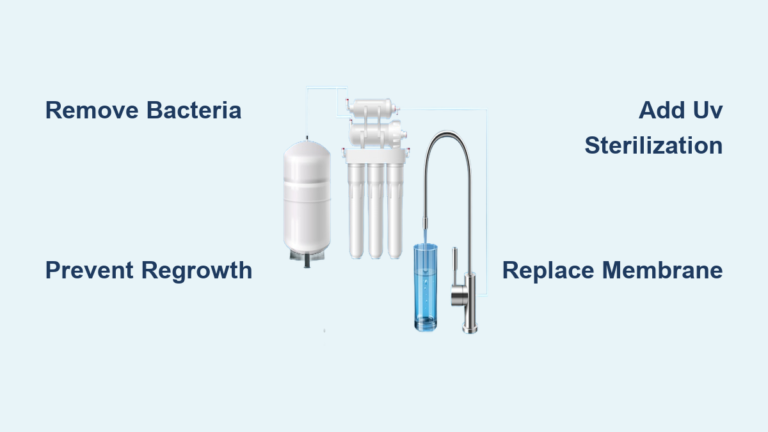
- Well Water: RO removes chemicals and metals but does not kill bacteria or viruses on its own. Pair your RO system with a UV sterilizer for complete microbial protection.
Skipping this step risks under-treating or over-treating your water, wasting money and potentially missing critical health threats.
Match System Type to Your Home and Lifestyle
Reverse osmosis systems come in three main configurations. Each serves a different purpose.
Under-Sink RO Systems for Daily Drinking Water
Under-sink units are the most popular choice for households wanting clean drinking water at the kitchen tap.
Tanked vs. Tankless Designs
- Tanked Systems (e.g., APEC ROES-PH75): Store 2–4 gallons of filtered water under the sink. Deliver instant flow but can run out during heavy use. Best for small families or moderate consumption.
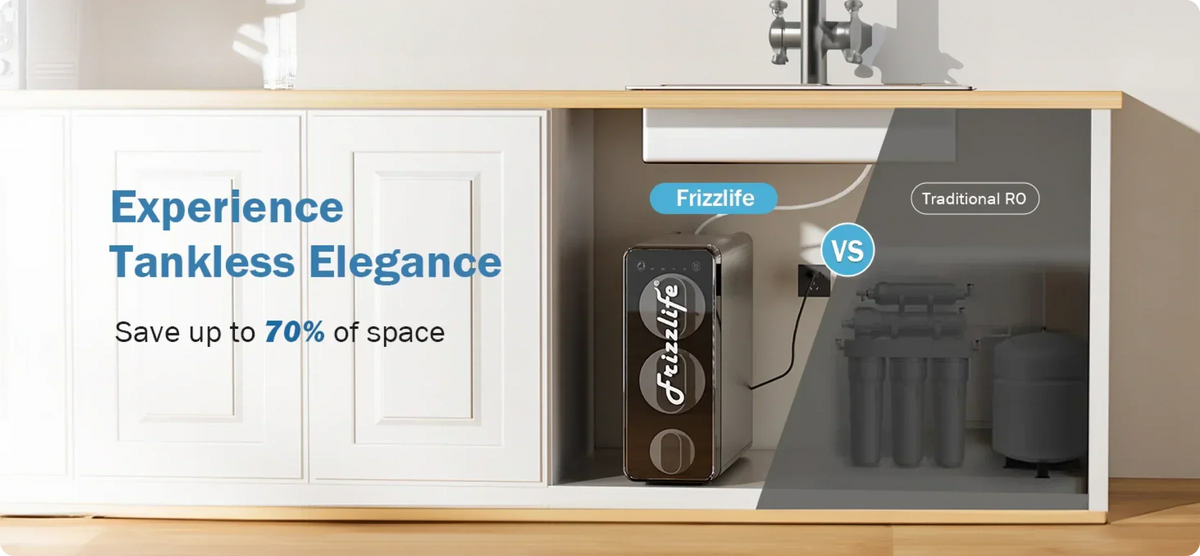
- Tankless Systems (e.g., Waterdrop G3 P800): Filter on demand using high-capacity membranes. Save space and provide unlimited flow. Ideal for large households or frequent cooking.
Pro Tip: Tankless models require water pressure of 40+ PSI or a built-in booster pump to function properly.
Whole-House RO Systems for Severe Contamination
Whole-house systems treat all water entering your home, including showers, laundry, and appliances.
- Pros: Comprehensive protection for homes with extreme contamination.
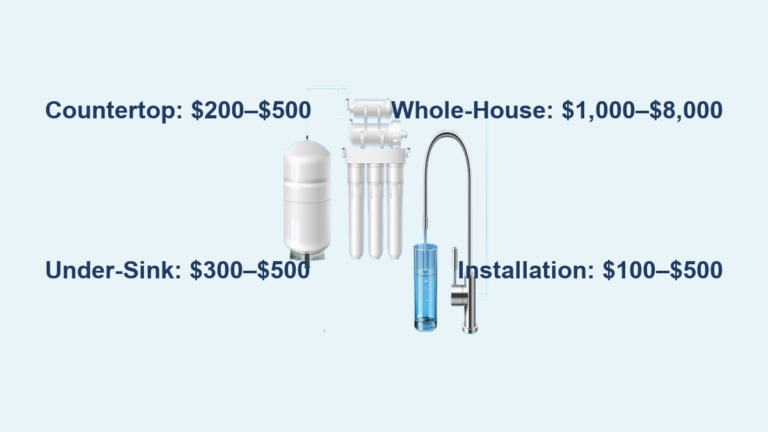
- Cons: $3,000–$6,000+ cost, professional installation required, high water waste. Overkill for most homes focused on drinking water quality.
Bottom Line: Only consider whole-house RO if you have extreme TDS levels, well water with chemical contamination, or specific health sensitivities requiring treated water throughout the home.
Countertop RO Units for Renters and Small Spaces
Countertop systems work well for renters, small kitchens, or temporary setups where plumbing modifications are not possible.
Top Countertop Models
- AquaTru Carafe: NSF 58 certified, removes 100% of tested health contaminants, no plumbing needed.
- Waterdrop A1: Compact design, hot/cold dispensing, app-connected.
- Philips Water Dispenser: Easy to use but lacks full NSF 58 certification.
Trade-off: Takes counter space and may need manual refilling. Not ideal for large families with high daily water consumption.
Verify Contaminant Removal Claims with Certifications

Marketing claims mean nothing without third-party verification. This is where many buyers get burned.
What High-Quality RO Membranes Actually Remove
Proven RO membranes eliminate a wide range of dangerous substances.
- Lead: 95–100%
- Fluoride: 85–92% (up to 100% in top models)
- Arsenic: 92–96%
- PFAS (PFOA/PFOS): High reduction confirmed in independent testing
- Nitrates: 60–75%
- TDS: 90%+ reduction (e.g., from 164 mg/L to 14 mg/L)
Note: RO does not remove gases like radon or VOCs unless paired with strong carbon pre-filters.
Look for These Critical Certifications
Third-party certification separates proven systems from marketing hype.
- NSF/ANSI 58: The gold standard for RO systems, verifying TDS reduction, structural integrity, and contaminant removal.
- NSF/ANSI 53: Confirms removal of health hazards like lead and cysts.
- NSF/ANSI 401: Covers emerging contaminants such as pharmaceuticals and pesticides.
- NSF/ANSI 372: Ensures lead-free materials.
Red Flag: Systems certified only for NSF 372 (lead-free materials) but not NSF 58 are not proven to remove contaminants.
Certified vs. Uncertified Comparison
| System | Certified? | Key Strengths |
|---|---|---|
| AquaTru Carafe | Yes (NSF 42, 53, 58, 401) | Removes 100% of tested health contaminants |
| Cloud RO | Yes (NSF 58) | Built-in remineralization, 1:1 efficiency |
| Waterdrop G3 P800 | Yes (NSF 58) | 800+ GPD flow, UV option available |
| Philips Water Dispenser | No NSF 58 | No verified RO performance data |
Prioritize Water Efficiency to Cut Waste and Costs
Older RO systems waste 3–4 gallons for every gallon produced. Modern technology has changed this dramatically.
Waste Ratios That Matter
- 3:1 or 4:1 (Old Standard): Found in budget models like APEC ROES-PH75. Acceptable but wasteful.
- 1:1 (High Efficiency): Modern systems like Cloud RO and PuROTwist 4000 achieve near-zero waste.
- AquaTru Carafe: 4:1 efficiency (1 gallon waste per 4 gallons purified), excellent for countertop use.
Environmental Impact: High-efficiency systems cut water bills and reduce environmental footprint. A 1:1 system saves thousands of gallons per year compared to older models.
How Efficiency Technology Works
- Permeate Pumps: Reduce backpressure, improving recovery rate.
- Automatic Shut-Off Valves: Stop water flow when the tank is full.
- Smart Flow Restrictors: Optimize membrane performance automatically.
Pro Tip: In low-pressure homes (below 40 PSI), choose a system with a built-in booster pump, which is common in tankless models.
Evaluate Flow Rate and Daily Capacity
Speed matters when filling pots, pitchers, or multiple glasses in a row.
Gallons Per Day Explained
- 400–600 GPD: Standard capacity for families of 2–4 people.
- 800+ GPD (e.g., Waterdrop G3 P800): High-demand households needing fast refill.
- Cloud RO: 80 GPD but designed for on-demand use with a small buffer tank.
Real-World Tip: Tanked systems deliver fast flow until empty, then slow down during refill. Tankless provides consistent on-demand flow without waiting.
Watch for TDS Creep in Storage Tanks
When RO water sits in a storage tank, trace contaminants can slowly seep back in, raising TDS levels.
- Best Systems (APEC, AquaTru Gen 2): Show only 1–5 PPM increase in first draw.
- Fix: Systems with quality check valves and automatic flush cycles minimize this effect.
Action Step: Discard the first cup if the system has not been used in 24+ hours.
Choose Systems with Smart Features That Add Value
Modern RO systems offer more than just filtration.
Filter Monitoring and Alerts
- Smart Apps (Cloud RO, Culligan Connect): Track filter life, water usage, and detect leaks.
- LED Faucets: Change color to indicate filter status or water quality in real time.
Benefit: Prevents membrane damage from expired pre-filters and ensures consistent performance.
Remineralization for Better Taste and Health
RO strips healthy minerals like calcium and magnesium, which can make water taste flat and lower pH.
Why Add Minerals Back?
- Improves taste and mouthfeel
- Raises pH to alkaline levels (8.0–8.7)
- Supports hydration and dental health
Top Systems with Built-In Remineralization:
- Cloud RO: Built-in remineralization stage
- Frizzlife PD600-TAM3: Raises pH from 7.4 to 8.13
- Waterdrop X16: Mineral boost stage included
DIY Option: Add a standalone remineralization filter to any system that lacks one.
Calculate Total Cost of Ownership Over 5 Years
The cheapest upfront system often costs more over time. Look beyond the sticker price.
Upfront Price vs. Long-Term Value
| Category | Price Range | Examples |
|---|---|---|
| Budget | $200–$400 | APEC ROES-PH75, PureValue 5EZ50 |
| Mid-Range | $400–$700 | AquaTru, Cloud RO |
| Premium | $700–$1,500+ | Waterdrop G3 P800, Kinetico K5 |
Savings Tip: Even a $700 RO system pays for itself in 1–2 years compared to bottled water at $1.50+ per gallon.
Annual Maintenance Costs Add Up
- Pre/Post Filters: Replace every 6–12 months ($30–$60 per set)
- RO Membrane: Replace every 2–5 years ($75–$150)
- Remineralization Filter: Replace every 6–12 months ($50+)
Cost Per Gallon Comparison
| System | Est. Cost/Gallon | Notes |
|---|---|---|
| APEC ROES-PH75 | $0.10 | Low-cost, non-proprietary filters |
| Frizzlife PD600 | $0.10 | Affordable replacement filters |
| Cloud RO | $0.26 | Higher filter cost |
| Waterdrop A1 | $0.26 | Proprietary filters |
Warning: Proprietary filters lock you into brand pricing. Opt for standard 4-inch filters (Hume, APEC) for long-term savings.
Ensure Easy Installation and Straightforward Maintenance
Most RO systems do not require a plumber.
DIY Installation Requirements
- Under-Sink: 1–2 hours with basic tools
- Countertop: 15 minutes, no tools needed
- Requirements: Cold water line, drain connection, power outlet (for electric models)
Pro Tip: Watch manufacturer video guides before starting. Use a saddle valve for easy water line connection.
Filter Replacement Made Simple
- Quick-Change Designs (PuROTwist, WaterDrop X16): Twist off, twist on, no buckets or mess.
- Traditional Systems: May require shutting off water and using wrenches.
Maintenance Schedule:
- Pre/Post Filters: Every 6–12 months
- RO Membrane: Every 2–5 years
- Sanitize System: Annually to prevent biofilm buildup
Debunk Common Reverse Osmosis Myths
Misinformation leads many buyers to make poor decisions.
“Fridge Filters Are Enough”
False. Fridge filters only remove chlorine and improve taste. They do not remove lead, fluoride, PFAS, or dissolved solids. RO is 10 times more effective.
“RO Removes Healthy Minerals, So It’s Bad”
RO does remove minerals, but most minerals come from food, not water. Remineralization filters restore calcium, magnesium, and pH balance. Removing toxic contaminants like lead and arsenic far outweighs losing trace minerals.
“RO Wastes Too Much Water”
Outdated. Modern 1:1 systems waste minimal water. Producing bottled water uses 3 times more water than even a 3:1 RO system.
“Whole-House RO Is Always Better”
Not true. Whole-house RO is expensive, high-maintenance, and unnecessary for most homes. Point-of-use RO at the kitchen sink delivers ultra-pure drinking water at a fraction of the cost.
Use This Final Decision Checklist
Follow these steps to pick the right system:
- Test your water and identify specific contaminants
- Choose the system type (under-sink tanked/tankless, countertop, or whole-house)
- Verify NSF 58 certification for RO performance claims
- Check efficiency ratio and aim for 1:1 to 4:1 waste ratio
- Confirm flow rate (400+ GPD for families, 800+ for high demand)
- Include remineralization for better taste and pH balance
- Avoid proprietary filters unless you accept long-term brand lock-in
- Calculate 5-year cost (upfront + annual cost × 5)
- Ensure drain access for wastewater line
- Consider smart features like app monitoring and leak detection
Best Systems by Category

| Category | Top Pick | Why It Wins |
|---|---|---|
| Best Overall | AquaTru Carafe | NSF 58, 100% contaminant removal, no installation |
| Best Under-Sink | Cloud RO | 1:1 efficiency, built-in remineralization, app control |
| Best Tankless | Waterdrop G3 P800 | 886 GPD flow, UV option, smart faucet |
| Best Budget | APEC ROES-PH75 | $200, NSF 58, ultra-low maintenance cost |
| Best Efficiency | Hume Water Saver 75 | 75% recovery, non-proprietary filters, North American made |
Frequently Asked Questions About Reverse Osmosis Systems
What contaminants does reverse osmosis remove?
Reverse osmosis removes up to 99% of contaminants including lead (95–100%), fluoride (85–92%), arsenic (92–96%), PFAS, nitrates (60–75%), and dissolved solids (90%+). It does not remove gases like radon or VOCs unless paired with carbon pre-filters.
Do I need a UV sterilizer with my RO system?
If you have well water, yes. RO removes chemicals and metals but does not kill bacteria or viruses. A UV sterilizer provides complete microbial protection for well water users.
How much does a good reverse osmosis system cost?
Budget systems start around $200 (APEC ROES-PH75). Mid-range options run $400–$700 (AquaTru, Cloud RO). Premium systems with smart features cost $700–$1,500+. Whole-house systems range from $3,000–$6,000+.
How often do RO filters need replacement?
Pre-filters and post-filters need replacement every 6–12 months. The RO membrane lasts 2–5 years depending on water quality and usage. Remineralization filters typically need replacement every 6–12 months.
Are countertop RO systems as effective as under-sink models?
Yes, quality countertop systems like the AquaTru Carafe hold NSF 58 certification and remove 100% of tested health contaminants. The main trade-off is counter space and smaller capacity compared to under-sink units.
Is reverse osmosis water safe to drink long-term?
Yes. While RO removes some minerals, most minerals come from food, not water. Adding a remineralization filter restores calcium, magnesium, and healthy pH levels. The benefit of removing toxic contaminants far outweighs the minor mineral loss.
Key Takeaways for Choosing the Right Reverse Osmosis System
Learning how to choose a reverse osmosis system comes down to three critical factors. First, test your water so you know exactly what contaminants you need to target. Second, verify NSF 58 certification to ensure the system actually delivers on its performance claims. Third, calculate the total 5-year cost including filters, not just the upfront price.
Start by ordering a water test today and shortlist two or three certified systems that match your household size and budget. Whether you choose a countertop carafe for simplicity or a high-flow tankless system for maximum capacity, you are making a long-term investment in cleaner, safer water that outperforms bottled water in purity, cost, and sustainability.