Does Reverse Osmosis Remove Radon?
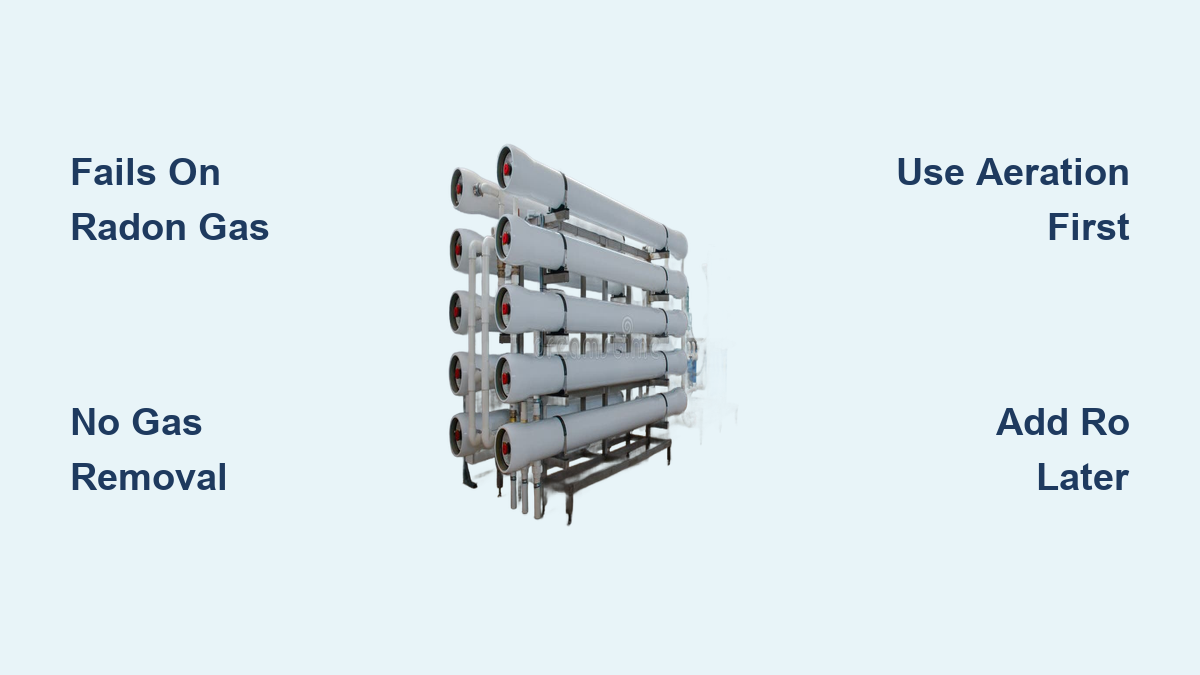
If you rely on well water and worry about radon, you may have wondered whether a reverse osmosis system can protect your household. Here is the critical answer: reverse osmosis does not remove radon from water. Despite its reputation for removing contaminants down to 0.001 microns, an RO membrane cannot capture radon because it is a dissolved gas, not a solid particle or ion. Relying on RO alone leaves your family exposed to a radioactive gas that escapes into indoor air during showers, cooking, and dishwashing.
This guide explains exactly why RO fails against radon, what actually works, and how to build a complete water treatment plan. You will learn the science behind radon removal, compare proven methods like aeration and carbon filtration, and discover where RO still fits into a safe, effective system.
Why RO Cannot Filter Radon Gas

Reverse osmosis is a powerhouse for removing dissolved solids, heavy metals, and certain radionuclides. However, radon operates on a completely different physical level. As a dissolved noble gas, radon molecules slip through the semi-permeable RO membrane without being rejected. Unlike lead or fluoride, which are blocked by size or charge, gases like radon, carbon dioxide, and hydrogen sulfide diffuse freely across the membrane barrier.
RO systems use sediment pre-filters, carbon pre-filters, and carbon post-filters. None of these stages are designed for high-volume radon adsorption. While a carbon post-filter might trap trace amounts, it saturates almost immediately and offers no meaningful protection. Even systems that remove 92–96% of radium and uranium (solid radionuclides) have virtually no impact on gaseous radon.
RO vs. Radon: A Physics Mismatch
| Property | Radon | RO Membrane Capability |
|---|---|---|
| State | Dissolved gas | Blocks solids and ions |
| Molecular Behavior | Small, non-polar | Allows gas diffusion |
| Removal Mechanism | Requires stripping or adsorption | Relies on size exclusion and charge |
| Typical Rejection Rate | Less than 10% | 85–99% for metals and ions |
This fundamental mismatch means no standard RO unit, regardless of brand or price, can be relied upon for radon mitigation.
Proven Methods to Remove Radon from Water
To effectively eliminate radon, you need technologies built specifically for gaseous contaminants. Two methods dominate the industry: aeration and granular activated carbon (GAC).
Aeration: Strip Radon with Air
Aeration is the gold standard, removing up to 99.9% of radon by physically separating the gas from water.
How It Works
Water is sprayed into a pressurized chamber while a blower forces air through it. This contact causes radon to volatilize and transfer into the air stream. The radon-laden air is then vented safely outside the home through a dedicated PVC pipe, typically above the roofline.
Key Installation Requirements
- The vent pipe must discharge outdoors and away from windows, soffits, or air intakes.
- A booster pump is often needed to maintain household water pressure.
- Professional installation is required due to pressure and venting complexity.
- Post-installation laboratory testing confirms radon levels are below the EPA action level of 4,000 pCi/L for water.
Advantages
- Highest removal efficiency available
- No radioactive waste generated
- Long-term reliability with minimal maintenance
Best For
- Radon levels above 2,500 pCi/L
- Whole-house protection
- Homes with high radon in well water
Granular Activated Carbon (GAC): Adsorb Radon
GAC systems use a tank filled with specialized carbon media that attracts and holds radon molecules as water flows through.
How It Works
Radon adheres to the massive surface area of the carbon granules. Over time, the media becomes saturated and must be replaced.
Limitations and Risks
- Effective only for lower levels, typically under 2,500 pCi/L
- Carbon becomes radioactive due to trapped radon and decay products
- Requires professional handling and disposal as low-level radioactive waste
- Risk of gamma radiation exposure during maintenance if the tank is not shielded
Maintenance Schedule
- Media replacement every 3–5 years, depending on radon concentration and water usage
- Regular monitoring with radon testing kits
Best For
- Moderate radon levels
- Homes where aeration is impractical due to space constraints
- Budget-conscious solutions with proper safety protocols in place
What Reverse Osmosis Can Remove
While RO fails against radon, it excels at eliminating a wide range of other dangerous contaminants commonly found in well water.
Contaminants RO Removes Effectively
| Contaminant | Removal Rate | Health Benefit |
|---|---|---|
| Lead | 95–98% | Prevents neurological damage, especially in children |
| Arsenic (As V) | 92–96% | Reduces cancer and cardiovascular risks |
| Fluoride | 85–92% | Controls overexposure linked to bone and thyroid issues |
| Nitrates | 60–75% | Protects infants from methemoglobinemia (“blue baby syndrome”) |
| PFAS/PFOS | 90–99% | Removes “forever chemicals” linked to cancer and immune disruption |
| Radium & Uranium | 92–96% | Reduces internal radiation exposure |
| Bacteria & Cysts | Greater than 99% | Prevents gastrointestinal illness |
RO also removes chlorine, pesticides, sulfates, and heavy metals like mercury, cadmium, and chromium, making it a powerful tool for overall water quality.
Contaminants RO Does Not Remove
Beyond radon, RO systems are ineffective against several other substances.
Dissolved Gases
- Radon passes through the membrane entirely
- Hydrogen sulfide causes a “rotten egg” smell and requires aeration or oxidation
- Carbon dioxide can lower pH and increase water corrosivity
Some Volatile Organic Compounds (VOCs)
Lighter VOCs like benzene, toluene, and trichloroethylene may pass through unless paired with robust carbon pre-filtration.
Note on Carbon Filters
While RO includes carbon stages, they are not sufficient for radon removal. The small volume and short contact time in RO post-filters prevent meaningful adsorption. Dedicated GAC systems use much larger tanks and slower flow rates to be effective.
How RO Systems Work: A Quick Breakdown
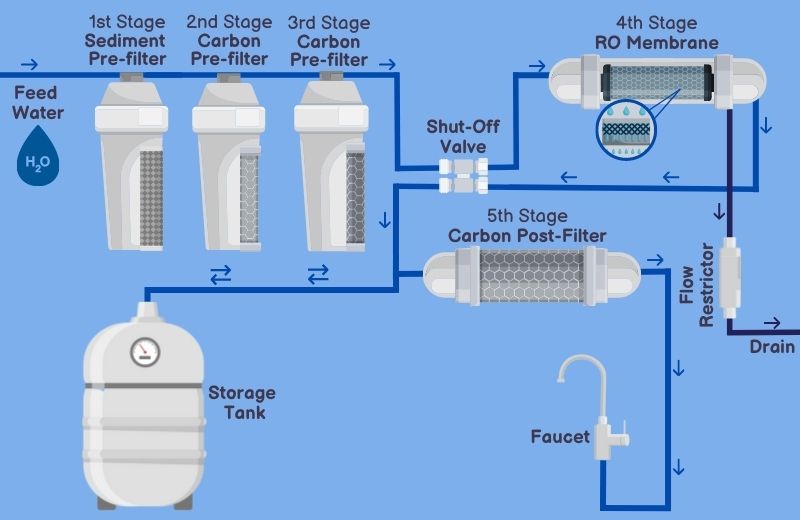
Understanding RO mechanics explains why it fails with gases.
The Reverse Osmosis Process
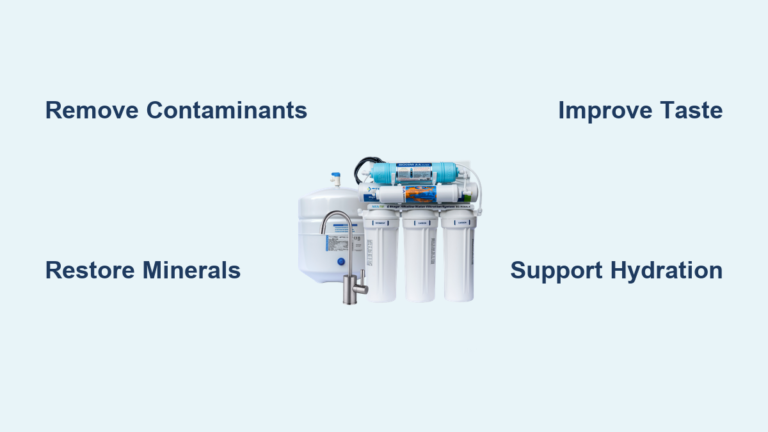
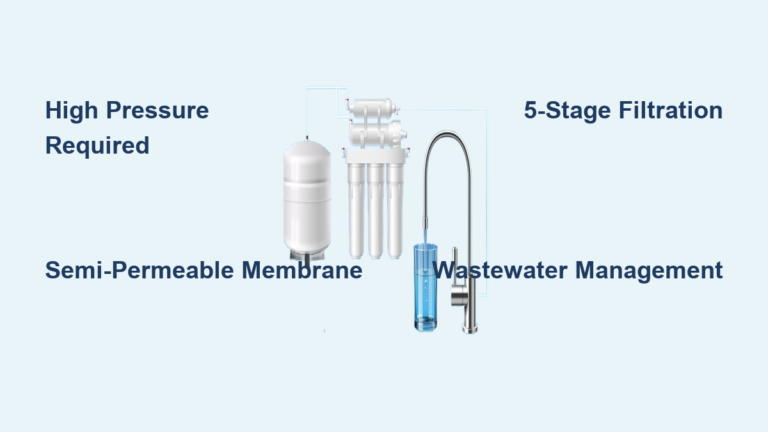
- Pre-filtration: Sediment and carbon filters remove particles and chlorine.
- Membrane separation: Pressurized water is forced through a semi-permeable membrane. Pure water (permeate) passes through while contaminants go to drain.
- Storage: Treated water is stored in a pressurized tank.
- Post-filtration: A final carbon filter polishes taste and odor.
Recovery and Waste
- Recovery rate: Only 20–30% of input water becomes drinking water.
- Waste ratio: 3–4 gallons wasted per 1 gallon produced.
- Low pressure or cold water (such as 45°F well water) can reduce output by 50%.
Hybrid Solutions: Use RO the Right Way

While RO should not be your first line of defense against radon, it can serve as a valuable second stage in a complete treatment system.
Recommended Setup for High-Radon Wells
-
Point-of-Entry (POE) Aeration System
Installed where water enters the home. Removes 99.9% of radon before it can off-gas indoors. -
Point-of-Use (POU) Reverse Osmosis System
Installed under the kitchen sink. Polishes water by removing remaining contaminants like lead, fluoride, nitrates, and PFAS.
This two-stage approach ensures both radiological safety and superior drinking water quality.
Maintenance and Safety Considerations
For Aeration Systems
- Inspect the vent pipe annually for blockages
- Check blower operation every 6 months
- Test water every 2–3 years to confirm performance
For GAC Systems
- Monitor radiation levels near the tank using a Geiger counter if advised
- Replace media on schedule and never wait for breakthrough
- Hire licensed professionals for removal and disposal
For RO Systems
- Replace pre- and post-filters every 6–12 months
- Change the RO membrane every 2–3 years
- Sanitize the system annually to prevent biofouling
- Avoid overloading septic systems with RO wastewater
Certification: How to Choose Reliable Equipment
The water treatment industry is largely self-regulated. Always look for NSF/ANSI certifications:
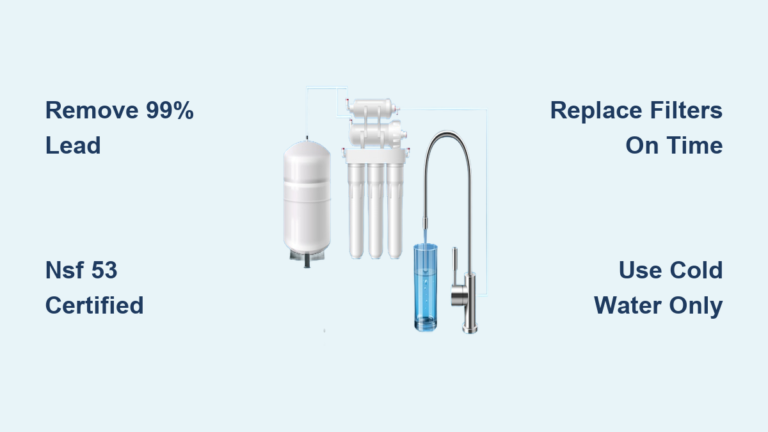
- NSF/ANSI 58: Validates RO system performance for TDS, contaminants, and structural integrity
- NSF/ANSI 53: Confirms reduction of health-related contaminants like lead, cysts, and VOCs
- WQA Gold Seal: Independent verification of performance claims
Avoid systems that make unsupported claims about radon removal.
Frequently Asked Questions About Radon and Reverse Osmosis
Does reverse osmosis remove radon from drinking water?
No. Reverse osmosis cannot remove radon because radon is a dissolved gas that passes freely through the RO membrane. Only aeration or granular activated carbon systems are proven effective for radon removal.
What is the best water filter to remove radon?
Aeration is the most effective method, removing up to 99.9% of radon. Granular activated carbon (GAC) filtration works for lower radon levels (under 2,500 pCi/L) but requires careful handling of radioactive media.
Can a carbon filter remove radon from water?
Standard carbon filters in pitcher-style or refrigerator filters cannot remove radon. Only large-tank GAC systems with sufficient contact time can adsorb radon, and they require professional maintenance and radioactive waste disposal.
How do I know if my well water has radon?
You must test your water with a certified laboratory. Home test kits exist, but a professional analysis provides accurate picocuries per liter (pCi/L) measurements to guide treatment decisions.
Is radon in water dangerous?
Yes. When radon-containing water is used for showering or dishwashing, the gas escapes into indoor air. Inhaled radon is the leading cause of lung cancer among non-smokers and is statistically more dangerous than drinking the water.
Can I use RO and aeration together?
Yes. A hybrid system with whole-house aeration followed by a point-of-use RO unit at the kitchen tap provides both radon removal and superior purification of drinking water for contaminants like lead, fluoride, and PFAS.
Key Takeaways for Removing Radon from Water
Reverse osmosis is a powerful filtration technology, but it is not designed to remove radon. The physics of the RO membrane allow dissolved radon gas to pass through into your treated water. For effective radon mitigation, invest in aeration for high levels or granular activated carbon for moderate levels, both installed and maintained by professionals.
Your safest path forward is to test your water first, choose the right radon removal technology for your contamination level, and add an RO system at the kitchen tap as a polishing stage for drinking water. This layered approach protects your household from radon while delivering the cleanest, best-tasting water possible.