Does Reverse Osmosis Remove Sulfur?
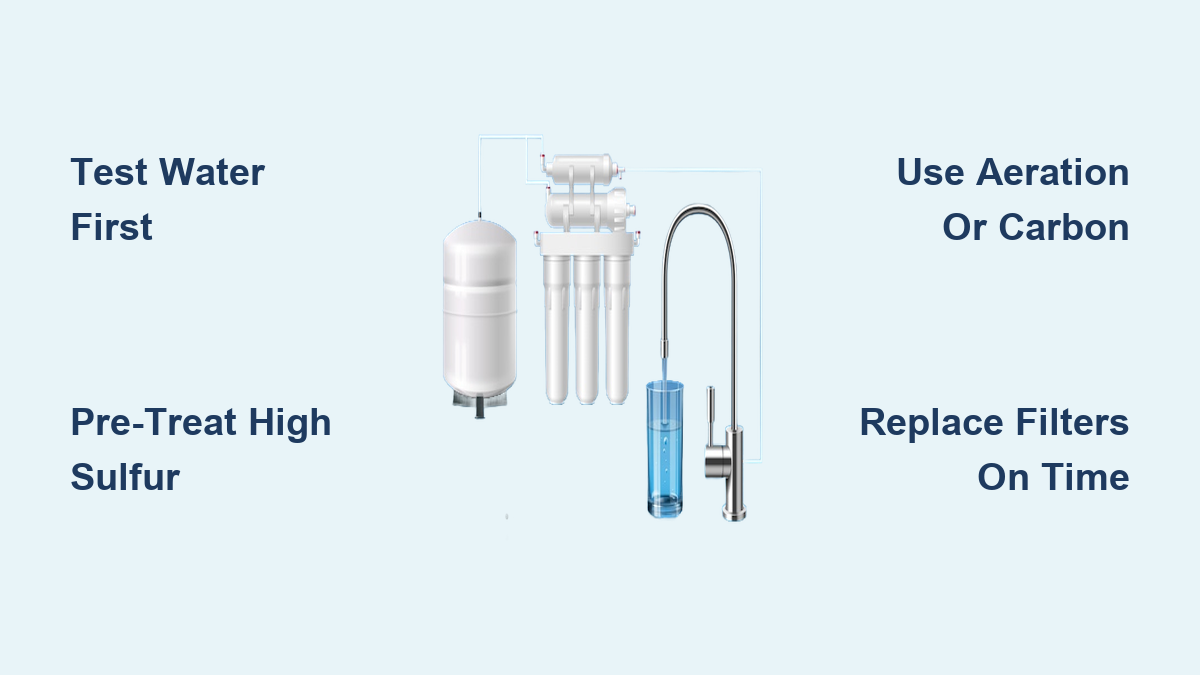
If your tap water smells like rotten eggs every time you run the faucet, you’re not alone. Hydrogen sulfide (H₂S) is a common well water problem that affects taste, odor, and even your plumbing. Many homeowners ask whether reverse osmosis can solve it. The short answer is yes, reverse osmosis does remove sulfur, with typical removal rates between 90% and 99%. But there’s a catch: using RO alone on high-sulfur water can destroy your membrane in months. This guide explains how RO tackles sulfur, when it works, when it fails, and the exact steps to protect your system and your wallet.
How Reverse Osmosis Removes Sulfur

The Membrane Mechanism Explained
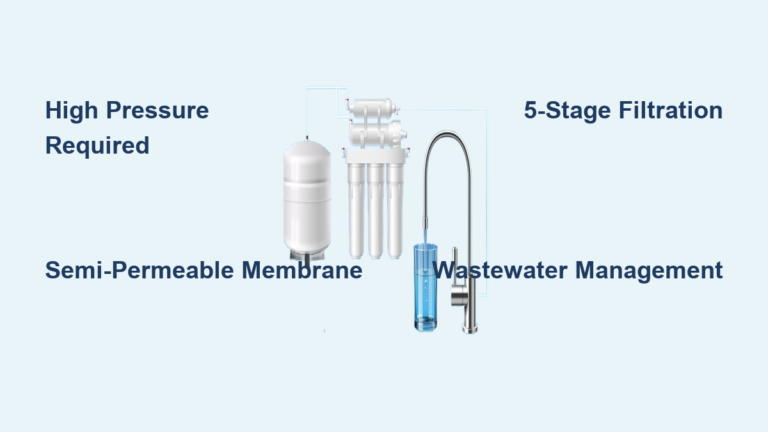
A reverse osmosis system forces water through a semipermeable membrane with pores around 0.0001 microns wide. This barrier blocks contaminants through two mechanisms working together:
- Size exclusion: Molecules larger than the membrane pores get physically blocked.
- Charge repulsion: The membrane surface repels charged ions, including negatively charged sulfates.
Because dissolved hydrogen sulfide molecules and sulfate ions both exceed the pore threshold, they get rejected and flushed away as wastewater. What comes out your RO faucet is clean, odor-free water.
What Gets Removed: H₂S vs. Sulfates
Sulfur shows up in water in two main forms, and RO handles both:
- Hydrogen sulfide (H₂S): The dissolved gas behind the rotten egg smell. RO removes up to 99% of it.
- Sulfates: Mineral salts like calcium sulfate. RO cuts these by 90–98%, depending on pressure and membrane condition.
Once installed, most users notice the smell and metallic taste disappear almost immediately from their drinking water.
Why RO Alone Is Not Enough for High Sulfur

Sulfur Damages RO Membranes
Here’s the paradox: RO removes sulfur beautifully, but sulfur also destroys RO membranes. Hydrogen sulfide is a reducing agent that can oxidize inside your system, forming elemental sulfur or sulfuric acid. Both attack the polyamide thin-film composite (TFC) membranes used in most home units.
Warning signs of membrane damage include:
- Slower water production
- Rising TDS readings
- Sulfur smell returning to the purified water
- Complete system failure requiring a $100–$200+ membrane replacement
Safe Sulfur Thresholds Before RO
To protect your investment, hydrogen sulfide levels should stay below 0.1 ppm before water reaches the membrane. Use this guide:
| H₂S Level | RO Risk | Action Needed |
|---|---|---|
| Below 0.1 ppm | Low | RO works as primary treatment |
| 0.1–1 ppm | Moderate | Pre-filtration required |
| Above 1 ppm | High | Full pre-treatment mandatory |
Skipping pre-treatment at higher levels is like putting regular gas in a premium engine. It runs for a while, then breaks down.
Pre-Treatment Methods That Protect Your RO System
Aeration: Chemical-Free Sulfur Removal
Aeration injects air into your water supply, converting dissolved hydrogen sulfide gas into solid elemental sulfur particles that get filtered out downstream.
How it works:
- Air mixes with incoming water through a venturi injector or compressor.
- H₂S converts to solid sulfur.
- A sediment or carbon filter captures the particles.
Best for: Well water with moderate to high sulfur (up to 10+ ppm). No chemicals required, and it handles heavy loads effectively.
Catalytic Carbon Filtration
Catalytic carbon is a specialized activated carbon that doesn’t just trap hydrogen sulfide. It oxidizes it into sulfate, which the RO membrane then removes.
Best for: Low to moderate sulfur levels under 2 ppm. Typical lifespan is 6–12 months. Place this filter before your RO unit to reduce the load on the membrane.
Chemical Oxidation for Severe Cases
When sulfur comes with iron or bacterial contamination, chlorine or ozone injection delivers the strongest results.
Process overview:
- Inject chlorine or ozone into the water line.
- Allow 20–30 minutes in a contact tank for full oxidation.
- Filter out precipitated sulfur and iron.
- Run water through a carbon filter to strip residual chlorine before it reaches the RO membrane.
Critical note: Residual chlorine destroys TFC membranes. Always include a de-chlorination carbon stage before your RO unit.
Build the Right Treatment Train
The Multi-Stage Setup That Works
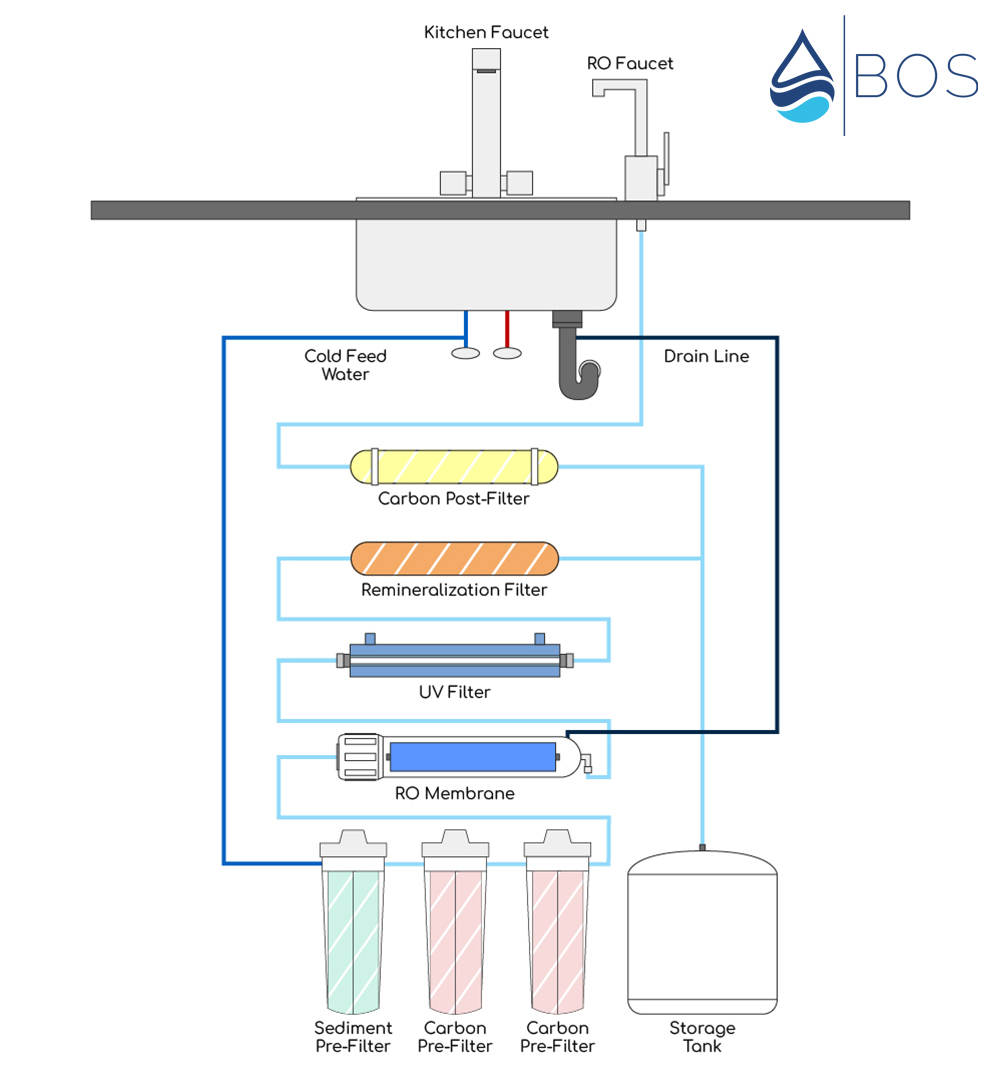
The most reliable approach combines technologies in sequence. This “treatment train” neutralizes sulfur, filters out particles, and lets RO do the final polishing.
Recommended sequence for sulfur-rich well water:
- Oxidation stage: Aeration or chlorination converts H₂S to solid sulfur.
- Filtration stage: Greensand or catalytic carbon removes oxidized particles.
- Sediment pre-filter: A 5-micron filter catches fine debris.
- De-chlorination: Carbon filter strips chlorine if you used chemical oxidation.
- Reverse osmosis unit: Final polishing for drinking and cooking water.
- Post-carbon filter: Polishes taste and removes any residual odor.
This setup ensures your RO membrane only sees clean, low-sulfur water, dramatically extending its lifespan.
Test Before You Buy
Never guess your water quality. A professional water test costs $50–$200 and should include:
- Hydrogen sulfide
- Iron (ferrous and ferric)
- Manganese
- Hardness
- pH
- Total Dissolved Solids (TDS)
- Bacteria (coliform and E. coli)
Your results dictate the right pre-treatment. High iron plus sulfur calls for greensand or an oxidizing filter. Moderate sulfur alone works well with aeration plus carbon.
Choosing the Right RO System

Point-of-Use RO for Drinking Water
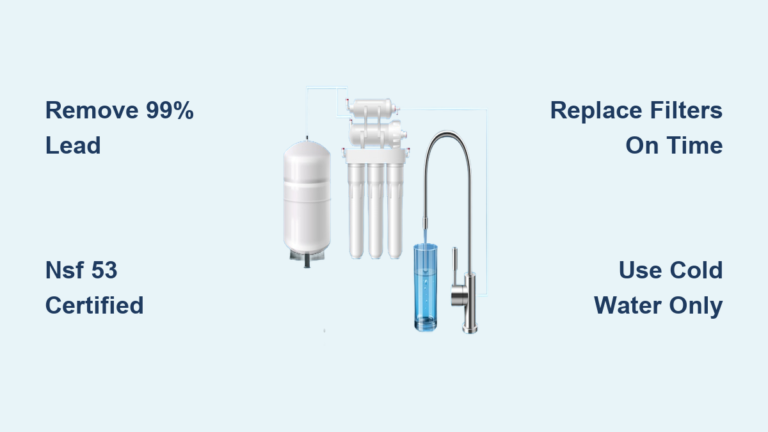
Reverse osmosis works best as a point-of-use (POU) system installed under your sink or on the counter. These units deliver purified water through a dedicated faucet.
Top options:
- APEC RO-90: High-capacity (90 GPD), durable, well-suited for post-pre-treatment use.
- Waterdrop G3P800: Tankless design, compact, smart monitoring features.
- AquaTru: Countertop unit with carbon block pre-filters, ideal for renters or RVs.
Advantages:
- Removes 99% of contaminants
- Dramatically improves taste
- Costs far less than whole-house RO
Limitations:
- Doesn’t treat shower or laundry water
- Produces wastewater (roughly 1:1 ratio on efficient models)
- Slower refill times
Why Whole-House RO Rarely Makes Sense
Whole-house RO systems cost $5,000+, waste 3–5 gallons per gallon purified, and foul quickly without extensive pre-treatment. A smarter approach pairs a whole-house pre-treatment system (aeration or catalytic filtration) with a point-of-use RO for drinking water. You get odor-free showers and ultra-clean drinking water without the massive expense.
Maintenance Essentials
Replace Filters on Schedule
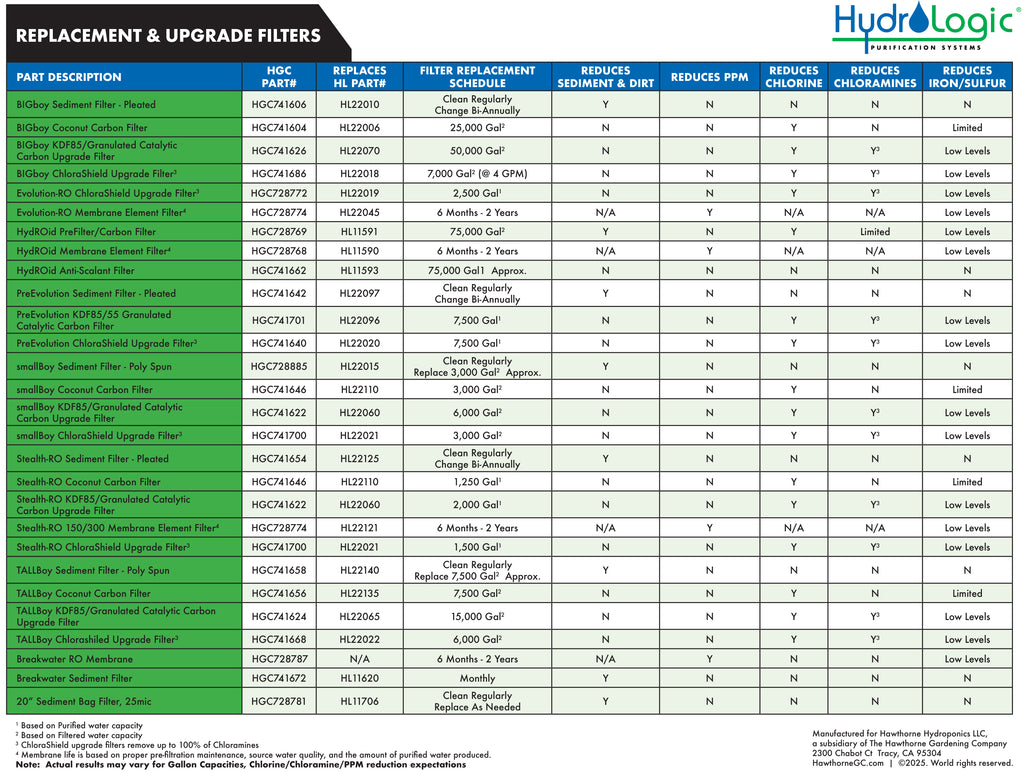
Even the best system fails without regular upkeep. Follow these intervals:
| Filter Type | Replacement Interval | Warning Signs |
|---|---|---|
| Sediment pre-filter | Every 6–12 months | Reduced flow, pressure drop |
| Carbon pre-filter | Every 6–12 months | Return of sulfur smell |
| RO membrane | Every 2–5 years | Rising TDS, bad taste |
| Post-carbon filter | Every 12 months | Metallic taste, odor |
Set calendar reminders. Neglected filters are the number one cause of RO failure in sulfur applications.
Prevent Bacterial Regrowth
Sulfate-reducing bacteria thrive in warm, oxygen-poor environments like water heaters and storage tanks. These microbes actually produce hydrogen sulfide, restarting the problem.
Prevention tips:
- Shock-chlorinate your well annually.
- Sanitize the RO storage tank and lines every 6–12 months.
- Flush the system after long periods of non-use.
Health and Safety Considerations
Sulfur Isn’t Toxic, But Taste Matters
Hydrogen sulfide at typical household levels is not considered toxic. However, high concentrations can cause stomach upset, diarrhea, and dehydration. The bigger risk is indirect: people stop drinking water that tastes bad.
Recommended daily water intake is 15.5 cups for men and 11.5 cups for women. When water smells like rotten eggs, most people fall short. An RO system makes water palatable again, supporting healthy hydration.
Skin and Plumbing Effects
Showering in sulfur water won’t harm you, but it can:
- Dry out sensitive skin
- Corrode copper pipes and fixtures
- Leave yellow or black stains on sinks, toilets, and laundry
A whole-house pre-treatment system eliminates these problems across your entire home.
Frequently Asked Questions About Reverse Osmosis and Sulfur
Does reverse osmosis remove the rotten egg smell from water?
Yes. RO systems remove 90% to 99% of hydrogen sulfide, which is the compound responsible for the rotten egg odor. Once you install an RO unit and the membrane is working properly, the smell disappears from your drinking water.
Can I use reverse osmosis as the only treatment for sulfur water?
Only if your hydrogen sulfide level is below 0.1 ppm. At higher concentrations, sulfur damages the RO membrane through oxidation, leading to premature failure. For moderate to high sulfur levels, you need pre-treatment such as aeration, catalytic carbon, or chlorination before the RO unit.
What pre-treatment works best for sulfur before RO?
Aeration is the top choice for moderate to high sulfur levels because it requires no chemicals and handles heavy loads. Catalytic carbon works well for low to moderate levels. For severe cases involving iron or bacteria, chemical oxidation with chlorine or ozone delivers the strongest results, provided you remove residual chlorine before the RO membrane.
How often do I need to change filters in a sulfur treatment system?
Sediment and carbon pre-filters typically need replacement every 6–12 months. The RO membrane lasts 2–5 years with proper pre-treatment but fails much sooner without it. Post-carbon filters should be replaced annually. Always follow your manufacturer’s schedule and watch for warning signs like pressure drops or returning odors.
Is sulfur in well water dangerous to drink?
Sulfur itself is not considered toxic at typical household levels. The main concern is indirect: bad taste and odor discourage adequate water intake, which can lead to dehydration. High sulfur concentrations may also cause mild gastrointestinal upset in sensitive individuals.
Will a reverse osmosis system make my shower water smell better?
No. Point-of-use RO systems only treat water at a single faucet, typically the kitchen sink. To eliminate sulfur odor from showers and baths, you need a whole-house pre-treatment system like aeration or a catalytic carbon filter installed at the point of entry.
Key Takeaways for Removing Sulfur with Reverse Osmosis
Reverse osmosis is a powerful tool for eliminating sulfur from drinking water, but it works best as the final step in a larger treatment strategy. Test your water first, install appropriate pre-treatment when sulfur levels exceed 0.1 ppm, and maintain your system on a strict schedule. This approach delivers clean, great-tasting water while protecting your RO investment for years to come. Start with a professional water test, then build your treatment train based on the results.